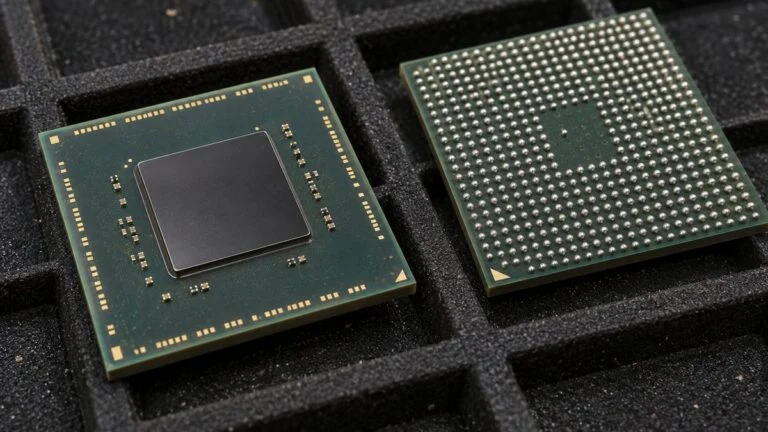
Semiconductor-Grade Phosphoric Acid: Rasa’s New Taiwan Plant
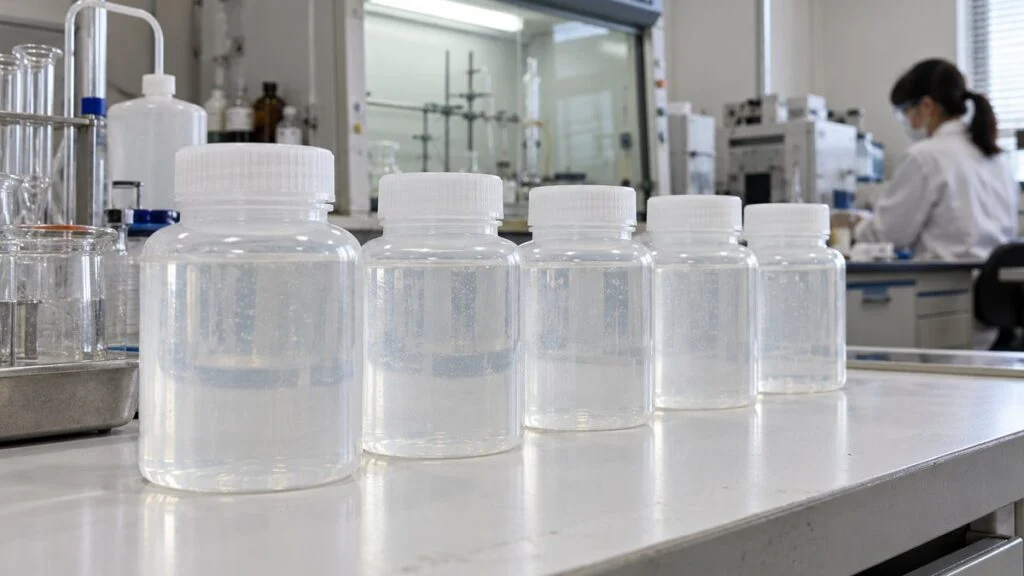
A supplier tells your fab that the next lots of phosphoric acid can ship from a new plant in Taiwan, Korea, or the US. The product name and the headline purity stay the same. What you need to know is whether the acid will behave the same way in your hot bath, and how much qualification work that answer will take.
Semiconductor-grade phosphoric acid is the etchant that removes silicon nitride (Si3N4) while leaving silicon oxide (SiO2) almost untouched. On September 30, 2026, Japan's Rasa Industries, which claims the top global share in this product, announced a second plant in Taichung, Taiwan, for about NT$3.8 billion (about ¥18.8 billion, or roughly US$119 million).
This guide covers the etch chemistry, the difference between electronic and industrial grades, and where Rasa and other suppliers make the acid. It then looks at what a buyer should check before approving a new site. A checklist, a question list for the Japanese side, and an email template are near the end.
Contents
- What Hot Phosphoric Acid Does in a Fab
- Industrial vs. Electronic Grade: Assay Is Not Purity
- What Rasa Announced
- Where the Acid Is Made: Japan, Taiwan, Korea, and the US
- Why Chemical Suppliers Build Near Fabs
- What Changes When a Japanese Supplier Opens an Overseas Plant
- Checklist: Qualifying a New Supply Site
- Questions for the Japanese Side
- Limits of This Guide
- FAQ
- Sources
What Hot Phosphoric Acid Does in a Fab
Front-end wafer processing repeats one loop many times: deposit a film, pattern it, etch it, and clean it. High-purity phosphoric acid belongs to wet etching, where a liquid dissolves a film. Rasa describes its product as a front-end wet etching chemical for logic and memory (NAND and DRAM) devices.
Silicon nitride is hard and resists chemicals, so process flows use it as a mask to protect lower layers and as an insulating or protective film. When the nitride has done its job, a typical way to remove it is to put the wafer in acid heated to about 160°C (320°F). Figure 1 shows the result.
The goal is to remove only the silicon nitride and keep almost all of the oxide below it.
A heavily simplified schematic. Film thickness and shape vary by process, and a small amount of oxide is also etched.
Dry etching and wet etching are separate steps in this loop. Figure 2 shows where the phosphoric acid step sits, which helps when you talk with procurement or logistics teams who do not work in the fab.
Film deposition, patterning, etching, and cleaning repeat dozens of times. Phosphoric acid handles part of the etching.
Step order and count vary by device. Simplified by the editors from SCREEN's process overview.
Selectivity: Nitride Rate vs. Oxide Rate
Selectivity is the ratio of the nitride etch rate to the oxide etch rate. At 50:1, for example, the bath removes 50 nm of nitride for every 1 nm of oxide. Published numbers vary widely because they depend on the film, the temperature, and the condition of the bath.
The examples below come from specific setups. Use them for context, not as targets or specifications.
- About 24:1 rising to 50:1 or more: a fresh bath compared with the same bath after about 1,000 nitride wafers, in a US patent describing a process at about 165°C (329°F)
- 30:1: 85% acid at 165°C in a 28 nm spacer-removal application (STMicroelectronics, 2015)
- Above 100:1: a properly tuned hot bath for 3D NAND (Tokyo Electron, 2015)
The gap between a fresh and a used bath is the point to remember. The acid you buy sets the starting condition. The tool and your bath control decide what happens after that.
Silicon Concentration: A Narrow Window
Dissolved silicon slows oxide etching: the more silicon in the bath, the lower the oxide etch rate. Etching nitride adds silicon byproducts to the acid, and baths are also typically pre-seeded with silica. That is why a used bath can be more selective than a fresh one.
The same silicon creates the main risk. Above a critical level, it comes out of solution as silica. One US patent puts saturation at about 120 ppm at 165°C and calls the precipitated silica a major yield-killing particle source.
Figure 3 shows the trade-off.
Silicon helps selectivity until it starts to deposit. The bath has to stay between the two limits.
No values are shown because the window depends on the tool, temperature, film, and chemistry. Your process owner sets it.
Equipment makers design around this window. Shibaura Mechatronics says its SC300-HT single-wafer tool holds the acid at 160°C or higher and controls silicon concentration to reach high selectivity. Patents also describe adding fresh hot acid to restore silicon levels, and adding deionized water to replace what evaporates.
This is why a clean certificate of analysis does not settle the question. The acid also has to perform steadily after it is heated and used repeatedly in your tool, so a new source needs evaluation in the actual process.
3D NAND: Removing Nitride from the Side
A 3D NAND stack alternates oxide and nitride layers, and the nitride is later removed sideways. The etch has to remove it evenly at the top and bottom of the stack and across the wafer, without attacking the oxide. Entegris described this step in a 2018 white paper as a wet etch challenge once aspect ratios reach about 50:1.
According to that paper, hot phosphoric acid at about 160°C was used below 96 layers, while 96 layers and above need a specially formulated chemistry to improve process margin. Entegris sells formulated chemistries, so read this as a supplier's view and check what your own node uses.
Silica is also a concern here, since patents describe colloidal silica growing on exposed oxide and hindering nitride removal. Tokyo Electron researchers attributed non-uniformity within a wafer and between wafers mainly to temperature differences in the bath.
So first decide whether you are buying plain electronic-grade acid or a formulated etchant. They call for different questions.
Industrial vs. Electronic Grade: Assay Is Not Purity

Assay (ganryo, 含量) tells you how much H3PO4 is in the liquid. Even industrial acid commonly comes at about 85%, so a high assay says nothing about fitness for a fab. For semiconductor use, the stricter questions are how little metal the acid contains, such as iron and sodium, and how few particles it carries.
Figure 4 compares the two grades using published examples from two Japanese makers.
Both are H3PO4, but the buyer checks different items at a very different level of control.
Values are published examples for individual products, Rasa (industrial grade) and Rin Kagaku Kogyo (EL-S), not industry-wide limits.
From ppm to ppt
Published electronic-grade numbers are limited. Rin Kagaku Kogyo lists particle limits for its top EL-S grade (200/mL at 0.2 µm, 70/mL at 0.3 µm, and 20/mL at 0.5 µm) and refers other questions to its sales team. Your own fab's specification and the supplier's controlled specification are the documents that count.
SEMI C36 (current revision C36-1121) is the SEMI specification for phosphoric acid grades used in semiconductor manufacturing, and its test methods must meet SEMI C1 validation requirements. It is a paid document, so we do not reproduce its limits here. Ask which grade and revision a supplier's product meets, if any.
For a sense of direction, look at a different chemical. Mitsubishi Gas Chemical quotes the 2022 International Roadmap for Devices and Systems (IRDS) for 30% hydrogen peroxide from the supplier.
The roadmap tightens each metal from 10 parts per trillion (ppt) in 2021 to 5 ppt from 2024, and 20 nm particles from 500/mL to 200/mL by 2027. These are not phosphoric acid limits.
Measurement is part of the specification. Trace metals in 85% semiconductor-grade acid can be measured by inductively coupled plasma mass spectrometry (ICP-MS), and an Agilent application note reports ppt-level detection limits, measured in the acid after it was diluted about 100 times. A result of "below X" means little until you know each lab's reporting limit.
Thermal vs. Wet Process
Japanese documents use kanshiki-ho (乾式法, dry process) for what English sources usually call the thermal process. Yellow phosphorus is burned to make phosphorus pentoxide, which then reacts with water. Shisshiki-ho (湿式法, wet process) breaks down phosphate rock with sulfuric or another acid.
Rasa says it uses the route through yellow phosphorus, and Rin says it makes its electronic grades by a dry process with few impurities. Wet-process acid starts with more impurities from the rock, but it can be purified further, so the route alone does not qualify or disqualify a product. Record the route anyway, because you will want to know if it ever changes.
What Rasa Announced
Rasa Industries, founded in 1913, makes phosphorus chemicals, high-purity materials for compound semiconductors, and crushing and tunneling machinery. Sales were ¥47.7 billion (about US$303 million) in the fiscal year ended March 2026, and high-purity phosphoric acid made up ¥16.8 billion, or 35.2%. The top global share is Rasa's own claim, which we did not verify independently.
Figure 5 summarizes the announcement. All US dollar figures in this article are our own rough conversions at the rates in the figure note.
An expansion of the existing plant started up in April 2026. The new plant is the next step.
Sources: Rasa's September 30, 2026 disclosure and its results presentation for the year ended March 2026. Yen values use Rasa's rate of NT$1 = ¥4.94 (September 30, 2026). Dollar values are our conversions at NT$31.89 = US$1, a mid-market rate for the same date, which implies about ¥157.5 = US$1.
The builder is Rasa Technology Taiwan Ltd. (RTT, 理盛精密科技), a wholly owned subsidiary set up in December 2003 in Wuqi District, Taichung.
The second plant will stand in the same park as the first, the Taichung Port Technology Industrial Park (臺中港科技產業園區). Rasa will fund it with its own cash and loans.
Rasa gave three reasons for the investment:
- Taiwan is one of the world's leading semiconductor production bases, centered on advanced logic.
- Generative AI and data centers are expected to keep expanding semiconductor demand.
- Demand for more high-purity phosphoric acid is growing stronger in Taiwan.
RTT's sales rose from NT$1,232 million in 2020 to NT$2,592 million in 2025. That figure includes price and product mix, so do not read it as volume growth. Rasa also expects only a minor effect on results for the fiscal year ending March 2027, so the plant is not a near-term supply event.
The disclosure does not give capacity, customers, or a date for first qualified supply. "FY2028" is also not tied to a month. Rasa's fiscal year ends in March and RTT's ends in December, so ask which calendar applies.
Where the Acid Is Made: Japan, Taiwan, Korea, and the US
Rasa says its strength is local production and local sales, in addition to quality. Figure 6 shows its supply map as presented to investors in June 2026.
Plants sit in regions with concentrations of fabs and mainly supply customers in that region.
Source: Rasa's results presentation for the year ended March 2026. The presentation also shows Chinese, Korean, and Taiwanese chipmakers producing in China as a market, but its four-country production plan does not include a plant in China.
Rasa's annual securities report names the Korean affiliate as SoulbrainRASA Co., Ltd., in Gongju, South Chungcheong Province, with Rasa holding 39.0% of the voting rights. Rasa does not consolidate this company, so do not assume it runs under Rasa's quality system or that Rasa can answer for its site data.
Rasa's presentation does not name the US site. In June 2026, the Texas governor's office announced an $11.6 million state grant to Soulbrain RASA TX LLC for its first US production facility in Taylor, Texas. The project is more than US$120 million, with Phase 1 targeting 28,800 metric tons per year of "high-selectivity, high-purity" phosphoric acid.
The name and product fit Rasa's description, but neither document explicitly connects the two, and one trade report calls the Texas company a subsidiary of Soulbrain Holdings. Treat the link as unconfirmed. If you are evaluating this source, ask who owns the plant and whose specification applies.
Rasa is not the only option. The table below lists other suppliers we could confirm from public sources, and it is not a complete market list.
| Supplier | Base | What we could confirm |
|---|---|---|
| Rin Kagaku Kogyo | Japan | EL grade (electronic material etching) and EL-S grade (semiconductor wafer etching), made by a dry process. EL-S comes in 25 or 30 kg cans, 300 kg drums, and 10-ton tank trucks |
| OCI | South Korea | Annual capacity of 25,000 tons. Said in September 2024 that it was the first Korean company to supply high-purity phosphoric acid to all Korean chipmakers, including Samsung Electronics, SK Hynix, SK Keyfoundry, and DB HiTek (OCI's own claim, as reported by KED Global) |
| Soulbrain RASA TX | US (Taylor, Texas) | Phase 1 target of 28,800 metric tons per year, per the Texas governor's office (June 2026). No opening date in that announcement |
Why Chemical Suppliers Build Near Fabs

Rasa's disclosure cites demand but says little about why location matters. Mitsubishi Gas Chemical, which claims about 50% of the global market for ultra-pure hydrogen peroxide, is more direct. It describes production near the point of consumption as a way to respond quickly to customers and hold down logistics costs, and it says closeness also speeds up customer feedback for new products.
Phosphoric acid has its own logistics issues. Rasa's published industrial grades list a specific gravity of 1.58 or more up to 1.73 or more, so the concentrated acid is heavy to move. Safety data sheets we checked classify 85% acid as UN1805, Class 8, Packing Group III, and most list a freezing or melting point near 21°C (70°F), so ask the supplier how it protects the product in transit and in cold storage.
A local plant helps a buyer, but not automatically. Figure 7 sets the likely gains against what still has to be proven.
Use the left column to build the business case and the right column to plan the qualification.
- Shorter transport distance, with lower logistics cost and less in-transit risk
- Supply that can grow with your ramp or new line
- Closer coordination on inventory levels and delivery schedules
- Faster feedback between your process results and the supplier
- A backup against disasters and logistics disruption, if more than one site is qualified
- The new site's product passes your evaluation and qualification
- Raw materials and high-purity analysis are in place locally
- The site has trained people and time to match the original site's quality
- Regional demand supports the plant over the long term
- The supplier can carry the plant and its debt through a downturn
General points organized by the editors. These are not items Rasa cited for its decision.
Plant completion is not the same as qualified supply. After construction, the supplier still has to provide samples, pass evaluation in the customer's process, and win formal adoption. Build that gap into your sourcing plan, because the disclosed date covers only completion.
Other Japanese process chemical suppliers are also building or buying capacity in Taiwan. The chemicals and uses differ, so do not compare these projects by size.
| Company | Chemical | Move in Taiwan | Timing |
|---|---|---|---|
| Rasa Industries | High-purity phosphoric acid (nitride etching) | Second plant at its Taichung subsidiary | Announced September 2026, completion planned for FY2028 |
| Tokuyama | High-purity isopropyl alcohol (IPA) | Second plant, 30,000 tons per year, at Formosa Tokuyama Advanced Chemicals in Kaohsiung (a 50/50 venture with Formosa Plastics) | Announced May 2026, operation planned for September 2028 |
| Mitsubishi Gas Chemical | Ultra-pure hydrogen peroxide (cleaning) | Operates an ultra-pure hydrogen peroxide plant in Taiwan | As of its October 2024 presentation |
| Sumitomo Chemical | Semiconductor process chemicals | Agreed to buy all shares of Asia Union Electronic Chemical Corporation (Taipei), with plants in Kaohsiung and Nevada | Announced November 2025, subject to approvals at that time |
Demand cycles also matter to a buyer. Rasa's semiconductor-related sales include capacitor raw materials, flocculants for etching, and high-purity materials for compound semiconductors. They went from ¥24.3 billion in the year ended March 2023 to ¥19.6 billion a year later, then to ¥24.4 billion in the year ended March 2026 (51.1% of total sales).
Ask how allocation works when the market tightens, because a supplier this exposed to chips faces the same cycle you do.
In our reading, Rasa's two moves serve different purposes. Taiwan adds supply for growing customers, while the US plant follows chip production into a new region. The same logic applies to buyers, since relying on one region or one site concentrates your risk.
What Changes When a Japanese Supplier Opens an Overseas Plant

The points below are a general editorial view of what to examine, not findings about Rasa. Each fab's supplier quality agreement decides how they are handled.
- Your data may not carry over. The brand stays the same, but your qualification results came from another plant. Whether the new site counts as a new source is your quality team's decision.
- Technical authority may sit elsewhere. The local plant may release lots while the mother plant (maza kojo, マザー工場) in Japan owns the process. Find out who can approve a deviation, and how fast.
- Raw material paths can differ. A site may start from a different phosphorus source, or it may finish an intermediate made elsewhere. Rasa has not published this for its plants.
- Labs can disagree. Two labs testing the same lot near their detection limits can report different results, so ask for a lab correlation between sites.
- Documents may start in Japanese. Ask which language version controls the specification (kikakusho, 規格書), the certificate of analysis (shiken seisekisho, 試験成績書), and change notices.
- Automation can count as a change. Rasa says it will work on automating production and shipping at its new plant. Ask whether filling and shipping steps differ from the site you qualified.
Recycling may also enter the discussion. Japan's Ministry of Economy, Trade and Industry (METI) certified a Rasa plan in July 2023 to establish high-purity phosphoric acid recycling technology, with 960 tons per year and supply planned from April 2027. If recycled acid is offered, ask for it to be identified separately, and agree with your quality team how it will be evaluated.
Checklist: Qualifying a New Supply Site
Use this list when you open a new-site evaluation. It covers what to collect, while your fab's own qualification plan sets the lot counts, test wafers, and pass criteria.
- Product: plain acid or formulated etchant, grade name, product code, and any SEMI C36 grade claimed
- Site and ownership: legal entity, plant address, parent company or joint venture partners, and who signs the quality agreement
- Process route: thermal or wet, phosphorus source, purification, filtration, and filling steps
- Specification: assay and tolerance, metals by element, anions, silicon, particles by size, and the test method and reporting limit for each
- Comparison data: consecutive lot data from the new site alongside the qualified site, and a lab correlation
- In-process evaluation: nitride and oxide etch rates over bath life, silica behavior, and particle adders on your own film stack
- Packaging and logistics: container type and material, container cleaning, transit temperature, freezing risk, shelf life, and hazard classification on the actual route
- Change control: what triggers a notice, how much notice you get, and whether notices come in English
- Continuity: backup site, safety stock, and allocation rules during shortages
- Environmental, health, and safety: local safety data sheet, local permits, and how used acid is handled
Questions for the Japanese Side
Send these early, ideally before the plant is finished. Asking in writing helps, because answers may need to go through the head office in Japan.
- Which site will make our product, and is that site's product already qualified at any fab? (Customer names are not needed.)
- Is this acid made by the thermal process (kanshiki-ho) or the wet process (shisshiki-ho)? Is the route the same at every site?
- Do all sites use the same phosphorus source and the same purification and filtration steps?
- Can you share the controlled specification, including metals by element, particles by size, and reporting limits?
- Does the product meet a SEMI C36 grade? Which grade and revision?
- Have your sites run a lab correlation on the same lots? Can we see the results?
- When will samples from the new plant be available, and when do you expect volume supply after qualification?
- What is your change notification process for a 4M change (man, machine, material, method)?
- Who owns the process and can approve deviations: the local plant or the Japanese head office?
- Which site develops purification and analysis methods, and where would next-generation chemistries be evaluated with us?
- Will any reclaimed or recycled acid be used in our product?
Sample Inquiry Email
Adapt this template to your situation. Replace the items in brackets, and remove anything your confidentiality agreement does not allow you to share.
Subject: High-purity phosphoric acid: evaluation of [site name] for [our site]
Dear [Name],
We use high-purity phosphoric acid for silicon nitride wet etching at our [location] fab, and we would like to evaluate supply from your [site name] plant.
Could you please send the following by [date]?
- Grade name and controlled specification, including assay, metals by element, particles by size, test methods, and reporting limits
- Production route and main process steps at this site, and any differences from [currently qualified site]
- Data from recent consecutive lots, plus lab correlation results between sites
- Packaging options, transit temperature control, and the shipping route to our site
- Your change notification procedure and notice period
- Expected dates for samples and for volume supply after qualification
Our expected volume is about [tons per month] starting around [date]. We can sign an NDA if needed. Please let us know which person in your company handles technical questions in English.
Best regards,
[Name, title, company]
Limits of This Guide
- Selectivity values and the silica saturation figure come from patents and conference abstracts for specific setups. They are not process recommendations.
- Electronic-grade limits are mostly unpublished. We did not review the paid text of SEMI C36, and the metal limits for your product must come from the supplier.
- Hot phosphoric acid is hazardous. This article is not a work instruction, so follow your site's procedures and the supplier's safety data sheet.
- Whether a new site requires full or partial requalification depends on your fab, your node, and your quality agreement.
- Company facts are from disclosures available as of November 2026. Dollar conversions are rough guides, not reported figures.
FAQ
What Is Hot Phosphoric Acid Used for in Semiconductor Manufacturing?
It selectively removes silicon nitride films while etching silicon oxide far more slowly. Typical bath temperatures are about 160°C (320°F). Applications include removing nitride masks in logic and memory devices, and removing nitride layers from 3D NAND stacks, although formulated chemistries may be needed in higher stacks.
What Is the Difference Between Electronic-Grade and Industrial Phosphoric Acid?
Both can have about the same assay, such as 85%, so the difference is in impurity control. Rasa's published industrial grade limits iron to 5 ppm or less, while electronic grades set lower limits by element and also control particles by size. Rin's EL-S grade, for example, allows 200/mL or fewer at 0.2 µm and larger.
Who Makes Semiconductor-Grade Phosphoric Acid?
Public sources show Rasa Industries (Japan, Taiwan, and its Korean affiliate SoulbrainRASA), Rin Kagaku Kogyo (Japan), OCI (South Korea), and Soulbrain RASA TX (a planned plant in Texas), among others. This is not a complete list, and each supplier's grades and sites should be confirmed directly.
When Will Rasa's Second Taiwan Plant Start Supplying Customers?
Rasa has not said. It plans completion in fiscal 2028 but has not disclosed capacity or the start of supply after customer qualification. Semiconductor materials take time to qualify, so expect a gap between completion and qualified supply, and ask the supplier for its current schedule.
Can Used High-Purity Phosphoric Acid Be Recycled?
Rasa is working on it. METI certified its plan in July 2023 under Japan's Economic Security Promotion Act, with 960 tons per year and supply planned from April 2027, and Rasa lists practical use of recycling in its medium-term plan.
Ask for recycled material to be identified, since it needs its own evaluation.
Sources
- New plant, reasons, RTT sales, exchange rate to yen: Rasa Industries, disclosure on the new plant at its consolidated subsidiary, September 30, 2026 (Japanese)
- Sales, supply map, Taiwan expansion, semiconductor-related sales: Rasa Industries, results presentation for the year ended March 2026 (Japanese)
- SoulbrainRASA Co., Ltd., voting rights: Rasa Industries, annual securities report filed June 2026 (Japanese)
- Production route and industrial-grade specification: Rasa Industries, phosphoric acid product page (Japanese)
- EL and EL-S grades, particle limits, packaging: Rin Kagaku Kogyo, high-purity phosphoric acid (Japanese)
- Scope and current revision: SEMI, "SEMI C36 - Specification for Phosphoric Acid"
- Trace metal measurement: Agilent application note, "Determination of Trace Metal Impurities in Semiconductor Grade Phosphoric Acid by High Sensitivity Reaction Cell ICP-MS"
- Single-wafer etching, temperature, silicon control: Shibaura Mechatronics, SC300-HT series (Japanese)
- Front-end process overview: SCREEN Semiconductor Solutions, semiconductor manufacturing process (Japanese)
- 3D NAND nitride removal: Entegris, "Considerations for Improving 3D NAND Performance, Reliability, and Yield" (2018)
- Selectivity above 100:1, silica behavior, temperature and non-uniformity: Bassett, Printz, and Furukawa (Tokyo Electron), 228th ECS Meeting abstract, 2015
- 30:1 selectivity at 165°C: Garnier et al. (STMicroelectronics), 228th ECS Meeting abstract, 2015
- Fresh and used bath selectivity, water replacement: US Patent 6,699,400
- Silicon control, silica saturation, particles: US Patent 8,834,671
- Adding fresh acid to restore silicon levels: US Patent 8,409,997
- Silicon content and oxide etch rate, colloidal silica: US Patent 10,325,779
- Thermal and wet process routes: The Essential Chemical Industry, "Phosphoric acid"; Wikipedia, "Phosphoric acid"
- Hazard classification and freezing point: Safety data sheet for phosphoric acid solution, University of Illinois; Glentham datasheet
- Texas project: Office of the Texas Governor, June 4, 2026; Area Development, June 11, 2026
- OCI supply and capacity: KED Global, "OCI supplies ultrapure phosphoric acid to SK Hynix," September 2, 2024
- Consumption-site supply, global share, IRDS example: Mitsubishi Gas Chemical, electronics chemicals business presentation, October 2, 2024 (Japanese)
- IPA plant: Tokuyama, news release, May 20, 2026 (Japanese)
- AUECC acquisition: Sumitomo Chemical, news release, November 20, 2025 (Japanese)
- Recycling plan: METI, summary of certified supply-assurance plan No. 16-1 (Japanese)
- US dollar rate: ValutaFX, USD to TWD on September 30, 2026
Original article in JapaneseThis guide is adapted from a MONOSCOPE article written for readers in Japan: 半導体用高純度リン酸とは|ラサ工業が台湾に188億円の新工場を建てる理由
About the editor
 MONOSCOPE EditorFOUNDER & EDITOR
Spent about ten years at a plant equipment maker and a plant engineering company, proposing, designing, and commissioning equipment, then moved into web marketing. Now a web consultant for B2B manufacturers, helping them explain their products and technology. Licensed in Japan as an Energy Manager and a Third-Class Chief Electrical Engineer.
Has run an engineering blog since 2017 (500+ articles) and a Japanese YouTube channel with about 20,000 subscribers. Each English guide is written from the Japanese shop-floor point of view and checked against the cited standards.