Tanaka Precious Metals Malaysia: Gold Recycling in Penang
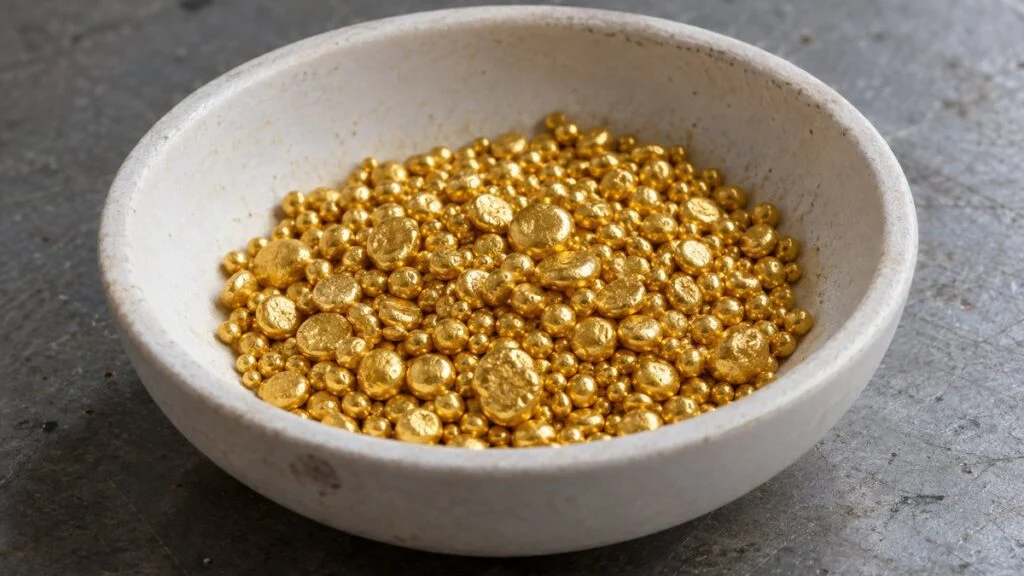
Picture a gold plating line in Penang. It runs on potassium gold cyanide (PGC), and the plant sells its gold-bearing scrap and spent plating solution to a recycler. Then the news arrives: Tanaka is building a refinery at Batu Kawan.
Your manager wants to know three things: whether your PGC changes, whether your scrap contract changes, and whether you have to requalify.
The short answer for now: nothing in the announcements changes your supply or your scrap contract today. The plant is scheduled to start in April 2029, and TANAKA has not published prices, accepted scrap types, or qualification timing. The site is built to recover and refine gold, not to mass-produce new materials from scratch.
This article separates what is confirmed from what is not and follows the gold through the planned loop. It then explains why a refiner change can trigger requalification and why the Basel Convention's e-waste rules matter. It ends with a checklist and an email you can send to TANAKA.
Contents
- What TANAKA Has Announced, and What It Hasn't
- Which Tanaka Is It? Sorting Out the Company Names
- What Does Not Change Before 2029
- How Scrap and Plating Waste Would Flow
- Why a Change of Refiner Can Trigger Requalification
- Why Basel's E-Waste Amendments Favor Local Processing
- Why Malaysia, and Why Now
- What to Ask TANAKA: Checklist and Email Template
- Limits of This Article
- FAQ
- Sources
What TANAKA Has Announced, and What It Hasn't
On October 21, 2026, TANAKA PRECIOUS METAL TECHNOLOGIES announced a joint venture, TANAKA MEP REFINERY SDN. BHD., with the Malaysian resource recovery company MEP Enviro Technology Sdn. Bhd.
(MEP). The groundbreaking took place on October 8 at Batu Kawan Industrial Park in Penang, with Penang Chief Minister Chow Kon Yeow and Japan's consul-general in Penang among the guests. Figure 1 sums up the main facts.
The company will take in recovered material, refine the gold, and ship it as material for electronics and semiconductor plants.
Investment figures come from Bernama and MIDA (October 2026). Everything else comes from TANAKA's October 21, 2026 press release.
Bernama also reports a site of three acres (about 1.2 hectares) and a built-up area of 45,000 sq ft (about 4,200 m²). The stated business scope goes beyond refining:
- Analysis of recovered material and refining to 4N
- Manufacture, import, export, and sale of precious metal products
- Trading, leasing, and storage of precious metal bullion
One date needs care. TANAKA says April 2029, while Bernama and the Malaysian Investment Development Authority (MIDA) report the first quarter of 2029. We use TANAKA's date here, but confirm it before you build it into a plan.
MIDA reports that Chief Minister Chow and TANAKA's chief operating officer call the site Malaysia's first 4N precious metal refining facility. We have not verified that claim independently. Annual capacity and headcount are not public, so you cannot yet size this plant against other refineries.
Which Tanaka Is It? Sorting Out the Company Names
Many people know Tanaka for gold bars and jewelry, and the names in circulation are confusing. The group reorganized on January 1, 2025, and some companies changed only their English names. That is why a 2022 document and a 2026 press release can name the same company differently.
The table below shows the names you are most likely to see on documents.
| Name today | Also seen as | What it does |
|---|---|---|
| TANAKA Precious Metals | 田中貴金属 (Tanaka Kikinzoku) | The group as a whole. Founded in 1885; consolidated sales of JPY 1,097.8 billion and 5,778 employees in fiscal 2025 (year ended December 2025) |
| TANAKA PRECIOUS METAL GROUP Co., Ltd. | – | Management control for the whole group; also the contact for press inquiries |
| TANAKA PRECIOUS METAL TECHNOLOGIES Co., Ltd. | Tanaka Kikinzoku Kogyo K.K. (English name until 2024); 田中貴金属工業 | The industrial precious metals company and the 66.7% shareholder in this joint venture |
| TANAKA ELECTRONICS CO., LTD. | Tanaka Denshi Kogyo K.K. (English name until 2024) | Group company under TANAKA PRECIOUS METAL TECHNOLOGIES, known for bonding wire |
| TANAKA ELECTRONICS SINGAPORE (PTE.) LTD. and TANAKA ELECTRONICS (MALAYSIA) SDN. BHD. | TES and TEM | Regional manufacturing bases, established in 1978 and 1994 (TEM in Penang) |
| TANAKA PRECIOUS METAL RETAILING Co., Ltd. | Tanaka Kikinzoku Jewelry K.K. (until 2024) | The retail side of the group; not a party to this joint venture |
| TANAKA MEP REFINERY SDN. BHD. | – | The new joint venture in Penang |
In practice, check your approved supplier list, material declarations, and contracts for the old names. Even the London Bullion Market Association (LBMA) used "Tanaka Kikinzoku Kogyo" in its March 2025 announcement. When the new plant comes up, ask which legal entity will invoice you and which site will issue the certificate of analysis.
What Does Not Change Before 2029
Treat the announcement as advance notice for planning, not as a change notice. Based on what TANAKA has published, four things stay as they are for now:
- Your commercial terms: TANAKA has announced no change to prices, contracts, or existing purchase routes.
- Your purchased materials: TANAKA has not said which existing products, if any, will move to gold from the new plant.
- The current refining route: Under the setup described in 2024, MEP collects and concentrates material in Malaysia, and TANAKA refines the concentrate in Japan.
- Your waste duties: The announcement does not change how your plant classifies, stores, or ships waste.
Asking early still makes sense, because material qualification takes time and schedules can move. A question sent now costs little and tells the supplier that you want to be informed.
How Scrap and Plating Waste Would Flow
In semiconductor and electronic component plants, gold mainly goes into the connections between the chip and the outside world and into contact finishes. TANAKA supplies bonding wire (ultra-fine metal wire that connects the chip to its terminals), plating technologies, and sputtering targets. Not all of that gold stays in the product, so scrap and spent solution still hold recoverable metal.
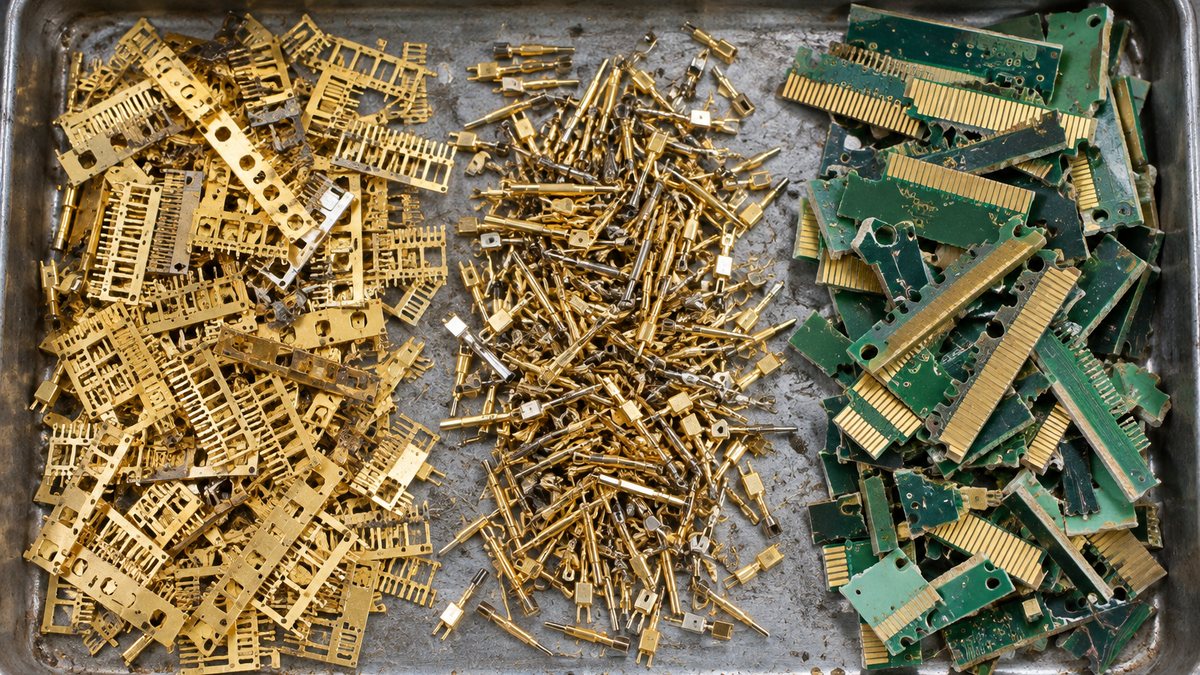
Recyclers treat this material as feedstock. Figure 2 shows the input types TANAKA has named in its releases and the planned output.
Process scrap and spent solution count as raw material because they still contain gold.
Input types come from TANAKA's 2022 and 2024 releases on other projects. The new company's accepted inputs have not been published.
4N means 99.99% pure, the grade used as feedstock for high-purity materials such as wire and targets. PGC, written KAu(CN)2, is the compound that supplies gold to a plating bath, and pure PGC is about 68% gold by weight.
It is used to gold-plate connector contacts and semiconductor packages. PGC is a toxic cyanide compound, so its handling, storage, and transport are governed by the supplier's safety data sheet and local regulations; this article does not cover handling.
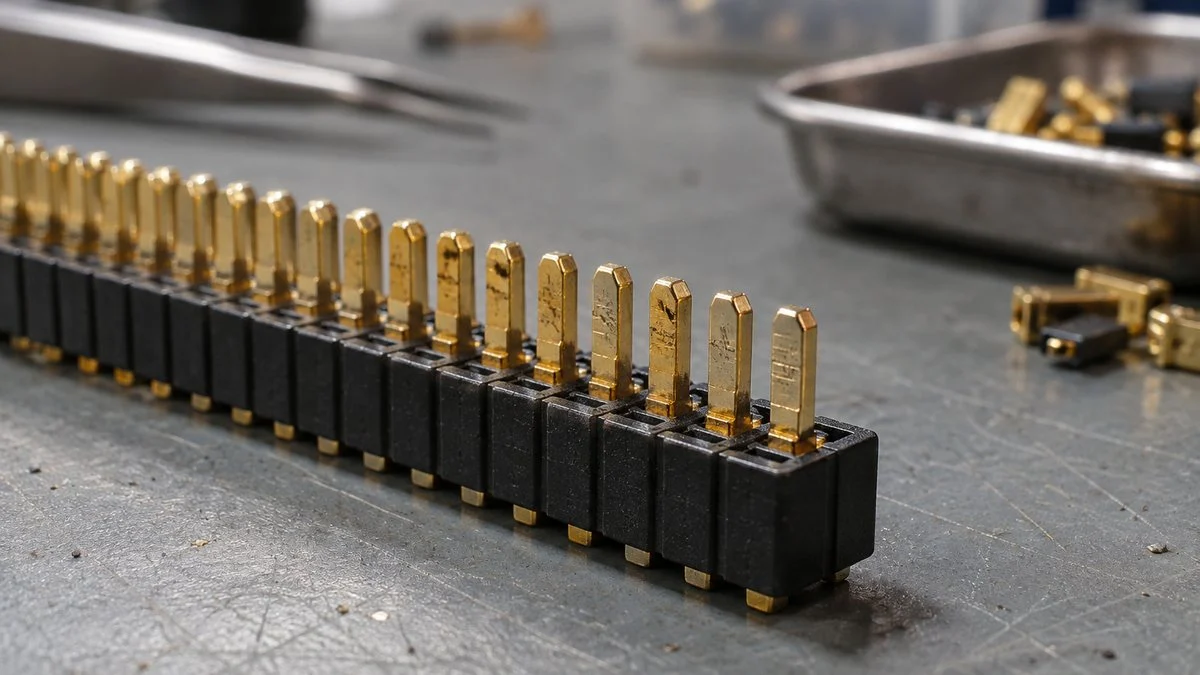
TANAKA is also working to use less gold, for example by replacing gold bonding wire with copper and by using three-layer nickel-palladium-gold plating that minimizes gold use. Recycling is the other half of that effort.
The split of work is clear. MEP preprocesses recovered material to concentrate the precious metal, and the new company analyzes and refines it. Figure 3 shows the planned loop.
Collection, preprocessing, refining, and shipment form one regional loop.
MEP was founded in 2005 and has 4 facilities in Malaysia, plus locations in Thailand, Vietnam, the Philippines, Singapore, and Hong Kong (TANAKA press release). The release does not say whether a plant receives its own gold back.
The two companies have worked together since August 2024, when TANAKA signed a technical assistance agreement at the opening of MEP's recovery plant in Bukit Minyak, Penang. Figure 4 compares that setup with the 2029 plan. The main change is where the concentrate gets refined.
The planned shift moves refining from Japan to Penang.
TANAKA has not said how much of the flow to Japan will be replaced.
For a scrap seller, this raises questions rather than answers. TANAKA says the new company will receive material preprocessed by MEP, but not whether a plant can deliver directly, and not whether plants outside Malaysia can take part. If you sell through another recycler today, nothing published requires you to switch.
Why a Change of Refiner Can Trigger Requalification
Purity alone may not settle the question. "4N" tells you the gold content, but the announcement gives no impurity limits or specification for PGC from the new plant. Your plating bath and your customer's approval depend on more than that one number, so a new material source usually calls for an evaluation.
Two separate notices can be involved: your supplier may notify you that a material now comes from a new source or site, and you may then have to notify your own customers. Each notice has its own timeline.
The common reference is J-STD-046, the customer notification standard for product and process changes, now at revision A (December 2025). It is usually summarized as written notice at least 90 days before the first shipment after a major change. It is a voluntary standard, so your purchase agreement or quality agreement decides what actually applies.
Published notices show how this plays out in practice. Diodes Incorporated, for example, issued an automotive product change notification (PCN) titled "Additional Qualified Plating Source – Automotive," with a 90-day minimum and a window for sample requests. Some automotive PCNs also attach a qualification matrix based on a ZVEI (German electrical industry association) guideline, which maps a change to specific tests instead of repeating the full qualification.
Whether a refinery change counts as "major" is not settled by the announcement. Do not assume the answer in either direction; agree on it with your supplier and your customer. Figure 5 shows what is confirmed and what is still open for each role.
The announcement sets the framework. Commercial and technical terms come later.
The right-hand column lists items not published as of the announcement.
If your customers ask for a Conflict Minerals Reporting Template, a new refinery also means a new line on your smelter list. The Responsible Minerals Initiative (RMI) publishes lists of conformant and active gold refiners, so check there and ask TANAKA about the new site's plans. We found no public statement on this.
Why Basel's E-Waste Amendments Favor Local Processing
The Basel Convention controls cross-border movements of hazardous and other wastes. Amendments in force since January 1, 2025 place hazardous e-waste under entry A1181 and non-hazardous e-waste under entry Y49, and both now fall under the Prior Informed Consent (PIC) procedure. Non-hazardous e-waste previously sat in an exempt entry, B1110.
Under PIC, an export needs the agreement of the receiving country first. Malaysia's Department of Environment (DOE) lists delays, heavy paperwork, and differing definitions among the challenges of that procedure. Refining closer to the source means fewer of those border steps, and TANAKA itself says e-waste is expected to be processed within the country or region where it arises.
"Local" does not mean simple, though. Before you plan around this, keep three cautions in mind:
- Definitions differ. TANAKA's 2024 release counts production scrap as e-waste, but the Basel Secretariat says classification is up to each Party. It treats scrap as e-waste where national law does, or where it goes to a listed disposal operation such as metal recycling.
- Plating liquid may sit under other entries. Basel's Annex I separately lists wastes from the surface treatment of metals and plastics (Y17) and inorganic cyanides (Y33). Your competent authority decides.
- Malaysia's rules may still change. In December 2025 the DOE said its policy and local law do not yet differentiate e-waste, with a main study planned for 2026–2027.
Plants elsewhere in ASEAN have one more point to check. The same DOE presentation says that importing hazardous waste for recovery or final disposal is prohibited, with limited exceptions for direct reuse or use as an alternative raw material, and only where the waste is not available in Malaysia. So a plant in Thailand or Vietnam should not assume it can ship hazardous gold-bearing scrap into Penang.
Exports from Malaysia have conditions too. The DOE allows them where the importing country has better technology, gets a higher recovery rate, or where Malaysia has no capable facility. A new domestic refinery could affect that last condition, but this is our inference, not a DOE statement, so raise it with the DOE or your licensed contractor.
Inside Malaysia, the Environmental Quality (Scheduled Wastes) Regulations 2005 set the waste codes. These entries are the ones most likely to come up in conversations about gold-bearing waste:
| Code | Description (summarized) | Where it may come up |
|---|---|---|
| SW 110 | Waste from electrical and electronic assemblies with listed components or contamination | E-waste, some scrapped assemblies |
| SW 105 | Galvanic sludges | Plating line sludge |
| SW 204 | Sludges containing listed metals, such as copper and nickel | Wastewater treatment sludge |
| SW 412 | Sludges containing cyanide | Cyanide-bearing sludge |
| SW 413 | Spent salt containing cyanide | Cyanide-bearing salts |
| SW 414 | Spent aqueous alkaline solution containing cyanide | Spent alkaline cyanide solutions |
Why Malaysia, and Why Now
The regulatory push is one of three reasons behind the investment. Figure 6 shows how they fit together.
A dense factory cluster, waste rules, and customer sourcing policies all point the same way.
13%: JETRO (December 2024). More than 300 plants: TANAKA press release (September 2024).
According to JETRO, the Japan External Trade Organization, Malaysia handles about 13% of the world's semiconductor packaging and test work, with Penang at the center. The government launched its National Semiconductor Strategy in May 2024, and E&E took 56% of approved manufacturing investment in 2023. More plants generate more process scrap, which is a reason to put a refinery close by.
On the customer side, global companies are pushing circular-economy programs, and TANAKA now promotes a one-stop service that covers collection, refining, and the manufacture of products from recycled precious metals. Gold is also a finite resource, and TANAKA names stable precious metal procurement as a goal. For a materials maker, a nearby refinery also serves as a source of metal.
At the groundbreaking, Chief Minister Chow said a local source shortens supply chains, speeds delivery, lowers cost, and helps keep production lines running in uncertain times. No figures have been published to back that up, so treat it as a stated aim rather than a commitment on your lead time or price.
TANAKA has taken this approach before. Its Taiwan unit has recovered and refined precious metals at Hukou, Hsinchu County, since 2005.
In 2022 the company announced a new building there for about JPY 3.5 billion, scheduled to start in the first half of 2025. It would make the plant's floor area about six times larger, finish processing inside Taiwan, and reduce import and export procedures.
TANAKA also stresses assay, the measurement of how much precious metal a lot contains, as a core part of recycling.
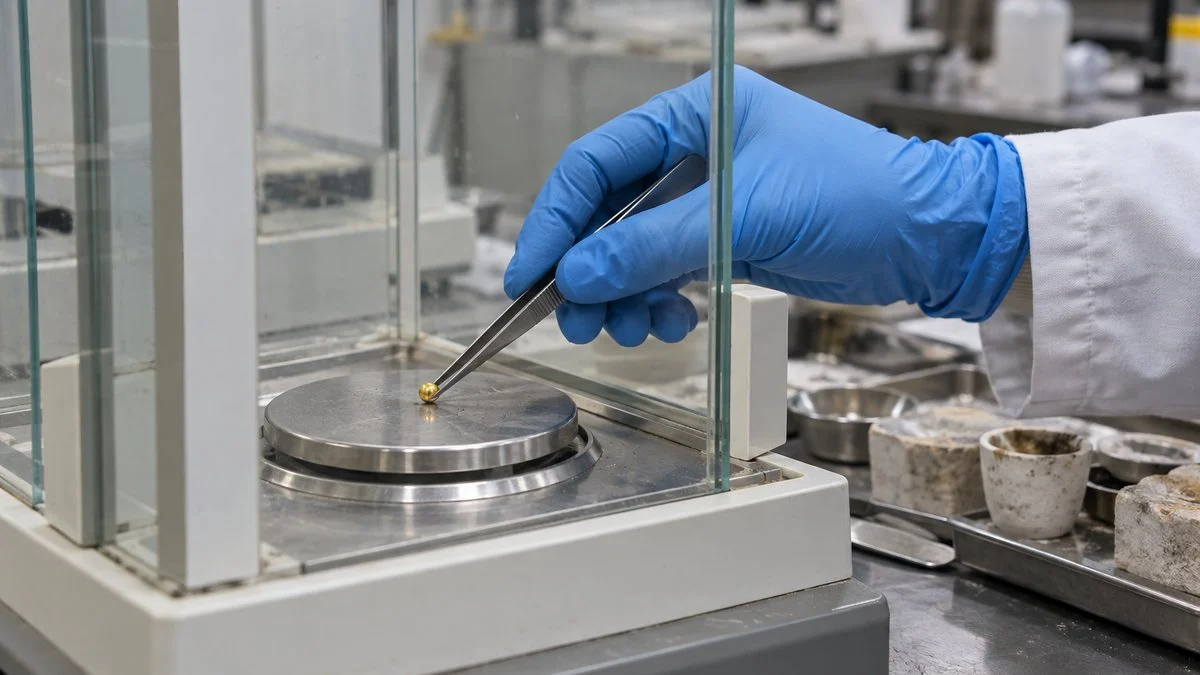
In 2022 TANAKA said it was one of five companies worldwide, and the only one in Asia, accredited as a Good Delivery Referee by both LBMA and the London Platinum and Palladium Market (LPPM).
LBMA named Tanaka among seven referees in March 2025, and TANAKA also cites ISO/IEC 17025 accreditation for assay. These credentials relate to TANAKA's existing analysis work, so ask how the new company's assay will connect to them.
Figure 7 puts the regional moves in order. A materials base came first, and recovery and refining followed.
Recovery and refining sites were added after the materials plants.
Dates from TANAKA press releases (July 2022, September 2024, April and October 2026).
What to Ask TANAKA: Checklist and Email Template
We found no published answer to the items below, so they are worth asking your TANAKA contact or your recycler directly. Pick the group that matches your role.
Purchasing
Start with who you will deal with and what changes commercially.
- Which legal entity will quote, invoice, and hold the contract?
- Will gold or PGC from the new plant replace, or run alongside, the current source?
- Will pricing or the contract form change, and when would you know?
- Is the April 2029 start firm? Reports also mention the first quarter of 2029.
Process Engineering
These questions decide whether the material can run in your process.
- What PGC grades and gold contents are planned?
- Which impurities will appear on the certificate of analysis, and at what limits?
- When can you supply evaluation lots, and how large are they?
- Will gold wire or other materials use 4N gold from this plant?
Quality
These questions set the notice period and the evidence you can expect.
- Will you issue a PCN for any switch of refinery or site, and how much notice will you give?
- What comparison data will you provide against current material?
- How will lot traceability work when feedstock is recycled?
- Will the site seek RMI or LBMA recognition, and on what timeline?
Scrap and Waste Sales
These questions cover what the plant takes and how you get paid.
- Which materials will be accepted: scrap, spent plating solution, sludge, or filters?
- Must everything go through MEP, or can a plant deliver directly?
- Can plants outside Malaysia take part, and who handles permits?
- How are lots sampled and assayed, can we witness it, and how are disputes resolved?
- Is settlement in metal or cash, and on what price date and deductions?
You can adapt this email for your first contact. TANAKA also has an inquiry form for industrial products if you do not have a sales contact.
Subject: TANAKA MEP REFINERY (Penang): Questions on Supply, Scrap, and Qualification
Hello [Name],
We use [PGC / gold wire, part number] at our [city] plant and sell gold-bearing [scrap / spent plating solution] through [company]. We read your October 21, 2026 announcement and would like to plan ahead. Could you tell us the following?
1. Will any material we buy from you come from the new plant? If so, from when?
2.Will you issue a PCN, and how much notice and comparison data can we expect?
3. When can you supply evaluation samples and a sample certificate of analysis?
4.Which scrap and solution types will the plant accept, and must they go through MEP?
5. How will lots be sampled, assayed, and settled?If these points are not decided yet, an expected date would still help us.
Best regards,
[Name, title, company]
Limits of This Article
This article relies on public releases, press reports, and government documents available through October 2026. It does not cover TANAKA's or MEP's internal plans, prices, or capacity, and the plant is not yet built, so dates and scope can change.
The waste rules here are a general guide, not legal advice or an operating procedure. The Malaysian points come from a DOE presentation and the 2005 regulation text, and we did not review each later amendment or other countries' national rules. Your environmental team, licensed contractor, and competent authority decide how a given waste is classified and shipped.
Our J-STD-046 summary comes from JEDEC's listing and secondary sources, not the standard's full text. Requalification needs vary by customer, product, and application, so your agreements take priority.
FAQ
When Will TANAKA MEP REFINERY Start Operating?
TANAKA says April 2029. Bernama and MIDA report the first quarter of 2029. When customers can actually use its 4N gold or PGC has not been published, and evaluation time would come on top of that.
Is Tanaka Kikinzoku Kogyo the Same as TANAKA Precious Metal Technologies?
Yes. Tanaka Kikinzoku Kogyo K.K. became TANAKA PRECIOUS METAL TECHNOLOGIES Co., Ltd. in English on January 1, 2025, while its Japanese name stayed the same. TANAKA Precious Metals refers to the group as a whole.
Can I Sell Gold Scrap Directly to the New Plant?
Not known yet. TANAKA says the company will receive material preprocessed by MEP. It has not said which scrap or solutions qualify or whether a plant can deliver without going through MEP.
Will Refining in Japan Stop?
TANAKA has not said so. Under the 2024 setup, MEP's concentrate goes to Japan, but how much of that flow moves to Penang is not public. Japan remains part of TANAKA's listed recycling network.
Do the Basel E-Waste Amendments Cover Production Scrap?
It depends on the country. Classification is up to each Party, and scrap counts as e-waste where national law treats it that way or where it goes to a listed disposal operation such as metal recycling. Confirm with your competent authority before you ship.
Sources
The facts in this article come from the documents below.
- Joint venture overview, shareholdings, scope, start of operations, MEP profile: TANAKA, "TANAKA and MEP to Establish TANAKA MEP REFINERY SDN. BHD." (October 21, 2026)
- Investment, site area, first-quarter 2029 timing, Chief Minister's remarks: Bernama (October 8, 2026); MIDA
- 2024 agreement, Japan refining route, Penang plants, e-waste definition: TANAKA press release (September 11, 2024; Japanese)
- Regional bases, product range, group sales and employees: TANAKA, SEMICON Southeast Asia 2026 release (April 28, 2026); Japanese version
- Company names and reorganization: TANAKA Precious Metals reorganization notice (ACN Newswire, August 2024)
- Taiwan expansion, input types, assay credentials: TANAKA Precious Metals (July 21, 2022)
- LBMA referees: LBMA, "New Referees of the Good Delivery Programme" (March 2025)
- Reduced gold use: Singapore Economic Development Board, reprint of NNA article (2026; Japanese)
- Malaysia's back-end share and investment approvals: JETRO (December 18, 2024; Japanese)
- Basel e-waste amendments: Basel Convention Secretariat, FAQs on the E-waste Amendments; E-waste overview; Ministry of the Environment, Japan (October 23, 2024; Japanese)
- Basel Annex I entries Y17 and Y33: Basel Convention Annexes I and VIII (NUS Centre for International Law copy)
- Malaysia's import and export policy, e-waste study: Department of Environment Malaysia, country update (December 2025)
- Malaysian waste codes: Environmental Quality (Scheduled Wastes) Regulations 2005
- J-STD-046: JEDEC listing; Utmel, "Semiconductor PCN Review Checklist"
- PCN example: Diodes Incorporated, PCN 2465 (July 2, 2020)
- PGC gold content: US Patent 5575900, "Gold plating solutions"
- Refiner lists: Responsible Minerals Initiative, Gold Refiners List
Original article in JapaneseThis guide is adapted from a MONOSCOPE article written for readers in Japan: 田中貴金属のマレーシア新工場|半導体の金をASEANで回収・精製する狙い
About the editor
 MONOSCOPE EditorFOUNDER & EDITOR
Spent about ten years at a plant equipment maker and a plant engineering company, proposing, designing, and commissioning equipment, then moved into web marketing. Now a web consultant for B2B manufacturers, helping them explain their products and technology. Licensed in Japan as an Energy Manager and a Third-Class Chief Electrical Engineer.
Has run an engineering blog since 2017 (500+ articles) and a Japanese YouTube channel with about 20,000 subscribers. Each English guide is written from the Japanese shop-floor point of view and checked against the cited standards.