Rapidus 2nm Mass Production: Funding and Supply Chain
Your VP asks whether Rapidus is worth the team's time, a Japanese tool maker asks you to quote a part for a fab in Hokkaido, or your fabless team wants a second source for a 2-nanometer (nm) design. All three situations lead to the same questions: will the fab start on time, will the money hold, and is there a way in for a company outside Japan?
Rapidus is a Japanese foundry, founded in August 2022, that plans to make 2nm logic chips at its IIM-1 fab in Chitose, on the northern island of Hokkaido. It has not started mass production. This guide uses government documents, company releases, and press reports available on October 30, 2026.
Here are the short answers:
- Timing: The target is the second half of Japan's fiscal 2027, which means October 2027 to March 2028. Tools and first transistors are in place, but yield and volume orders are not publicly proven.
- Funding: State money carries Rapidus through fiscal 2026. After that, the plan depends on annual budget approval and ¥2 trillion or more in bank loans that are still being negotiated.
- TSMC: TSMC already makes 2nm chips in volume. Rapidus is not trying to beat it on volume and is selling speed on custom chips instead.
- Suppliers: Parts usually reach the fab through tool makers and service companies, so start there. Rapidus has also stated a preference for domestic procurement.
Two conventions apply to the numbers below. Japan's fiscal year (FY) runs from April through March, so FY2027 means April 2027 to March 2028. Dollar amounts are rough conversions at ¥160 to the dollar, the rate implied by an October 2026 MLex report (¥400 billion, about $2.5 billion).
Contents
Rapidus at a Glance
Rapidus builds chips that customers design, rather than selling chips of its own. Its plan starts with fabless companies (chip designers without their own fabs) working on custom AI chips for data centers. It then extends to edge devices such as cars and robots.
The 2nm generation uses gate-all-around (GAA) transistors, in which the gate surrounds the current path on all four sides. Development began at IBM's research site in Albany, New York, and continues on the Chitose pilot line. Figure 1 shows the basic facts.
Prototyping is underway, and the company is preparing for mass production.
Based on METI's summary of the Rapidus implementation plan and Rapidus releases. METI and IPA are explained in the funding section below.
Is the FY2027 Mass Production Date Realistic?
The public evidence is split. Rapidus has built the fab, run extreme ultraviolet (EUV) lithography, and shown working 2nm test transistors. We found no published yield figures and no named customer with a signed volume order.
Watch the date format when you read English coverage. Rapidus often says "2027," and some reports say "the second half of 2027," but METI's plan says the second half of FY2027. Figure 2 uses the fiscal-year wording.
2026 is the year to turn prototype results into customers and production readiness.
Planned items are as of October 2026 and can change.
Shown So Far: Tools and First Transistors
Rapidus connected more than 200 tools at IIM-1 by June 2025. In July 2025, it announced prototype 2nm GAA transistors with confirmed electrical characteristics. An outside expert review in March 2026 rated both front-end and back-end progress as sufficient, and the government then approved the FY2026 plan and budget.
Company leaders say the schedule is holding. CEO Atsuyoshi Koike said in a Reuters report in October 2026 that preparations are on schedule, and chairman Tetsuro Higashi described the project on October 21 as "almost on schedule."
Still Open: Yield
Before production starts, the plan calls for raising transistor performance and yield to a level that can win customers on chip quality and cost. It specifically names defect control, including particles in the cleanroom. We found no published yield figure.
Nikkei xTECH, as cited by TrendForce, reported that the transistors shown in July 2025 did not yet meet performance expectations. Koike himself said in February 2026 that the company was still at the first stage of the climb, and one analyst told Reuters that stable around-the-clock operation is "extremely difficult."
Still Open: Customers
Rapidus says it is in talks with more than 60 potential customers. Koike said most are overseas, with many in high-performance computing, AI chips, and robotics. Higashi expects the first customers to be mostly US AI companies, but he named none.
Fujitsu and IBM have stated that they intend to use Rapidus for government-backed AI chip design projects. That is an intent to use the fab, not a volume order. As of early October 2026, Reuters-based reports said Rapidus had not named any firm with a signed order, and our search found none through October 30.
Signals to Watch
These public events will tell you more than any headline about the target date:
- General design kit release: It is planned for FY2026, so the deadline is March 2027.
- Customer test chips: Nikkei xTECH, cited by TrendForce, reported a plan to begin customer-designed 2nm test chips by late 2026.
- A named customer: Koike said in February 2026 that customers could make announcements in the second half of the year.
- Japan's FY2027 budget: The government's plan is usually finalized in late December.
- Bank loan closing: Look for about ¥400 billion in FY2027.
Will the Money Last? How Rapidus Is Funded
Reaching 2nm mass production will take more than ¥4 trillion (about $25 billion), according to METI's summary of the plan: about ¥2.6 trillion for R&D and about ¥1.6 trillion for production investment. The 1.4nm generation and beyond add at least ¥3 trillion ($19 billion), which brings the total to more than ¥7 trillion ($44 billion).
Three Japanese agencies appear in almost every funding story:
- METI (Ministry of Economy, Trade and Industry): the ministry that sets chip policy and requests the budgets.
- NEDO (New Energy and Industrial Technology Development Organization): a state R&D agency that pays Rapidus under research contracts.
- IPA (Innovation Platform Agency, Japan): a state agency, called the Information-technology Promotion Agency until June 2026. An amendment to the Act on Facilitation of Information Processing lets it invest in Rapidus and guarantee its loans.
Figure 3 shows where the money comes from. The balance is moving from state research contracts toward private equity and loans.
Public money has carried the technical risk so far. Private money depends on progress.
Based on METI documents from September and October 2026. Planned amounts are not final.
Phase 1: NEDO Research Contracts
NEDO contracts have supplied most of the money so far. METI has also requested about ¥300 billion for FY2027, which would bring the total to about ¥2.6 trillion ($16 billion) by our calculation. The work covers front-end performance and yield, plus advanced packaging.
Because these are research contracts, NEDO owns the fab and tools bought with the money. After the contract ends around October 2027, METI plans for NEDO to transfer those assets to IPA at no charge, and for IPA to contribute them to Rapidus in exchange for shares. The finance ministry's panel materials point out that these assets depreciate quickly.
Phase 2: Government Equity and the Golden Share
IPA invested ¥100 billion on February 27, 2026, alongside ¥167.6 billion from 32 companies, more than the roughly ¥130 billion first expected. It added ¥150 billion on June 5.
METI told a finance ministry panel on October 19 that it wants ¥400 billion more over FY2027–29, which would take total government equity to ¥650 billion ($4.1 billion). Each year's amount needs approval.
The government holds three kinds of shares:
- A golden share: a special share with a veto limited to major management decisions.
- Voting preferred shares: only the minimum votes needed to be the largest shareholder. METI put the voting stake at 11.5% after the February investment.
- Nonvoting preferred shares: these convert in a defined emergency, taking the state to two-thirds of the votes or as close as possible.
Emergency triggers include a strong likelihood of insolvency within three years despite recovery efforts, top management being unable to serve for a long period, and serious misconduct such as falsified accounts. These terms protect the state's position. They do not promise any supplier a volume or any customer a capacity allocation.
Phase 3: Private Loans, the Real Test
The plan calls for ¥2 trillion or more ($12.5 billion or more) from private lenders, starting with about ¥400 billion ($2.5 billion) in FY2027. Japan's Chemical Daily reported that FY2027 target on September 24, 2026.
METI has requested ¥32 billion ($200 million) as a reserve so that IPA can guarantee those loans. It also says Rapidus needs an equity ratio of about 40% to borrow, which is why the government equity comes first.
The lenders' commitment is not final. METI's October 2026 document says private financial institutions issued a nonbinding letter of intent for ¥2 trillion in 2025, and that terms were still being negotiated. Private equity also has a long way to go: ¥167.6 billion raised against a goal of about ¥1 trillion.
Be careful with "¥400 billion" in headlines, because the figure refers to three different things:
- About ¥400 billion in private loans needed in FY2027
- ¥400 billion in new government equity planned for FY2027–29
- About ¥400 billion in cumulative government equity through FY2027, the figure used in September 2026 (¥100 billion + ¥150 billion + ¥150 billion)
The table below puts the pieces in order. At ¥160 to the dollar, ¥100 billion is about $625 million.
| Source | Through FY2025 | FY2026 | FY2027 | FY2028–29 |
|---|---|---|---|---|
| NEDO contracts | About ¥1.7 trillion | ¥631.5 billion | About ¥300 billion (requested) | Not shown |
| Government equity | ¥100 billion | ¥150 billion | ¥150 billion (planned) | ¥150 billion + ¥100 billion (planned) |
| Private equity | ¥167.6 billion | None shown | Goal: about ¥1 trillion overall | |
| Private loans | None | None | About ¥400 billion (goal) | Goal: ¥2 trillion or more overall |
| Loan guarantee reserve | None | None | ¥32 billion (requested) | Not shown |
| Main milestone | Pre-release design kit | General design kit | 2nm mass production | Advanced packaging (FY2028), positive operating cash flow (FY2029) |
The Bottom Line on Funding
State funding is in place through FY2026. From FY2027, the plan needs annual approvals, signed loans, and far more private equity. Investors are watching technical and customer progress, and TrendForce, citing Nikkei xTECH, wrote in March 2026 that many remained in "wait-and-see mode."
Figure 4 shows how the open risks connect. If yield or customers slip, the private money becomes harder to raise.
Technology, customers, and money all depend on one another.
Rapidus vs. TSMC: What Is Actually Different
TSMC is ahead on schedule. Its website says 2nm (N2) volume production started in the fourth quarter of 2025, and a METI document notes reports that its 2026 capacity is fully booked. Koike said in February 2026 that Rapidus will put speed ahead of mass production, which positions it for many custom chips rather than high volumes of one design.
This table compares only the points we could verify:
| Point | Rapidus | TSMC |
|---|---|---|
| 2nm status | Pilot line. Mass production targeted for the second half of FY2027 | N2 volume production since Q4 2025 |
| Track record | Founded in 2022, no manufacturing track record (Reuters) | Omdia expects it to keep the majority of the market (Reuters) |
| Selling point | Short turnaround on custom chips | Established volume production |
| 2026 capacity | No volume production yet | Reported to be fully booked (METI document citing reports) |
Single-Wafer Processing and Short TAT
Rapidus plans to process wafers one at a time across all of its front-end steps, an approach it calls fully single-wafer processing, and to pair this with a new transport system. It says this will shorten prototyping and improvement cycles. The term for that cycle is turnaround time (TAT).
In FY2026, Rapidus is installing and validating the equipment, transport, and production management for its short-TAT system. We found no published cycle-time figure, so ask for one in writing and ask how it is defined.
What Fabless Engineers Should Check
Rapidus estimates that 2nm supply will fall about 10–30% short of global demand in FY2030. That is the company's own estimate. An Omdia analyst told Reuters that TSMC will keep most of the market, but that there are plenty of customers in the remaining share, which he put at about 20%, who cannot get capacity from TSMC.
Shortage or not, one executive told Reuters that a company already using TSMC "can't switch everything to Rapidus." Three practical points deserve early attention:
- Process design kit (PDK): This is the set of design rules and models that customers use to design chips. The pre-release version went to early customers at the end of 2025, and the general release is planned for FY2026. Confirm which version you would design against.
- Design partners: On October 5, 2026, Rapidus announced Rapidus CORE, an ecosystem framework. Its first 17 Design Solution Associates include Cadence and Synopsys, plus HCLTech, Infosys, MosChip, Wipro, GreatAsic, Infinecs, Oppstar, and SkyeChip. You may find one of them an easier first contact.
- Price: After a wafer price from a Koike seminar was reported in July 2026, Rapidus said that figure was a mass-production assumption and not a selling price. It said prices vary with product specifications and exchange rates, so only a quote will settle this.
Where Can Overseas Suppliers Fit?
METI's summary of the plan says Rapidus will actively pursue domestic procurement. That is a preference, not a ban. Rapidus's Procurement Policy, dated April 1, 2026, speaks of partnerships with leading global partners in design, equipment, and materials, and ASML of the Netherlands already supports the fab from Chitose.

A METI document also points out that Japan is strong in manufacturing equipment and materials. Expect established Japanese competitors in those fields. Demand falls into the five areas in Figure 5.
Much of the trade runs through tool makers and service companies rather than Rapidus itself.
MONOSCOPE's own grouping. It does not show which companies have orders.
Tool Parts and Service: Usually Through Tool Makers
If you make vacuum parts, fittings, or jigs, your customer is likely to be a tool maker or service company rather than Rapidus. Replacement and modified parts are often supplied to the tool maker's quality standards, so its purchasing department is a likely first contact.
Expect it to judge you on quality, cost, and delivery (QCD), and to compare you with Japan's many niche parts makers, some of which hold high global shares.
Service is a long-term need. ASML told Nikkei xTECH that EUV requires support 24 hours a day, 365 days a year, and its Chitose office has grown from about 25 people at its 2024 opening to about 50, according to Nikkei as cited by TrendForce, with further increases planned. ASML and Tokyo Electron both have offices in the building connected to Chitose Station, Nikkei reported.
Materials and Consumables: Direct Supply Is Possible
Unlike tools, materials are consumed continuously after production starts, and direct supply to the fab is possible. The February 2026 investors include JX Advanced Metals, FUJIFILM, Dai Nippon Printing, Kyocera, Ushio, and Furukawa Electric. An investment does not guarantee an order, but it shows that these suppliers are close to the project.
A fab in Japan also makes it easier for Japanese makers to ship evaluation samples and align on quality locally, so plan how you will match that from overseas.
Packaging: A Newer Entry Point
Rapidus plans to handle back-end work too. Its Rapidus Chiplet Solutions (RCS) site, inside Seiko Epson's Chitose plant, began full operation in April 2026, and advanced packaging production is planned for FY2028. In December 2025, it prototyped a redistribution-layer interposer panel measuring 600 mm (about 24 in) square.
Large panels can bring new requirements for substrate materials, handling, and inspection. If you sell in those fields, follow the evaluation and adoption activity as production nears.
Facilities and Logistics: Watch the Second Fab
Hokkaido Shimbun, a regional newspaper, reported in November 2025 that Rapidus may start building a 1.4nm fab next to the first one as early as FY2027. If that happens, construction and facilities work would continue after 2nm production begins. The February 2026 investors also include Hokkaido Electric Power, Nippon Express, and fire-protection maker Nohmi Bosai.
Chitose: Who Is Already There
Supplier activity around the fab keeps growing. Reports also say the mix is widening from tool makers to materials and design companies. Figure 6 shows the reported counts.
More companies are considering a move than have made one so far.
December 2024: Nikkei. July 2026: Hokkaido Shimbun. The reports may count companies differently, so do not treat this as a precise trend.
Entry is not easy, even for local firms. Hokkaido Shimbun reported in April 2026 on a local dairy-equipment maker that was still undecided after a support agency suggested using its welding skills in chip work. Any new supplier faces the same three questions:
- Can you meet the quality assurance and cleanliness requirements?
- Can you afford the required equipment investment?
- How far will production actually scale?
For a foreign company, the Japan External Trade Organization (JETRO) says its Hokkaido office works with the Hokkaido Government to offer networking and business support to international chip companies. It is a reasonable place to start if you are considering a local presence.
Cleanliness Requirements: What Is Known
We found no public Rapidus limit for particles or metal contamination on supplied parts. The plan commits only to thorough defect control. Particles and contamination from tool parts, piping, and consumables can lower yield, so expect requirements to arrive through your buyer's specification.
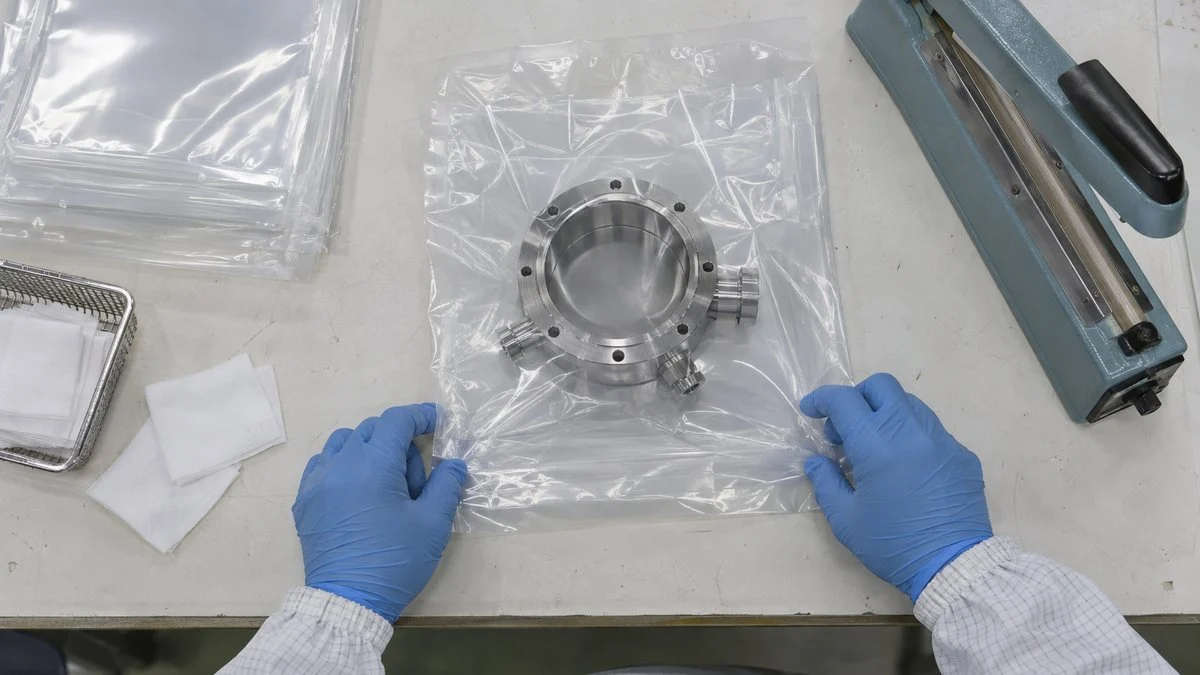
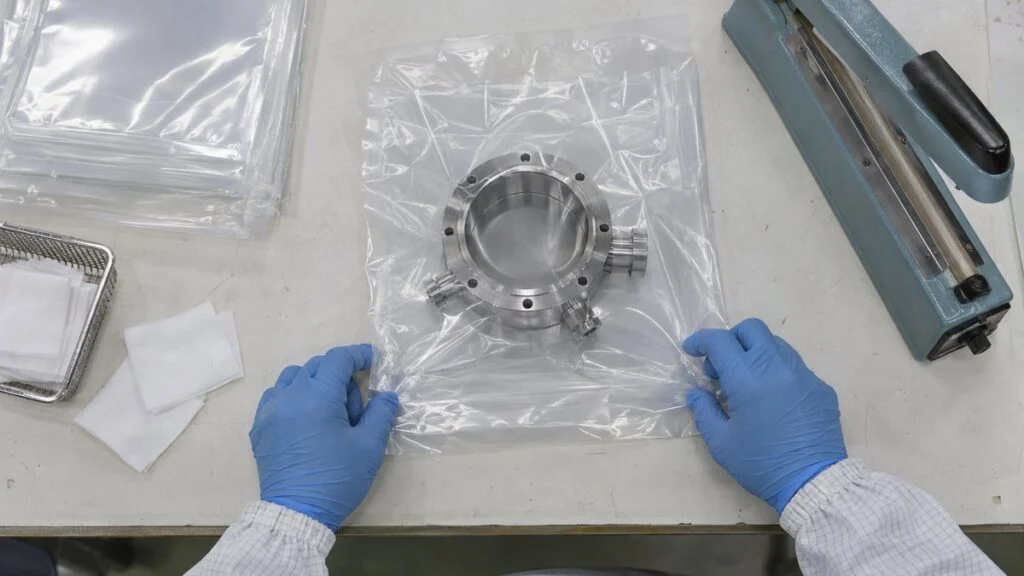
Parts for leading-edge fabs are typically controlled for dimensional accuracy, surface particles and metal contamination, and packaging after cleaning. Your buyer may also cite SEMI standards, such as these two:
- SEMI F19: the surface condition of wetted surfaces on stainless steel components
- SEMI F57: high-purity polymer materials and components for ultrapure water and liquid chemical distribution
We list these only as examples. Whether they or an in-house specification apply to your part is for the buyer to confirm.
Plan for Schedule Changes
Dates and volumes can move with yield, customers, and funding, and the chip industry also has its own demand cycles. One option is to build cleaning, packaging, and traceability capability that can also serve other fabs and tool makers, rather than tying it to Rapidus alone. Any investment decision is yours to make.
Checklist: Questions for the Japanese Side
Use this list with a tool maker, service company, or trading company before you quote or invest. Some answers will require a nondisclosure agreement (NDA).
- Buyer: Who places the order: Rapidus, a tool maker, a service company, or a trading company?
- Use: Which tool, process step, or area is the part or material for?
- Specification: What are the limits for particles, metals, surface finish, cleaning, and packaging? Do they come from SEMI standards or an in-house specification?
- Verification: Which test methods, sample sizes, and laboratories are accepted?
- Qualification: What are the steps for samples, evaluation time, and audits? What are the change-notification rules?
- Volume: Is the number a firm order, a forecast, or a planning figure? Does "2027" mean the calendar year or FY2027?
- Schedule risk: If production moves, what happens to minimum quantities, cancellations, and tooling costs?
- Delivery: Who acts as importer? Is stock or local service in Japan required, and what response time is expected?
- Documents: Which documents must be in Japanese?
- Policies: Which information security, environmental, and human rights requirements apply? Rapidus publishes a Procurement Policy, a Human Rights Policy, and an Anti-Corruption Policy.
Fabless teams should add a separate list for a Rapidus or design-partner discussion:
- Which PDK version is available to us now, and through which route?
- When can we run test chips, and on what schedule?
- What TAT do you commit to, and from which step to which step is it measured?
- What yield data can you share under NDA?
- How is the price calculated, what currency is it quoted in, and what order volume does it assume?
- How is capacity allocated once production ramps up?
- Who handles packaging and testing, and where?
Template: English Inquiry Email
Adapt this to your company and send it to a tool maker's purchasing department or your trading partner. The Rapidus website has a general Contact page, but we found no public supplier registration page. Everything in brackets is a placeholder.
Subject: Supplier inquiry: [part or material] for semiconductor equipment in Chitose
Dear [Name],
We are [company], a [country]-based maker of [product]. We supply [industry or customer type], and we hold [certifications]. We would like to learn whether our [product] could support your work related to Rapidus's IIM-1 fab in Chitose.
Could you help us with the following?
- The right purchasing contact for this category
- Your supplier qualification steps and expected timeline
- Applicable cleanliness, contamination, and packaging specifications (we can sign an NDA)
- Whether expected volumes are firm or planning figures, and whether dates are by calendar or fiscal year
We have attached a one-page company profile and a product data sheet. We can arrange a short online meeting at a time convenient for you.
Best regards,
[Name, title, company, email]
Limits of This Guide
- Information is current to October 30, 2026. Budget requests, loans, and dates can change, and the FY2027 budget is not final.
- Actual contract terms, supplier specifications, capacity, and yield are not public. "We found no figure" means only that our search did not find one.
- Some details come from press reports or from secondary reports of Japanese articles, and those are attributed in the text. Confirm anything important with the source or your counterpart.
- Dollar amounts are rough conversions at a single rate.
- Whether to invest, quote, or design for Rapidus is a decision for your own management. Export-control and trade-compliance questions belong with your compliance team. This guide is not financial or legal advice.
FAQ
When Will Rapidus Start 2nm Mass Production?
The plan says the second half of FY2027, which runs from October 2027 to March 2028, at IIM-1 in Chitose. The company said in October 2026 that it is on schedule, but the date depends on yield, customers, and funding.
How Is Rapidus Funded?
So far, mainly by state research contracts through NEDO, about ¥2.3 trillion through FY2026 by our calculation. Government and private equity add ¥250 billion and ¥167.6 billion. The next stage depends on a planned ¥2 trillion or more in bank loans, partly guaranteed by the state, and on about ¥1 trillion in private equity.
What Is the Government's Golden Share in Rapidus?
It is a special share, held through IPA, with a veto limited to major management decisions. The government otherwise keeps its normal voting stake low (11.5% after the February 2026 investment) and can raise it to about two-thirds in a defined emergency.
Does Rapidus Have Customers Yet?
It has more than 60 potential customers in talks, and Fujitsu and IBM have stated an intent to use it for government-backed design projects. We found no announced volume order as of October 30, 2026.
How Can a Foreign Supplier Sell to Rapidus?
Start by working out your route. Tool parts usually go through the tool maker's purchasing department, while materials and consumables may be supplied directly. We found no public supplier registration page, so a trading partner, a tool maker, or JETRO's Hokkaido office may be a practical first contact.
Sources
- Funding plan, ¥400 billion in equity, ¥2 trillion loan plan and letter of intent, share design, customer progress, Design Solution Associates: METI briefing to the Fiscal System Council panel, Document 2-1 (October 19, 2026, Japanese)
- FY2027 loan report: Chemical Daily (September 24, 2026, Japanese)
- Equity plan by year: MLex, "Japan's METI seeks more investment in Rapidus" (October 20, 2026)
- Implementation plan, investment totals, cash flow targets, technology and customer plans: METI, summary of the Rapidus implementation plan (Japanese)
- FY2027 requests, ¥32 billion reserve, 40% equity ratio, transfer of assets: METI, Next-Generation Semiconductor Subcommittee, 10th meeting, Document 4 (September 2026, Japanese)
- Voting stake, CEO press conference, competitive landscape: METI, Next-Generation Semiconductor Subcommittee, 8th meeting, Document 3 (April 3, 2026, Japanese)
- Selection under the law: METI news release (November 21, 2025, Japanese)
- February 2026 funding and investors: Rapidus, "Rapidus Secures 267.6 Billion Yen in Funding" (February 27, 2026)
- June 2026 investment: Rapidus release (June 5, 2026, Japanese)
- Prototyping history: Rapidus release (July 18, 2025)
- FY2026 plan: Rapidus, "NEDO Approves Rapidus' FY2026 Plan and Budget" (April 2026)
- Analysis center and RCS: Rapidus release (April 11, 2026, Japanese)
- Fab location and EUV tool: Rapidus, IIM page
- Wafer price report: Rapidus statement (July 9, 2026, Japanese)
- Supplier policy: Rapidus, Procurement Policy (April 1, 2026)
- Customer search and analyst comments: Reuters via Khaleej Times (October 7, 2026); The Next Web (October 7, 2026)
- Chairman's October remarks: CloudNews, citing Reuters (October 2026)
- Investor sentiment: TrendForce, citing Nikkei xTECH (March 2, 2026)
- Test chips and July 2025 transistor performance: TrendForce, citing Nikkei xTECH (March 30, 2026)
- TSMC N2 status: TSMC, 2nm technology page
- ASML in Chitose: TrendForce, citing Nikkei (September 4, 2026); Nikkei xTECH (March 28, 2025, Japanese)
- Tool makers near Chitose Station and the December 2024 count: Nikkei (December 18, 2024, Japanese)
- Chitose company counts: Hokkaido Shimbun (July 28, 2026, Japanese)
- Barriers to entry: Hokkaido Shimbun (April 7, 2026, Japanese)
- Second fab: Hokkaido Shimbun (November 25, 2025, Japanese)
- Support for foreign companies: JETRO (January 27, 2025)
- IPA's English name: IPA, brand page
- SEMI standards: Swagelok catalog citing SEMI F19; SEMI store listing
Original article in JapaneseThis guide is adapted from a MONOSCOPE article written for readers in Japan: ラピダス2nm量産はどこまで来たか|資金計画と国内サプライヤーへの影響
About the editor
 MONOSCOPE EditorFOUNDER & EDITOR
Spent about ten years at a plant equipment maker and a plant engineering company, proposing, designing, and commissioning equipment, then moved into web marketing. Now a web consultant for B2B manufacturers, helping them explain their products and technology. Licensed in Japan as an Energy Manager and a Third-Class Chief Electrical Engineer.
Has run an engineering blog since 2017 (500+ articles) and a Japanese YouTube channel with about 20,000 subscribers. Each English guide is written from the Japanese shop-floor point of view and checked against the cited standards.