Kawasaki’s 50 t/day Hydrogen Liquefaction Plant Explained
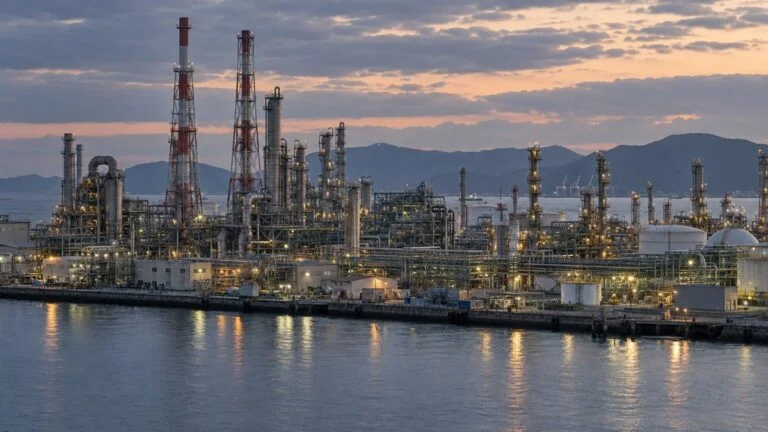
On October 19, 2026, Kawasaki Heavy Industries (KHI) announced that it has started building a hydrogen liquefaction plant with a capacity of 50 metric tons per day at the Kawasaki LH2 Terminal in Ogishima, Kawasaki City, near Tokyo. The plant is scheduled for completion at the end of 2028 and, after commissioning, will be used from 2030 to demonstrate a commercial liquefied hydrogen (LH2) supply chain.
If you work in plant engineering, EPC, procurement, or cryogenic equipment, the headline number raises two questions. How big is 50 tons per day compared with the liquefiers already running in Japan and elsewhere? And where in an LH2 supply chain would your equipment, your engineering hours, or your bid actually fit?
This guide answers both. It compares the plant's capacity with other liquefiers, walks through the terminal from receiving to shipping, explains the Japanese organizations behind the project, and ends with a checklist, a question list, and an inquiry email template for suppliers who want to take part in Japanese LH2 projects.
Contents
- Kawasaki's Ogishima Hydrogen Liquefaction Plant at a Glance
- How Big Is 50 Tons per Day? Comparing Hydrogen Liquefier Capacity
- Why Liquefy Hydrogen at All?
- Inside an LH2 Terminal: Receive, Liquefy, Store, Ship
- Who's Behind the Project: NEDO, the GI Fund, and JSE
- Inside the Liquefier: Where Equipment Suppliers Fit
- How Kawasaki's Liquefiers Have Grown
- What Will Decide Whether It Pays Off
- What to Check Before Supplying a Japanese LH2 Project
- Limits of This Article
- FAQ: Kawasaki's Hydrogen Liquefaction Plant
- Sources
Kawasaki's Ogishima Hydrogen Liquefaction Plant at a Glance
The plant is part of the Green Innovation Fund (GI Fund) run by Japan's New Energy and Industrial Technology Development Organization (NEDO). Within the fund's "Large-scale Hydrogen Supply Chain Establishment" project, it belongs to the theme "Liquefied Hydrogen Supply Chain Commercialization Demonstration."
The liquefier will sit inside the Kawasaki LH2 Terminal, which Japan Suiso Energy, Ltd. (JSE) is building.
In other words, it is not a stand-alone factory but one stage of a terminal that receives hydrogen, liquefies it, stores it, and ships it out by sea or by truck. The key points of the announcement are summarized below.
Capacity, location, completion date, and purpose, as stated in the announcement.
Source: Kawasaki Heavy Industries news release (October 19, 2026). The investment amount has not been disclosed.
Note that completion, commissioning, and the demonstration happen at different times. The plant is finished at the end of 2028, its performance is verified in commissioning, and then the demonstration from 2030 tests whether the whole supply chain works. NEDO materials place full-scale deployment, such as supplying power plants, in fiscal year 2030 and later. (Japan's fiscal year runs from April to March, so FY2030 starts in April 2030.)
How Big Is 50 Tons per Day? Comparing Hydrogen Liquefier Capacity
The scale becomes clear when you line 50 t/day (metric tons per day) up against other liquefiers. The chart below includes Japanese reference points from the source article (the previous Japanese maximum, KHI's 2020 commercial liquefier, and a planned plant at the Chiba refinery) and two large plants outside Japan that we could verify in public sources.
Ogishima is more than three times Japan's previous publicly announced maximum, but smaller than the largest plant in South Korea.
All values are rated or planned liquefaction capacity, not actual output, and the plants differ in purpose and operating status. Sources: KHI news releases (October 19, 2026 and June 10, 2020); Cosmo Energy Holdings and Iwatani announcements for Chiba (via the Japanese edition of MONOSCOPE); The Korea Economic Daily (May 8, 2024) for Incheon (three units of 30 t/day; the total is our sum); Linde (July 15, 2021) for La Porte. This is not a complete list of liquefiers worldwide.
KHI said its 5 t/day liquefier launched in 2020 produces enough fuel for about 1,000 fuel cell vehicles (FCVs) per day. The Ogishima plant puts ten times that capacity on one site, and it is far ahead of the 11.6 t/day Chiba plant planned for around the same time.
The 50 t/day figure is not a single machine, however. According to NEDO's July 2026 results briefing, the demonstration's liquefaction facility consists of two 25 t/day liquefiers. Per unit, that is in the same range as the 30 t/day units at Incheon and the 30+ t/day plant at La Porte.
The same NEDO material sketches a future concept with liquefaction plants of about 100 t/day on the exporting side, outside Japan, from FY2030 onward. So 50 t/day is the largest in Japan, but for a commercial international supply chain it is still demonstration scale, a step on the way to larger plants.
Why Liquefy Hydrogen at All?
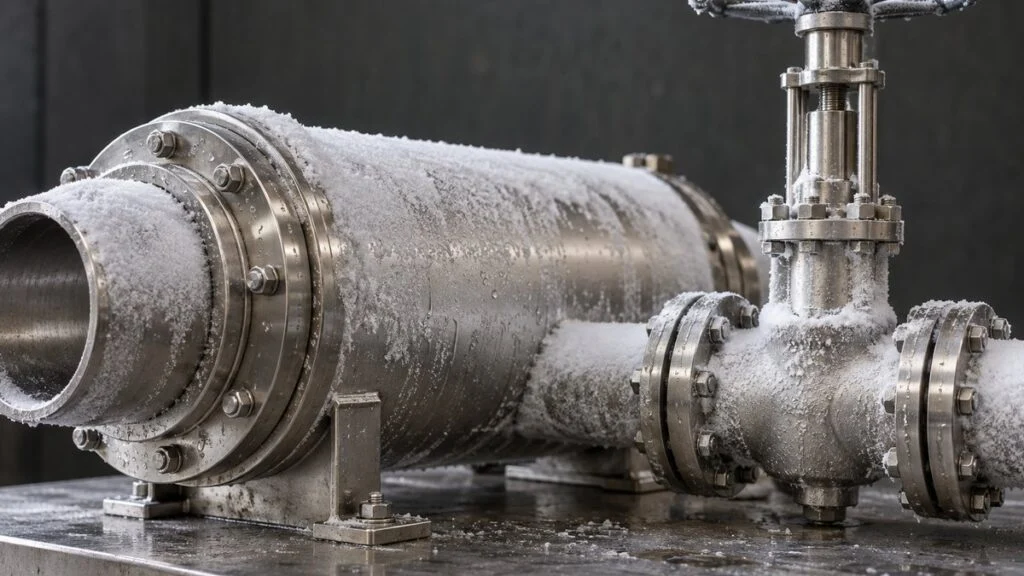
Hydrogen becomes a liquid at −253°C (−423°F), and its volume shrinks to about 1/800 of its gaseous volume. That density makes liquefaction well suited to storing and shipping large amounts of hydrogen over long distances.
Natural gas follows the same logic: it is cooled to about −162°C (−260°F) and shipped as LNG, according to Japan's Agency for Natural Resources and Energy. Liquid hydrogen is handled at a temperature roughly 90°C (about 160°F) colder than LNG.
Cooled to −253°C, the same amount of hydrogen fits in a much smaller container.
Source: KHI news release (October 19, 2026). Container sizes are not drawn to scale.
Liquefaction has two costs. Cooling hydrogen to cryogenic temperature takes a lot of electricity, and during storage, heat leaking into the tank slowly boils off part of the liquid.
That is why liquefier efficiency and the insulation performance of tanks and piping drive the cost of delivered hydrogen. It is also why KHI's announcement stressed that the plant will achieve world-class liquefaction efficiency compared with facilities of similar size.
At the receiving end, the liquid is vaporized again and used as fuel for power plants and factories or for fuel cells. Liquid is the form for transport; at the point of use, hydrogen normally goes back to gas.
Inside an LH2 Terminal: Receive, Liquefy, Store, Ship
The demonstration covers far more than the liquefier. According to NEDO materials, the Kawasaki LH2 Terminal will also include:
- A 50,000 m³ (about 13 million US gallons) liquefied hydrogen storage tank and LH2 pumps
- Compressors and vaporizers that handle boil-off gas (BOG), the hydrogen that evaporates naturally inside the tank
- Ship loading equipment (loading arms) and truck loading facilities
What makes the terminal notable is that liquefaction, storage, and shipping can all be tested on one site. The flow below shows how the pieces connect.
Each stage brings its own equipment and its own suppliers.
Based on NEDO results briefing 2026, presentation e-05 (JSE and ENEOS, July 21, 2026) and KHI news release (October 19, 2026). Simplified; not a process flow diagram.
One point is easy to miss: the hydrogen liquefied in the demonstration comes from inside Japan. The plan is to pipe it from a domestic hydrogen producer to the terminal, liquefy and store it at Ogishima, and run voyage trials with a 40,000 m³ LH2 carrier. Importing hydrogen made overseas belongs to the later concept.
The boxed lower row is the demonstration through FY2030; the upper row is the deployment concept for FY2030 onward.
Source: NEDO results briefing 2026, presentation e-05 (JSE and ENEOS, July 21, 2026). Overseas production is presented as a concept combining natural gas with carbon capture and storage (CCS).
Responsibilities and schedules also differ by facility. KHI builds the liquefaction plant, JSE builds the terminal and the 50,000 m³ tank, and KHI builds the carrier under a shipbuilding contract with JSE.
The liquefaction plant joins a terminal project that has been under construction since 2025.
Sources: NEDO results briefing 2026, presentation e-05 (July 21, 2026); KHI news release (October 19, 2026).
For KHI, Ogishima is the step after its demonstration in Kobe. The Suiso Frontier, the world's first LH2 carrier, built by KHI, returned to Kobe from Australia with a cargo of liquid hydrogen in February 2022, completing an international Japan–Australia transport demonstration by the HySTRA research association. Ogishima builds on that experience by testing the technology with a terminal and liquefier closer to commercial scale.
Who's Behind the Project: NEDO, the GI Fund, and JSE
Japanese energy projects often involve several organizations at once, and the roles are not obvious from outside. The table below summarizes who does what in this project, based on the announcements cited in this article.
| Organization | What it is | Role in this project |
|---|---|---|
| NEDO (New Energy and Industrial Technology Development Organization) | Japanese national R&D agency that funds energy and industrial technology development | Runs the Green Innovation Fund that supports the demonstration |
| Green Innovation Fund (GI Fund) | Government fund for decarbonization technologies, managed by NEDO | The "Large-scale Hydrogen Supply Chain Establishment" project has a total budget ceiling of JPY 321.12 billion |
| Japan Suiso Energy, Ltd. (JSE) | Company carrying out the LH2 supply chain demonstration ("suiso" means hydrogen) | Builds the Kawasaki LH2 Terminal and the 50,000 m³ tank; ordered the LH2 carrier from KHI; co-presented the NEDO briefing with ENEOS |
| Kawasaki Heavy Industries (KHI) | Japanese heavy machinery, shipbuilding, and aerospace manufacturer | Builds the liquefaction plant and the 40,000 m³ carrier |
| HySTRA | Technology research association behind the earlier Japan–Australia demonstration | Ran the 2022 Suiso Frontier voyage that preceded Ogishima |
The GI Fund's hydrogen supply chain project targets a hydrogen supply cost of JPY 30/Nm³ in 2030 and JPY 20/Nm³ or less in 2050. That target covers the entire chain from production through shipping and receiving, not liquefaction alone.
Nm³ (normal cubic meter) is gas volume converted to 0°C and 1 atmosphere, the common yardstick for comparing gas quantities. If liquefier efficiency improves by a few percent, the electricity used for liquefaction drops and part of that supply cost falls with it.
On the demand side, Japan's Hydrogen Society Promotion Act provides a contract-for-difference style support scheme. It supports, for 15 years, the gap between a base price for low-carbon hydrogen and a reference price based on existing fuels, and Japan's Agency for Natural Resources and Energy describes it as a program of about JPY 3 trillion.
Inside the Liquefier: Where Equipment Suppliers Fit
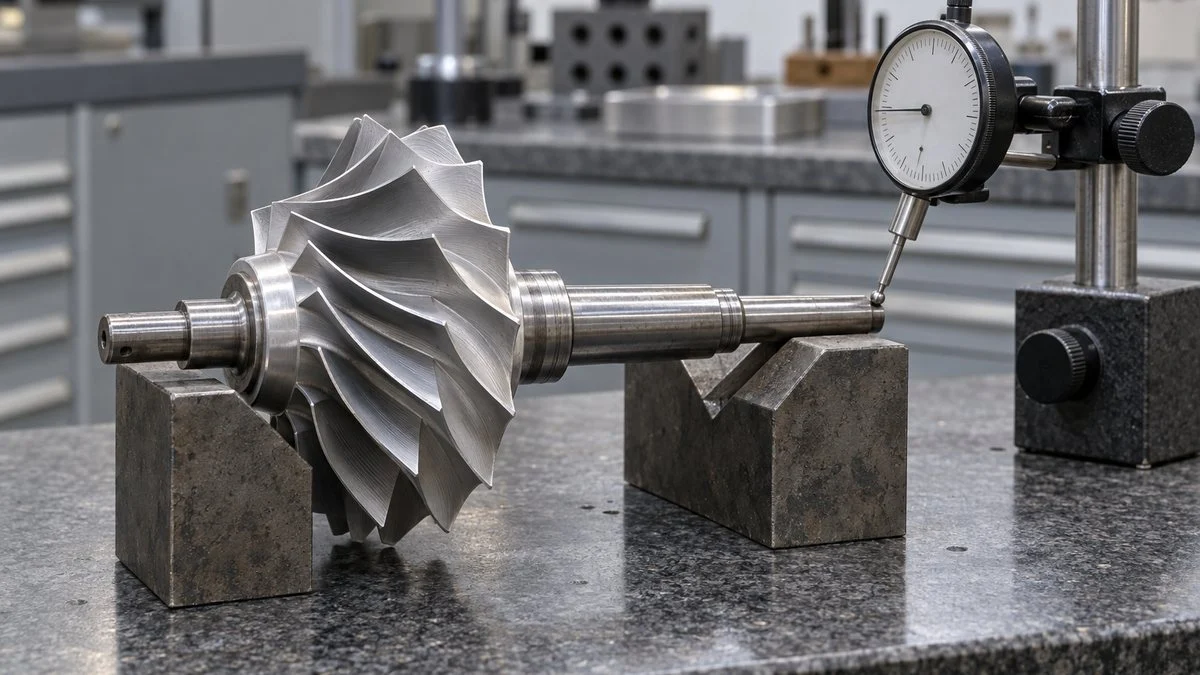
The heart of the plant is the hydrogen liquefier itself. According to KHI, the liquefier houses heat exchangers, expansion turbines, and piping and valves inside a vessel called a "cold box," and it takes design and fabrication skills that combine high insulation performance with stable operation at cryogenic temperature.
To block heat from outside, cold boxes typically place the equipment inside a vacuum-insulated vessel. KHI says it scaled up the liquefier by combining its cryogenic and insulation technology with high-speed rotating machinery know-how from developing gas turbines and aircraft jet engines.
How a vacuum-insulated vessel is classified under Japanese law (for example, whether it counts as a pressure vessel) is one of the first questions the design side has to settle. The figure below shows the main equipment groups and the work each one creates.
Each group needs different skills in design, fabrication, procurement, and maintenance.
Equipment list based on NEDO results briefing 2026, presentation e-05, and KHI's news release. The work listed under each group is MONOSCOPE's own summary.
Scaling up creates new engineering problems of its own. KHI's GI Fund project "Development of Large, High-Efficiency Equipment for Hydrogen Liquefiers" (business strategy vision, as of September 2024) lists four development themes, all aimed at better liquefaction efficiency:
- Large, high-efficiency hydrogen compressors
- Expansion turbines with power recovery
- Wet turbines
- Magnetic refrigerators
The same document notes that the small 5 t/day liquefier uses reciprocating hydrogen compressors and that centrifugal hydrogen compressors for large liquefiers do not yet exist. How much of this equipment will be used at Ogishima has not been disclosed, but the document expects competition to scale up liquefiers and raise their efficiency to intensify after 2030.
For plant and equipment makers, the effects fall into three broad areas:
- Components for colder service than LNG: cryogenic piping, valves, insulation, and vacuum vessels
- Larger rotating machinery: possible growth in design, testing, and parts machining for compressors and expansion turbines
- Work before and after construction: standards development and permitting, long-term EPC management, and maintenance after start-up
NEDO materials also list standards development, permitting, and monitoring progress through a long EPC phase as challenges. In a field with little track record, buyers put heavy weight on operating experience and compliance with standards, so companies involved from the demonstration stage are likely to be in a stronger position for later projects.
How Kawasaki's Liquefiers Have Grown
The 50 t/day plant builds on more than ten years of step-by-step development. KHI developed a prototype liquefier based on its own technology in 2013, the first of its kind in Japan, and in 2020 became the first Japanese manufacturer to commercialize a liquefier, rated at 5 t/day.
That 5 t/day unit went through more than 3,000 hours of continuous demonstration operation and can produce liquid hydrogen at 99.999% purity, according to KHI. The timeline below shows the path from that machine to Ogishima.
From liquefier development to international shipping to a terminal-scale demonstration.
Sources: KHI news releases (June 10, 2020 and October 19, 2026); HySTRA (April 2022); NEDO results briefing 2026, presentation e-05.
KHI says it is also looking at deliveries to major hydrogen suppliers, including Australia and countries in the Middle East, and will consider larger liquefiers as customer demand requires. Ogishima is a domestic demonstration plant, but it also gives KHI a track record for selling liquefiers to overseas liquefaction projects.
What Will Decide Whether It Pays Off
A finished plant does not guarantee a working commercial LH2 business. Three issues will decide that.
- Cost: the GI Fund's supply-cost targets of JPY 30/Nm³ in 2030 and JPY 20/Nm³ or less in 2050 apply to the whole chain, so liquefier efficiency and insulation performance are only part of the answer.
- Demand: unless large users in power generation or steelmaking commit, a 50 t/day plant will not run at high utilization. Hydrogen-based ironmaking, which replaces the reducing agent in the blast furnace with hydrogen, needs large volumes, and the terminal sits on a JFE Steel works site in a coastal industrial zone.
- Standards and permits: Japan has few precedents for terminals that handle LH2 in large volumes, and NEDO materials list standards work with industry associations and permitting as challenges.
Japan's Basic Hydrogen Strategy (revised June 2023) sets targets for hydrogen and derivatives such as ammonia of up to 3 million tons per year in 2030, about 12 million tons in 2040, and about 20 million tons in 2050. Ogishima is the first large test of whether Japan can handle volumes on that path.
What to Check Before Supplying a Japanese LH2 Project
For overseas suppliers of cryogenic valves, pumps, insulated tanks, compressors, or engineering services, one of the first things to clarify is which Japanese rules apply. In Japan, facilities that handle high-pressure gas, including liquefied gases, generally fall under the High Pressure Gas Safety Act (Act No. 204 of 1951), administered by the Ministry of Economy, Trade and Industry (METI).
The High Pressure Gas Safety Institute of Japan (KHK) carries out inspections of "designated equipment," and foreign manufacturers that export such equipment to Japan can apply for those inspections. Which rules apply to a specific LH2 component, and which approvals it needs, depends on the equipment, its conditions, and the project, so confirm it with the buyer or EPC contractor rather than assuming. This article gives an overview only, not a compliance procedure.
The checklist below collects the points worth confirming before you quote.
| Item | What to confirm | Usually decided by |
|---|---|---|
| Applicable law | Whether your item falls under the High Pressure Gas Safety Act or other Japanese rules, and under which category | Owner / EPC contractor, with the authorities |
| Inspection and approval | Whether the item needs a KHK inspection or other approval, who applies, and how long it takes | Owner / EPC contractor; KHK for designated equipment |
| Design code | Which code and edition the design must follow (Japanese standards, ASME, or others), and whether foreign test data is accepted | Purchase specification |
| Materials | Material grades, certificates, and any low-temperature impact testing or hydrogen compatibility data required | Purchase specification |
| Vacuum insulation | Required vacuum level and how it is verified, and how vacuum jackets are classified (vacuum vessel or pressure vessel) | Purchase specification / EPC contractor |
| Leak tightness and cleanliness | Leak test method and acceptance criteria, and cleaning requirements before shipment | Purchase specification |
| Interfaces | Flange and connection standards (JIS or ASME), pipe sizes, and instrument signals | EPC contractor (interface list) |
| Documents | Required language, format, and timing of drawings, inspection records, and manuals | Purchase order / document list |
| Schedule | Delivery date against the plant schedule (liquefier completion planned for end of 2028; demonstration from 2030) | EPC contractor |
Questions to Ask the Japanese Side
These questions help you find out early who decides what and which documents you will have to produce:
- Who is the purchaser of this package: the owner, the plant builder, or an EPC contractor?
- Does this item fall under the High Pressure Gas Safety Act? If so, which inspection or approval is needed, and who will apply?
- Which design code and edition apply? Will you accept design and test data under ASME or other non-Japanese codes?
- What material certificates and low-temperature or hydrogen-service test data do you need?
- What are the leak test and cleaning requirements, and who witnesses the tests?
- Which flange and connection standards (JIS or ASME) apply at the interfaces?
- Which documents must be in Japanese, and which can be in English?
- What is the required delivery date, and is there a factory acceptance test (FAT) at our works?
Inquiry Email Template
You can adapt the template below for a first inquiry to a Japanese buyer or EPC contractor. Replace the bracketed parts with your own details.
Subject: Inquiry about supplying [product] for liquefied hydrogen service

Dear [Name],

We are [company], a manufacturer of [cryogenic valves / LH2 pumps /
vacuum-insulated tanks / compressors] based in [country]. We have supplied
[product] for [LH2 / LNG / industrial gas] service, with design
temperatures down to [value].

We would like to know whether we could support your liquefied hydrogen
projects. Before preparing a proposal, could you tell us:

1. Which design code and edition apply to [product]?
2. Does the item fall under the High Pressure Gas Safety Act, and which
   inspection or approval would be needed? Who would apply for it?
3. What material certificates, low-temperature test data, and leak test
   records do you require?
4. Which documents must be submitted in Japanese?
5. What is the expected schedule and delivery location?

We can send our product datasheets and reference list on request.

Best regards,
[Name]
[Title], [Company]
[Email / Phone]
Limits of This Article
- All project figures come from KHI and NEDO announcements up to October 2026. Schedules, scope, and configuration may change.
- The capacity comparison uses rated or planned capacity from public sources and is not a complete list of liquefiers worldwide. The Incheon figure is the combined capacity of three units as reported in the press.
- The announcements cited here do not say which equipment packages will be bought from outside Japan, or by whom.
- The regulatory section is an overview only. Which laws, standards, and approvals apply to a specific item must be confirmed with the buyer, the EPC contractor, or the authorities.
- The work listed for each equipment group is MONOSCOPE's own summary, not a published scope of supply.
FAQ: Kawasaki's Hydrogen Liquefaction Plant
Has the Investment Amount for the Ogishima Plant Been Disclosed?
No. KHI's announcement of October 19, 2026 does not give an investment amount. The plant will be used for the NEDO Green Innovation Fund's "Liquefied Hydrogen Supply Chain Commercialization Demonstration" and is being built within that project's framework.
Is 50 Tons per Day the Capacity of a Single Liquefier?
No, it is the capacity of the whole facility. NEDO's July 2026 results briefing shows the demonstration's liquefaction facility as two liquefiers of 25 t/day each.
Is 50 t/day the Largest Hydrogen Liquefier in the World?
No. It is the largest announced in Japan, more than three times the previous Japanese maximum of 15 t/day. SK E&S's plant in Incheon, South Korea, completed in 2024, was reported at three units of 30 t/day each, or about 90 t/day in total.
Will the Demonstration Import Hydrogen From Overseas?
Not in the demonstration. The plan is to liquefy hydrogen delivered by high-pressure pipeline from a domestic producer. Liquefying hydrogen made overseas and shipping it to Japan is part of the deployment concept for FY2030 and later.
How Else Can Hydrogen Be Transported?
The GI Fund's large-scale supply chain project covers two carriers: liquefied hydrogen and MCH (methylcyclohexane). MCH binds hydrogen to toluene so that it can be shipped as a liquid at ambient temperature and pressure. It needs no cryogenic equipment, but the hydrogen must be extracted again at the point of use.
Sources
- Ogishima liquefaction plant: Kawasaki Heavy Industries news release, "Japan's largest hydrogen liquefaction plant with 50 t/day capacity: construction starts" (October 19, 2026, Japanese)
- Coverage of the announcement: Argus, "Japan's KHI starts building hydrogen liquefaction plant"; LOGISTICS TODAY (October 20, 2026, Japanese)
- Demonstration facilities and progress: NEDO results briefing 2026, presentation e-05, "Liquefied Hydrogen Supply Chain Commercialization Demonstration" (JSE and ENEOS, July 21, 2026, Japanese)
- Terminal groundbreaking: Kawasaki Heavy Industries news release (November 27, 2025)
- Cost targets and budget: NEDO Green Innovation Fund, "Large-scale Hydrogen Supply Chain Establishment" (Japanese)
- Large, high-efficiency liquefier equipment: KHI business strategy vision, "Development of Large, High-Efficiency Equipment for Hydrogen Liquefiers" (as of September 2024, Japanese)
- 5 t/day liquefier: KHI news release on the first Japanese-made hydrogen liquefier (June 10, 2020, Japanese)
- Japan–Australia shipping demonstration: HySTRA news release (April 2022, Japanese)
- SK E&S Incheon plant: The Korea Economic Daily, "SK E&S builds world's largest hydrogen liquefaction plant" (May 8, 2024)
- Linde La Porte plant: Linde, "Linde Starts Up New Liquid Hydrogen Plant in Texas" (July 15, 2021)
- High Pressure Gas Safety Act: Japanese Law Translation, "High Pressure Gas Safety Act (Act No. 204 of 1951)"
- KHK inspections for foreign manufacturers: Cabinet Office of Japan, "High Pressure Gas Safety Law"
- Contract-for-difference support (scale): Agency for Natural Resources and Energy (Japanese)
- Contract-for-difference support (15-year design): METI Hydrogen and Ammonia Policy Subcommittee, interim report (January 29, 2024, Japanese)
- Basic Hydrogen Strategy targets: Agency for Natural Resources and Energy, Basic Hydrogen Strategy overview (June 2023, Japanese)
- LNG liquefaction temperature: Agency for Natural Resources and Energy (Japanese)
- How MCH works: Mitsubishi Corporation news release (2021), footnote (Japanese)
Original article in JapaneseThis guide is adapted from a MONOSCOPE article written for readers in Japan: 川崎重工の水素液化プラント、扇島で着工|日量50トンの意味と供給網
About the editor
 MONOSCOPE EditorFOUNDER & EDITOR
Spent about ten years at a plant equipment maker and a plant engineering company, proposing, designing, and commissioning equipment, then moved into web marketing. Now a web consultant for B2B manufacturers, helping them explain their products and technology. Licensed in Japan as an Energy Manager and a Third-Class Chief Electrical Engineer.
Has run an engineering blog since 2017 (500+ articles) and a Japanese YouTube channel with about 20,000 subscribers. Each English guide is written from the Japanese shop-floor point of view and checked against the cited standards.