Warabeya’s Ohio Plant Halt: 4 Reasons New Plants Stall
Your company asks a Japanese supplier to build a plant close to your sites. Or you are a local engineer on the startup team of a Japanese company's first plant in your region. The announcement comes with a floor area, an investment figure, and a start date. Then the start date moves once, then again, and one day the project is cancelled before the plant ever runs.
That is what happened in Columbus, Ohio. On October 7, 2026, Warabeya Nichiyo Holdings, a Japanese maker of sandwiches, rice dishes, and other fresh ready-to-eat food (nakashoku, food prepared outside the home and eaten at home or work) for 7-Eleven, decided to cancel the start-up of a new plant it had planned for 7-Eleven stores in the US Midwest. The planned investment was about USD 81.5 million. The start date had slipped three times since 2023, and the reason was different each time.
This article walks through the company's own disclosures to show what went wrong, then turns the case into four factors that stall new overseas plants and a checklist you can use when a Japanese partner plans a plant dedicated to one customer.
Contents
- What Happened to Warabeya's Ohio Plant
- Three Delays, Three Different Reasons
- Why It Was Cancelled Before Start-Up
- Four Factors That Stall New Overseas Plants
- Why Fresh Food Plants Are Especially Exposed
- Warabeya's Next Move: Virginia and Frozen Products
- Checklist: When a Partner Plans a Plant for One Customer
- Limits of This Case
- FAQ
What Happened to Warabeya's Ohio Plant
In its October 7, 2026 filing, Warabeya Nichiyo Holdings (Tokyo Stock Exchange: 2918) announced that it would not start up the new plant in Columbus, Ohio. The company is negotiating to sell the assets related to the plant and expects to book an extraordinary loss of about JPY 700 million on those assets in the fiscal year ending February 2027. That figure is an estimate; the company has not said how the sale negotiations will change the final cost.
Warabeya's main business is food production in Japan. In the US, its subsidiaries in Hawaii and Texas already make rice dishes, sandwiches, and other bread-based items for 7-Eleven at plants in Hawaii, Texas, and Virginia. The Ohio plant came out of a specific customer decision: 7-Eleven, Inc., which runs 7-Eleven in the US mainland, selected Warabeya's US subsidiary as a business partner to strengthen fresh food in the Midwest.
The original plan, announced in March 2023, looked like this. Note that the land and building were to be leased, not bought.
Figures as announced on March 28, 2023. The plant was planned to supply one customer's store network.
Source: Warabeya Nichiyo Holdings, notice on entering the US Midwest (March 28, 2023, Japanese). Yen figure as stated in the notice.
Three Delays, Three Different Reasons
Between the announcement and the cancellation, about three and a half years passed and the start date changed three times. What stands out is that each delay had a different cause. The first two came from the project itself (construction and equipment, then a delayed distribution center). The third came from outside: the customer's strategy.
Reasons are short summaries of the wording in the company's filings.
- March 28, 2023Midwest plant announcedSelected as 7-Eleven, Inc.'s partner for Midwest fresh food. Planned start: December 2024
- January 11, 2024Start moved to September 2025Part of the construction work and the equipment to be installed were revised after a change in the product supply planConstruction and equipment
- April 10, 2025Start moved to summer 2026Construction of the distribution center attached to the new plant fell behindSupporting infrastructure
- April 8, 2026Start date changed to "undecided"Amid changes in the US economy and market, 7-Eleven, Inc. began reviewing its North American supply chainCustomer strategy
- October 7, 2026Start-up cancelledCancelled in light of recent supply and demand. Priority shifts to existing plants and productivity. Assets under sale negotiation
Sources: Warabeya Nichiyo Holdings filings dated March 28, 2023; January 11, 2024; April 10, 2025; April 8, 2026; and October 7, 2026 (Japanese).
The first delay cites a "change in the product supply plan." In plain terms, the answer to "which products, and how many" changed partway through the project, so part of the building and the equipment list had to change with it. In a food plant, each product needs its own cooking, assembly, and packing equipment, so a change in the product mix often means rework on the construction site.
The second delay had nothing to do with the plant itself. The distribution center attached to it was late, and a fresh-food plant that cannot ship to stores cannot start. Something outside the plant's own schedule ended up setting the start date.
By the third delay, the question had changed from "when do we start?" to "should we start at all?"
Why It Was Cancelled Before Start-Up
To understand the cancellation, keep three types of information apart: what the company officially said, what its earnings materials say about the business environment, and what news reports say about the customer. Mixing them leads you to read in causes the company never stated.
What the Company Said
According to the October 7 filing, Warabeya set the start date to "undecided" after 7-Eleven, Inc. began reviewing its North American supply chain, then kept discussing the plant's production plan with 7-Eleven. Its conclusion: cancel the start-up in light of recent supply and demand, and prioritize making effective use of existing plants and improving productivity.
The company also said it still sees North America as an important growth market and will keep looking for new business opportunities there. In its words, this is a review of the plan for one region, not an exit from North America.
What the Earnings Materials Show About the Customer
The earnings presentation for the first half of the fiscal year ending February 2027, released the same day, lists three reasons behind the review of the North American strategy: the customer plans to expand hot food as part of its evolving food strategy, supply is shifting from a region-by-region model to wide-area coverage, and consumers are paying more attention to product range and price.
The Ohio plant was, in effect, a regional plant built to serve about 2,500 stores in the Midwest. A shift from regional supply to wide-area coverage calls into question the basic idea of building a plant for each new region.
What News Reports Add
For background, the Associated Press reported in April 2026 that 7-Eleven's North American business expected to close 645 stores and open 205 in fiscal 2026. The closures include conversions to wholesale fuel stores. Parent company Seven & i Holdings also said that personal consumption had begun to soften, particularly among low-income households, as inflation weighed on spending.
Warabeya's filing does not say how much any of this affected the Ohio decision. Treat it as the customer's business environment, not as a stated cause.
What the filings confirm, what is background, and what has not been disclosed.
- Start-up cancelled in light of recent supply and demand
- Priority on existing plants and productivity
- Assets under negotiation for sale
- Extraordinary loss of about JPY 700 million expected
- North America still an important growth market
- Customer plans to expand hot food (earnings materials)
- Supply shifting from regions to wide areas (earnings materials)
- 645 closures and 205 openings expected in North America in FY2026 (AP)
- Consumption softening, especially among low-income households (Seven & i)
- How far the building and equipment had progressed
- Buyer and terms of the asset sale
- Total cost of the exit
- Contract terms with the customer
Sources: Warabeya Nichiyo Holdings filing and earnings presentation (October 7, 2026, Japanese); Associated Press (April 14, 2026).
How the Supply Model Changed
Put together, the earnings materials describe a change in how Warabeya plans to supply North America. The old model placed a dedicated plant in each region and delivered fresh food daily. The new model concentrates production in an existing plant that has spare capacity and covers a wide area with frozen products.
From adding a plant per region to running existing plants harder and shipping farther.
Source: Warabeya Nichiyo Holdings, earnings presentation for the first half of the fiscal year ending February 2027 (October 7, 2026, Japanese).
Impact on the Earnings Forecast
On the same day, Warabeya cut its full-year forecast for the fiscal year ending February 2027. Net income attributable to owners of the parent fell from JPY 4.8 billion to JPY 3.5 billion, a cut of JPY 1.3 billion. Not all of that cut comes from Ohio.
The lower operating and ordinary profit (ordinary profit is a Japanese reporting line: profit before extraordinary items and taxes) comes mainly from the domestic food business, where packaging and energy costs are expected to run higher than planned because of the prolonged situation in the Middle East. Net income takes that hit plus the expected Ohio loss of about JPY 700 million.
Most of the profit cut comes from higher costs in Japan. The extraordinary loss affects net income only.
Previous (April 8, 2026)Revised (October 7, 2026)
Net sales revised from JPY 241.0 billion to JPY 238.0 billion (−1.2%). Source: Warabeya Nichiyo Holdings, notice of revision to full-year forecast (October 7, 2026, Japanese).
For a company with about JPY 238 billion in sales, a JPY 700 million loss is large enough to move a year's profit outlook. There is another way to read it, though: the decision may have prevented ongoing losses after start-up. Once a plant starts, labor and utility costs arrive every month, so starting without reliable demand could have kept adding to the loss.
Four Factors That Stall New Overseas Plants
Warabeya's filings show, almost one by one, the factors that typically trip up a new plant abroad. The four below are limited to what the Ohio delays and the company's earlier Virginia plant revision actually show.
Each one appears in the company's own filings.
The Virginia investment change is from the company's February 28, 2022 filing, which gives the yen figures as about JPY 4.8 billion and about JPY 6.2 billion.
1. Demand Assumptions Change
The change in demand assumptions had the biggest impact. The Ohio plant was built for one customer's stores in one region, so most of its demand depended on one company's strategy. When that customer changed how it supplies its stores, the plant risked losing its reason to exist.
Building a plant takes years. In that time, a customer's leadership, policy, or store network can easily change, and the demand forecast used at the planning stage may no longer hold at start-up.
2. Construction and Equipment Rework
When the product plan changes mid-construction, the room layout and the equipment specifications have to be revisited. In a food plant, cooking, cooling, assembly, and packing areas each have their own hygiene zone and temperature range, so a change in products can mean redesigning the layout itself.
3. Supporting Infrastructure Runs Late
The second Ohio delay came from the attached distribution center. Short-shelf-life products have to go out to stores soon after they are made, so the plant and the distribution hub only work as a pair. A finished plant cannot start until the facilities around it are ready.
4. Construction Costs Overrun
At its earlier Virginia plant, Warabeya raised the total investment in 2022 from about USD 44 million to about USD 54 million, citing a revised plant layout and higher prices for building materials. Any new overseas plant carries the risk that construction costs move between planning and completion, and projects that allow several years to complete the building, such as YKK's new plant in Chennai, India, are especially exposed.
Why Fresh Food Plants Are Especially Exposed
The sandwiches, bread items, and rice dishes Warabeya makes in the US have a short shelf life. Unlike frozen or shelf-stable food, they have to be made every day near the stores that sell them. That is why the company's US business has placed a plant in each region with a store network: Hawaii, Texas, and Virginia.
This model works well when regional demand is predictable. When demand falls short, though, the plant's fixed costs and the losses from unsold products both become harder to carry at the same time, and distance and freshness limits make it hard to fill gaps by shipping from another plant.
Warabeya's earnings materials list the advantages of frozen products: planned deliveries that ease the load on logistics, planned production and automation that hold down costs, and less worry about in-store waste, which lets stores order the right amounts and keep a full product range. In short, frozen products make up for the limits of fresh food.
Neither is better in general. What changes is where you put plants and how you plan.
Source: Warabeya Nichiyo Holdings, earnings presentation (October 7, 2026, Japanese). Details on frozen product quality and in-store heating and serving have not been disclosed.
Frozen is not a cure-all. Much of fresh food's value is that it tastes freshly made, and whether a frozen version earns the same response depends on the product. On the fresh side, Warabeya says it is looking at ways to extend shelf life that suit each product, such as ingredient choices for extended shelf life (ESL) and modified-atmosphere (gas-flush) packaging.
Warabeya's Next Move: Virginia and Frozen Products
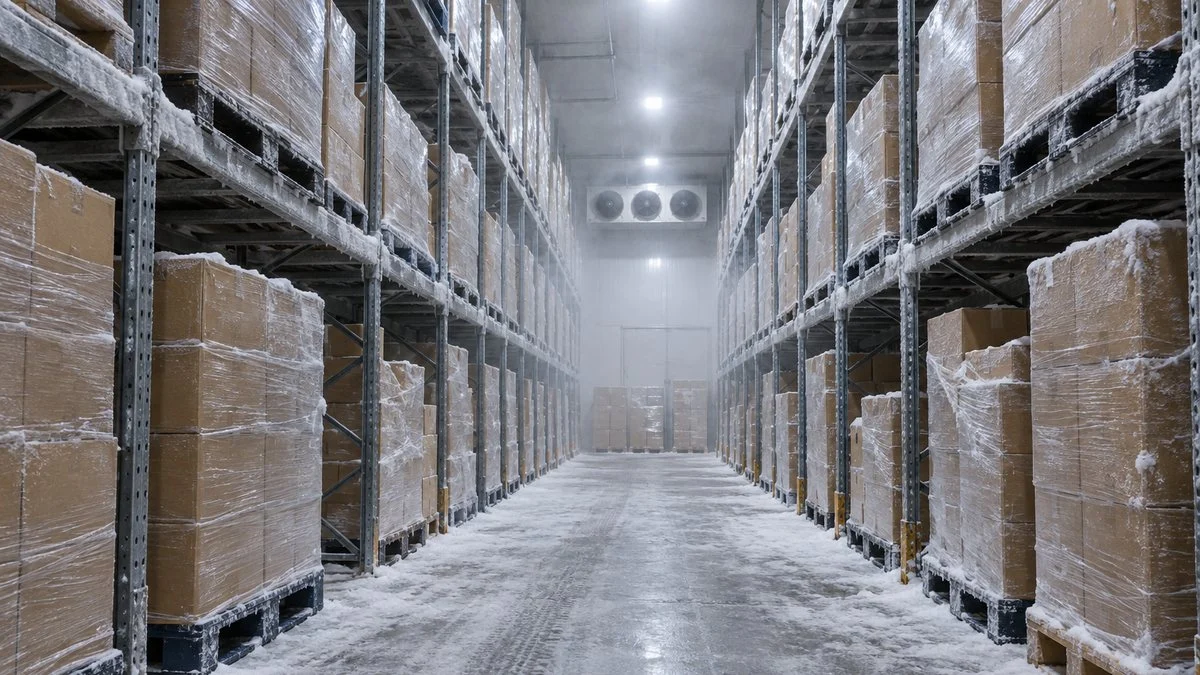
Instead of running the Ohio plant, Warabeya plans to move the production planned for Ohio to its Virginia plant and use the higher utilization to absorb fixed costs. A new plant adds another layer of fixed costs: rent, equipment depreciation, and labor. If an existing plant has spare capacity, sending work there lowers the fixed cost per unit, so the company chose to raise utilization rather than add plants.
Ookii-Bun: Frozen Buns for All of North America
The center of this plan is a frozen line called Ookii-Bun, supplied from Virginia to all of North America, with a full rollout planned for spring 2027. At full rollout, the company expects to deliver to about 10,000 stores, far more than the roughly 2,500 stores planned for Ohio.
The line has three items, each priced at USD 3.49: a Japanese-style curry bun, a sloppy joe (a ground-meat sandwich familiar in the US), and an apple pie. The company added the apple pie to reach snack and dessert occasions, not only meals.
More Products Across Both Formats
On the frozen side, breakfast croissant and biscuit sandwiches went on sale in stores in September 2026. The company is also developing rice products, which had been hard to sell as fresh food because of the distance to demand and limited sales volume, for wide-area sale as frozen items. On the fresh side, it is revising product quality and value, with items such as a Japanese-style egg sandwich.
In other words, Warabeya is redesigning its North American supply network, from "a plant per region delivering fresh food" to "higher utilization at existing plants and wide-area supply of frozen food." The Ohio cancellation is one decision within that redesign.
Checklist: When a Partner Plans a Plant for One Customer
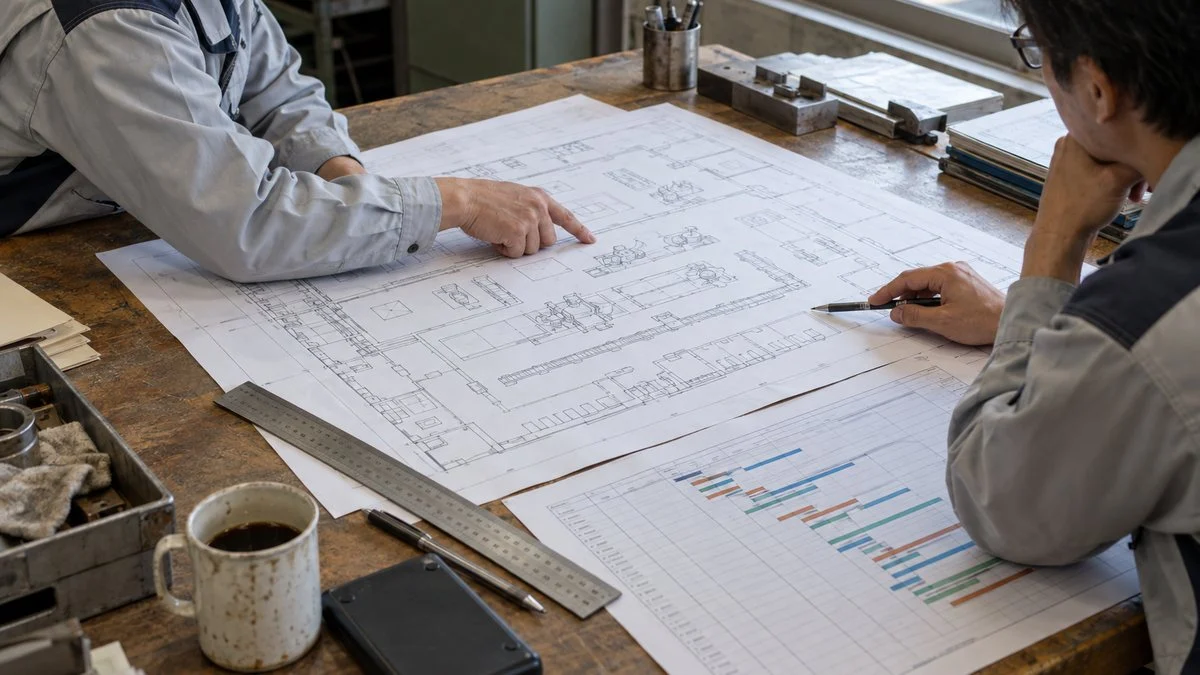
The lessons here go beyond food. Any plan to build a plant abroad for a specific customer has the same structure, including the common case of a Japanese parts supplier setting up near a customer's overseas assembly plant. With US tariffs and supply chain restructuring pushing more companies to consider local production, these checks matter more. If you are that customer, a project engineer on the supplier's local team, or a buyer counting on the new capacity, these are the points to check, in order.
Work from top to bottom. The more items that are uncertain, the more the investment should be split into smaller steps.
Compiled by MONOSCOPE from the Warabeya case and common plant-planning issues.
Demand and the Contract
For a plant that serves one customer, most of the demand forecast rests on that customer's plans. A volume backed by a written advance forecast of orders from the customer (in Japanese, a naiji) is far firmer than a verbal estimate. Plan for what happens if the assumption turns out wrong, not only for the base case.
Related: Production Control in Japan: Scheduling, Shipping, Who to Ask
Also check how far the contract covers costs if the plan changes or is cancelled. Warabeya has not disclosed what it agreed with its customer. In general, though, for capital investment dedicated to one customer, whether such terms exist has a large effect on the loss when the project is stopped.
Build So It Can Be Reused
Warabeya planned to lease the land and building in Ohio. Compared with buying land and building, leasing reduces the property the company is left holding when it exits. Equipment works the same way: specifications that handle several products, rather than one, make it easier to move the equipment to another customer or product.
When demand is hard to read, another option is to size the building for future expansion but add production lines in steps as demand appears. Because full capacity is not installed on day one, the damage is smaller if the assumptions change.
Outside Works and Existing Capacity
Distribution hubs, power hookups, and wastewater treatment built by other parties tend to sit outside the project's own schedule. As Ohio's second delay showed, work outside the plant can set the start date, so put the key outside works into the project schedule and track them.
Before deciding to build, check how fully the existing plants are used. Warabeya's final choice was to move production to Virginia, which had spare capacity. If better logistics or freezing lets existing plants reach the customer, a new plant may not be needed.
People and Local Rules
These were not reasons for the Ohio cancellation, but any overseas plant plan has to account for local labor costs, hiring, and hygiene and safety rules. In the US, for example, the FDA Food Safety Modernization Act (FSMA), signed into law in 2011, requires food facilities to analyze hazards and put risk-based preventive controls in place. The approach is close to HACCP as practiced in Japanese food plants, but record formats and audit handling have to follow US rules. Confirm the specific requirements with the FDA and your own food safety team.
Questions to Ask Your Japanese Partner
If a Japanese supplier or parent company is planning a plant that your operation depends on, these questions help you see the risks early. If the investment decision sits with headquarters in Japan, ask early and in writing.
Related: Ringi in Japan: Why Approvals Are Slow and How to Help
- What volume is the plant sized for, and is that based on a formal forecast or an estimate?
- What share of the plant's output depends on one customer?
- Which outside works (distribution center, utilities, wastewater, roads) must finish before start-up, and who owns each schedule?
- If the product mix changes, which parts of the building and equipment would need rework?
- Are the land and building owned or leased? Can the equipment run other products?
- Could an existing plant cover the demand first, for example by shipping or freezing?
- If the start date moves, when and how will we be told, and what is the backup supply plan?
Limits of This Case
- The analysis rests on Warabeya's public filings and one AP report. The company has not disclosed its contract terms with 7-Eleven, how far construction had progressed, or the final exit cost.
- Fresh food has an unusually short shelf life, which ties plant location tightly to stores. In industries with longer-lived products, the distance limits are weaker and the regional-plant risk looks different.
- The checklist is a general framework compiled by MONOSCOPE. How much each item matters varies by company, industry, and project.
FAQ
What kind of company is Warabeya?
Warabeya Nichiyo Holdings makes rice dishes, sandwiches, and other bread-based items for 7-Eleven. Its core business is food production in Japan, and it also runs US plants in Hawaii, Texas, and Virginia that supply 7-Eleven.
Why did Warabeya cancel its Ohio plant?
The company cited recent supply and demand and chose to prioritize its existing plants and productivity. This followed 7-Eleven, Inc.'s review of its North American supply chain, which had already led Warabeya to set the start date to "undecided" in April 2026.
Is Warabeya leaving North America?
No. The company says it still sees North America as an important growth market and is reviewing its plan for the Midwest only. Production planned for Ohio will move to its Virginia plant, and frozen products will be supplied across North America.
How much will the Ohio cancellation cost?
Warabeya expects an extraordinary loss of about JPY 700 million in the fiscal year ending February 2027. The assets are under negotiation for sale, and the final cost has not been disclosed.
Can frozen products be supplied from anywhere?
They can reach a much wider area than short-shelf-life fresh food, and Warabeya plans to supply all of North America from Virginia. Whether frozen versions earn the same response as freshly made food depends on the product, so frozen is not a replacement for every item.
What should I check when a supplier builds a plant just for my company?
Check how firm the demand behind the plant is, what the contract says about changes and cancellation, whether the building and equipment can be reused, which outside works must finish first, and whether existing plants could cover the demand. The checklist and question list above cover each point.
Sources
- Cancellation: Warabeya Nichiyo Holdings, notice of the decision to cancel plant start-up in the US Midwest (October 7, 2026, Japanese)
- Forecast revision: Warabeya Nichiyo Holdings, notice of revision to full-year consolidated forecast (October 7, 2026, Japanese)
- North American strategy and frozen products: Warabeya Nichiyo Holdings, earnings presentation for the first half of FY ending February 2027 (October 7, 2026, Japanese)
- Original plant plan: Warabeya Nichiyo Holdings, notice on entering the US Midwest (March 28, 2023, Japanese)
- Start date changes: January 11, 2024, April 10, 2025, April 8, 2026 (Japanese)
- Virginia plant plan and investment change: July 6, 2021, February 28, 2022 (Japanese)
- 7-Eleven North American store outlook: Associated Press, "7-Eleven expects to close hundreds of its stores in North America this year" (Anchorage Daily News, April 14, 2026)
- News coverage: LOGISTICS TODAY (October 8, 2026, Japanese)
- FSMA: U.S. FDA, "Food Safety Modernization Act (FSMA)"; U.S. FDA, "FSMA Final Rule for Preventive Controls for Human Food"
Original article in JapaneseThis guide is adapted from a MONOSCOPE article written for readers in Japan: わらべや日洋のオハイオ工場が稼働中止|海外新工場がつまずく4つの要因
About the editor
 MONOSCOPE EditorFOUNDER & EDITOR
Spent about ten years at a plant equipment maker and a plant engineering company, proposing, designing, and commissioning equipment, then moved into web marketing. Now a web consultant for B2B manufacturers, helping them explain their products and technology. Licensed in Japan as an Energy Manager and a Third-Class Chief Electrical Engineer.
Has run an engineering blog since 2017 (500+ articles) and a Japanese YouTube channel with about 20,000 subscribers. Each English guide is written from the Japanese shop-floor point of view and checked against the cited standards.