Tokyo Steel: How Japan’s EAF Leader Sets Steel Prices
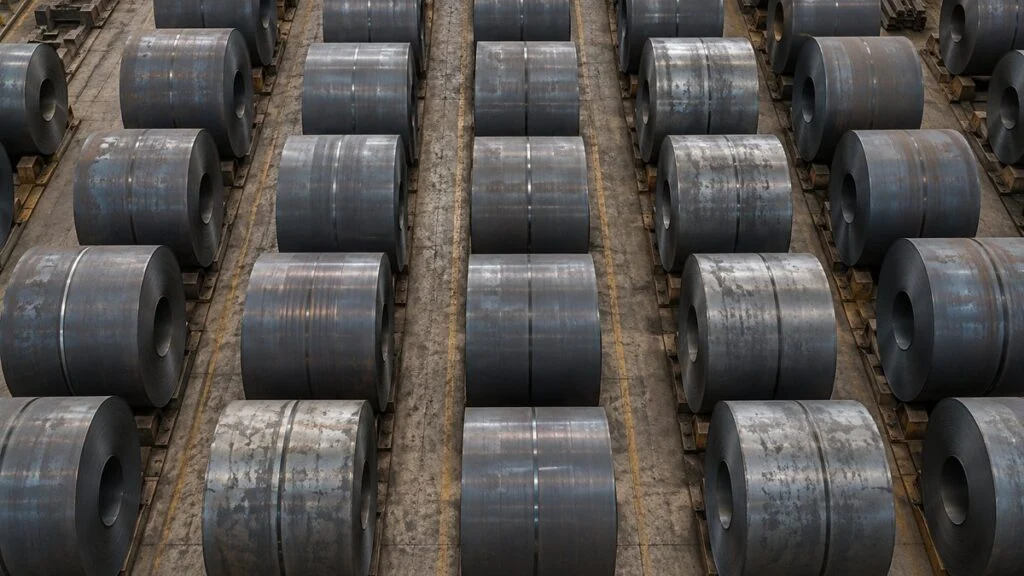
Say a steel trade newsletter lands in your inbox: "Tokyo Steel raises all product prices by JPY 3,000 per ton for November." A week later, your Japanese supplier in Thailand or India sends a letter saying steel costs are rising and asks to revisit your parts price. You may wonder why one company's monthly price list makes headlines across Asia, and what it actually tells you about the price you pay.
Tokyo Steel Manufacturing Co., Ltd. is Japan's largest electric arc furnace (EAF) steelmaker. It melts scrap steel in electric furnaces and rolls it into H-beams, hot-rolled coil, plate, and other products. Unusually for a steelmaker, it publishes its selling prices for the next month on its own website, every month. On October 19, 2026, it announced a JPY 3,000 per metric ton increase on all products for November contracts, citing higher fuel, electricity, and materials costs as conflict in the Middle East drags on and pushes up crude oil and LNG (liquefied natural gas).
This guide explains who Tokyo Steel is, why its price list is watched, how to read it, how EAF steelmaking differs from the blast-furnace route, and why a price increase reaches the company's profits only months later. It ends with a checklist and questions you can use when a supplier passes steel costs on to you. All figures come from the company's public disclosures and the other sources listed at the end.
Contents
- What Is Tokyo Steel?
- Why Tokyo Steel's Monthly Price List Matters
- The November 2026 Increase: What Tokyo Steel Said
- How to Read a Tokyo Steel Price List
- EAF vs. Blast Furnace: How Tokyo Steel Makes Steel
- Products and Plants: Flat Steel From an EAF
- Why Price Increases Reach Profits Late: Metal Spread
- Scrap Sourcing and Low-CO2 Steel
- Using Tokyo Steel Prices as a Buyer
- Limits of This Guide
- FAQ
- Sources
What Is Tokyo Steel?
Tokyo Steel (東京製鐵, Tokyo Seitetsu) is a pure-play EAF steelmaker that makes steel from scrap. It was founded in 1934 in Adachi, Tokyo, is listed on the Prime Market of the Tokyo Stock Exchange, and has its head office in Kasumigaseki, Tokyo.
The company runs four plants: Tahara (Aichi Prefecture), Okayama (Okayama Prefecture), Kyushu (Fukuoka Prefecture), and Utsunomiya (Tochigi Prefecture). Its recruiting materials describe it as Japan's largest EAF steelmaker, producing about 3 million tons of steel a year. It had 1,161 employees as of March 31, 2026.
Its products range from H-beams for building and warehouse frames to square steel tubes for building columns and hot-rolled coil for machinery and parts. It sells both construction products and flat steel, and in the fiscal year ended March 2026, flat products (sheet and plate) made up about 60% of shipments.
About 1,200 people make roughly 3 million tons of steel a year at four plants.
Sources: Tokyo Steel company profile and history; Mynavi 2028 company profile (Japanese).
Why Tokyo Steel's Monthly Price List Matters
Tokyo Steel's price changes make the news because the company posts next month's selling prices on its website every month. Its sales information page shows the prices for each contract month along with a short market commentary, and past monthly price lists go back to 2007.
It also publishes the prices it pays for scrap and updates them as often as needed; in 2026 the scrap prices have changed several times a month. In 2010, the Japanese business weekly Toyo Keizai called this an "unconventional" way to run a steel company: Tokyo Steel stays out of the industry association, reviews its product prices monthly, and keeps its price list open to anyone.
Because anyone can see the price list, buyers and sellers both use it to read the market.
The published prices are a reference point. They do not directly set the price of any individual deal. Overseas monitoring is based on an SX Coal report (December 2023).
The 2010 "Totetsu Shock"
A well-known example of the list's influence is the announcement of October 18, 2010. Tokyo Steel cut its November prices for H-beams and hot-rolled coil sharply from the previous month. Other mills, which had been pushing prices up, were hit hard, and the Japanese press called it the "Totetsu shock" (Totetsu is a common short name for Tokyo Steel).
At the time, the company said it had matched the prices actually being negotiated behind the scenes, to compete with a flood of imported steel.
The November 2026 Increase: What Tokyo Steel Said
With the October 19, 2026 announcement, the market commentary on the sales page made four points. The explanation goes beyond rising costs to cover the demand and import outlook:
- Energy and materials: Crude oil and LNG keep rising as conflict in the Middle East drags on, pushing up fuel, electricity, and other materials. The company expects the cost pressure to continue.
- Construction steel: Demand is firm as the busy season begins. Large planned investments in data centers and semiconductor plants point to stronger demand for structural steel over the medium to long term.
- Flat steel: Demand lacks strength, but global inflation and soaring coking coal prices are pushing steelmakers worldwide to revise prices.
- Imports: Some buyers are rushing imports in ahead of an anti-dumping (AD) investigation, but the company expects import growth to be held in check over the medium term. Higher ocean freight is also pushing import prices up.
An EAF melts steel with electric heat, so higher power prices feed straight into production costs. On top of scrap price movements, this increase can be read as a move to pass energy costs on to product prices.
How to Read a Tokyo Steel Price List
Each price list gives a base price in yen per ton for each product and size range, plus a grade extra (an add-on for the steel grade). In the October 2026 list, for example, mid-width H-beams from 148 × 100 to 294 × 200 mm (height × flange width) are listed at JPY 116,000 per ton, with an extra JPY 5,000 per ton for grade SS490 (a general structural steel grade under JIS G 3101). Check three things on any list:
- Contract month: which month's contracts the price applies to (the latest increase applies to November contracts)
- Product and size: even within H-beams, each size range has its own base price
- Grade extra: the add-on changes with the steel grade
The published list does not show the terms agreed with individual customers. Japanese steel is sold both under direct contracts negotiated with large end users (called himotsuki) and through distributors' stock (called mise-uri), and the terms of those deals are not on the list. In practice, it works best as a signal of direction: put it side by side with your own suppliers' price changes.
Related: Japan Steel Price Increase 2026: Responding to Suppliers
EAF vs. Blast Furnace: How Tokyo Steel Makes Steel
Steelmakers fall into two broad groups by process. A blast furnace reduces iron ore with coke made from coal to extract iron. An electric arc furnace melts scrap, such as discarded steel products, with electric heat and turns it back into steel.
Japan's large blast-furnace makers, Nippon Steel and JFE Steel, produce steel from iron ore through an integrated process. The basic difference is that Tokyo Steel relies on scrap collected in Japan for its raw material.
| Item | Blast furnace | Electric arc furnace (Tokyo Steel) |
|---|---|---|
| Main raw materials | Iron ore, coking coal (coke) | Scrap steel |
| Heat source | Burning coke and the reduction reaction | Electricity (heat from an electric arc) |
| CO2 per ton of steel (2030 estimate by Tokyo Steel) | 1.6 t | 0.2 t |
| Main cost drivers | Iron ore and coking coal prices | Scrap prices and electricity costs |
| Examples in Japan | Nippon Steel, JFE Steel | Tokyo Steel and others |
Collected scrap is melted in an electric furnace, then rolled into construction products and flat steel.
Rolling presses solidified steel between rollers to form plate, sheet, and structural shapes.
Because an EAF skips the step of reducing iron ore, it emits less CO2 for the same steel product. On the other hand, scrap quality and power prices drive both cost and quality, so how the company sources scrap and uses electricity sits at the center of its business.
Japan's blast-furnace makers are also preparing to switch some capacity to EAFs and to make steel with hydrogen as part of decarbonization.
Products and Plants: Flat Steel From an EAF
Tokyo Steel shipped 2.76 million tons of products in the fiscal year ended March 2026: 2.41 million tons in Japan and 0.34 million tons for export. By product, sheet accounted for 47%, sections (structural shapes) 34%, plate 17%, and bar 2%. Sheet and plate together made up about 60%.
Flat steel (sheet and plate) ships in larger volumes than construction sections.
By shipment volume. Source: Tokyo Steel, results presentation for the fiscal year ended March 2026 (April 24, 2026).
Tokyo Steel started making H-beams at its Okayama plant in 1969. In 1991 it began producing wide hot-rolled coil at the same plant, and in 2009 it added hot-rolled coil production at Tahara. Making sheet as well as construction products in EAFs gives it a product range that sells to both construction and manufacturing.
What Each Plant Makes
The four plants started up at different times and focus on different products. Based on when their main facilities were completed, according to the company's history, their roles look like this:
Tahara, the newest, and Okayama, the oldest, focus on flat steel. Kyushu and Utsunomiya focus on construction products.
Sources: Tokyo Steel history and plant pages (Japanese). Utsunomiya's role as an H-beam plant is based on Toyo Keizai Online (2011).
Why Price Increases Reach Profits Late: Metal Spread
The starting point for reading an EAF steelmaker's profit is the metal spread: the product selling price minus the scrap purchase price. Tokyo Steel discloses it every quarter in its results presentations. In January–March 2026, the average shipment price was JPY 92,700 per ton and scrap cost JPY 47,000, a spread of JPY 45,700.
Whatever is left of this spread after electricity, labor, and other costs is profit.
Source: Tokyo Steel, results presentation for the fiscal year ended March 2026. Compared with the previous quarter, the shipment price fell by about JPY 500 and scrap rose by about JPY 2,300, so the spread narrowed by about JPY 2,800.
For the fiscal year ended March 2026, net sales were JPY 268.0 billion (down from JPY 326.7 billion) and operating profit was JPY 7.2 billion (down from JPY 30.1 billion). The main cause was a drop in the average shipment price from JPY 106,700 to JPY 94,300 per ton, as China's steel exports stayed high and construction projects in Japan ran behind schedule.
The average scrap price also fell, from JPY 47,800 to JPY 44,300, but product prices fell further, so the spread narrowed from JPY 58,900 to JPY 50,000. The company also cited heavier fixed costs per ton as production volume fell.
FY Ending March 2027: Waiting for Price Increases to Feed Through
In 2026, tension in the Middle East sent scrap prices soaring, and Tokyo Steel raised product prices three times starting at the end of the previous fiscal year. Even so, it posted an operating loss of JPY 2.3 billion for April–June. Its results presentation explained that it takes "a considerable amount of time" for price increases to show up in shipment prices.
On October 16, the company revised its full-year forecast from an operating loss of JPY 4.0 billion to an operating profit of JPY 1.0 billion, because shipment prices rose as planned and scrap cost less than expected. The numbers show that price increases reach the bottom line several months later.
About six months passed between the jump in raw material costs and the revision to a profit forecast.
Sources: Tokyo Steel, Q1 results presentation for the fiscal year ending March 2027; notice of revised earnings forecast; sales information page.
Scrap Sourcing and Low-CO2 Steel
Beyond flexible pricing and a broad product range, public information points to two further strengths: how the company gathers raw material, and its low-CO2 steel. Both depend on scrap being the main feedstock, and many of its recent announcements involve one or the other.
Tokyo Steel is expanding its scrap collection network and its sales of lower-CO2 steel at the same time.
Sources: Tokyo Steel news releases and Hobo Zero product page (Japanese).
Collecting Scrap Farther From the Plants
To gather scrap from areas far from its plants, Tokyo Steel keeps adding satellite yards (collection depots). After Nagoya in 2022, Kansai in 2024, and Tokyo Bay in 2025, it opened the Takamatsu Satellite Yard in May 2026 to replace its idled Takamatsu steel center.
It is also changing how scrap moves. Since May 2026, part of the scrap shipped from the Tokyo Bay yard to the Utsunomiya plant has moved by rail container instead of truck. A joint announcement with its logistics partners says this cuts CO2 emissions from transport by about 32%.
Hobo Zero Low-CO2 Steel and EcoVision 2050
According to the company, even its standard products emit about 0.4 t of CO2 per ton of steel at the production stage, about one-fifth of the blast-furnace figure. Hobo Zero (Japanese for "almost zero") is a brand that cuts this to about 0.1 t by using non-fossil certificates with additionality and demand response (shifting power use to match grid supply and demand).
It covers every product from all four Japanese plants, with the same quality and lead time as standard products, for an extra JPY 5,900 per ton. Applications include structural frames for rental housing, main elevator components, and trailers used to transport steel. For export customers in Europe, the company launched a separate green steel brand, enso, with the trading company Stemcor in June 2024, starting with hot-rolled coil and plate.
Under its long-term environmental vision, Tokyo Steel EcoVision 2050, the company aims to raise EAF steel production to 6 million tons in 2030 and 10 million tons in 2050. Its CO2 intensity (emissions per ton of steel) fell 35% between fiscal 2013 and fiscal 2024, and it targets a 60% cut by fiscal 2030 and carbon neutrality by 2050.
More customers abroad now ask for CO2 data on the steel in the parts they buy. A material-stage emissions figure with a clear basis, like Hobo Zero's, can help a parts maker answer those requests.
Related: Product Carbon Footprint Calculation for Japanese Customers
Using Tokyo Steel Prices as a Buyer
For anyone who buys steel or steel-heavy parts, Tokyo Steel's price list is a monthly guide to which way prices are heading. Read it alongside the moves of the blast-furnace makers, and it becomes easier to explain to your own management how costs are flowing for each product type.
If you want to specify lower-CO2 steel, a product like Hobo Zero, with a stated surcharge and a stated basis for its emissions figure, is a strong option to ask about.
Checklist: When a Supplier Cites Steel Price Increases
- Product and grade: which steel product (H-beam, hot-rolled coil, plate) and which grade the part uses, and how many kilograms go into each part
- Timing: which contract month's increase the supplier is passing on, and when its own steel purchase prices actually changed
- Size of the change: how the claimed cost increase per part compares with the published change per ton (for example, JPY 3,000 per ton is JPY 3 per kilogram)
- Grade extras and processing: whether the increase is in the base price, the grade extra, or processing such as pickling or galvanizing
- Direction: whether recent Tokyo Steel lists and your other suppliers' notices point the same way
- Scrap trend: for EAF steel, whether the published scrap purchase prices are rising or falling
- Reversal terms: whether the price will come down again if steel prices fall
Questions to Ask Your Japanese Supplier
- Which mill and which product does the steel for our parts come from? Is it bought directly or through a distributor?
- Is your steel price linked to a published list such as Tokyo Steel's, and with what time lag?
- Can you show the steel weight per part and the steel price per ton before and after the change?
- Does the requested increase include energy or processing costs as well as steel? If so, how much of each?
- Can you provide CO2 data for the steel used (per ton of steel), and is a low-CO2 grade available? What would it add to the price?
- How will the price be adjusted if steel prices fall?
Sample Email: Asking for a Steel Cost Breakdown
Replace the bracketed parts before sending.
Subject: Request for steel cost breakdown - [part number(s)]

Dear [Name],

Thank you for your letter of [date] about the price revision
for [part numbers].

To review the request internally, could you send us:

1. The steel product and grade used (e.g., hot-rolled coil, SS400)
   and the steel weight per part (kg)
2. Your steel purchase price per ton before and after the change,
   and the month it took effect
3. A split of the requested increase into steel, energy,
   and processing costs
4. How the price will be adjusted if steel prices go down
5. CO2 data for the steel (t-CO2 per ton), if available

We would appreciate a reply by [date].

Best regards,
[Name], [Title]
[Company], [Phone]
Limits of This Guide
- Tokyo Steel's published prices are list prices for the Japanese market. They are not the price of any individual contract, and they are not export prices.
- Financial figures cover the fiscal year ended March 2026 and announcements up to October 19, 2026, in Japanese yen as reported. Later results and forecasts may differ.
- The link between Tokyo Steel's list and what a particular supplier pays depends on that supplier's mill, product, and contract. Confirm it with the supplier.
- CO2 figures are Tokyo Steel's own estimates and claims. If you need CO2 data for compliance, ask for the calculation basis.
FAQ
Is Tokyo Steel the same company as 東京製鐵 and "Totetsu"?
Yes. The official Japanese name is 東京製鐵株式会社, written with an older form of the character for iron. Japanese media often write it with the modern character (東京製鉄) and shorten it to Totetsu. Its English name is Tokyo Steel Manufacturing Co., Ltd., and it is listed on the TSE Prime Market under securities code 5423.
Where can I see Tokyo Steel's steel prices?
On the sales information page of its Japanese website. It shows the prices for each contract month, a market commentary, and PDF price lists for construction products and flat steel. Monthly price lists going back to 2007 are also available.
Does Tokyo Steel publish its scrap prices?
Yes. The purchasing information page of its website publishes purchase price lists for domestic scrap and its scrap acceptance specifications. In 2026, the prices have changed several times a month.
How much CO2 does EAF steel emit compared with blast-furnace steel?
According to Tokyo Steel, its standard EAF products emit about 0.4 t of CO2 per ton of steel at the production stage, about one-fifth of the blast-furnace figure. Its Hobo Zero products bring this down to about 0.1 t. These are company figures, so ask for the calculation basis if you need them for reporting.
Why did Tokyo Steel raise prices for November 2026?
It raised all products by JPY 3,000 per ton, citing higher crude oil and LNG prices from the prolonged conflict in the Middle East, which push up fuel, electricity, and materials costs. Its commentary also pointed to firm construction demand, global price revisions for flat steel, and higher ocean freight on imports.
Sources
- November price increase, market commentary, and price list: Tokyo Steel, sales information (updated October 19, 2026) (Japanese), October 2026 price list (Japanese)
- Company profile: Tokyo Steel, company profile, plants, history (Japanese)
- Production volume and EAF-only business: Mynavi 2028, Tokyo Steel company profile (Japanese)
- Results, product mix, and metal spread for the fiscal year ended March 2026: Tokyo Steel, results presentation (April 24, 2026) (Japanese)
- Q1 of the fiscal year ending March 2027: Tokyo Steel, Q1 results presentation (July 17, 2026) (Japanese)
- Revised forecast: Tokyo Steel, notice of revised earnings forecast (October 16, 2026) (Japanese)
- Open pricing and the Totetsu shock: Toyo Keizai Online, on Tokyo Steel's unconventional management (December 8, 2010) (Japanese)
- Monitoring by Asian competitors: SX Coal, "Tokyo Steel to maintain steel prices stable for 6th mth in Jan 2024" (December 22, 2023)
- Environmental targets and blast furnace vs. EAF CO2: Tokyo Steel, Tokyo Steel EcoVision 2050 (Japanese)
- Low-CO2 steel: Tokyo Steel, Hobo Zero (Japanese); GMK Center, "Tokyo Steel and Stemcor launch enso green steel brand" (June 14, 2024)
- Satellite yards, rail transport, and energy efficiency rating: Takamatsu Satellite Yard opening (May 22, 2026), start of scrap transport by rail container (April 24, 2026), S class under the Energy Conservation Act classification (May 7, 2026) (Japanese)
- Role of the Utsunomiya plant: Toyo Keizai Online (2011) (Japanese)
- Scrap purchase prices: Tokyo Steel, purchasing information (Japanese)
Original article in JapaneseThis guide is adapted from a MONOSCOPE article written for readers in Japan: 東京製鉄とは?電炉最大手の強みと鋼材価格を左右する値決めの仕組み
About the editor
 MONOSCOPE EditorFOUNDER & EDITOR
Spent about ten years at a plant equipment maker and a plant engineering company, proposing, designing, and commissioning equipment, then moved into web marketing. Now a web consultant for B2B manufacturers, helping them explain their products and technology. Licensed in Japan as an Energy Manager and a Third-Class Chief Electrical Engineer.
Has run an engineering blog since 2017 (500+ articles) and a Japanese YouTube channel with about 20,000 subscribers. Each English guide is written from the Japanese shop-floor point of view and checked against the cited standards.