Japan Steel Price Increase 2026: Responding to Suppliers
A letter arrives from your Japanese supplier, or from its plant in Thailand, India, or Mexico. It says that Japanese steelmakers have raised prices again, that JFE Steel's increases this year now total JPY 25,000 per ton, and that the supplier would like to "discuss a revision of unit prices" from a certain month. The letter is polite, the numbers are large, and you need to decide what to accept.
The short answer: the 2026 increases are real and widely reported, but the announced price per ton is not the same as what your supplier actually pays, or when it starts paying it. Before you agree to anything, find out which steel the part uses, how the supplier buys it, how many kilograms go into each part, and from which month the supplier's own purchase price changed.
This guide walks through what Japan's steelmakers announced in 2026 and why, how an increase travels from the mill to your part price, and what to check. It ends with a checklist and sample English emails you can adapt. Figures are based on Japanese press reports and official statistics up to October 2026; sources are listed at the end.
Contents
- What Japanese Steelmakers Announced in 2026
- Why Japanese Steel Prices Are Rising
- Announced Increases vs. Actual Steel Prices
- How a Steel Increase Reaches Your Part Price
- How to Calculate the Impact on a Part
- Why Japanese Suppliers Are Asking Now
- How to Respond: Options Beyond Yes or No
- Checklist: When a Japanese Supplier Sends a Steel Price Notice
- Sample Emails and Phrases for Steel Price Negotiations
- Will Japanese Steel Prices Keep Rising?
- Limits of This Guide
- FAQ
- Sources
What Japanese Steelmakers Announced in 2026
Japan's two largest blast-furnace (integrated) steelmakers, Nippon Steel and JFE Steel, have raised prices several times since spring 2026. They layered product-specific increases with across-the-board add-ons, so the total depends on the product and on how the steel is bought.
Increases came in three waves: product-specific hikes in spring, an across-the-board add-on in early summer, and another in fall.
Based on reports in the Nikkei, Nikkan Sangyo Shimbun, and Tekko Shimbun, March–September 2026. All amounts are announced increases; how much reaches actual transaction prices depends on negotiation.
JFE Steel: Three Increases, JPY 25,000 per Ton
In January, JFE Steel said it would raise prices for civil engineering and construction products by about JPY 10,000 per ton from April shipments. In March it announced JPY 10,000 per ton on sheet from May shipments (up to about 10%) and the same amount on plate. Both were its first increases in about two years.
At the end of May, JFE added JPY 5,000 per ton on all products from June negotiations. The add-on covered sheet, plate, H-beams, and special steel, sold through distributors, under negotiated contracts with large users (himotsuki), and for export. That brought the total to JPY 15,000.
On September 17, JFE told customers it would raise all steel products by another JPY 10,000 per ton from October negotiations, covering both distributor and contract sales. It was the company's third increase of the year, bringing the total to JPY 25,000 per ton. For hot-rolled sheet sold through distributors, the October increase alone is just under 10%, according to press reports. JFE reportedly said its earnings were under pressure and that it aims to have the new prices accepted within the year.
Three increases took the 2026 total to JPY 25,000 per ton.
Based on Nikkei reports (May 29 and September 18, 2026) and Nikkan Sangyo Shimbun (September 18, 2026). JFE Steel did not issue these increases as press releases; the figures come from press reports.
Nippon Steel, Tokyo Steel, and Toyota
Nippon Steel, Japan's largest steelmaker, raised sheet prices in two steps, JPY 10,000 per ton from May shipments and JPY 5,000 from July shipments, for a total of JPY 15,000. Plate went up JPY 10,000 from April order intake and another JPY 5,000 from July.
Tokyo Steel, the largest EAF steelmaker (it melts scrap rather than smelting iron ore), held prices for two months over the summer, describing the market as calm. For October contracts it raised sheet products by JPY 3,000 and plate by JPY 2,000 per ton, putting hot-rolled coil at JPY 103,000 per ton, and kept long products unchanged for a third straight month. According to reports, it cited higher energy costs and expectations of rising scrap prices, but said it would pass on costs only at levels the market can absorb. It has since announced JPY 3,000 per ton on all products for November. For how its published monthly price list works, see Tokyo Steel: How Japan's EAF Leader Sets Steel Prices.
In the auto sector, Toyota reportedly plans to raise the price of the steel it supplies to its parts makers by about JPY 12,000 per ton for the second half of fiscal 2026 (October 2026 to March 2027), compared with the first half. It is the first increase in four years and follows Toyota's agreement with Nippon Steel on a similar increase in its own purchase price. For Toyota-group parts makers, material costs change from October.
Why Japanese Steel Prices Are Rising
The blast-furnace makers point to coking coal purchase prices, higher logistics costs from fuel prices, petrochemical-based consumables, and labor. No single factor explains the increases; raw materials, energy, and wages are all rising at once.
Coking Coal Jumped in August
A blast furnace uses coke to reduce iron ore, and coke is made from coking coal. The price of premium hard coking coal feeds directly into steel costs. According to Japan Organization for Metals and Energy Security (JOGMEC), the spot price of Australian premium hard coking coal rose from around USD 214 per ton in early August 2026 to about USD 270 by the end of the month, the highest since March 2024. Prices had spiked in January, eased, and then climbed again in August. Argus reported a cargo sold at USD 265 per ton FOB Australia on August 27.
JOGMEC links the spike to tighter safety rules after a series of mine accidents in China, combined with heavy rain in Shanxi Province and concerns about supply from Mongolia. Japan's average import price for hard coking coal in July was about 40% higher than a year earlier, reflecting higher freight and a weaker yen as well as spot prices.
Steelmakers cover their raw materials with several months of inventory and long-term contracts, so the late-August spike is likely to feed into costs gradually from fall onward.
Energy and Logistics After the Middle East Conflict
After the US and Israeli strikes on Iran at the end of February 2026, shipping through the Strait of Hormuz was severely disrupted, and crude oil prices rose sharply. Japan relies on the Middle East for more than 90% of its crude oil. Steelworks use large amounts of electricity, fuel, oxygen, and consumables, and shipping finished steel also burns fuel. That is why the steelmakers cited the Middle East when they added the June increase.
Announced Increases vs. Actual Steel Prices
An announced increase is a starting position, not a transaction price. In the Bank of Japan's Corporate Goods Price Index (CGPI) for August 2026 (preliminary), domestic iron and steel prices were up only 2.4% from a year earlier.
Steel prices are rising much more slowly than nonferrous metals or fuel.
Source: Bank of Japan, Corporate Goods Price Index (August 2026, preliminary), domestic index. The iron and steel index stood at 146.6 (2020 average = 100), nearly 50% above its 2020 level.
The gap likely reflects how increases reach transaction prices bit by bit, as negotiations close and contracts roll over. In other words, the spring increases had not fully worked through by August. For a buyer, this cuts both ways: the supplier's costs may not have risen by the full announced amount yet, but its purchase prices may catch up as negotiations progress.
Keep the longer view in mind, too. With the steel index at 146.6 against a 2020 base of 100, steel is already far more expensive than in 2020, and the 2026 increases come on top of that.
How a Steel Increase Reaches Your Part Price
To translate a mill's increase into your part cost, you need to know how your supplier buys its steel. Japan has two main routes, himotsuki and mise-uri, and in the auto industry a third: supplied steel.
The same increase reaches the buyer at different times, through different negotiations, depending on the route.
A general overview. Actual contract terms vary by company and product.
Under himotsuki (literally "tied") contracts, the steel user and the mill set prices, often every six months, and a trading company handles delivery. The announced increase does not always go through in full, and settlement takes time, so the cost change usually shows up late.
In mise-uri ("shop sales"), distributors sell from stock, so a mill increase reaches their selling prices through their own purchase costs. When demand is weak, though, distributor stock piles up and increases are harder to push through. Tokyo Steel's description of a "calm" market over the summer referred to this situation.
A parts maker using supplied steel (shikyu-zai) has almost no room to negotiate the steel price itself, but its part prices are normally revised when the supplied price changes. If your supplier uses both supplied steel and steel it buys itself, ask which parts use which. The answer changes the size and timing of the increase you should accept.

Reading the Timing Terms in a Japanese Notice
Japanese steel price notices use different bases for the effective date, and the same mill may use different ones for different products. Supplier letters often quote these terms, sometimes translated loosely as "from October." Ask which one applies.
| Japanese term | Meaning | What to ask |
|---|---|---|
| 出荷分 (shukka-bun) | Applies to steel shipped from the stated month | When did the supplier's first shipment at the new price arrive? |
| 商談分 (shodan-bun) | Applies to orders negotiated in the stated month | Which month's negotiation covers our steel, and has it closed? |
| 引き受け分 (hikiuke-bun) | Applies to orders the mill accepts from the stated month | When were the orders for our steel placed? |
| 契約分 (keiyaku-bun) | Applies to contracts for the stated month | Which contract month is the supplier buying under? |
An increase "from October negotiations" may not reach steel the supplier receives until November or later, and stock bought earlier still carries the old price.
How to Calculate the Impact on a Part
Steel is one of the easier costs to verify, because the impact is just the steel weight per part multiplied by the increase per ton. JPY 25,000 per ton is JPY 25 per kilogram.
Multiply the gross steel weight per part by the increase per ton to see the effect on the unit price.
Fictional example for illustration.
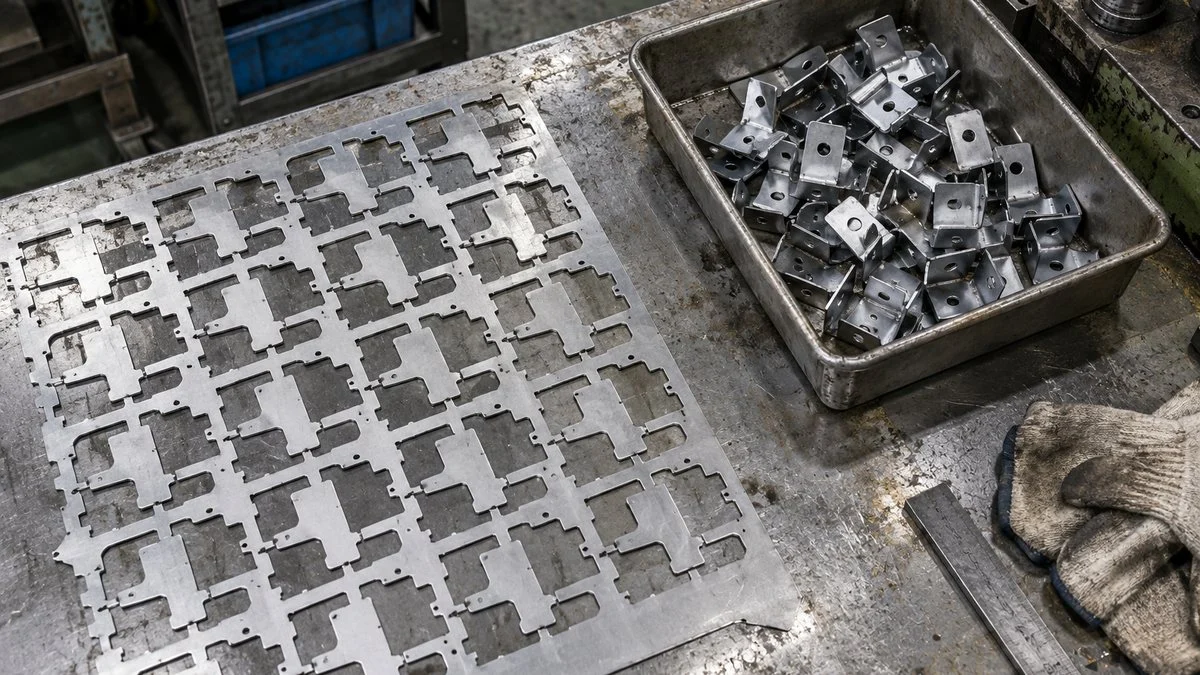
Gross weight is the right basis, because the supplier pays for the offcuts and chips too. If you check the request against the finished part weight, you will underestimate the real impact and may reject a fair request. On the other hand, if the supplier applies the full JPY 25,000 when its own purchase price has risen less, or applies the steel increase to the whole part price, the request is too high.
Why Japanese Suppliers Are Asking Now
Japanese suppliers are not only facing higher costs; the government is also pushing them to pass those costs on. In a survey published by Japan's Small and Medium Enterprise Agency in June 2026, small and mid-size suppliers had passed on 54.2% of their cost increases as of March 2026, and 55.7% of raw material cost increases.
The rules have moved in the supplier's favor. In January 2026, Japan's Subcontract Act was amended and renamed the Fair Transactions Act (Toriteki-ho). For transactions it covers, a buyer may not refuse a supplier's request to discuss prices and then set the price unilaterally. Whether the Act applies to your cross-border purchase depends on the parties and the contract, so check with your legal team. For more on the Act, see Mold Storage in Japan: Subcontract Act Rules and Checklist.
September and March are Japan's Price Negotiation Promotion Months, set by the government twice a year. Japanese companies are encouraged to use these months to request price revisions, so expect letters around them and plan your review time accordingly.
How to Respond: Options Beyond Yes or No
A prompt, reasoned reply keeps the talks moving even if you push back on the amount or timing. See also Japanese Procurement: QCD Negotiation and Supplier Ratings for how Japanese buyers run these talks.
Related: Japanese Procurement: QCD Negotiation and Supplier Ratings
- Ask for the basis first. Steel grade and product, gross weight per part, purchase price per ton before and after, and the month it changed.
- Match the effective date to the supplier's actual cost. If the supplier's new steel price applies from November deliveries, an October start for your part price is early.
- Separate steel from other costs. If the request also covers energy, logistics, or labor, ask for each item separately so you can judge them one by one.
- Agree on a material price adjustment clause. Japanese suppliers call this a material slide (zairyo suraido): unit prices are reviewed when the steel price moves beyond an agreed range. Ask for it to work in both directions. It saves both sides from renegotiating every few months.
- Shorten quote validity. While prices keep moving, shorter validity periods on quotes reduce the risk on both sides.
- Look at material use together. Better nesting on the sheet, a thinner gauge or different grade where strength allows, or reusing offcuts can offset part of the increase. Any change to material or thickness needs an engineering review and approval.
- Plan stock, not panic buying. Temporarily raising reorder points and safety stock, especially for long-lead steel products and unusual sizes, is usually more practical than large forward purchases, which tie up cash and space. For parts with uncertain demand, buying ahead can leave you with excess inventory.
Checklist: When a Japanese Supplier Sends a Steel Price Notice
- Which steelmaker, product (hot-rolled coil, cold-rolled sheet, plate, bar), and grade does each part use?
- Does the supplier buy under a negotiated contract (himotsuki), from distributor stock (mise-uri), or receive supplied steel?
- Which notice is the supplier passing on (JFE, Nippon Steel, a distributor), and on which basis: shipments, negotiations, order intake, or contract month?
- When did the supplier's own purchase price actually change, and by how much per ton?
- What is the gross steel weight per part, including yield loss?
- Does the claimed increase per part match gross weight × increase per kilogram?
- Is the increase applied only to the steel portion of the price, not to the whole part price?
- Are energy, logistics, or labor costs included? If so, how much is each?
- How much old-price stock does the supplier hold, and when will it run out?
- Will the price come down if steel prices fall? Is there a material adjustment clause?
Sample Emails and Phrases for Steel Price Negotiations
The emails below are written in plain English that Japanese counterparts generally find easy to read and translate. Replace the bracketed parts before sending.
1. Acknowledge and Ask for the Basis
Subject: Your price revision request - [part numbers]

Dear [Name],

Thank you for your letter of [date] about the revision of unit
prices for [part numbers]. We understand that steel costs in
Japan have risen this year.

To review the request internally, could you please send us the
following for each part number:

1. Steel product and grade (e.g., hot-rolled coil, SPCC)
2. Gross steel weight per part (kg), including yield loss
3. Your steel purchase price per ton before and after the change,
   and the month the new price applied to your purchases
4. Whether you buy the steel under a negotiated contract, from
   distributor stock, or as supplied material
5. A breakdown of the requested increase into steel and any
   other costs (energy, logistics, labor)

We would appreciate your reply by [date]. We will then
respond with our proposal.

Best regards,
[Name], [Title]
[Company]
2. Agree in Principle but Adjust the Timing
Subject: Re: Price revision for [part numbers]

Dear [Name],

Thank you for the breakdown. We have checked the steel weight
and the change in your purchase price, and we agree with the
increase of JPY [amount] per part for the steel portion.

As your new steel price applies to deliveries from [month],
we propose to apply the new unit price to parts shipped
from [month]. Please let us know if this works for you.

Best regards,
[Name]
3. Propose a Material Price Adjustment Clause
Subject: Proposal: steel price adjustment rule for [part numbers]

Dear [Name],

Steel prices have changed several times this year, and we
would like to avoid separate negotiations each time.

We propose the following rule for [part numbers]:
- Reference price: [index or supplier's purchase price] for
  [steel product], reviewed every [three/six] months
- If the reference price moves by more than JPY [amount] per ton
  (up or down), the steel portion of the unit price is adjusted
  by gross weight per part x the change
- The new price applies from [the month after the review]

We would be glad to discuss the details at our next meeting.

Best regards,
[Name]
Useful Phrases
- "Could you show us how the increase per part was calculated?"
- "Is this the increase announced by the mill, or the change in your actual purchase price?"
- "Which month did the new steel price apply to your purchases?"
- "We can accept the steel portion, but we need a separate explanation for the other costs."
- "If steel prices fall, how will the unit price be adjusted?"
- "We need to check this internally. We will reply by [date]."
Will Japanese Steel Prices Keep Rising?
No primary source can forecast steel prices with confidence, so the useful approach is to watch the factors that push prices up or hold them back.
On demand, the Japan Iron and Steel Federation expects domestic steel demand in fiscal 2026 to be roughly flat: slightly up for civil engineering, shipbuilding, and machinery, slightly down for construction, and lower for automotive. Crude steel output in August 2026 was a little over 6.66 million tons, up 0.4% year on year, the fifth consecutive month of year-on-year growth. These increases are about passing on costs, not about strong demand.
Cost factors point up; weak demand and restrained EAF pricing slow how far increases go through.
Based on the Japan Iron and Steel Federation's fiscal 2026 demand outlook, JOGMEC, and press reports on Tokyo Steel.
For negotiations from October onward, assume that JFE's latest increase and the higher Toyota supplied-steel price will be in play. Into 2027, coking coal and the Middle East are the swing factors: if coal eases, the increases will likely pause; if it stays high, more announcements are possible. Plan for both cases.
Limits of This Guide
- Increase amounts are those announced by steelmakers or reported in the Japanese press up to September 2026. JFE Steel did not publish its increases as press releases.
- Announced increases are not transaction prices. How much a given supplier pays depends on its mill, product, route, and negotiations.
- The routes and timing described are general patterns in Japan. Overseas plants of Japanese suppliers may buy local or imported steel on different terms; ask where their steel comes from.
- Whether Japan's Fair Transactions Act applies to a specific deal is a legal question. Confirm it with your legal team.
- Amounts are in Japanese yen as reported. We have not converted them to other currencies.
FAQ
How much have Japanese steel prices risen in 2026?
JFE Steel's increases total JPY 25,000 per ton across three rounds, the last from October 2026 negotiations, according to press reports. Nippon Steel raised sheet by JPY 15,000 in two steps. The Bank of Japan's price index, however, showed domestic steel prices up only 2.4% year on year in August 2026, because increases take time to reach transaction prices.
Do blast-furnace and EAF steelmakers raise prices the same way?
No. In 2026, the blast-furnace makers raised prices repeatedly, citing coking coal and energy costs, while Tokyo Steel, the largest EAF steelmaker, kept its increases small. In October it raised sheet by JPY 3,000 and plate by JPY 2,000 per ton and left long products unchanged.
When do Japanese suppliers usually send price increase requests?
Expect them around September and March. These are Japan's government-designated Price Negotiation Promotion Months, and Japanese companies are encouraged to use them to request price revisions.
Should we accept the full increase per ton announced by the steelmaker?
Not automatically. Ask for the supplier's actual purchase price change and the gross steel weight per part, then calculate the per-part impact. The announced increase may be only partly passed on to the supplier, and may apply from a later month.
Should we buy ahead before prices rise?
Usually not in large quantities. Steel and steel parts are heavy, take up space, and tie up cash, and suppliers typically limit how much they can sell at the old price. Temporarily raising reorder points and safety stock for long-lead steel products and unusual sizes is the more practical way to avoid shortages and last-minute high-price purchases.
Sources
- JFE Steel October increase: Nikkan Sangyo Shimbun, "JFE Steel adds JPY 10,000 increase for all steel products from October negotiations" (September 18, 2026) (Japanese); Nikkei, "JFE Steel raises steel prices for the third time this year" (September 18, 2026) (Japanese)
- JFE Steel June increase: Nikkei, "JFE Steel raises all steel products again" (May 29, 2026) (Japanese); Tekko Shimbun (May 29, 2026) (Japanese)
- JFE Steel spring increases: Nikkei (March 6, 2026) (Japanese); Nikkan Sangyo Shimbun, "JFE Steel plans increase of about JPY 10,000 for civil engineering and construction products" (January 30, 2026) (Japanese); Nikkei, "JFE Steel also raises plate prices" (March 24, 2026) (Japanese); GMK Center, "Nippon Steel and JFE Steel raise sheet prices amid rising costs" (March 12, 2026)
- Nippon Steel increases: Nikkei (May 27 and June 29, 2026) and Nikkan Sangyo Shimbun (March 27, 2026) (Japanese)
- Tokyo Steel prices: Tekko Shimbun (August 19, 2026), Nikkan Sangyo Shimbun (September 15, 2026), Nikkei (September 14, 2026) (Japanese); Tokyo Steel sales information (October 19, 2026) (Japanese)
- Toyota supplied steel: Nikkei, "Toyota raises auto sheet prices for the first time in four years" (August 27, 2026) (Japanese); Jiji Press via Nippon.com (August 27, 2026); Mysteel
- Coking coal: JOGMEC, "Coal price trends and supply and demand (August 2026)" (September 15, 2026) (Japanese); Argus, "Australian met coal price rises in August"
- Middle East and the Strait of Hormuz: JETRO, "Energy trends in the Middle East after the closure of the Strait of Hormuz" (June 19, 2026) (Japanese); Nikkei (February 28, 2026) (Japanese); Cabinet Office of Japan, World Economic Trends (2026 I) (Japanese)
- Corporate Goods Price Index: Bank of Japan, Corporate Goods Price Index (August 2026, preliminary) (Japanese)
- Steel demand and output: Japan Iron and Steel Federation, fiscal 2026 steel demand outlook (December 25, 2025); Nikkei and Nikkan Sangyo Shimbun on August crude steel output (September 25, 2026) (Japanese)
- Price pass-through rate: METI, follow-up survey on the March 2026 Price Negotiation Promotion Month (June 26, 2026) (Japanese)
- Fair Transactions Act: Japan Fair Trade Commission, briefing materials on the amended Subcontract Act effective January 2026 (Japanese)
Original article in JapaneseThis guide is adapted from a MONOSCOPE article written for readers in Japan: 鋼材値上げ2026|JFE累計2.5万円の背景と部品メーカーの調達対策
About the editor
 MONOSCOPE EditorFOUNDER & EDITOR
Spent about ten years at a plant equipment maker and a plant engineering company, proposing, designing, and commissioning equipment, then moved into web marketing. Now a web consultant for B2B manufacturers, helping them explain their products and technology. Licensed in Japan as an Energy Manager and a Third-Class Chief Electrical Engineer.
Has run an engineering blog since 2017 (500+ articles) and a Japanese YouTube channel with about 20,000 subscribers. Each English guide is written from the Japanese shop-floor point of view and checked against the cited standards.