Japanese Automotive Supply Chain: Tiers, Keiretsu, Pricing
Say your plant in Thailand, India, or Ohio supplies stamped brackets to the local factory of a Japanese Tier 1. Two years after the price was agreed, a cost-reduction request arrives. When you ask why, you are told that "the carmaker sets the target." Steel prices go up, and the buyer tells you the material price is decided further up the chain. To make sense of these answers, you need a picture of how the Japanese automotive supply chain is built.
In short, a small number of automakers sit in the middle. Several tiers of parts makers stand behind them, materials, equipment, and software companies feed those tiers, and dealers and repair shops sit on the other side. Orders flow down the tiers and parts flow up. How a company earns its profit depends heavily on where it sits in that chain.
This guide walks through the overall structure, what each tier looks like, how orders, prices, and parts move, where the profit is, and how the structure is changing. It ends with questions to ask your Japanese customer before you quote.
Contents
The Big Picture: An Hourglass With Automakers in the Middle
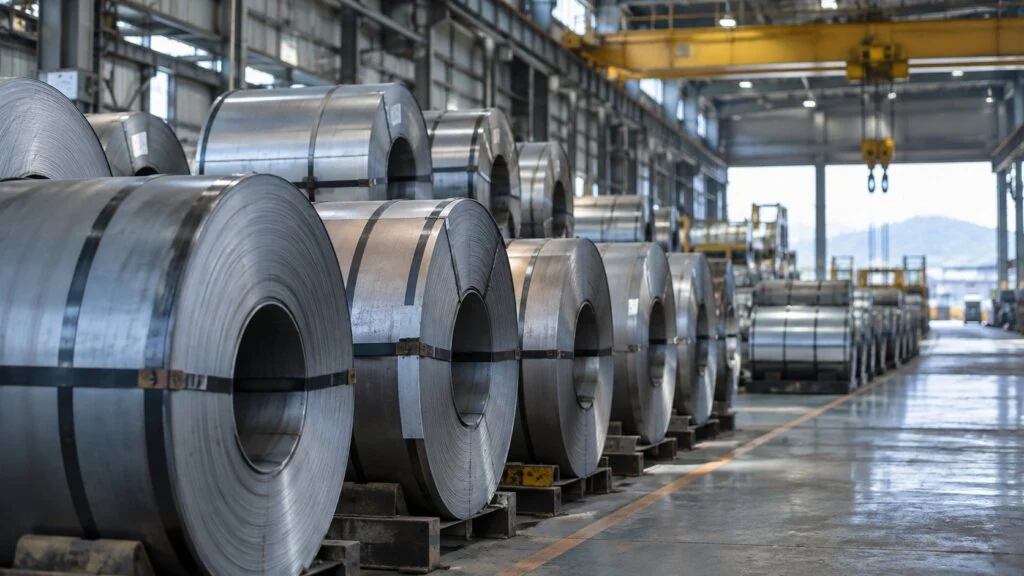
The Japanese automotive industry runs along a long supply chain. Upstream companies make materials, midstream companies machine and assemble parts, and downstream companies build finished vehicles and deliver them to customers. Figure 1 includes production equipment, software, and after-sales service, not just the parts tiers.
Materials, parts, finished vehicles, and after-sales service form one continuous chain.
Business relationships change by part and by program. The figure shows a typical flow.
Seen as a whole, the industry looks like an hourglass. Many companies sit upstream and many sit downstream, and a few automakers sit at the narrow point where the two halves meet. In the auto industry, "OEM" means the automaker itself.
The chain employs far more people than the automakers' own factories. The Japan Automobile Manufacturers Association (JAMA) estimates that about 5.57 million people in Japan work directly or indirectly in automotive-related jobs, from procurement and manufacturing to sales, service, and transport.
Who Sits at Each Tier
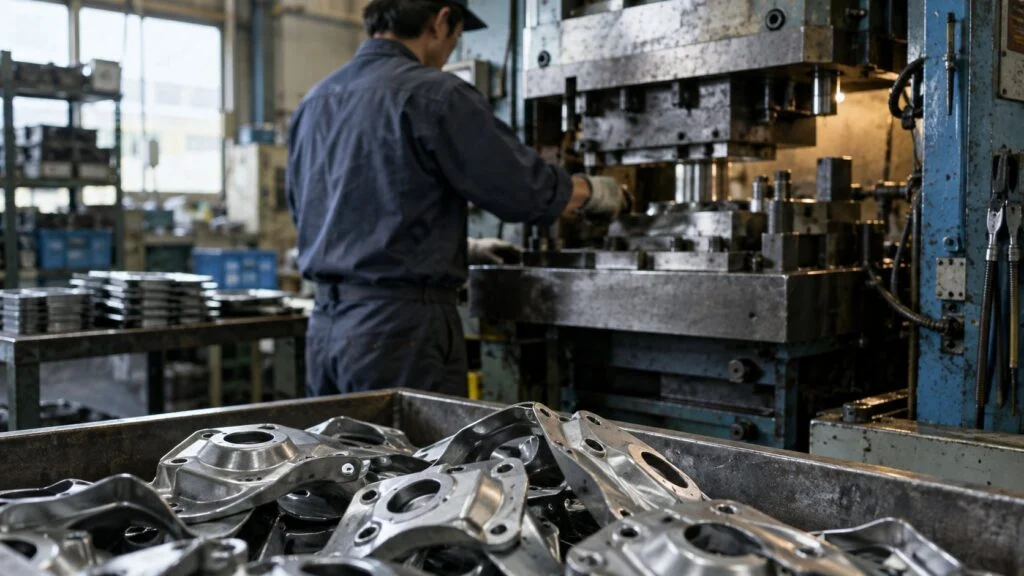
The number of companies, their size, how they make money, and how people work all differ by tier. Here are the five main groups.
Automakers (OEMs)
Japan has eight passenger-car makers, and the total stays small even after you add truck and bus makers. Each one is large. Toyota Motor's operating revenue for the fiscal year ended March 2026 reached JPY 50.68 trillion.
Profitability varies widely. In the same fiscal year, Toyota's operating margin was about 7.4%, while Nissan's was about 0.5% (calculated from each company's results).
Tier 1 Suppliers
Tier 1 suppliers ship parts directly to automakers, and the largest have annual revenue in the trillions of yen. For the fiscal year ended March 2026, DENSO reported revenue of JPY 7.54 trillion and AISIN reported JPY 5.12 trillion.
Tier 1s settle specifications with the automaker from the development stage, so their engineers work closely with the customer's development team. Many sell to several automakers, and spreading sales across customers keeps their business more stable.
Tier 2 and Tier 3 Suppliers
This group is huge. It runs from component makers to small and mid-sized shops that specialize in stamping, machining, plastic molding, or plating.
The Japan Auto Parts Industries Association (JAPIA), the trade group for parts makers, has more than 400 parts makers as regular members, and many more companies sit below them.
Each company is smaller, but it focuses on a specific process and covers a wide range of work with a small team. Each person tends to handle a broad scope, from design questions to the shop floor.
Materials Makers
Steel, nonferrous metal, chemical, rubber, and glass makers sell to many industries besides automotive. Automotive customers set strict quality requirements, but they also offer substantial volumes, which makes them important accounts.
Lightweighting and electrification are changing which materials carmakers need: high-tensile steel sheet, aluminum, plastics, and battery materials.
Sales and Aftermarket
Dealers, repair shops, and used-car and accessory sellers are mostly local businesses. Japan sold 4,565,777 new vehicles in 2025, and 1,667,360 of them, about 37%, were kei cars (keijidosha, Japan's small-car class with its own size and engine limits) (calculated from Japan Automobile Business Association figures).
The strength of this tier is that revenue continues after the sale, through inspections, shaken (Japan's mandatory periodic vehicle inspection), repairs, and parts replacement.
Parts makers of different sizes play different roles and work in different ways.
There are many exceptions. Read this as a general tendency.
How Orders, Prices, and Parts Flow
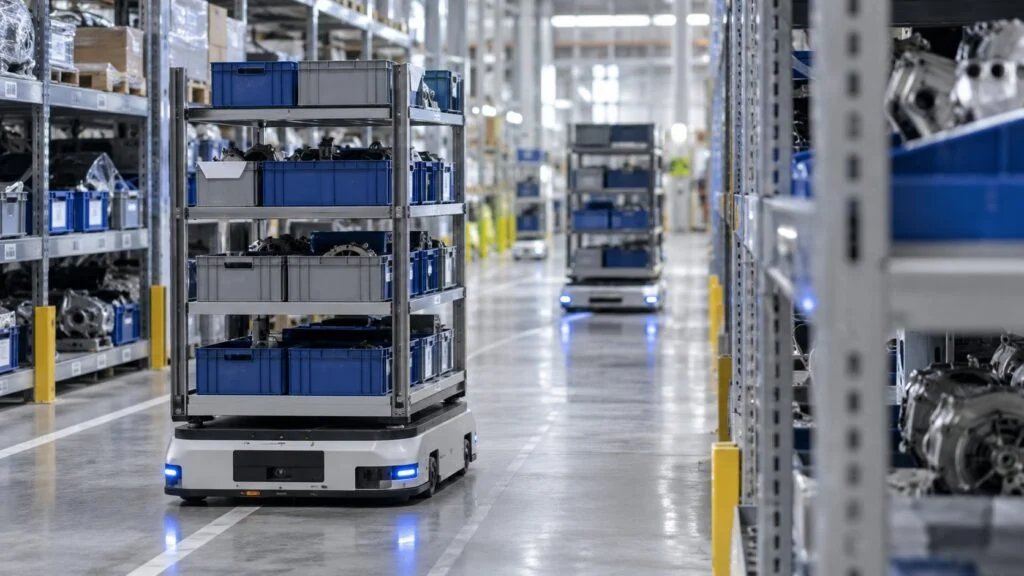
The basic pattern is simple. Orders start at the automaker and move down the tiers one level at a time. Parts move the other way, building up from the lower tiers toward the automaker. Figure 3 shows how this plays out for a new vehicle model.
Business moves through three stages: selection, development and preparation, and mass production.
The process differs by automaker and by part.
Once a Tier 1 wins the business, it orders components and processing from Tier 2 and Tier 3 suppliers. JAPIA's survey for fiscal 2024 shows how much business stays between parts makers: 20.9% of the value of members' parts shipments went to other parts makers rather than to automakers. If you sell to a Japanese Tier 1, you are part of that layer. For how a Japanese buyer runs the quoting stage, see RFQ to a Japanese Manufacturer: The 7-Step Hikiai Process.
Keiretsu and Long-Term Business Relationships
Japanese automakers and parts makers have built keiretsu (系列) relationships, groups tied together by shareholdings and by people moving between companies. Because both sides expect a long-term relationship, they can work together from the development stage.
The same structure tends to give the ordering side more bargaining power. In recent years, passing rising material and labor costs on to parts prices, known as price pass-through (kakaku tenka, 価格転嫁), has become an industry-wide issue in Japan. Japan's rules for fair dealing with smaller suppliers are covered in Mold Storage in Japan: Subcontract Act Rules and Checklist.
How Part Prices Are Set
A part's price is usually set during development of the new model, through quotes and negotiation. After mass production starts, suppliers are often asked for regular cost reductions, and they protect their margin by improving their processes.
For materials such as steel, some automakers buy in bulk and supply the material to their suppliers. There is no single pricing method; it differs by part and by customer.
The Role of Trading Companies and Logistics
Trading companies play a major role in sourcing materials and parts and in imports and exports between Japan and overseas plants. Some belong to automotive groups and work on everything from raw material sourcing to building sales networks abroad.
Just-in-time delivery, getting the right parts in the right quantity at the right time, only works because suppliers and logistics companies coordinate closely.
Where the Profit Is: The Smile Curve
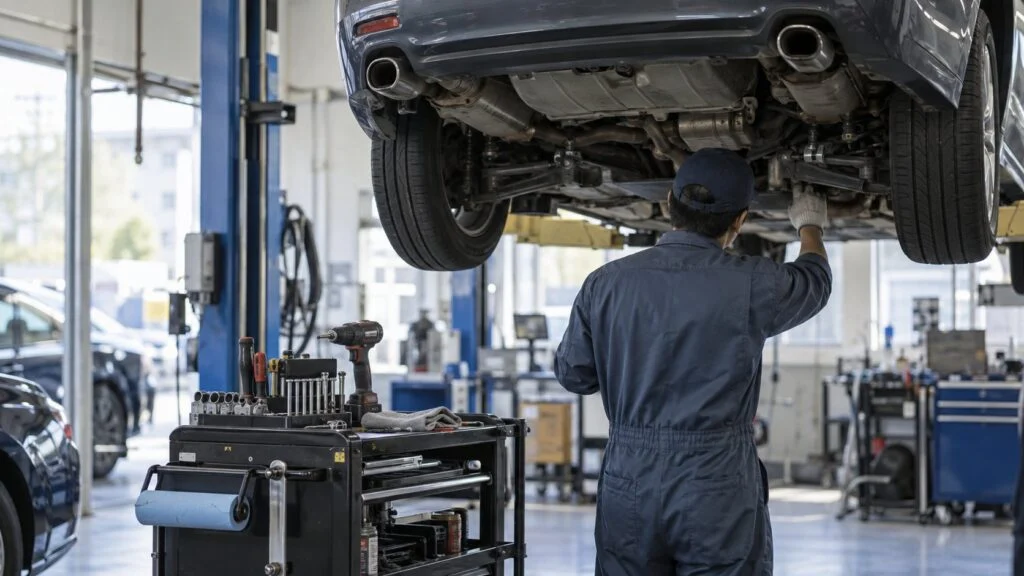
How much profit a company makes depends on where it stands in the chain. The smile curve, a common way of looking at manufacturing, makes the pattern easier to see.
The two ends of the chain are generally seen as adding more value, while processing and assembly in the middle are harder to differentiate.
Automakers: Volume and Regional Mix
An automaker's profit depends heavily on how many vehicles it sells, in which regions, and with what model mix.
For the fiscal year ended March 2026, operating margins were about 9.9% at Suzuki and about 7.4% at Toyota, but only about 1.0% at Mazda and about 0.8% at SUBARU (calculated from each company's results).
Mazda, for example, said that US tariffs reduced its operating profit by JPY 154.9 billion in that fiscal year. Heavy dependence on a few export markets can make profits swing sharply.
Parts Makers: Proprietary Technology
Parts makers with products that set them apart technically, such as electronic controls and electrification parts, find it easier to earn relatively high margins. For the fiscal year ended March 2026, DENSO's operating margin was about 7.3% and AISIN's about 4.5% (calculated from each company's results).
Companies that mainly do general-purpose processing get pulled into price competition more easily. For them, productivity improvement is the direct source of profit.
Aftermarket: A Steady Source of Income
Replacement parts, service, and shaken inspections bring in steadier income than new-car sales, which rise and fall with the market. In JAPIA's fiscal 2024 survey, parts for the repair and replacement market made up 8.2% of the value of members' parts shipments.
Cars often stay on the road for 10 years or more, and they need service and parts the whole time. For automakers and dealers alike, after-sales service is an important source of income.
Related: US Tariffs on Japanese Imports in 2026: Rates and Impact
How the Structure Is Changing
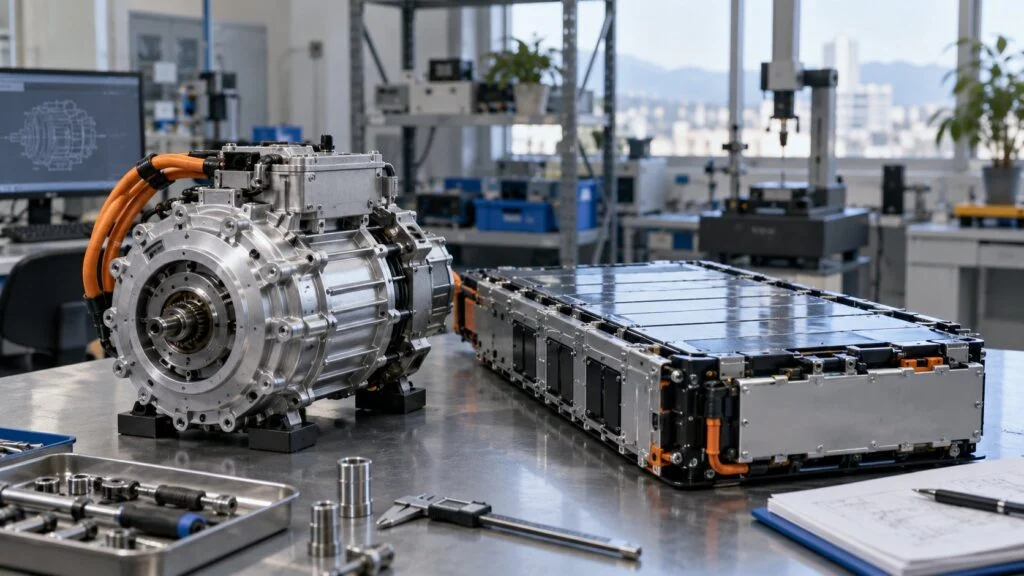
The long-standing structure is starting to shift in several ways, driven by electrification and changes in trade.
Keiretsu Unwinding and Supplier Consolidation
Parts makers are merging across keiretsu lines, and groups are unwinding cross-shareholdings. The main aims are to grow large enough to fund development and to sell to more automakers.
Related: Japanese Automakers and Their Suppliers: Keiretsu and Buying
Looser keiretsu ties give suppliers a chance to win new customers, but they also mean competing without the group's protection.
Electrification Changes the Parts Mix
An EV does not need an engine or a conventional transmission; it needs batteries, motors, and inverters instead. JAPIA's fiscal 2024 survey shows the value of shipments of parts for electrified vehicles rising year over year, while engine parts declined.
Companies whose main products are engine parts are under pressure to shift their business or move into new fields. Over time, this change in the parts mix could change which companies make up the supply chain.
New Entrants and Shifting Production Bases
As software and semiconductors matter more, IT companies and electronics makers are getting involved in automotive work. Fast-growing automakers built differently from the traditional model, such as China's BYD, which makes its own batteries, are also changing the industry's structure.
US tariff measures have also led more companies to rethink which countries they produce in and where they export to.
Questions to Ask Before You Quote a Japanese Automotive Customer
If you supply a Japanese automaker, a Japanese Tier 1, or one of their overseas plants, the structure above explains many of the terms you will be offered. These questions help you find out where you sit and how your price will move. The answers vary by customer, so ask rather than assume.
Where You Sit in the Chain
- Who is my direct customer, and which tier am I in for this part (Tier 1, 2, or 3)?
- Which automaker and which vehicle program is this part for?
- Does the customer belong to an automaker's keiretsu group, and does that affect how suppliers are chosen?
- What share of my sales would this customer represent? (Small suppliers swing with one customer's production plan.)
How the Price Is Set and Revised
- Is there a target price from the automaker, and is the price fixed at the development stage?
- Will cost-reduction requests come after mass production starts? How often, and in what form?
- How are changes in material, labor, and energy costs reflected in the price, and on what schedule?
- Do I buy the material myself, or does the customer (or the automaker) supply it? If it is supplied, at what price?
- Who owns the dies and tooling, and who pays for them?
Development, Approval, and Delivery
- What prototypes and tests are required before the specifications are final?
- What quality approval is needed before mass production, and who signs it off?
- What delivery pattern does the customer expect (just-in-time, delivery frequency, buffer stock)?
- Which trading company or logistics provider handles the shipment, if any?
Sample Email to a Japanese Customer
You can adapt this short email when you receive an RFQ from a Japanese automotive customer:
Subject: RFQ [part number] – questions before quoting
Dear [Name],
Thank you for the RFQ for [part number]. Before we submit our quote, could you confirm the following?
1. The vehicle program and annual volume for this part
2. Whether there is a target price, and when the price will be fixed
3. How material cost changes will be reflected in the price after start of production
4. Whether the material will be supplied by your company or purchased by us
5. The quality approval required before mass productionBest regards,
[Your name]
Where This Picture Does Not Apply
- The tier labels are not fixed. A company can be Tier 1 for one part and Tier 2 for another, and business relationships change by program.
- Pricing methods, cost-reduction practices, and material supply arrangements differ by automaker, by part, and by contract. Treat this article as a map, not a description of any specific customer.
- The figures here are for Japan and cover different periods: company results for the fiscal year ended March 2026, vehicle sales for calendar 2025, and JAPIA survey figures for fiscal 2024. Overseas plants of Japanese companies may work differently under local rules and local management.
- Keiretsu ties are loosening, so older descriptions of tightly closed groups may no longer hold.
FAQ
What is the difference between Tier 1 and Tier 2 suppliers?
A Tier 1 supplier ships parts directly to the automaker and usually develops module-level parts. A Tier 2 supplier ships components, such as sensors and bearings, to Tier 1s and other parts makers.
What does OEM mean in the auto industry?
In the auto industry, OEM means the automaker that plans, develops, and assembles vehicles and sells them under its own brand. Parts makers line up below the OEM in several tiers, starting with Tier 1.
What is keiretsu in the Japanese auto industry?
Keiretsu is a relationship in which an automaker and its parts makers are tied by shareholdings and personnel and work together on the expectation of long-term business. In recent years, mergers across keiretsu lines and the unwinding of cross-shareholdings have been increasing.
Where is the profit in the auto industry?
On the smile curve, profit is easier to earn at the two ends: development and core components such as batteries and control software, and after-sales service and repair. Processing and assembly in the middle are hard to differentiate and compete on steady cost reduction.
Why do Japanese customers ask for cost reductions every year?
Part prices are usually set during model development, and automakers often keep asking for cost reductions after mass production starts. Suppliers are expected to absorb these through process improvement. How often and how much varies by customer, so confirm it before you quote.
Sources
- Automotive-related employment: Japan Automobile Manufacturers Association (JAMA), "The automobile manufacturing industry as a key industry" (Japanese)
- Parts shipments by customer and product: Japan Auto Parts Industries Association (JAPIA), survey of auto parts shipments, fiscal 2024 (Japanese); LOGI-TODAY summary of the survey (Japanese)
- JAPIA membership: JAPIA (Japanese)
- New-vehicle sales in Japan, 2025: Japan Automobile Business Association (Japanese)
- Toyota results: Car Watch, Toyota results for the fiscal year ended March 2026 (Japanese)
- DENSO results: Gyokai Digest, DENSO results for the fiscal year ended March 2026 (Japanese)
- AISIN results: Gyokai Digest, AISIN results for the fiscal year ended March 2026 (Japanese)
- Mazda results and tariff impact: Car Watch, Mazda results for the fiscal year ended March 2026 (Japanese)
- Other margins were calculated from the published results of Nissan, Suzuki, and SUBARU for the fiscal year ended March 2026.
Original article in JapaneseThis guide is adapted from a MONOSCOPE article written for readers in Japan: 自動車業界の構造をわかりやすく解説|サプライチェーン・商流・利益構造
About the editor
 MONOSCOPE EditorFOUNDER & EDITOR
Spent about ten years at a plant equipment maker and a plant engineering company, proposing, designing, and commissioning equipment, then moved into web marketing. Now a web consultant for B2B manufacturers, helping them explain their products and technology. Licensed in Japan as an Energy Manager and a Third-Class Chief Electrical Engineer.
Has run an engineering blog since 2017 (500+ articles) and a Japanese YouTube channel with about 20,000 subscribers. Each English guide is written from the Japanese shop-floor point of view and checked against the cited standards.