RFQ to a Japanese Manufacturer: The 7-Step Hikiai Process
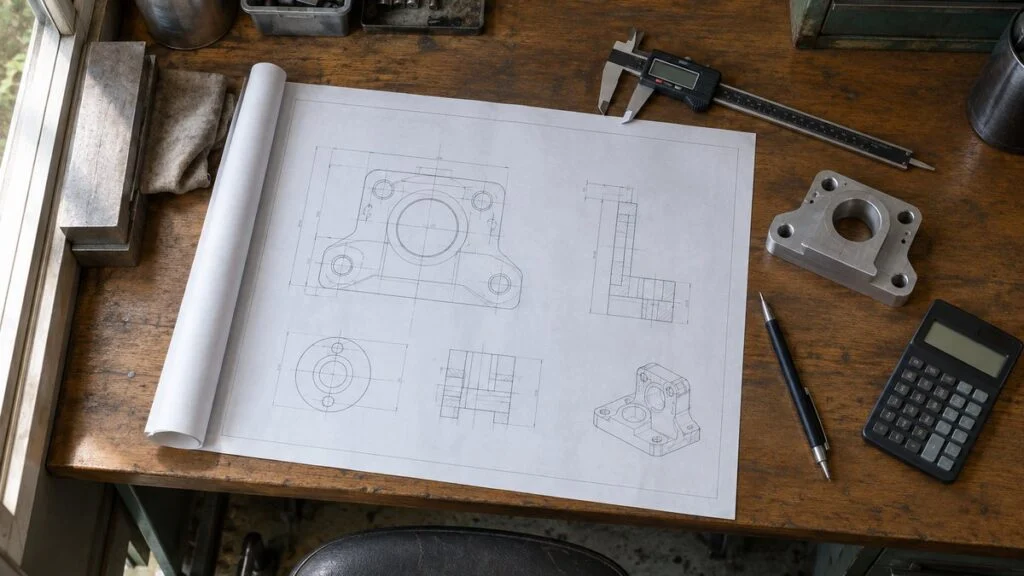
You send drawings and a request for quotation (RFQ) to a Japanese manufacturer. A week later, instead of a price, you get a list of questions: Which drawing revision? How many pieces per order? Who pays for the tooling? Who owns it? If you work on the other side and supply parts to a Japanese customer, you may see the same thing in reverse: an email titled 引き合い (hikiai, an inquiry or RFQ) with drawings attached and a reply deadline.
Both situations come from the same process. Before calculating a price, the supplier needs to confirm the drawing revision, the order quantity, and who pays for molds and jigs before calculating a price. Most of the time between your RFQ and the quote goes into these checks and into internal coordination, not into the price calculation itself.
This guide walks through the seven steps a Japanese manufacturer typically follows from inquiry to quotation, what it checks at each step, and why answers can take longer than you expect. It ends with an RFQ checklist and an English RFQ email you can reuse, whether you are sending an RFQ to Japan or answering one from a Japanese customer.
These words appear in emails, drawings, and quotations from Japanese companies.
Romaji spellings are for reference. Some companies write 引合 or 見積依頼 (mitsumori irai, request for quotation) instead of 引き合い.
Contents
- The 7 Steps from Hikiai to Quotation
- Step 1: Log the Inquiry and Work Back from the Deadline
- Steps 2 and 3: What Gets Checked Before Quoting
- Step 4: Judge Feasibility and the Process
- Step 5: Estimate the Cost
- Step 6: Write the Quotation, Assumptions, and Validity
- Step 7: Follow Up on Won, Lost, and Pending Quotes
- Common Mistakes and How to Prevent Them
- RFQ Checklist: What to Include
- English RFQ Email Template
- Where This Guide Does Not Apply
- FAQ
- Sources
The 7 Steps from Hikiai to Quotation
A hikiai asks three things: can you make this under these conditions, how much will it cost, and when can you deliver? A Japanese manufacturer's response can be split into seven steps: logging the inquiry, reviewing the content, asking questions, judging feasibility, estimating cost, preparing the quotation, and replying and following up.
The steps fall into three phases: preparation, evaluation, and reply.
For repeat parts, steps 02–04 can be shortened, but the drawing revision and quantity still need checking.
Why the Answer Takes Time
Steps 2 to 4 take the longest. The sales contact cannot decide alone, so the questions go to production engineering, manufacturing, quality assurance, and purchasing.
Related: Japanese Sales Engineers and FAEs: Roles and Handoffs
The Price Negotiation Handbook for SMEs published by Japan's Small and Medium Enterprise Agency (in Japanese) notes that every quote request contains unclear points. It recommends that suppliers prepare a quotation checklist covering their internal workflow and what to confirm with the customer before they quote. The handbook also notes that in manufacturing, contract amendments tend to be hard to secure after the order, even when extra costs come up. The quoting stage is the main chance to confirm conditions.
For buyers: a round of questions does not mean the supplier is slow or uninterested. It often means your RFQ left one of the items in this guide open. Covering them up front can save a round of questions.
Step 1: Log the Inquiry and Work Back from the Deadline
The first task is to move the inquiry out of one person's inbox and into a log that everyone can see. A spreadsheet works as well as a case management system.
What Goes in the RFQ Log
The log should hold enough information to trace later which conditions were quoted, when, and at what price.
Anyone, not only the person in charge, should be able to follow the history of a quote.
Sample entries are fictional.
Drawings and specifications from a customer may be covered by a nondisclosure agreement (NDA). Check the contract and the customer's instructions when the inquiry arrives, so you know whether you can pass the drawings to subcontractors for their quotes.
Set Internal Deadlines
If the customer gives no reply deadline, the supplier proposes a reply date and sets one. Requests without a deadline tend to slip behind other work. For an inquiry with five business days until the reply is due, the internal schedule might look like this (the day counts are only an example):
- Day 1: Log the inquiry, check the drawings and specifications, send questions
- Day 2: Ask production engineering, manufacturing, and purchasing to evaluate
- Days 3–4: Collect internal answers and estimate cost
- Day 4: Prepare the quotation and get internal approval
- Day 5: Reply to the customer
As soon as it becomes clear that the deadline will be missed, tell the customer why and give a new reply date. If quotes for material or outsourced work have not arrived, another option is to send the parts of the answer that are already firm.
For urgent requests, a supplier may reply with a rough estimate based on similar past parts. In that case, the quote should say clearly that it is an estimate and that the formal quote may differ. If the rough number alone becomes the customer's internal budget, adjusting it later is hard.
For buyers: put a reply date in your RFQ. If you only need a budget number, say so, and ask for it to be labeled as an estimate.
Steps 2 and 3: What Gets Checked Before Quoting
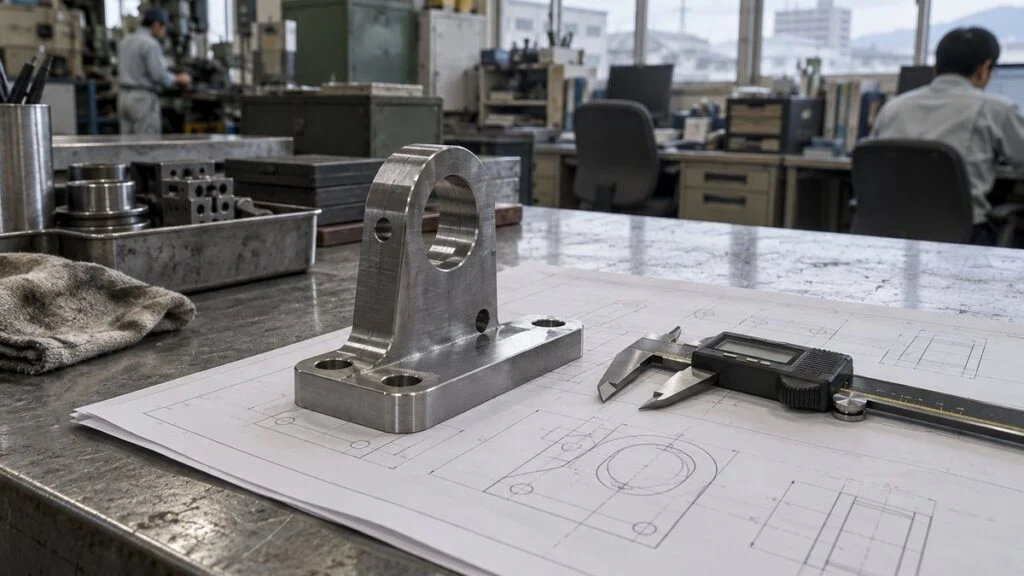
Once the inquiry is logged, the supplier confirms each condition the quote will rest on. For a supplier that runs a quality management system to ISO 9001 (published in Japan as JIS Q 9001), this is a formal step. In the 2015 edition, clause 8.2.3 requires a review of requirements before the organization commits to supply products or services.
That review covers the requirements the customer specified, requirements the customer did not state but that are needed for a known intended use, and statutory and regulatory requirements. When the customer gives no documented statement of its requirements, the clause requires them to be confirmed before acceptance.
ISO 9001:2026 was published on September 16, 2026. This guide cites the 2015 clause numbers, so check the 2026 text for its numbering and wording.
Sorting the checks into three groups (the part, quantity and timing, and commercial terms) makes it harder to miss one.
Grouped by the part, quantity and timing, and commercial terms.
Compiled by the editors. Not every inquiry needs all 12 items; choose the ones that fit the product.
Drawings and Specifications
The supplier first checks the drawing revision and the standards or customer specifications the drawing refers to. If a referenced specification is missing from the package, now is the time to request it.
For material, the supplier looks beyond the designation to the stock form and any required maker. Material that takes a long time to source affects both lead time and price.
Tolerances have a large effect on cost. The supplier reads whether the drawing uses dimensional or geometric tolerances and which general tolerance class applies. Production engineering and quality assurance then confirm whether the plant can meet and verify them with its equipment and measuring instruments.
Related: Datum Selection in GD&T: JIS vs ASME on Japanese Drawings
When surface or heat treatment is outsourced, the supplier checks the treatment type, the coating thickness or hardness, and the area to be treated. The type of plating decides which subcontractors can do the work and how many days it adds.
Related: JIS Plating Callouts (Ep-Fe/Zn8/CM2) and ASTM Equivalents
The application and operating environment are often not on the drawing. Whether the part goes outdoors, or into food or medical equipment, can change the material, the treatment, and the regulations that apply.
Quantity and Delivery
The supplier asks for the quantity per order and the order frequency, not only the total. Setup work and the way material is bought change with lot size, so the same part can have a different unit price depending on how many are ordered at once.
The SME Agency handbook gives the example of a machining company asked to quote spare parts at the same terms as mass production. Because material prices and labor rates change with order volume, that job loses money. The quantity assumption belongs in the quotation as well.
Delivery is checked as two items: the first delivery date and the delivery frequency after that. The supplier adds material procurement time and outsourcing days to its own manufacturing lead time, and production control confirms whether the parts can arrive by the requested date.
Inspection, Packaging, and Delivery Terms
For inspection, the supplier confirms which dimensions to measure, on how many pieces, with which instruments, and which documents to attach. 100% inspection, inspection reports, and material certificates all add labor hours and cost.
Packaging and delivery are easy to overlook. Returnable containers, individual packing, the delivery location, and delivery time windows all affect cost. The supplier also confirms which side pays freight.
Customer-Supplied Material and Tooling
When the customer supplies material or parts, the supplier confirms whether they are charged or free, when and how many will arrive, and how defects are handled. The SME Agency handbook cites a precision machining company whose supplied material arrived one piece at a time. Each piece had to be processed separately, labor hours went up, and the cost of managing the stock had not been included in the quote.
For parts that need molds, jigs, or gauges, the supplier confirms at the quoting stage who pays to make them, who owns them, and who stores them after mass production ends. Recent Japanese rules also address this point (see the next section).
Japanese Rules Behind These Questions
Two sets of Japanese rules explain why suppliers in Japan ask about tooling, payment, and written terms. If you are an overseas supplier with a Japanese customer, they also explain what that customer may be required to do.
- The Act Against Delay in Payment of Fees, etc. to Small and Medium-sized Entrusted Business Operators in Manufacturing and Other Specified Fields (取適法, toriteki-ho; JFTC's tentative English name). It replaced the former Subcontract Act on January 1, 2026. In covered transactions, the ordering company must give written terms right after ordering, set the payment date as early as possible and no later than 60 days after receipt, and may not pay by promissory note. It also may not set a price on its own while refusing the supplier's request to negotiate.
- Tooling storage. In its Q&A on the Act, the Japan Fair Trade Commission (JFTC) says that making a supplier store molds without paying storage costs, when no orders are placed for a long time, may count as an unjust request for economic benefits. One violation it lists involved molds stored free of charge although no orders had been placed for a year or more.
- The Promotion Standards (振興基準, shinko kijun) under the Act on Promotion of Entrusted Small and Medium-sized Enterprises. They ask the ordering company to state contract terms, including tooling, freight, and storage costs, in writing. A revision on June 24, 2026 asks ordering companies to seek explicit advance agreement on storage costs, for example in a memorandum, and states that storage costs must be paid for the storage period whether or not the supplier asks.
Whether the Act applies depends on the type of transaction and on the capital or headcount of both companies. Whether it covers a cross-border deal is a question for legal counsel; the JFTC and the SME Agency also run consultation desks in Japan.
Payment Terms and the Pricing Basis
For payment, the supplier confirms the monthly closing date, the payment date, and the payment method. It is also easier to discuss price changes later if both sides agree at this stage on whether prices can be reviewed when material or energy costs move.
Send Unresolved Questions in One Written List
Points that remain unclear go into one list of questions, sent by email or another method that leaves a record. If something was settled by phone, the supplier sends the content again by email.
The basic rule is to send questions in one batch, not one at a time. While waiting for answers, the supplier keeps working on the parts that are firm. Any item still unanswered at the deadline goes into the quotation as a stated assumption.
Step 4: Judge Feasibility and the Process
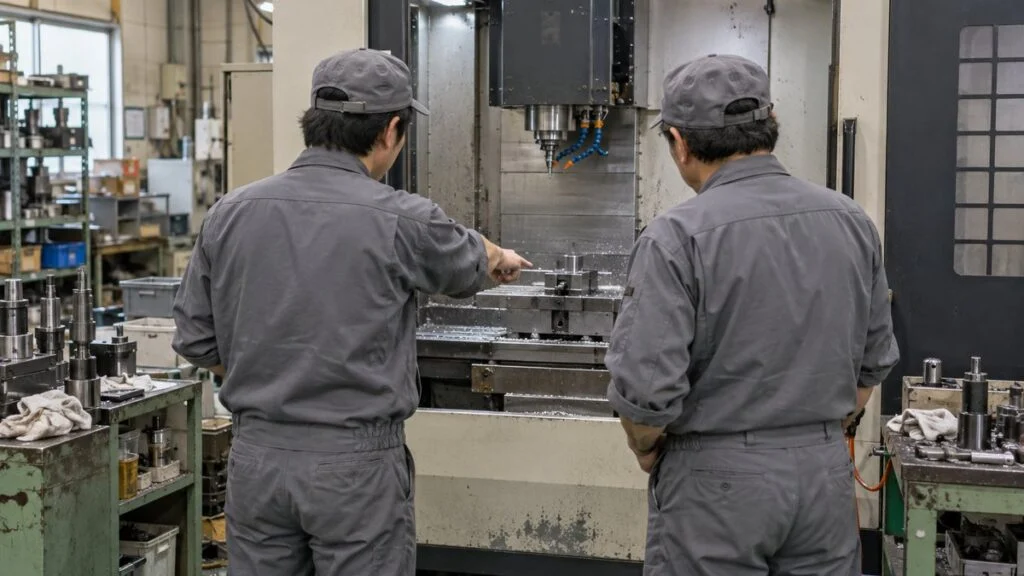
With the conditions clear, the supplier decides whether it can make the part. ISO 9001:2015 clause 8.2.3 also requires the organization to ensure it can meet the requirements. This is the internal check that the company can keep its promise, done before any price is set.
Three questions, answered in order, decide what kind of reply to send.
Whether the job is profitable is decided together with the cost estimate in the next step.
Each question goes to a different department. Production engineering answers on machining methods and process sequence, manufacturing on machine availability and labor hours, quality assurance on inspection, purchasing on material and outsourcing prices, and production control on lead time.
The request to each department always includes the quantity, the delivery date, and the date an answer is needed, not just the drawing. A department that receives only the drawing must guess the assumptions, and the answers come back inconsistent.
Purchasing gets quotes from its own suppliers, so it sends them the same kind of request the company received from its customer.
Related: Purchasing Process at Japanese Manufacturers: 8 Steps
There are three possible outcomes. Besides quoting as specified, the supplier can quote with conditions if a change makes the job possible, such as an alternative material, a looser tolerance, or a different delivery date.
If the supplier cannot make the part, or the job does not pay, it should decline early. The customer may be holding off on other suppliers while waiting for the answer. A one-line reason for declining also makes it more likely that the next inquiry will be a better fit.
For buyers: a "quote with conditions" is useful information. It can point to a requirement that is driving cost or lead time, so you can decide whether that requirement is really needed.
Step 5: Estimate the Cost
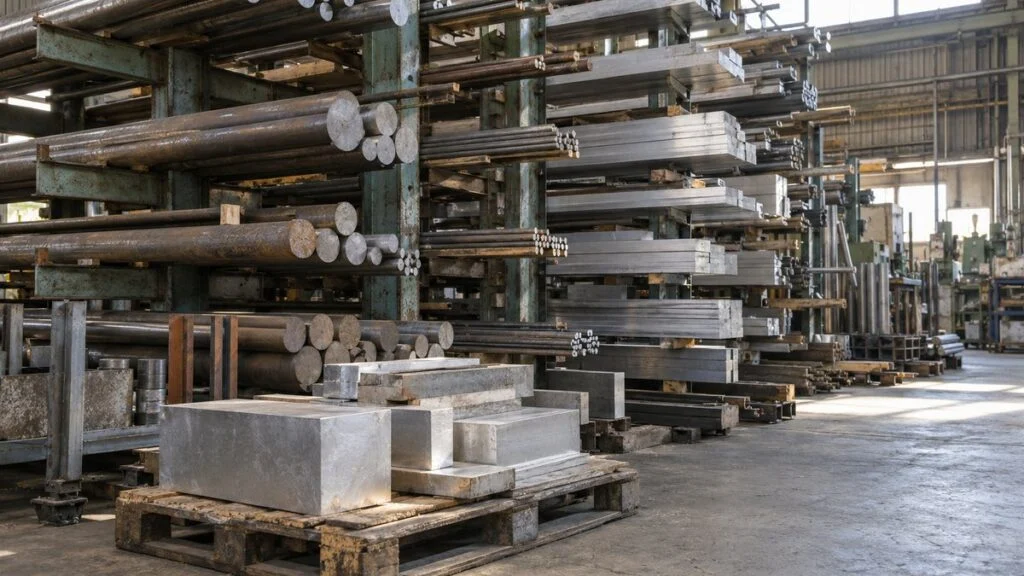
Once the supplier decides it can make the part, it builds up the cost. Companies split cost items in different ways, but for machined and fabricated parts, three groups keep the estimate organized: materials and outsourcing, processing, and one-time costs.
Building the price item by item makes it possible to explain it later.
How costs are grouped and allocated differs by company.
The SME Agency handbook points out that cost per product is complex to calculate and that many companies do not have a clear picture of it. Setting hourly rates and standard labor hours in advance is the starting point for estimating.
Why Unit Price Changes with Quantity
The cost of setup (preparing tools and jigs before machining starts) is divided by the run quantity to get the unit price, so the smaller the run, the more setup cost each piece carries.
When the setup cost is spread over a different quantity, the cost per piece changes.
Fictional figures for illustration. In practice, quantity also changes the material price and the machining method.
In this example, processing and material costs are the same, yet the unit price differs by JPY 180. Stating the quantity assumption in the quote is what lets the supplier explain that difference.
The JFTC's Q&A on the Act also covers the case where the work turns out to be much larger than planned after the quote. Ordering at the original unit price may count as unjustly low pricing (kaitataki), so the ordering company must get a new quote that reflects the final work and revise the price. In other words, Japanese rules expect the ordering side, too, to requote when the assumptions change.
Quote One-Time Costs Separately
The quotation should make clear whether mold and jig costs are built into the unit price or billed separately. If they are in the unit price, the quote should state the quantity over which they will be recovered. If production ends before that quantity is reached, part of the cost is never recovered.
Record the Cost Basis Date
The supplier records the date of the material and outsourcing prices it used. The SME Agency handbook stresses negotiating labor costs separately from raw material and energy costs. A breakdown by cost item with a basis date makes it possible to justify a price change later when costs move.
Step 6: Write the Quotation, Assumptions, and Validity
No Japanese law sets a single format for a quotation. But a quote that lists only price and delivery gives no basis for resolving a later disagreement about the assumptions. The assumptions and the validity period deserve as much weight as the price.
A quote states the price and the conditions that price depends on.
Not set by law or standard; compiled by the editors from items commonly included. Some industry associations publish quotation templates.
State the Assumptions
The assumptions list the drawing revision, quantity, material, any customer-supplied items, and the scope of inspection and packaging that the price is based on. Items not included, such as freight, mold storage, or special inspection, are listed as exclusions.
The SME Agency handbook recommends writing any item that stayed unclear after checking into the quotation and negotiating it as a risk factor before the order. When commercial terms are still unclear, it also describes noting in the remarks that the price may be adjusted, and getting agreement on that note.
Sample wording (fictional):
- This quotation is based on drawing B-1234, revision 3. If the drawing is changed, we will requote.
- Unit prices assume a minimum of 100 pcs per order.
- Material is assumed to be supplied free of charge by the customer. Any delivery change caused by late supply will be discussed separately.
- Mold costs are quoted separately. Storage after the end of production will be agreed separately.
State the Validity Period
Material prices and plant load change over time, so the quote includes a validity period. Each company sets the length based on material price movements and industry practice.
Under Japan's Civil Code, a contract is formed when the other party accepts an offer, and as a rule no written document is required (Article 522). An offer with a fixed acceptance period generally cannot be withdrawn, and it lapses if no acceptance is received within that period (Article 523).
Whether a given quotation counts as an offer depends on its wording and on the history of the deal; there is no single answer. That is exactly why it helps to state in writing how long the quote is valid and on what conditions. For questions about contract treatment, consult a lawyer.
Check the Purchase Order Against the Quote
The work does not end with the reply. When the purchase order arrives, the supplier compares it with the quote. If the quantity, unit price, delivery date, drawing revision, or payment terms differ, the supplier clarifies before accepting.
Article 528 of the Civil Code says that accepting an offer with conditions or other changes counts as rejecting it and making a new offer. ISO 9001:2015 clause 8.2.3 also lists contract or order requirements that differ from those previously expressed among the items to review.
In transactions covered by the Act described above, the ordering company must state the work, the delivery date and place, the price, the payment date, and other terms in writing or electronically right after ordering. A supplier that receives only a verbal order should ask for it in writing.
Step 7: Follow Up on Won, Lost, and Pending Quotes
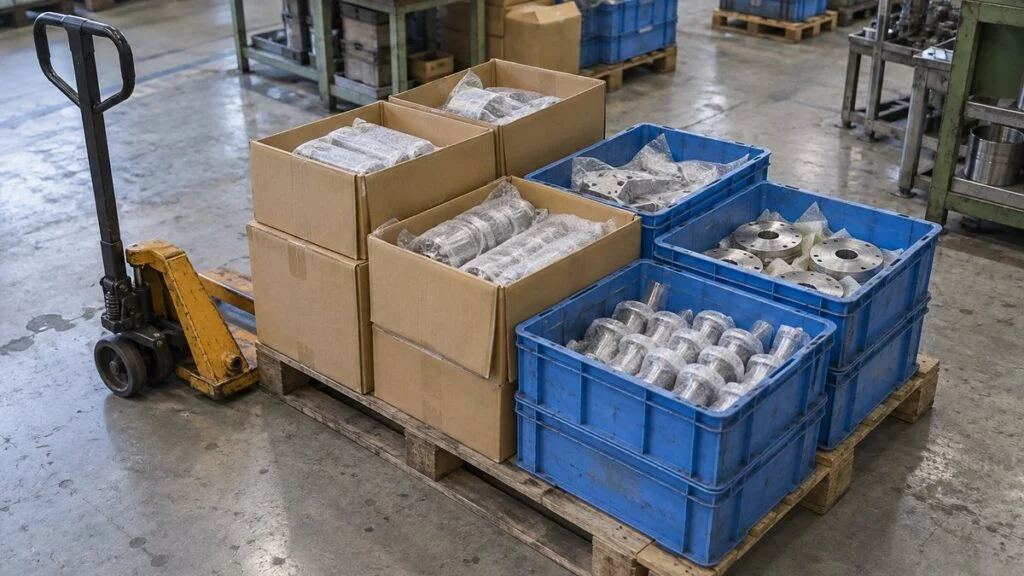
After the quote goes out, the result is won, lost, or on hold. The RFQ process ends only when the outcome is filled in on the log.
Whatever the result, record it in the log and use it next time.
When an order is won, the supplier confirms that nothing differs from the quote assumptions before scheduling production. ISO 9001:2015 clause 8.2.4 requires that when requirements change, the related documents are amended and the people concerned are made aware. Putting every post-order change in writing is what prevents rework.
For lost inquiries, recording the reason helps the next estimate. Customers do not always explain, but just asking whether it was price, delivery, specifications, or track record shows a pattern over time.
Quotes on hold are easily forgotten and left to expire. If an order arrives against an expired quote, the supplier rechecks material prices and plant load and requotes if needed.
It also helps to know in advance what happens when labor or raw material costs rise after the order. Under the Promotion Standards, if the supplier asks because costs have risen or the order has changed, the ordering company should negotiate without delay. In transactions covered by the Act, setting a price on its own while refusing to negotiate is prohibited.
Common Mistakes and How to Prevent Them
Each of these mistakes happens when one of the steps above is skipped.
- Quoting from an old drawing: write the revision in both the log and the quotation.
- Leaving out the quantity assumption: state the quantity per order in the quotation.
- Leaving mold and jig costs vague: state whether they are in the unit price or separate.
- Missing a change agreed by phone: confirm it by email and record it in the log.
- Only one person knowing the history: keep the log and question records in a shared location.
The shared cause is that confirmed content and assumptions were not put in writing. The SME Agency handbook also says that storing the workflow and checklists where everyone can access them lets anyone handle a quote and speeds up the response.
A checklist does not have to be complete on day one. Add one item each time you lose a quote or have to redo work, and the list will gradually fit your products.
RFQ Checklist: What to Include
Use this list when you send an RFQ to a Japanese manufacturer. If you are the supplier receiving a hikiai, use it to find what is missing and put those points in your question list. Each line matches an item the supplier would otherwise have to ask about.
| Item | What to include |
|---|---|
| Drawings and revision | Drawing numbers with revision letters or numbers, plus every specification and standard the drawing references |
| Application | What the part does and where it is used (outdoors, food contact, medical, and so on) |
| Material | Material designation and standard, stock form if it matters, any required maker |
| Critical features | Which tolerances and features are critical, and the general tolerance class |
| Surface and heat treatment | Treatment type, thickness or hardness, area to be treated |
| Inspection and documents | What to measure, sample size, inspection report and material certificate requirements |
| Quantity | Annual or total quantity, quantity per order, order frequency, expected program life |
| Delivery | Requested first delivery, later delivery schedule, split deliveries allowed or not |
| Packaging and shipping | Packing requirements, delivery address, Incoterms or who pays freight |
| Supplied material | Whether you will supply any material or parts, free or charged, and when |
| Tooling | Who pays for molds, jigs, and gauges, who owns them, and how storage and disposal will be handled |
| Commercial terms | Payment terms, currency, whether prices can be reviewed when costs change |
| Reply date and format | When you need the quote, whether a rough estimate is acceptable first, price breaks you want to see |
| Confidentiality | NDA status and whether the supplier may share drawings with its subcontractors for quoting |
English RFQ Email Template
Adapt this email for an RFQ to a Japanese manufacturer. Short, numbered requests are easier for a non-native reader to answer item by item.
Subject: Request for Quotation: Bracket, Drawing B-1234 Rev. 3, reply by [date]
Dear [Name],
We would like to request a quotation for the part below. Drawings and specifications are attached. [This request is covered by our NDA dated [date]. You may share the drawings with your subcontractors for quoting purposes.]
1. Part: Bracket, drawing B-1234, revision 3 (material and surface treatment as shown on the drawing)
2. Application: [what the part does and where it is used]
3. Quantity: [total quantity per year]; [quantity] pcs per order, [frequency]
4. Delivery: first delivery by [date] to [address]; then [schedule]
5. Inspection: [requirements]; please include an inspection report and material certificate with each shipment
6. Packaging: [requirements]
7. Tooling: please quote molds and jigs separately and state the quantity they are designed for. [Tooling will be owned by us. Please propose storage terms after production ends.]
8. Terms: [payment terms], [currency], [Incoterms]Please include in your quotation:
- Unit price for [quantity A] and [quantity B] pcs per order
- One-time costs listed separately
- Lead time after order
- Assumptions and exclusions
- Validity periodIf anything is unclear, please send all your questions in one list by [date], and we will answer within [number] business days. If a full quotation will take longer than [date], please let us know when to expect it.
Best regards,
[Your name]
[Company]
If you are the supplier answering a Japanese customer's hikiai, the same structure works in reverse. Reply with one numbered list of questions, then state in your quote which revision, quantity, and tooling terms the price assumes.
Where This Guide Does Not Apply
- The seven steps and the 12 check items are a general framework, illustrated here with machined parts. Not every inquiry needs all 12 checks. Each company's process, departments, and lead times differ, and so do practices across industries.
- Cost groups, allocation methods, and quote formats vary by company. The cost figures in this guide are fictional.
- Whether the Japanese Act and the Promotion Standards apply depends on the transaction type and on both companies' capital or headcount. Whether they reach a cross-border transaction is for legal counsel to decide.
- Whether a quotation is a binding offer under Japanese law depends on its wording and the deal history. Contract questions should go to a lawyer.
- ISO 9001 clause numbers are from the 2015 edition. Check the 2026 edition for current numbering.
FAQ
What Does Hikiai Mean?
Hikiai (引き合い) is the Japanese business term for a customer inquiry asking whether a supplier can make something, at what price, and by when. In manufacturing it is close to an RFQ. A hikiai usually leads to a mitsumorisho (見積書), the written quotation.
Why Does a Japanese Manufacturer Take So Long to Quote?
Most of the time goes into checking conditions and coordinating internally, not calculating the price. Production engineering, manufacturing, quality assurance, purchasing, and production control each answer part of the question. Missing information in the RFQ adds a round of questions.
What Should an RFQ to a Japanese Supplier Include?
Typically: the drawings with revision, application, material, inspection and document requirements, quantity per order and frequency, delivery schedule, packaging, tooling ownership, payment terms, and a reply date. The checklist above covers each item.
Why Do Japanese Suppliers Ask So Much About Molds and Jigs?
Tooling decides who carries the cost if production ends before the tooling is paid off, and who stores it afterward. The Promotion Standards revised in 2026 also ask ordering companies to seek explicit advance agreement on storage payments, for example in a memorandum, and to pay suppliers for storage.
Is a Japanese Quotation a Binding Offer?
It depends. Under Japan's Civil Code, a contract forms when an offer is accepted, and an offer with a fixed acceptance period generally cannot be withdrawn during it. Whether a specific quotation is an offer depends on its wording and the deal history, so check with legal counsel if it matters.
Sources
- RFQ-stage checks, quotation checklist, and quotation template: Small and Medium Enterprise Agency, Price Negotiation Handbook for SMEs, revised edition (Japanese) (first published March 2022, last revised January 2026)
- Name, effective date, and outline of the amended Act: JFTC, press release on the amendment of the Subcontract Act (May 16, 2025)
- Scope, 60-day payment, promissory notes, written terms: DLA Piper, "Major Amendments to Japan Subcontract Act"
- Obligations of the ordering company: JFTC, obligations of entrusting businesses (Japanese)
- Ban on promissory notes and on setting prices without negotiation: JFTC, leaflet on payment rules under the Act (October 2025, Japanese)
- Tooling storage and requoting after work changes: JFTC, FAQ on the Act (Japanese)
- Promotion Standards: Small and Medium Enterprise Agency, Promotion Standards (Japanese)
- June 24, 2026 revision of the Promotion Standards: METI press release (Japanese)
- Civil Code Articles 522, 523, and 528: e-Gov Law Search, Civil Code (Japanese)
- ISO 9001 current edition: ISO, ISO 9001 Quality management systems: Requirements; DNV, "The new edition of the quality management system standard ISO 9001 is released"
- JIS Q 9001:2015 clauses 8.2.3 and 8.2.4: Japanese Industrial Standards Committee, JIS search (Japanese)
Original article in JapaneseThis guide is adapted from a MONOSCOPE article written for readers in Japan: 引き合い対応の進め方|見積回答までの7ステップと確認項目
About the editor
 MONOSCOPE EditorFOUNDER & EDITOR
Spent about ten years at a plant equipment maker and a plant engineering company, proposing, designing, and commissioning equipment, then moved into web marketing. Now a web consultant for B2B manufacturers, helping them explain their products and technology. Licensed in Japan as an Energy Manager and a Third-Class Chief Electrical Engineer.
Has run an engineering blog since 2017 (500+ articles) and a Japanese YouTube channel with about 20,000 subscribers. Each English guide is written from the Japanese shop-floor point of view and checked against the cited standards.