Hidden Champions in Japan: Global Niche Top Suppliers
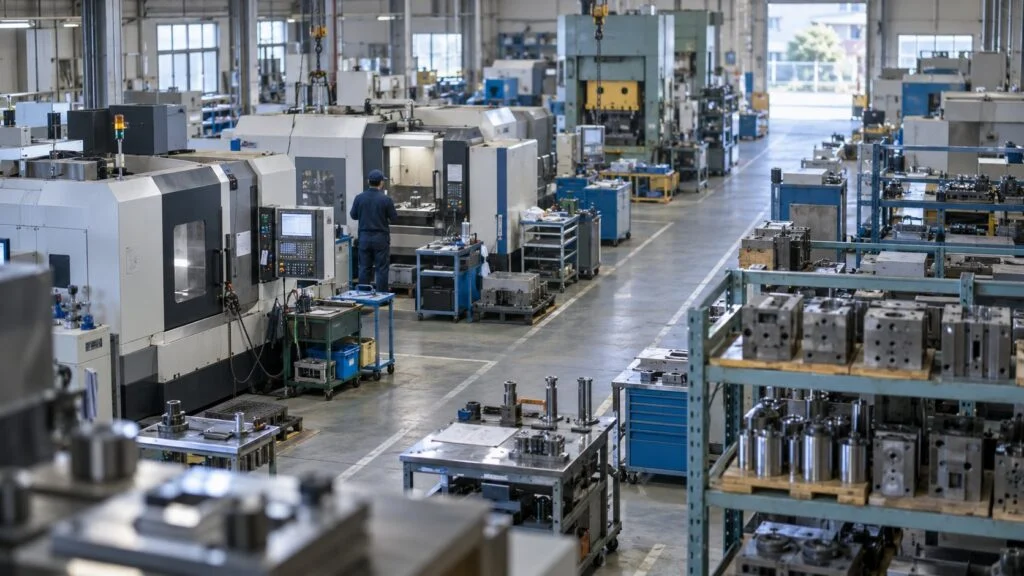
If you work with industrial robots, printed circuit boards, or semiconductors, you may already depend on a Japanese supplier whose name you barely know. Japan has many mid-sized and small manufacturers that hold a large share of the world market for one specific part, material, or piece of equipment. Because they sell to other manufacturers rather than to consumers, few people outside their industry know their names.
In Japan these firms are called nicchi toppu kigyo (ニッチトップ企業, "niche top companies"). Outside Japan, the closer term is "hidden champions." This guide explains what they are, how Japan's Ministry of Economy, Trade and Industry (METI) selects them for its Global Niche Top (GNT) program, why they are hard to replace, and how buyers and engineers can find and evaluate one.
Contents
- What Is a Niche Top Company?
- METI's Global Niche Top (GNT) Companies Selection 100
- Why Niche Top Companies Are Hard to Replace
- Examples of Japanese Niche Top Companies by Field
- What This Means When You Buy From One
- How to Find Japanese Niche Top Suppliers
- Checklist: Questions to Ask a Niche Top Supplier
- Limits of This Guide
- FAQ
- Sources
What Is a Niche Top Company?
A niche top company holds a high share of a specific product market that is not large in total size. The idea is close to the "Hidden Champions" concept popularized by the German management thinker Hermann Simon.
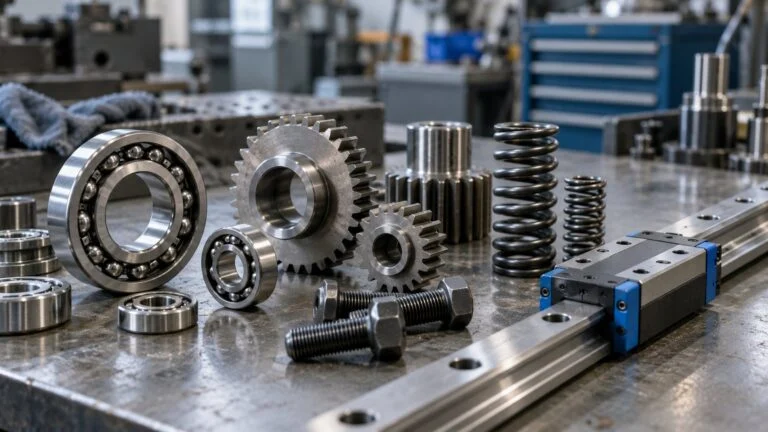
"Niche" does not mean unimportant. Many of these products are parts or materials that the final product cannot be built without: speed reducers for industrial robot joints, materials used to pattern semiconductor circuits, and terminals for electronic components. Take a smartphone. It contains many electronic components, and the materials, production equipment, and inspection equipment behind each of those components come from specialist makers. Behind everyday products sit several layers of parts, materials, and equipment suppliers, and in each layer companies compete for the top position worldwide.
Small markets also make it harder for large companies to enter, and once a niche top company establishes its technology and customer relationships, both tend to last. As a result, many of these firms stay highly profitable for long periods, even though business cycles still affect them.
Japanese manufacturing is built as a pyramid: large finished-goods makers at the top, supported by a broad base of parts, materials, and equipment makers. Niche top companies are the firms in that base that refined one technology so deeply that customers around the world, not just in Japan, now choose them. Their biggest strength is that the supply chain has no easy substitute for them.
Japan has many such companies partly because its automotive and electronics industries grew large at home. Parts and materials makers sharpened their technology by meeting those customers' strict quality requirements, and that technology later won over customers abroad.
The market is small, but in its field the company has no easy substitute.
Not every niche top company has all of these traits.
METI's Global Niche Top (GNT) Companies Selection 100

METI recognizes companies that win in niche segments of the world market through its "Global Niche Top (GNT) Companies Selection 100." It has published two rounds so far, in 2014 and 2020. For a buyer, the published lists work as a ready-made directory of specialist Japanese suppliers.
The 2014 Selection
METI ran the first open call in fiscal 2013 and announced the winners in March 2014. Out of 281 applicants, it selected 100 companies: 6 business divisions of large companies, 25 mid-sized companies, and 69 small and medium-sized enterprises (SMEs). SMEs made up about 70% of the list.
The share thresholds were 10% or more of the world market for mid-sized companies and SMEs. For large companies, the bar was 20% or more in a market worth roughly JPY 10–100 billion. By category, machinery and processing had the most companies, followed by materials and chemicals, electrical and electronics, and consumer goods and others.
The 2020 Selection
METI announced the 2020 edition in June 2020. Despite the "100" in the name, it selected 113 companies from 249 applicants: 61 in machinery and processing, 24 in materials and chemicals, 20 in electrical and electronics, and 8 in consumer goods and others. By size, 37 were large companies, 21 mid-sized, and 55 SMEs. (In this program, a "mid-sized company" is a large company with sales of JPY 100 billion or less.)
The share requirements were similar to 2014:
- Large companies: a world market of roughly JPY 10–100 billion, and a world share of roughly 20% or more in at least one of the past three years
- Mid-sized companies and SMEs: a world share of roughly 10% or more in at least one of the past three years
Reviewers also looked at whether a company combined market share with profit, how unique and self-reliant its technology was, and how important it was to the supply chain.
As of September 2026, the 2020 edition is the latest selection listed on METI's website. METI and its regional bureaus publish the selected companies, and METI also offers an English version of the 2020 list.
The 2020 winners are not concentrated in Tokyo. Companies under the Kanto Bureau of Economy, Trade and Industry (which covers Tokyo and the surrounding prefectures) took 46 places, or 40.7% of the total, including 26 in Tokyo and 8 in Kanagawa. The other roughly 60% came from other regions of Japan.
Selection also gives a B2B company an easy way to show its strength to customers and job seekers who would not otherwise know it. That is why many selected companies mention it in their company profiles and recruiting pages.
Machinery and processing accounts for more than half of the companies selected.
Source: Kanto Bureau of Economy, Trade and Industry, "2020 Global Niche Top Companies Selection 100" (Japanese). Total selected: 113 companies.
Why Niche Top Companies Are Hard to Replace
METI's analysis of the 2014 winners puts numbers on their strength. In specific product markets worth from a few hundred million yen up to about JPY 100 billion, the selected companies held an average world share of 59.6%. Their average operating margin was 10.7%, far above the 2.9% average for manufacturing as a whole that METI used for comparison. Overseas sales averaged 45.1% of revenue, and the companies had kept a world share of 10% or more for an average of 19.9 years. In other words, they are not riding a one-off hit product; customers worldwide have chosen them year after year.
Technology Competitors Cannot Easily Copy
The first reason is technology that others find hard to imitate. Processing know-how, material formulations, and inspection methods built up over years of refinement cannot be reproduced from drawings and specifications alone. Many of these suppliers join a customer's product development at an early stage and help write the specifications, which makes them even harder to replace.
Markets Too Small for Large Companies
The second reason is market size. A small market rarely justifies entry by a large company. The ability to handle many small, varied orders with care is itself a barrier to entry.
Selling to the World From the Start
The third reason is that these companies target customers worldwide, not just in Japan. A niche that is small in any one country adds up to a viable market globally. Selling to many countries also softens the blow when one country's economy turns down.
High margins fund research and equipment, which widens the technology gap further. And because customers choose them for quality and performance rather than price, these companies find it easier to pass rising raw material costs on to customers.
People and Accumulated Skills
Many niche top companies rely on a small group of engineers and technicians who have worked in the same field for years. These people carry each customer's detailed requirements and the lessons from past defects as working knowledge, and a new entrant cannot catch up with that in a short time.
Concentrating on one technology can also become a weakness. If the technology on the user side changes significantly, demand for the product itself can shrink. The strongest niche top companies keep applying their core technology to other fields and developing the next products.
Technology, market, and management reinforce each other to sustain a high share over time.
Examples of Japanese Niche Top Companies by Field
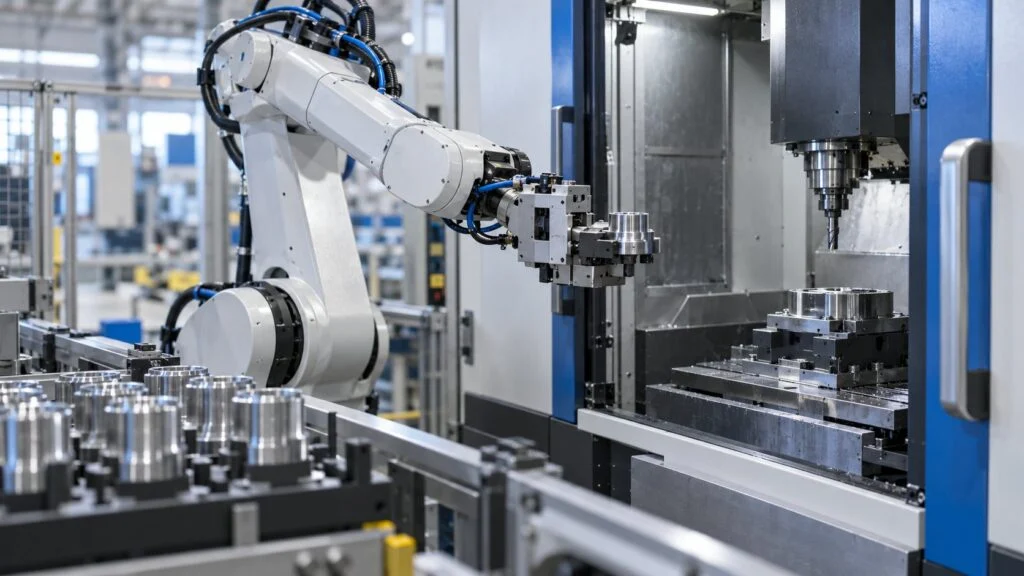
The companies below are examples by field. The share figures come from each company's website or investor relations (IR) materials, so the survey date and method differ from company to company. Where a company does not publish a number, we list only the product and its position.
Before you compare share figures, check what each one is based on. The same product can show very different numbers depending on:
- Whether the share is by value or by volume
- Which market it covers (all applications, or one segment)
- Whether it is the company's own estimate or a research firm's survey
Look at the basis and the date, not just the size of the number.
Machinery and Machine Elements
Nabtesco makes precision reduction gears for industrial robot joints. It states a world share of about 60% for joints of medium and large industrial robots (company estimate). It also reports about 60% of the Japanese market for automatic doors, applying its precision motion-control technology across a wide range of products.
Related: Japanese Robot Makers: Pendants, Service, and Safety Rules
Factories are adopting industrial robots, especially in automotive and electronic component plants, as labor shortages grow. More robots mean more reduction gears for their joints, so a parts maker in this position grows along with the end market.
Union Tool describes itself as the top company in PCB drills, the tools that drill holes in printed circuit boards, with about 30% of the world market (company estimate). Its drills support board processing for smartphones, servers, and other electronics. As electronics shrink, the holes get smaller. Mass-producing drills thinner than a human hair, consistently, depends on years of R&D and manufacturing know-how.
Giken was selected for the 2020 GNT list for its Silent Piler, a machine that presses piles into the ground while keeping vibration and noise low. The company says it holds well over 90% of the global market for hydraulic pile press-in and extraction machines.
Nikkiso makes cascades, carbon fiber reinforced plastic (CFRP) parts used in aircraft engine thrust reversers. According to its April 2025 announcement, its world share for commercial aircraft is over 90%.
Materials and Chemicals
Tokyo Ohka Kogyo (TOK) states that it ranks first in the world in photoresists, the materials used to form semiconductor circuits. Its share is 26.1%, based on estimated 2025 shipment volume from Fuji Chimera Research Institute data. By type, it publishes 33.3% for KrF and 29.3% for EUV resists.
Related: Semiconductor Back-End Process: Flow and Japanese Suppliers
Furuya Metal specializes in processing rare precious metals such as iridium and ruthenium. Its website lists a 90% world share in iridium compounds for OLED displays and 70% in ruthenium sputtering targets for hard disk drives, among others.
In materials and chemicals, customers rarely switch suppliers once a product is built into their process, because changing materials means repeating quality validation. Once adopted, a material tends to stay in use for a long time, which is one reason these companies keep high shares.
Electronic Components and Test Equipment
Kohoku Kogyo makes lead terminals for aluminum electrolytic capacitors and optical components for submarine cables. Its December 2022 presentation for individual investors gives, for the fiscal year ended December 2021, a 60% world share in lead terminals overall (by value) and 50% in optical isolators.
ESPEC makes environmental test chambers, which recreate temperature, humidity, pressure, and other conditions to check product quality and performance. It was selected for the GNT list twice, in fiscal 2013 and in the 2020 edition, and states that it holds the top world share in environmental test equipment.
Beyond these examples, many other Japanese companies rank near the top worldwide in specific processes or materials for electronic components and semiconductors.
Related: Top Japanese Semiconductor and Electronic Component Makers
Line them up and a pattern appears: robots, semiconductors, aircraft, electronics, and construction. Many of these products support growth industries or social infrastructure. Niche top companies are less visible than finished-goods makers, but many are positioned to grow as their industries change.
Little-known parts, materials, and equipment makers near the top of world markets.
Figures published on each company's website or in IR materials. Survey dates and methods differ by company.
What This Means When You Buy From One
If your equipment or product depends on a niche top supplier, its strengths and its limits both reach your supply chain. These points come from how such companies are typically organized; check each one against the specific supplier.
- Deep expertise in a small team. Headcount is lower than at a large manufacturer, so one engineer often covers a wide range, from development through mass production and customer support. You may get a contact who knows the product very well, but there may be few other specialists in the company to step in when that person is unavailable. Where training depends on senior staff's experience, ask how skills are being passed on.
- Business tied to one main market. High share and high margins make the business stable, but results depend on the market for the main product. Companies in semiconductors and electronic components can see orders rise and fall sharply with the market cycle: plants run overtime and weekend shifts in boom periods and cut production in downturns. If the company depends heavily on one product or customer, a shift in technology can cut demand suddenly. For listed companies, check the revenue mix and new product fields in the Annual Securities Report (yuka shoken hokokusho) and medium-term business plan.
- Pricing based on value, not price competition. Customers choose them for quality and performance, so they can pass rising raw material costs on more easily than a commodity supplier can.
- Production in Japan, often outside major cities. METI's 2014 analysis found that GNT companies tend to produce mainly at their domestic plants while expanding overseas. Many have head offices or plants in regional Japan.
Weigh both sides before you commit to a single niche supplier.
How to Find Japanese Niche Top Suppliers
Niche top companies spend little on consumer-facing advertising, so they rarely show up in a casual search. Use several sources deliberately.
Start with the GNT lists. METI's list of selected companies is grouped by category, so you can browse by field or region, and the 2020 list is available in English. METI's regional bureaus also publish material on the selected companies in their areas. Keep in mind that many niche top companies are not on the list. METI selects only from companies that apply, so a missing name does not mean a weaker company. Treat the list as a starting point.
Read IR documents for listed companies. Look at the Annual Securities Report (有価証券報告書), integrated reports, and earnings presentations. Read claims such as "world share" or "top share" alongside the overseas sales ratio and operating margin to judge how strong the company really is.
Trace the supply chain. Pick one finished product and work down through the parts and materials inside it. You will reach the makers that are strong in specific components.
Related: Japanese Mechanical Components: Makers, Distributors, MISUMI
Go to trade shows and read the trade press. Specialist shows for machine tools, electronic components, and chemical materials have many exhibitors that are unknown to the public. Talking with their staff directly tells you a lot about their technology and culture.
Check local government programs. Prefectures, municipalities, and regional business associations sometimes award or profile strong local manufacturers. Their websites can surface suppliers in a specific region.
Once you have candidates, ask them two questions: "Why do customers around the world choose you?" and "Which fields are you trying to grow next?" A company whose people can explain both in their own words usually has a clear business focus.
Start from a public list, then confirm with company documents and in person.
For unlisted companies, use their official websites and profiles published by local governments and industry associations.
Checklist: Questions to Ask a Niche Top Supplier
Use these questions when you evaluate a Japanese niche supplier or review one already in your bill of materials. They follow from the points above; adapt them to your product and contract.
| Topic | What to ask | Why it matters |
|---|---|---|
| Share claim | Is the share by value or volume? Which market and year? Company estimate or research firm? | The same product can show very different figures |
| Track record | Which industries and countries do you supply? Is the company on a GNT list? | Shows how widely the product is proven |
| Contacts | Who is our technical contact, and who covers when that person is unavailable? | Small teams can have few backup specialists |
| Capacity | How did lead times change in the last demand peak? How do you allocate supply when orders surge? | Orders can swing sharply with the market cycle |
| Changes | How and how early will you notify us of material, process, or plant changes? | A material change can mean repeating quality validation |
| Pricing | How are raw material price changes reflected in our price? | Value-based suppliers pass cost increases on more easily |
| Production site | Where is our product made, and is there more than one site? | Production is often concentrated at plants in Japan |
| Direction | Which fields are you developing next? | Shows whether the business depends on one shrinking market |
A short inquiry you can adapt:
Subject: Inquiry about [product] for [application]
Dear [Name],
We are [company], a manufacturer in the [industry] sector based in [country]. We are evaluating suppliers of [product] for [application], with an expected volume of [quantity] per [month/year]. Could you share (1) your datasheet and available grades, (2) the industries and regions you currently supply, (3) your standard lead time and how it changed during recent demand peaks, and (4) your process for notifying customers of material or process changes?
If a technical meeting would help, we are happy to arrange an online call.
Best regards,
[Your name]
Related: RFQ to a Japanese Manufacturer: The 7-Step Hikiai Process
Limits of This Guide
- Market shares are figures published by each company. Survey dates, methods, and market definitions differ, and we have not verified them independently.
- The GNT lists include only companies that applied and were selected. As of September 2026, the 2020 edition was the latest.
- The averages (59.6% share, 10.7% margin, and so on) come from METI's analysis of the 2014 winners and do not describe any one company today.
- The buyer watch points describe common patterns, not any specific company named here. Confirm them with the supplier you deal with.
- This guide is not a supplier recommendation or investment advice.
FAQ
What is a hidden champion in Japan?
It is a company, often mid-sized or small, that holds a large share of the world market for one specific part, material, or piece of equipment, while staying almost unknown to the public. In Japan the usual term is "niche top company" (nicchi toppu kigyo).
What is the Global Niche Top Companies Selection 100?
It is a METI program that selects companies winning in niche segments of the world market. The 2014 round selected 100 companies, and the 2020 round selected 113. As a rule of thumb, mid-sized companies and SMEs needed a world share of about 10% or more, and large companies about 20% or more in a market of roughly JPY 10–100 billion.
Where can I find the list of GNT companies?
METI publishes the 2020 list on its website in Japanese and English, and its regional bureaus publish material on selected companies in their areas. Many strong niche suppliers are not on the list, so use it as a starting point only.
Are published market share figures reliable?
They are useful, but check the basis. A figure may be by value or by volume, cover the whole market or one segment, and come from the company's own estimate or a research firm. Compare figures only when the basis and year match.
Why are so many hidden champions Japanese?
Japan's automotive and electronics industries grew large at home, and parts and materials makers refined their technology to meet those customers' strict quality requirements. That technology later won over customers worldwide.
Sources
- 2014 GNT selection and analysis of the winners: METI Manufacturing Industries Bureau, "GNT Companies Selection 100: Analysis of Award Winners" (Japanese)
- 2020 GNT selection numbers and criteria: Kanto Bureau of Economy, Trade and Industry, "2020 Global Niche Top Companies Selection 100" (Japanese)
- 2020 GNT company list in English: METI, 2020 Global Niche Top Companies Selection 100 List
- Nabtesco product shares: Nabtesco, "Main products and shares" (Japanese)
- Union Tool PCB drill share: Union Tool, IR FAQ (Japanese)
- Giken GNT selection and press-in machine share: Giken, news release, July 9, 2020 (Japanese)
- Nikkiso cascade share: Nikkiso, news release on 800,000 cascades shipped, April 2, 2025 (Japanese)
- Tokyo Ohka Kogyo photoresist share: TOK, "TOK at a glance" (Japanese)
- Furuya Metal product shares: Furuya Metal, "Furuya Metal at a glance" (Japanese)
- Kohoku Kogyo product shares: Kohoku Kogyo, presentation for individual investors, December 2022 (Japanese)
- ESPEC GNT selection: ESPEC, news release on selection for the 2020 GNT Companies Selection 100 (Japanese)
Original article in JapaneseThis guide is adapted from a MONOSCOPE article written for readers in Japan: 知られざる優良メーカー|世界シェアトップを握る日本のニッチトップ企業
About the editor
 MONOSCOPE EditorFOUNDER & EDITOR
Spent about ten years at a plant equipment maker and a plant engineering company, proposing, designing, and commissioning equipment, then moved into web marketing. Now a web consultant for B2B manufacturers, helping them explain their products and technology. Licensed in Japan as an Energy Manager and a Third-Class Chief Electrical Engineer.
Has run an engineering blog since 2017 (500+ articles) and a Japanese YouTube channel with about 20,000 subscribers. Each English guide is written from the Japanese shop-floor point of view and checked against the cited standards.