Japanese Automakers and Their Suppliers: Keiretsu and Buying

Say your plant in Ohio, Thailand, or India wants to supply a Japanese automaker, or one of the big Japanese Tier 1s that feed it. Before you quote, you want to know a few things. Is the customer part of the Toyota group or independent? Does it keep long-term relationships with its suppliers, or is it cutting the number of suppliers right now? How often does it revise part prices? Japanese automakers answer these questions differently, and the answers have shifted in the past five years.
This guide covers the major Japanese automakers and their two largest group suppliers, Denso and Aisin. For each one, it explains how big the company is, which suppliers it is tied to, and what its published purchasing policy says. It ends with a checklist, questions to ask the Japanese side, and a sample email. All financial figures are for the fiscal year ended March 31, 2026 (the Japanese "FY2025" or "FY2026" label varies by company), taken from company results and English-language reports listed under Sources.
For how the tiers, keiretsu, and annual cost-down requests work in general, see Japanese Automotive Supply Chain: Tiers, Keiretsu, Pricing. This article focuses on the individual companies.
Contents
- Japan's Largest Automotive Companies by Revenue
- Who Belongs to Which Group
- How Each Automaker Works With Suppliers
- Major Consolidation Moves Since 2021
- What This Means When You Supply a Japanese Automaker
- Checklist Before You Quote a Japanese Automotive Customer
- Questions to Ask the Japanese Side
- Where This Picture Does Not Apply
- FAQ
- Sources
Japan's Largest Automotive Companies by Revenue

Figure 1 ranks the main Japanese automakers and the two largest group suppliers by consolidated revenue. Toyota is more than twice the size of Honda, and Denso, a supplier, is larger than Suzuki, Mazda, Subaru, or Mitsubishi Motors.
Toyota is far ahead. Two suppliers, Denso and Aisin, sit among the automakers.
Consolidated figures for the fiscal year ended March 31, 2026, from company results and English-language reports. Toyota reports "operating revenues"; the others report "revenue," "sales revenue," or "net sales." Figures include non-automotive businesses such as motorcycles and financial services.
Read these numbers with two caveats. First, the scope differs: Honda's revenue includes a large motorcycle business, power products, and financial services, and Toyota also has a financing arm. Second, revenue does not equal profit. In the same year, Nissan posted a net loss of ¥533.1 billion, and Honda posted an operating loss of ¥414.3 billion, mainly from EV-related losses and US tariffs.
For a supplier, profit matters as much as size. A customer with thin margins has less room to absorb your material or labor cost increases and more reason to push for cost reductions. Figure 2 shows how far apart the operating margins are.
Margins range from under 1% to about 10%, a gap of more than 10 times within the same industry.
Calculated as operating profit divided by revenue from each company's results. Honda is excluded because it posted an operating loss. One year's margin is affected by exchange rates, tariffs, and one-time charges, so look at several years before drawing conclusions.
Who Belongs to Which Group
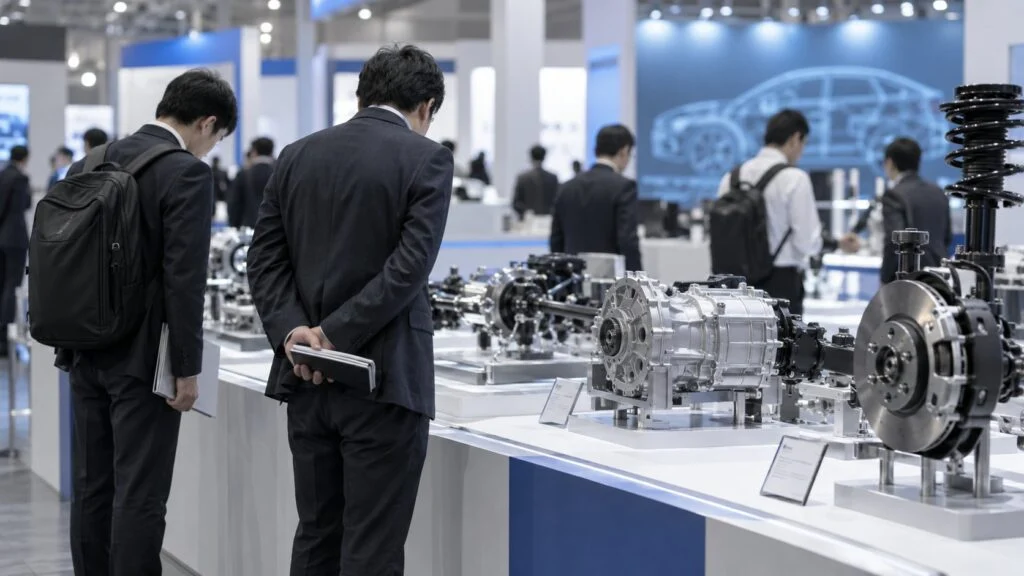
Japanese automakers are not equally tied to their suppliers. Toyota still sits at the center of a large group of affiliated suppliers and holds equity stakes in several other automakers. Honda is about to take majority control of one large supplier, Astemo. Nissan sold most of its own supplier group years ago. Figure 3 gives the overall map.
Group ties are strongest around Toyota. Independent and foreign Tier 1s supply all of them.
Examples only. Group membership is a guide; actual business relationships differ by company and by part.
In practice, "group" does not mean "exclusive." Denso and Aisin sell to automakers outside the Toyota group, and Toyota buys from independent and foreign suppliers. Group membership is more useful as a hint about which supplier is likely to be the incumbent on a part.
How Each Automaker Works With Suppliers
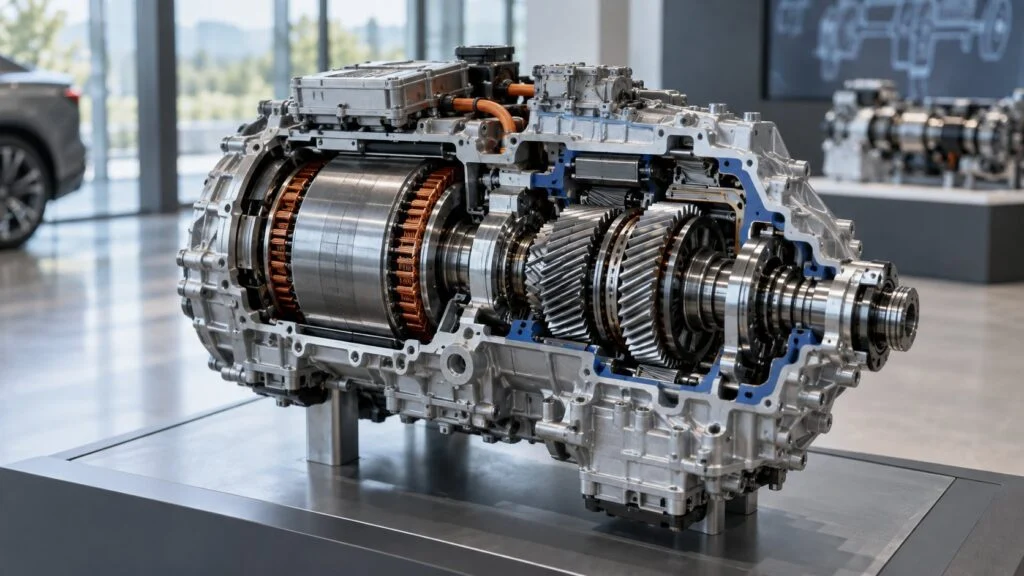
The sections below summarize each company's size, its supplier ties, and what it has published about purchasing. Company policies are what the company says in public; how an individual buyer or plant applies them can differ.
Toyota: Long-Term Suppliers and Twice-a-Year Price Revisions
Toyota is Japan's largest automaker. Its revenue reached ¥50.68 trillion, making it the first Japanese company to pass ¥50 trillion, and operating income was ¥3.77 trillion, down 21.5%, largely because of US tariffs. Including Daihatsu and Hino, the Toyota group sold about 11.32 million vehicles worldwide in calendar 2025, keeping the global top spot for the sixth straight year.
Toyota describes its purchasing mission as getting "the best possible products at the lowest possible cost" on a stable, long-term basis, and says "lowest cost" means fair prices that keep long-term relationships going. Toyota's corporate history and its regional purchasing materials list three principles: fair competition based on an open door to new suppliers, mutual benefit based on mutual trust, and local sourcing in each region where it builds vehicles.
According to Toyota's own 2024 article on supplier relations, the company works with about 400 domestic Tier 1 suppliers. Across its whole supply chain, about 60,000 companies are involved, and annual orders total about ¥7 trillion. Several points from that article matter to suppliers:
- Part prices are normally revised twice a year, in April and October, based on each supplier's situation rather than a flat rate.
- Changes in material and parts costs are passed through under rules agreed with suppliers. Special cases, such as sudden material price spikes, are handled individually.
- Toyota negotiates directly only with Tier 1 suppliers. It says it cannot step into Tier 2 prices, because doing so could count as abuse of a superior bargaining position under Japan's Antimonopoly Act.
- Joint cost reduction includes reviewing specifications that are tighter than customers need, such as costly inspection of a small blemish on the underside of a seat that no customer sees.
The group itself is being reshaped. Toyota sold part of its Denso stake in 2023 and part of its Aisin stake in 2024, with plans in each case to bring its holding to about 20%. In March 2026, a tender offer by a Toyota Fudosan subsidiary for Toyota Industries was completed, a deal reported at about ¥5.9 trillion that takes Toyota Industries private. The move unwinds cross-shareholdings within the group and is one of the largest acquisitions ever between Japanese companies. For a Tier 2 supplier, these changes do not end the group relationships, but they do give group suppliers more freedom to sell outside Toyota.
For one recent example of how Toyota works with battery suppliers in the US, see Toyota's Michigan Battery Center: What Changes for Suppliers.
Honda: Open Competition, Equal Partnership, and Astemo
Honda's revenue was ¥21.80 trillion, up 0.5%, but it posted an operating loss of ¥414.3 billion, mainly from EV-related losses and tariffs. Honda is unusual among Japanese automakers because of its large motorcycle business: it sold about 22.1 million motorcycles, far more than its 3.39 million automobiles, and motorcycle growth more than offset a decline in automobiles. EV-related losses of about ¥1.45 trillion pushed Honda to a net loss of ¥423.9 billion, its first since it listed in 1957, and its EV strategy is now under review.
Honda publishes its purchasing policy in English. Its "Purchasing Belief" is to procure good products at reasonable prices and in a timely manner through fair, equitable, and transparent business. Its "Three Purchasing Principles" are:
- Fair and open trade: Honda does business with suppliers that meet its requirements for quality, quantity, price, and timing and share its approach to sustainability, based on open competition.
- Equal partnership: Honda deals with suppliers on an equal footing regardless of their size or nationality.
- Respect for suppliers: Honda respects each supplier's management and independence.
Honda's ESG Report 2025 adds details that affect suppliers directly. Honda encourages each region to source locally, and local procurement in North America reaches 80% for major global models. When selecting suppliers, Honda looks at quality, cost, delivery, development, and environment (QCDDE) as well as human rights, labor, safety, compliance, risk management, and information protection. In Japan, it moved to third-party supplier ESG surveys using a self-assessment questionnaire (SAQ), with full-scale use starting in the fiscal year ended March 2026, and plans to cover all direct material suppliers worldwide by the fiscal year ending March 2028.
On the supplier side, Honda holds 40% of Astemo, the supplier formed in 2021 from Hitachi Automotive Systems and three Honda-affiliated suppliers (Keihin, Showa, and Nissin Kogyo). In December 2025, Honda agreed to buy another 21% from Hitachi, which would give Honda 61%, Hitachi 19%, and JIC Capital 20%. On June 30, 2026, Honda moved the expected closing to the end of December 2026 at the latest (the end of its fiscal third quarter), because some regulatory approvals were still pending.
Nissan: Fewer Suppliers, More Volume per Supplier
Nissan's revenue was ¥12.01 trillion, down about 5%, and it posted a net loss of ¥533.1 billion, its second straight annual loss. Nissan and Honda signed a memorandum of understanding (MOU) on December 23, 2024, to study a business integration, but they terminated it on February 13, 2025. Mitsubishi Motors had also been considering how to work with the two companies. Nissan is now restructuring on its own under a plan called Re:Nissan, announced in May 2025.
Re:Nissan has direct consequences for suppliers. Nissan targets total cost savings of ¥500 billion compared with fiscal 2024, including ¥250 billion in variable costs. It says it will restructure its supplier panel "to secure more volume for fewer suppliers," cut parts complexity by 70%, consolidate vehicle plants from 17 to 10 by fiscal 2027, and reduce platforms from 13 to 7 by fiscal 2035. If you supply Nissan, expect sourcing decisions in which some suppliers gain volume and others lose the business.
Nissan's supplier base also looks different from Toyota's. Nissan sold its stake in Calsonic Kansei, its largest affiliated supplier, to KKR in 2017. Calsonic Kansei later merged with Magneti Marelli to form Marelli, which filed for Chapter 11 in the US in June 2025. For a recent example of Nissan assigning a whole system to a foreign Tier 1, see Nissan, Valeo, Wayve: What a System Tier 1 Means for ADAS.
Suzuki: A Supplier Base Built Around India
Suzuki's revenue rose about 8% to ¥6.29 trillion, a record, driven mainly by stronger demand in India. Its operating margin of about 9.9% was one of the highest among Japan's automakers. Suzuki focuses on kei cars (Japan's minivehicle class) and compact cars, and India is its most important market through its subsidiary Maruti Suzuki.
For suppliers in India, Maruti Suzuki is the relevant buyer. Its chairman said in 2022 that the company had about 20 joint ventures with suppliers, and a large share of its parts is made in India. If you are a Japanese or Indian parts maker, you may meet Suzuki-related joint ventures as competitors, partners, or customers.
Mazda, Subaru, and Mitsubishi Motors: Thin Margins
The three mid-size automakers all had a hard year. Mazda's net sales fell 2% to ¥4.92 trillion, and operating profit was ¥51.6 billion; Mazda cited US tariffs, the end of BEV incentives, and higher raw material and logistics costs. Subaru's revenue rose 2.1% to ¥4.78 trillion, but operating profit fell about 90% to ¥40.1 billion. Mitsubishi Motors' net sales rose about 8% to ¥2.90 trillion, while operating profit fell 63% to about ¥75.5 billion, mainly because of US tariffs.
Mazda and Subaru both have capital alliances with Toyota, and Mitsubishi Motors is an alliance partner of Nissan and Renault. All three depend heavily on overseas sales. Subaru, for example, sold 793,000 of its 896,000 consolidated vehicles outside Japan in the same year, about 90%. When margins are this thin, expect close scrutiny of every price increase request; see Price Increase Requests in Japan: How Suppliers Negotiate.
Denso and Aisin: Tier 1 Customers in Their Own Right
If you are a Tier 2 or Tier 3 supplier, your Japanese customer is more likely to be a Tier 1 such as Denso or Aisin than an automaker. Both are core Toyota group companies, and both sell to other automakers too.
- Denso: Revenue was a record ¥7.54 trillion, and operating profit rose 6.5% to ¥552.5 billion despite US tariffs and higher material costs, thanks to efficiency gains and better plant utilization. Denso is strong in electrification and electronic control parts. Revenue grew from both the Toyota group and other automakers during the year.
- Aisin: Formed in April 2021 by merging Aisin Seiki and Aisin AW, Aisin is strong in transmissions and other drivetrain parts. Revenue was ¥5.12 trillion, up 4.5%, and operating profit was ¥228.8 billion, up 12.7%. The shift from engine drivetrains to electrified drivetrains is both its main challenge and a growth opportunity, so the parts it buys are changing too.
- Global competition: Both compete with German megasuppliers such as Bosch and Continental for business from automakers worldwide.
Commercial Vehicles: Isuzu and ARCHION
Trucks and buses form a separate market with different customers and performance requirements. The main Japanese players are Isuzu and ARCHION, a holding company that combined Hino Motors and Mitsubishi Fuso Truck and Bus and began operating on April 1, 2026. Daimler Truck and Toyota each hold about 25% of ARCHION, so this part of Japan's industry is no longer purely Japanese.
Major Consolidation Moves Since 2021

Electrification and software require large investments, and Japanese automotive companies have responded by combining. Figure 4 groups the main moves into supplier and group restructuring and automaker restructuring.
Supplier and group restructuring on one side, automaker restructuring on the other.
Based on company announcements and press reports. Honda's planned increase of its Astemo stake to 61% was still pending as of June 30, 2026.
Astemo is the most notable of these. It brought together suppliers from the Hitachi and Honda groups, crossing traditional keiretsu lines, and it is now set to become a Honda subsidiary. The Aisin merger, by contrast, combined two Toyota group companies to remove overlapping development and concentrate investment on electrification.
What This Means When You Supply a Japanese Automaker
Put the company profiles together and a few practical points stand out:
- Know whether you are quoting to the automaker or a Tier 1. Toyota, for example, negotiates prices only with its Tier 1s. As a Tier 2, your price discussion is with Denso, Aisin, or another Tier 1, not with Toyota.
- Know the price revision cycle. Toyota revises part prices in April and October. Ask each customer when its cycle runs, so your cost increase request arrives in time.
- Expect local-content targets. Toyota and Honda both state local sourcing as policy, and Honda reports 80% local procurement for major global models in North America.
- Prepare for ESG questionnaires. Honda is rolling out third-party ESG self-assessments to all direct material suppliers. Other Japanese customers ask for similar data, including carbon footprints; see Product Carbon Footprint Calculation for Japanese Customers.
- Watch for supplier consolidation. Nissan's plan to give more volume to fewer suppliers is a chance to win more business and a risk of losing it. Ask early where your parts stand.
- Check your customer's financial health. Thin margins and losses at several automakers mean tougher pricing and, in some cases, payment or volume risk. See Japanese Supplier Financial Health: Warning Signs and Checks for the kinds of signals to watch; the same checks apply to customers.
US tariffs on Japanese vehicles and parts are a recurring theme across these results. For how Japanese suppliers are adjusting prices and production, see Japanese Auto Parts Tariffs: Pricing and Production Moves.
Checklist Before You Quote a Japanese Automotive Customer
- Customer's position: automaker, group Tier 1, independent Tier 1, or foreign Tier 1
- Group ties: which automaker group the customer belongs to, and whether it also sells to other automakers
- Published purchasing policy and supplier guidelines (sustainability, compliance, conflict minerals, information security)
- Price revision cycle and the rules for passing through material, energy, and labor costs
- Annual cost reduction expectations, if any
- Local-content requirements for the vehicle program and region
- Required self-assessments or audits (ESG SAQ, quality system, supplier audit)
- Customer's recent results: revenue trend, operating margin, restructuring plans
- Any ongoing consolidation affecting your part (supplier panel reviews, mergers, stake changes)
For how Japanese customers rate suppliers on quality, cost, and delivery, see Japanese Procurement: QCD Negotiation and Supplier Ratings. For what a Japanese customer's audit looks like, see Supplier Audit Checklist: How Japanese Customers Audit You.
Questions to Ask the Japanese Side
- When are part prices revised, and what data do you need from us for a revision?
- How are changes in material prices reflected? Is there an agreed index or formula?
- How do you handle labor and energy cost increases?
- Is this part being reviewed as part of a supplier consolidation, and what are the selection criteria?
- What local-content level does this vehicle program require in our region?
- Which sustainability guidelines and questionnaires must we complete, and by when?
- Who is our contact for commercial issues, and who for quality and engineering?
Sample Email
The email below is a fictional example for a Tier 2 supplier writing to a Japanese Tier 1's local purchasing team. Adjust the names and details to your case.
Subject: Questions on price revision timing and supplier requirements – Part No. XXXX
Dear Mr. Tanaka,
Thank you for the opportunity to quote Part No. XXXX for the new program. Before we submit our quotation, could you help us with a few questions?
1. When are part prices normally revised, and what cost data should we prepare for a revision?
2. How are changes in steel and resin prices reflected in the part price?
3. Does this program have a local-content requirement for our region?
4. Which supplier guidelines or ESG questionnaires should we complete, and by what date?If it is easier to discuss these points in a short online meeting, we would be glad to set one up at your convenience.
Best regards,
Alex Morgan
Sales Manager, ABC Components
Where This Picture Does Not Apply
- Published purchasing policies describe intent. How a specific plant, buyer, or vehicle program applies them can differ, so confirm with your contact.
- Group membership is a guide, not a rule. Group suppliers sell outside the group, and automakers buy from outside their group.
- Stakes and alliances change. Honda's Astemo deal was still pending as of June 2026, and Toyota group shareholdings have been changing year by year. Check the latest company announcements.
- Financial figures here cover one fiscal year (ended March 31, 2026). Margins and losses can change sharply with exchange rates, tariffs, and one-time charges.
- Local subsidiaries of Japanese automakers in the US, India, and Southeast Asia have their own purchasing departments and procedures, which may differ from the headquarters policy.
FAQ
What is the largest Japanese automaker?
Toyota. Its revenue for the fiscal year ended March 2026 was ¥50.68 trillion, more than twice that of Honda, and the Toyota group, including Daihatsu and Hino, sold about 11.32 million vehicles in 2025.
Who are Toyota's main suppliers?
Toyota's core group suppliers include Denso, Aisin, and Toyota Industries, and it works with about 400 domestic Tier 1 suppliers in Japan. It also buys from independent and foreign suppliers, and its stated policy keeps the door open to new suppliers.
Does keiretsu still exist in the Japanese auto industry?
Yes, but it is looser than before. Toyota has reduced its stakes in Denso and Aisin, Nissan sold its main affiliated supplier in 2017, and Astemo combined suppliers from different groups. Long-term relationships remain, especially around Toyota, but group suppliers now sell widely outside their group.
How often do Japanese automakers revise part prices?
Toyota revises part prices twice a year, in April and October. Other companies use their own cycles, so ask your customer directly.
What does Honda look for in suppliers?
Honda selects suppliers based on open competition on quality, quantity, price, and timing, plus sustainability. It also checks human rights, labor, safety, compliance, risk management, and information protection, and it is extending third-party ESG surveys to all direct material suppliers by the fiscal year ending March 2028.
Sources
- Toyota results: Just Auto, "Toyota operating profits drop 21.5%"; Toyota FY2026 Q4 presentation
- Toyota supplier relations, price revisions, and supplier numbers: Toyota Times, "Together With Our Suppliers" (October 21, 2024); purchasing principles: Toyota, 75 Years history, Purchasing
- Toyota group global sales in 2025: Inovev, "The Toyota Group sold 11.32 million vehicles in 2025"
- Toyota Industries tender offer: Toyota notice (June 15, 2026); Automotive World
- Toyota stake sales in Denso and Aisin: Automotive News Europe (2023); Free Malaysia Today / Reuters (June 27, 2024)
- Honda results: Honda filing (May 14, 2026); Nasdaq / RTTNews; TimesLIVE / Reuters (EV-related losses, May 14, 2026)
- Honda purchasing policy and supplier initiatives: Honda ESG Report 2025, Supply Chain
- Astemo stake: Honda news release (June 30, 2026)
- Nissan results: News18a, Nissan FY2025 results
- Re:Nissan plan: Nissan news release (May 13, 2025)
- Calsonic Kansei and Marelli: Marelli press release on Chapter 11; Marelli Holdings (Wikipedia)
- Suzuki results: Just Auto, Suzuki FY results; Maruti Suzuki supplier joint ventures: Dawn / Reuters (2022)
- Mazda results: Inside Mazda, full-year results
- Subaru results: RTTNews
- Mitsubishi Motors results: Just Auto
- Denso results: Just Auto; Quartr, Denso Q4 2026 summary
- Aisin results: Aisin release (April 28, 2026)
- ARCHION: Transport Topics; Truck Parts & Service
- Honda–Nissan integration talks: Repairer Driven News, "Nissan, Honda and Mitsubishi terminate business integration MOU" (February 14, 2025)
Original article in JapaneseThis guide is adapted from a MONOSCOPE article written for readers in Japan: 自動車業界の主要企業と勢力図|売上ランキング・各社の強み・再編動向
About the editor
 MONOSCOPE EditorFOUNDER & EDITOR
Spent about ten years at a plant equipment maker and a plant engineering company, proposing, designing, and commissioning equipment, then moved into web marketing. Now a web consultant for B2B manufacturers, helping them explain their products and technology. Licensed in Japan as an Energy Manager and a Third-Class Chief Electrical Engineer.
Has run an engineering blog since 2017 (500+ articles) and a Japanese YouTube channel with about 20,000 subscribers. Each English guide is written from the Japanese shop-floor point of view and checked against the cited standards.