Japanese Electronic Components: Makers, Shosha, Distributors
You need a Japanese MLCC, sensor, or microcontroller for a new board. You contact the maker through its website and get a polite reply pointing you to a distributor. The distributor quotes a price and lead time that differ from what a catalog site shows online. Meanwhile, a Japanese trading company you have never heard of offers to "support the design-in." Who are you actually supposed to buy from?
The short answer: Japanese electronic components reach buyers through three main channels: direct from the maker, through a Japanese electronics trading company, or through a global authorized distributor. Which channel you end up in depends mostly on your volume, the type of part, and how much engineering support you need. Japanese makers generally sell direct to large OEMs and automotive suppliers, and leave smaller and high-mix customers to trading companies and distributors.
This guide explains how the Japanese electronics and semiconductor supply chain is layered, how parts and money move from a design win to payment, where the margins sit, and what that means for your pricing and supply. It ends with a channel-selection table, a pre-order checklist, and an inquiry email you can adapt.
Contents
- How the Japanese Electronics Supply Chain Is Layered
- Three Ways to Buy Japanese Electronic Components
- From Design-In to Payment: How Parts and Money Flow
- Where the Margins Are, and What It Means for Your Price
- How the Industry Structure Is Changing
- Which Channel Fits Your Situation
- Checklist: Questions to Ask Before You Place the Order
- Limits of This Guide
- FAQ
- Sources
How the Japanese Electronics Supply Chain Is Layered
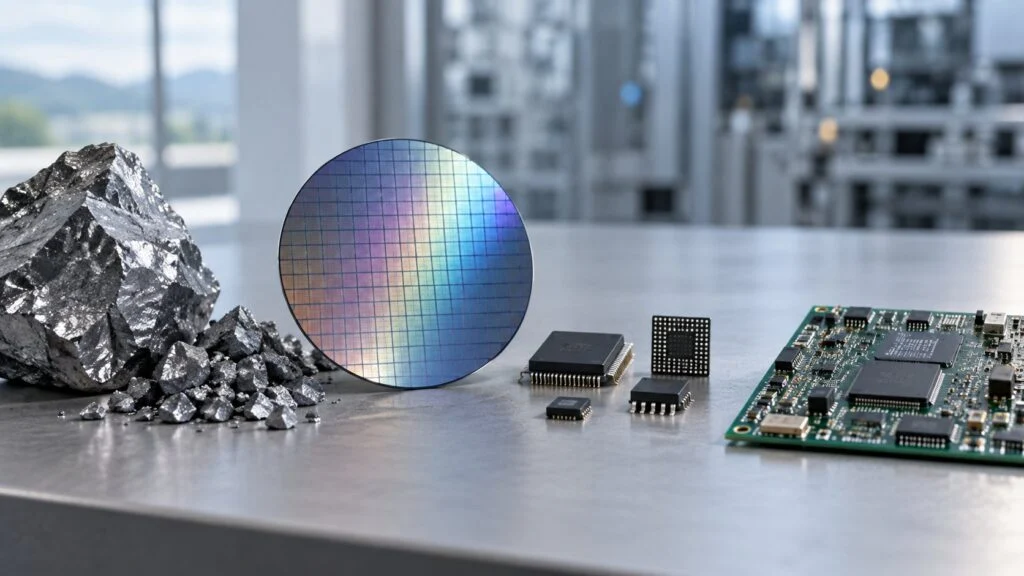
The electronic components and semiconductor supply chain runs through many stages between raw materials and the finished product. It is easiest to understand as five layers, from materials upstream to end products downstream.
Companies with different roles connect in stages, from materials to the finished product.
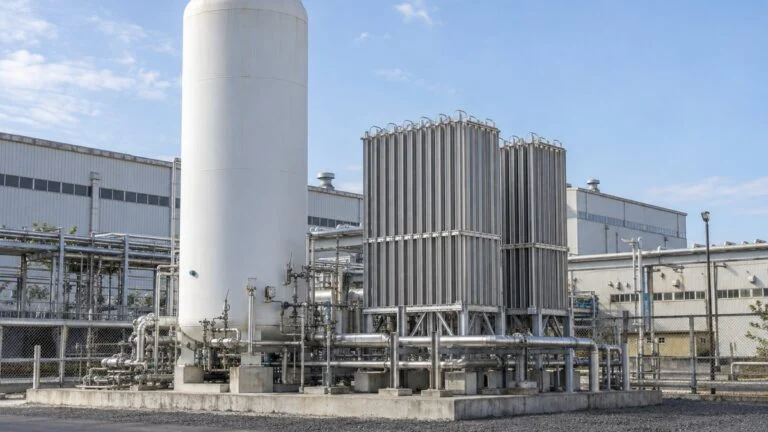
Manufacturing equipment goes into semiconductor and component plants. Electronics trading companies sit between the layers and handle distribution and technical support.
Materials and equipment go into semiconductor and component plants, and the chips and parts made there flow on to equipment makers. Because the chain is so deep, changes in end-product demand reach the upstream layers with a time lag. When smartphone sales fall, component orders drop first, and investment in equipment and materials is cut later.
Here is what each layer looks like from a buyer's point of view.
Materials Makers
These companies supply silicon wafers, chemicals, gases, and similar inputs. Many are divisions of chemical companies. Even small shipments must meet extremely strict quality requirements, and each customer plant has its own detailed specifications. Once a material is qualified, the business tends to last for years, but a quality problem at this level can have a large impact. Materials makers also feel market cycles: when customers keep cutting inventory, the most upstream companies tend to be the last to recover.
Japan holds large global shares in several of these materials and in some equipment categories. See where Japan holds top global share in materials and equipment.
Equipment Makers
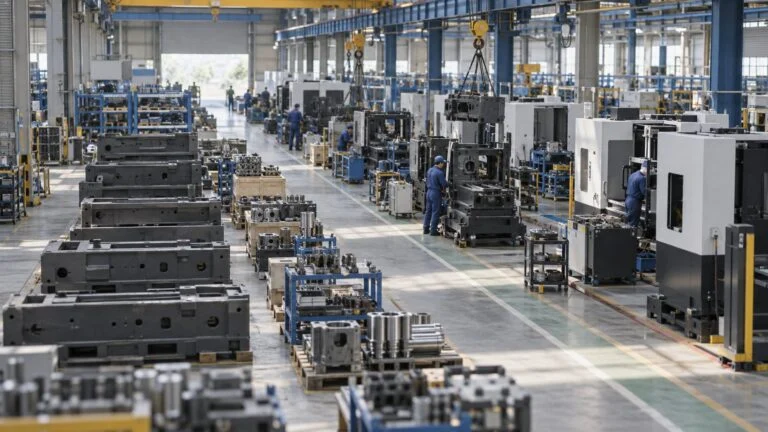
Equipment makers develop and build the tools used in semiconductor fabs, and the large ones sell to chipmakers worldwide. Their work does not end at shipment: installation, startup, and maintenance at the customer's plant are a large part of the business, and field engineers are often stationed at or travel to customer sites in Japan and abroad.
Semiconductor Makers
This layer includes three business models:
- IDM (integrated device manufacturer): designs chips and runs both front-end (wafer) and back-end (assembly and test) processes
- Fabless company: designs chips but outsources manufacturing
- Foundry: manufactures chips designed by other companies
Chipmaking needs huge capital investment, so earnings swing widely with the business cycle. Fabs normally run 24 hours a day. For an example of how a Japanese chipmaker fits into one customer industry, see Renesas and the automotive MCU supply chain.
Component Makers
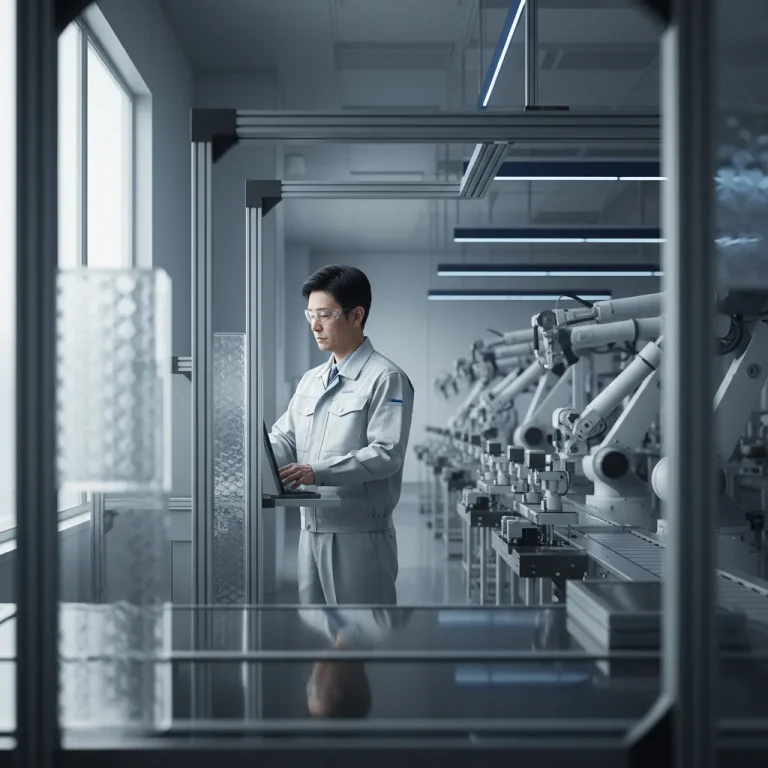
Component makers mass-produce capacitors, sensors, connectors, and other parts. The large ones sell to equipment makers around the world and are heavily export-oriented. Murata, for example, earned more than 90% of its revenue outside Japan in the fiscal year ended March 2026. There are also many mid-sized and small companies that specialize in one type of part or process, and some act as subcontract plants for the large makers. For how one key component is made and why Japanese makers lead in it, see the MLCC manufacturing process.
The layers are a simplification. Some companies span several of them. TDK, for example, makes passive components and sensors, but energy products such as batteries make up more than half of its revenue.
EMS Providers and Trading Companies
EMS (electronics manufacturing services) providers assemble electronic equipment under contract. Electronics trading companies, called denshi buhin shosha (電子部品商社) or simply shosha in Japan, distribute parts and provide technical support. Neither develops its own products as a core business. They compete instead on cost control, supply stability, and the ability to coordinate many customers and suppliers at once.
Three Ways to Buy Japanese Electronic Components
Electronic component and semiconductor sales split broadly into direct sales and sales through intermediaries. Large equipment makers and automotive parts makers usually buy directly from the component maker. Small and mid-sized customers, and high-mix, low-volume business, usually go through a trading company or distributor. For an overseas buyer, the intermediary side itself splits in two, which gives three channels.
Volume, part type, and support needs decide which channel you end up in.
General patterns only. Terms differ by maker, part, region, and volume.
Maker Direct
Direct business usually means a large, ongoing program: an OEM or automotive supplier that designs the part in and orders it in high volume for years. The maker's own sales office or overseas sales subsidiary handles the account. If your volume is small, a maker that asks you to "contact our distributor" is not brushing you off. That is how its sales channels are set up.
Japanese Electronics Trading Companies (Shosha)
Trading companies do much more than buy and resell. They propose parts that fit the customer's design, keep inventory, and adjust delivery timing, supporting both the technical and logistics sides between maker and customer. Their technical sales staff and FAEs can compare products from several makers before recommending one. In a trading-company deal, much of the proposal work and inventory management is done by the trading company rather than the maker.
For overseas buyers, this channel often appears when you work with Japanese customers or Japanese-affiliated plants, which may already have a trading company they buy through. The same structure exists in factory automation, where distributors and system integrators sit between makers and plants. See how the Japanese factory automation industry is structured.
Global Authorized Distributors
Japanese component makers also sell through global distributors. These include broadline distributors that serve production customers and catalog distributors that sell small quantities online. Murata, for example, lists Arrow, TTI, DigiKey, Mouser, ChipOneStop, Avnet, and Future as places to check stock for its crystal timing devices. Each maker publishes its own list, and the list can differ by product line and region.
An "authorized" (or "franchised") distributor has a distribution agreement with the maker. Brokers and independent distributors do not. Murata advises buyers to purchase only from a Murata sales office, a sales subsidiary, or an authorized distributor, and states that it cannot guarantee the performance of parts bought through unofficial channels. It also warns that counterfeiters have forged letters of authorization and posed online as authorized distributors. In aerospace and defense supply chains, SAE AS6496 covers counterfeit avoidance by authorized distributors, and SAE AS6081 covers independent distributors and brokers.
From Design-In to Payment: How Parts and Money Flow
The path from proposing a component to collecting payment runs in three phases: proposal, adoption, and mass production.
The process runs in three phases: proposal, adoption, and mass production.
In trading-company deals, the trading company handles much of the proposal work and inventory management.
Four points matter most for buyers:
- Design-in is where the competition happens. Ties between buyers and suppliers are generally looser than the keiretsu (affiliated supplier group) relationships common in the auto industry. Instead, once a part is designed in, the same part tends to stay in use for several years, so makers and trading companies compete hardest at the design stage.
- Prices are usually set before mass production and reviewed periodically while production continues.
- Commodity parts move with supply and demand. The more unique a part is, the stronger the maker's negotiating position.
- The intermediary that wins the design often keeps the business. Many suppliers run design registration programs, which give the distributor that helped design a part in a special price for that customer's project. Other distributors cannot match that price, so quotes for the same part can differ by channel. Not every maker runs such a program, and the rules vary.
Semiconductors also have a split commercial flow: a fabless company designs the chip, a foundry makes it, an outsourced assembly and test company packages and tests it, and the fabless company sells it to customers as its own product.
Where the Margins Are, and What It Means for Your Price
Profitability differs sharply across the industry, by layer and by product. Margins also move with the market, so a strong year's numbers say little about the next.
Value tends to concentrate in technologies and processes that are hard to replace.
Companies that only mass-produce commodity parts or only assemble get pulled into price competition, and their margins tend to be lower.
The industry fits the "smile curve" idea well: upstream development and design, and downstream maintenance and service, earn more than the assembly stages in the middle, where cost competition is intense. Equipment makers earn revenue not only from tool sales but also from maintenance, parts replacement, and upgrades for as long as the installed tools keep running.
For a buyer, this translates into three practical expectations:
- Unique, high-share parts: expect limited room on price and few true alternates. Spend your effort on securing allocation and lead time.
- Commodity parts: prices follow supply and demand, and cross-references from other makers are often available. Quotes from different channels are worth comparing.
- Equipment and tools: the purchase price is only the start. Ask about service contracts, spare-parts pricing, and how long the maker will support the model.
How the Industry Structure Is Changing
The structure of the industry has changed a great deal over the past few decades, and consolidation and new fab construction are still going on.
- From vertical integration to horizontal specialization. IDMs that handled everything from design to manufacturing once dominated. Today, the split between fabless companies and foundries is widespread. Most Japanese chipmakers grew up as IDMs, and as Japan's share of the world semiconductor market fell from its late-1980s peak, many of their businesses were merged or sold.
- Domestic consolidation. NEC Electronics and Renesas Technology merged in 2010 to form Renesas Electronics, and Toshiba Memory renamed itself Kioxia in 2019. Companies continue to focus resources on their strongest areas.
- New fabs in Japan. JASM, a TSMC-backed company, started volume production at its first fab in Kumamoto in late 2024. Rapidus, founded in 2022, aims to start mass production of 2 nm-generation chips in Chitose, Hokkaido, in 2027. New fabs create business for equipment and materials makers, construction contractors, and local component makers.
- Supply chain diversification. Against the backdrop of US–China tensions, companies have become more aware of the risk of concentrating production in one country or region. Governments use subsidies to attract fabs, and companies are looking at spreading production across sites. New fabs overseas are new customers for Japanese equipment and materials makers, which must also handle export controls and other geopolitical requirements.
For buyers, these shifts show up as questions about which plant makes your part, whether a second source plant exists, and whether export-control paperwork applies to what you are buying.
Which Channel Fits Your Situation
| Your situation | Likely channel | Note |
|---|---|---|
| Prototypes or a few hundred pieces | Catalog distributor (authorized) | Check the maker's distributor list before you buy |
| Ongoing production, mid volume, many part numbers | Broadline distributor or Japanese trading company | Ask who registered the design if quotes differ widely |
| Supplying a Japanese customer or a Japanese-affiliated plant | Often the trading company that customer already uses | Confirm with the customer's purchasing team before switching |
| High-volume program, long production life | Maker direct (sales office or overseas subsidiary) | Expect qualification, audits, and a negotiated price |
| Obsolete or allocated part, only brokers have stock | Broker or independent distributor, with care | Plan for counterfeit inspection; the maker's warranty may not apply |
Checklist: Questions to Ask Before You Place the Order
- Is this seller on the maker's own list of authorized distributors for my region and this product line?
- Does the maker sell this part direct at my volume, or only through distributors?
- Is there a design registration for my project, and with which distributor or trading company?
- What is the standard lead time, and what is the minimum order quantity or reel quantity?
- Which plant makes the part, and is there a second source plant?
- Will the price be reviewed during production, and how often?
- How will I be notified of a product change or discontinuation (PCN or end-of-life notice)?
- Does the part need export-control classification or other paperwork for my country?
- Who provides engineering support: the maker, the trading company's FAE, or the distributor's FAE?
- For equipment: what are the service contract terms and spare-parts availability period?
Inquiry Email Template
Use this when you contact a Japanese maker's sales office or overseas subsidiary and want to find the right channel. Short, specific emails get faster answers.
Template: Asking a Japanese Maker Which Channel to Use
Replace the bracketed parts. Keep one request per email.
Dear [Company] Sales Team,
We are [company], a [type of business] in [country]. We are designing [part number] into [product], with production planned from [month/year].
Estimated volume: [annual quantity] pcs/year (prototype: [quantity] pcs)
Could you tell us:
1. Whether we can buy direct at this volume, or which authorized distributor or trading company covers our region
2. The standard lead time and minimum order quantity
3. Whether a design registration is available for this project
Our current design schedule and drawing are attached.
Best regards,
[Name]
[Title], [Company]
Limits of This Guide
- Channel rules differ by maker, product line, region, and volume. Treat the patterns here as a starting point and confirm with the maker or its listed distributors.
- The volume thresholds for direct business are not public and vary by company; this guide does not give numbers.
- Counterfeit avoidance requirements in aerospace, defense, medical, and automotive programs are set by your customer and your quality system, not by this article.
- Export-control decisions belong to your trade compliance team and the relevant authorities.
FAQ
Can I buy directly from Japanese component makers like Murata or TDK?
Usually only for large, ongoing programs. Japanese makers generally sell direct to large OEMs and automotive suppliers and serve smaller customers through authorized distributors and trading companies. Ask the maker's sales office which channel covers your volume and region.
What is a Japanese electronics trading company?
It is an intermediary, called shosha in Japanese, that buys parts from makers and sells them to customers, while also proposing parts for the customer's design, holding inventory, and adjusting delivery timing. Its FAEs can compare parts from several makers.
Why do two distributors quote different prices for the same part?
One common reason is design registration: the distributor that helped design the part into your product may get a special price from the maker for your project. Volume, stock position, and each distributor's terms with the maker also affect quotes.
Is it safe to buy Japanese components from brokers?
It carries more risk. Makers such as Murata state that they cannot guarantee parts bought through unofficial channels and warn of counterfeits sold by parties posing as authorized distributors. If a broker is the only source, plan for inspection and follow your customer's counterfeit-avoidance requirements.
Sources
- Buying only from authorized channels: Murata, ceramic capacitor FAQ
- Counterfeit warnings: Murata, counterfeit products
- Distributor examples: Murata, crystal units support page
- Design registration: ECIA, Design Registration Best Practices
- AS6496 and AS6081: ECIA, SAE AS6496 anti-counterfeiting standard
- Murata and TDK results: Murata and TDK, consolidated financial results for the fiscal year ended March 31, 2026
- Rapidus plans: The Register, Rapidus and Japan's semiconductor comeback (April 2026)
Original article in JapaneseThis guide is adapted from a MONOSCOPE article written for readers in Japan: 電子部品・半導体業界の構造をわかりやすく解説|サプライチェーン・商流・利益構造
About the editor
 MONOSCOPE EditorFOUNDER & EDITOR
Spent about ten years at a plant equipment maker and a plant engineering company, proposing, designing, and commissioning equipment, then moved into web marketing. Now a web consultant for B2B manufacturers, helping them explain their products and technology. Licensed in Japan as an Energy Manager and a Third-Class Chief Electrical Engineer.
Has run an engineering blog since 2017 (500+ articles) and a Japanese YouTube channel with about 20,000 subscribers. Each English guide is written from the Japanese shop-floor point of view and checked against the cited standards.