JIS Q 9100 vs AS9100: Japanese Aerospace Suppliers
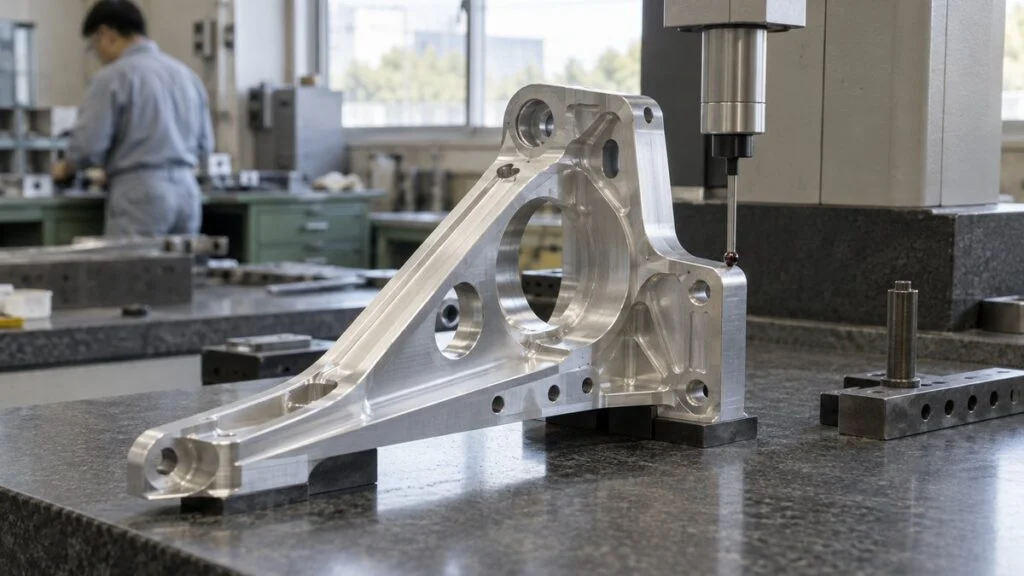
A machining shop in Japan sends back your supplier questionnaire. In the box for "AS9100 certification," it has written "JIS Q 9100:2016, certified by JQA." Your procurement system only has a checkbox for AS9100. Or you run a shop in India or Thailand, and a Japanese airframe or engine customer asks whether you hold JIS Q 9100. Either way, the question is the same: is this a different standard?
The short answer: JIS Q 9100, AS9100, and EN 9100 are regional editions of one aerospace quality standard. The International Aerospace Quality Group (IAQG) develops the text, and Japan, the Americas, and Europe each publish it under their own number without changing the technical content. All three take in every requirement of ISO 9001 and add requirements for aviation, space, and defense work, such as product safety, counterfeit parts prevention, configuration management, and first article inspection. Certificates under all three go into the same IAQG database, OASIS.
This guide covers how the names relate, what JIS Q 9100 adds to ISO 9001, how certification works in Japan, how to check a supplier's certificate, and where the 9100 revision stands in 2026. It ends with a verification checklist and questions you can send to a Japanese supplier.
Contents
- What Is JIS Q 9100?
- JIS Q 9100 vs AS9100 vs EN 9100
- JIS Q 9100 vs ISO 9001: What Changes
- Key Requirements Added by JIS Q 9100
- Example: Where an ISO 9001 Machine Shop Falls Short
- How JIS Q 9100 Certification Works in Japan
- How to Check a Japanese Supplier in OASIS
- Related Standards: 9102, 9103, 9145, and Nadcap
- Timeline and Cost to Get Certified
- ISO 9001:2026 and the IA9100 Revision: Status in 2026
- Checklist: Verifying a Supplier's JIS Q 9100 Certificate
- Limits of This Guide
- FAQ
- Sources
What Is JIS Q 9100?

JIS Q 9100 is Japan's edition of the 9100 quality management system (QMS) standard for aviation, space, and defense organizations. JIS stands for Japanese Industrial Standards, Japan's national standards. The full title is "Quality management systems – Requirements for aviation, space and defense organizations." The current edition, JIS Q 9100:2016, was issued on September 20, 2016, the same day as AS9100 Rev D.
The Japanese Standards Association (JSA) describes it as JIS Q 9001:2015 (Japan's ISO 9001:2015) taken in unchanged, with aerospace-specific requirements, definitions, and notes added. Being certified to JIS Q 9100 therefore means meeting ISO 9001 first, then the added layer on top.
IAQG writes one standard. Each region publishes it under its own number with the same technical content.
Current editions: AS9100 Rev D, EN 9100:2018, and JIS Q 9100:2016. JAQG (Japanese Aerospace Quality Group) is the quality body set up within the Society of Japanese Aerospace Companies (SJAC).
JIS Q 9100 vs AS9100 vs EN 9100
According to JAQG, the same standard is issued as a Japanese, an American, and a European standard without any change to its technical content, and it has been translated into more than 35 languages. It is the de facto global quality standard for the aerospace industry. The IAQG standards register lists the current editions together as one family:
| Edition | Region | Issued |
|---|---|---|
| AS9100 Rev D | Americas (published by SAE) | 2016-09-20 |
| JIS Q 9100:2016 | Japan | 2016-09-20 |
| EN 9100:2018 | Europe | 2018-05-30 |
| KS Q 9100 | Korea | 2018-10 |
IAQG was formed in 1998 under SAE International in the US and became an international nonprofit association under Belgian law in 2013. It has three sectors: the Americas (AAQG), Europe (EAQG), and Asia-Pacific (APAQG). The reason one standard carries several numbers is practical. Aircraft are built through international supply chains, and airframe and engine makers cannot audit every supplier around the world one by one. A common standard, a trusted certification scheme, and shared audit results let the industry cut down on duplicate audits.
For a buyer, this means a valid JIS Q 9100:2016 certificate covers the same requirements as AS9100D. What you still need to confirm is the certificate itself: its scope, its sites, and whether it is current in OASIS (see the checklist below). If your customer contract names AS9100 specifically, check with your own customer or quality department whether an equivalent 9100-series certificate is accepted.
The 9100 series also includes 9110 for maintenance, repair, and overhaul (MRO) organizations and 9120 for distributors that buy and resell parts and materials. In Japan these are published as SJAC 9110 and SJAC 9120. Which one applies depends on what the supplier actually does. Certification is not limited to airframe and engine makers: small and midsize suppliers that do machining, sheet metal work, surface treatment, heat treatment, or electronics assembly may also be asked for 9100 by their customers.
JIS Q 9100 vs ISO 9001: What Changes
JIS Q 9100 keeps ISO 9001's structure of clauses 1 to 10. It differs in two ways: aerospace requirements are added inside those clauses, and the industry, not only the certification body, sets the rules for auditing and certification.
JIS Q 9100 adds requirements and also changes how audits are run.
Nonconformity deadlines are from JQA's published information. Other certification bodies may differ; confirm before signing a contract.
Japan Quality Assurance Organization (JQA), one of the Japanese certification bodies, highlights three features of JIS Q 9100:
- On-time, on-quality delivery (OTOQD). On-time delivery performance is measured and improved alongside product quality.
- Supply chain control. Customer requirements must flow down reliably to sub-tier suppliers, so that suppliers spread around the world work to the same system.
- Traceability over a long service life. Aircraft stay in service for 30 or 40 years, so production records must be kept long enough to trace the cause of an accident or defect. JQA cites customer requirements to keep first article inspection records until the aircraft are retired from service.
An ISO 9001 internal audit program carries over as the base. Under JIS Q 9100, internal audits should also cover customer and statutory and regulatory quality requirements, so the audit scope gets wider.
Related: Quality Assurance Process at Japanese Plants: 8 Steps
Key Requirements Added by JIS Q 9100
The added requirements are spread across the standard. In practice they are easier to follow in four groups: operational planning, production, external providers, and people. The summary below gives the intent only; for the exact wording, get the standard itself (JIS Q 9100 from JSA, or AS9100D from SAE).
Clause numbers are from JIS Q 9100:2016 (same as AS9100D), grouped by where they apply.
The standard also defines terms such as critical items, key characteristics, and special requirements, and adds measurement of on-time delivery performance (5.1.2).
Operational Risk Management and Work Transfers
ISO 9001 clause 6.1 deals with risk to the QMS as a whole. Clause 8.1.1 narrows the focus to the operational processes that deliver the product. The organization assigns responsibility, assesses likelihood and consequence, and, if it accepts a risk that remains after mitigation, makes that decision explicit.
Clause 8.1 also requires project planning so that work moves from order to shipment on schedule, and control of work transfers. A work transfer means moving production to another plant, sending an in-house process to an outside supplier, or changing or adding a supplier. The aim is to keep quality and delivery stable before and after the move. FMEA is a common tool for finding these risks, and IAQG guidance lists process FMEA and safety analysis as examples of product safety activities.
Related: AIAG-VDA FMEA for Japanese Customers: DFMEA vs PFMEA
Configuration Management
In plain terms, configuration management (clause 8.1.2) is drawing and specification change control. Aerospace drawings get revised to optimize a shape or rework strength calculations, and the shop floor has to know how each change affects machining conditions and work instructions. Because aircraft stay in service for decades, spare parts are sometimes built to an earlier drawing revision. The practical goal is to be able to say, at any time, which drawing revision a given part was built to. The basic habit is to put the drawing number and revision on every work instruction. For how Japanese drawings show revisions and approvals, see our guide to shonin-zu (approval drawings).
Product Safety and Counterfeit Parts Prevention
Clause 8.1.3 requires a process to plan, implement, and control product safety over the whole product life cycle. JQA's examples include hazard assessment and risk management, control of safety-critical items, analysis and reporting of events that affect product safety, and communication and training on those events.
Clause 8.1.4 aims to keep counterfeit parts and materials, sold as genuine, out of the organization's own products and out of deliveries to customers. JQA's examples include raw material shipped with a forged or reused mill certificate, and junk electronic components that were cleaned up and resold. The basic defense is to buy from the original manufacturer or an authorized distribution channel.
Special Processes and First Article Inspection
A special process is one whose result cannot be fully confirmed by visual or dimensional inspection afterward: heat treatment, chemical processing, surface treatment, nondestructive testing (NDT), and welding. Clause 8.5.1.2 requires these processes to be validated, with strict control of the 4Ms (machine, man, material, method).
Clause 8.5.1.3, production process verification, uses an inspection of the first part made in production to confirm that the process can produce conforming product. This is what the industry calls first article inspection (FAI). As a rule, a process change invalidates the earlier FAI and verification is repeated. The details are set out in a companion standard, 9102 (AS9102 / SJAC 9102).
Some customers also require Nadcap accreditation for special processes. Nadcap is a separate industry accreditation program, not part of JIS Q 9100. JQA's Q&A says Nadcap is needed when a customer requires it; otherwise it is the organization's own decision. For how Nadcap works and how to find accredited processors in Japan, see Nadcap accredited suppliers in Japan.
Key Characteristics and Critical Items
JIS Q 9100 adds definitions too. A key characteristic is a feature whose variation has a significant effect on fit, form, function, performance, service life, or producibility, and so needs special control. Being inside the tolerance is not the end goal: for key characteristics, the expectation is to improve process capability so results cluster toward the center of the tolerance range. Companion standard 9103 covers how to manage key characteristics.
A critical item is one that has a significant effect on safety, performance, service life, or similar properties, and therefore needs specific actions. Several clauses address critical items, including operational planning, design and development outputs, information for external providers, and production control.
External Provider Control
Clause 8.4 tightens control of what outside suppliers provide. An easy point to miss: even when the customer designates the source, the organization still owns the quality of what it buys. Customer requirements must flow down not only to direct suppliers but also to their suppliers.
When the organization uses a supplier's test reports to verify material and judges that material to be a significant risk, it needs a process to check that the reports are accurate. When it delegates inspection to a supplier, it defines and records the scope of that delegation and monitors it regularly.
Awareness, Human Factors, and On-Time Delivery
Clause 7.3 requires workers to be aware of their contribution to product conformity, to product safety, and of why ethical behavior matters. JQA points out that some workers do not know what the part they make is used for, which makes it hard for them to think about safety at all.
Clause 10.2 requires human factors to be considered when analyzing the cause of a nonconformity. Instead of stopping at "operator error," the analysis looks at why the procedure was not followed and fixes the system. The nonconformity reports exchanged in OASIS follow much the same logic as an 8D report. Clause 5.1.2 adds measurement of product conformity and on-time delivery performance, with action when targets are missed.
Example: Where an ISO 9001 Machine Shop Falls Short
The fictional example below shows gaps that can appear at an ISO 9001 parts maker that has received an inquiry for aircraft parts. The same comparison is useful for a shop in India or Southeast Asia preparing for an aerospace customer.
Company A (fictional): 80 employees, machined aluminum parts, ISO 9001 certified, has received an inquiry for aircraft parts.
Company A is fictional and used only for illustration. Actual requirements depend on the customer, the product, and the process.
How JIS Q 9100 Certification Works in Japan
The certification scheme is called ICOP (Industry Controlled Other Party). According to JAQG, it reuses the existing ISO 9001 certification structure, but the industry oversees the scheme directly. Each of the three IAQG sectors manages its own scheme, and IAQG cross-checks that the sectors stay equivalent.
Accreditation body, certification bodies, and certified organizations all work under industry oversight.
Certification bodies as listed on JAQG's "JIS Q 9100 certification scheme" page (checked October 2026). BSK is the Japanese abbreviation of Boei Kiban Seibi Kyokai.
In Japan, JAB is the accreditation body. It checks that certification bodies operate fairly and transparently, and its accreditations are recognized internationally through mutual recognition arrangements. Audit report formats are standardized by IAQG and published in Japan as SJAC 9101.
Auditors need aerospace or defense industry experience, QMS audit experience, and a completed JIS Q 9100 training course. JAQG names the Japanese Registration of Certificated Auditors (JRCA) as the body that evaluates and registers these auditors. IAQG has been moving auditor qualification to a single central system, "IAQG Authentication," so the auditor qualification rules are in transition in 2026.
How to Check a Japanese Supplier in OASIS
OASIS (Online Aerospace Supplier Information System) is IAQG's global database of 9100-series certification data. Certification bodies register audit results there, so every certified organization appears in one place whichever regional standard it was certified to. JAQG notes that buyers can use OASIS as an approved supplier list or supplier management tool. Check IAQG's site for the current access terms and fees.
According to JQA, OASIS data falls into two tiers:
- Public information, visible to registered users: certification scope, certification body, and the certificate.
- Restricted information, visible only with the organization's permission: audit reports, process effectiveness assessment reports (PEARs), and nonconformity reports. If a customer or an industry auditor from an IAQG member company asks to see them, the organization is expected to agree unless there is a competitive, confidentiality, or conflict-of-interest problem.
In a PEAR, the auditor records each process's inputs and outputs, KPIs, and level of effectiveness. Customers read it to see whether the supplier's plan-do-check-act (PDCA) cycle actually works, so suppliers need targets and results per process that are more than paperwork. Nonconformity reports are also handled in OASIS, with fields for containment, root cause, and corrective action.
Related Standards: 9102, 9103, 9145, and Nadcap
The 9100 series has many companion standards. The ones suppliers meet most are 9102 (first article inspection), 9103 (variation management of key characteristics), and 9145 (advanced product quality planning and production part approval process, APQP/PPAP). Japan publishes them as SJAC 9102, SJAC 9103, and SJAC 9145. Which ones apply usually depends on the customer, so the starting point is the customer's purchase order quality requirements.
Nadcap is a separate accreditation program for special processes. Customers sometimes require it from suppliers that do heat treatment, surface treatment, NDT, and similar work, as covered in our Nadcap guide.
Timeline and Cost to Get Certified
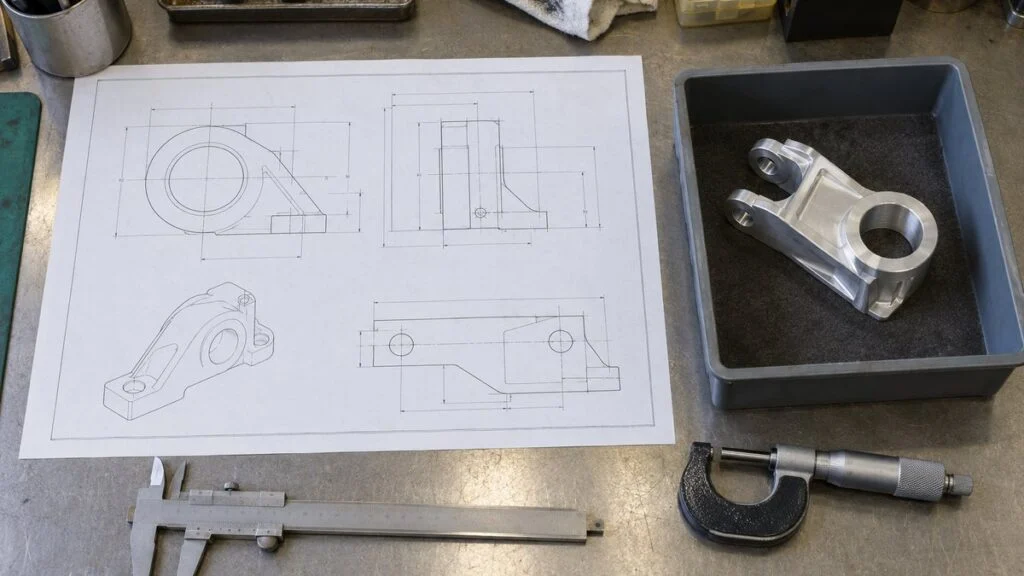
Certification runs in three phases: internal preparation, audits by the certification body, and maintenance after registration. JQA's FAQ puts the time from starting to plan to receiving the certificate at roughly 1.5 to 2 years. The actual time varies widely with readiness, for example whether the organization already holds ISO 9001.
Preparation takes the longest. The internal audit and management review must be complete before the audit starts.
Periods and deadlines are guidelines from JQA's published information. They vary by certification body, organization size, and site setup.
Compared with ISO 9001, note that the internal audit and management review must be finished before the Stage 1 audit. Because nonconformities have fixed response deadlines, plan for staff time to handle corrective actions in the one to three months after the audit.
According to JQA, an organization does not need a track record of aerospace or defense business to be certified. It is eligible once it has a record of operating a management system based on JIS Q 9100. JIS Q 9100 and ISO 9001 can also be certified together in a combined audit. JQA does not publish a fixed fee. It calculates audit fees from the number of employees and sites, and multi-site organizations see the audit effort change with how the sites are organized. Getting quotes from more than one certification body early is the practical approach.
ISO 9001:2026 and the IA9100 Revision: Status in 2026
ISO 9001:2026, the sixth edition, was published on September 16, 2026, and ISO lists ISO 9001:2015 as withdrawn. ISO tells certified organizations to move to the new edition according to their certification cycle and to check details with their certification body.
The 9100 series has been under revision in step with ISO 9001. In a November 2023 document, IAQG described the next edition as "IA9100," changing the prefix from AS to IA (International Aerospace), with publication planned for 2026 to match ISO 9001. Planned directions included expanded product safety, information security and data protection including cyber, quality culture and ethics, broader counterfeit prevention, and control of sub-tier suppliers.
However, a January 2025 SJAC bulletin reported that IAQG had set up an independent review team to keep the revision process transparent. The revision work was paused, and the schedule was to be discussed in light of the ISO 9001 timetable. As of October 1, 2026, we found no announcement on the official IAQG or JAQG sites of the IA9100 publication date or transition period. A consultant article from November 2025 still expected release in 2026 with a transition running to 2029, but that is not an official schedule.
What we could confirm from official sources as of October 1, 2026.
- The current JIS Q 9100 is the 2016 edition (same content as AS9100D)
- Current certificates are issued under the 9100:2016 series
- IAQG has been moving auditor qualification to IAQG Authentication
- Transition period to the new edition: no official announcement found
- Form of the Japanese edition: a Japanese translation of the IAQG standard was under consideration (same bulletin)
- Future of JIS Q 9100 itself (revision or withdrawal): no official announcement found
Check JAQG, IAQG, and your certification body for the latest announcements.
For a company starting now, a pending revision is rarely a reason to wait. As with ISO 9001, a new edition normally comes with a transition period, and the current system is the base it builds on. Ask your certification body which edition to be audited to and when.
Checklist: Verifying a Supplier's JIS Q 9100 Certificate
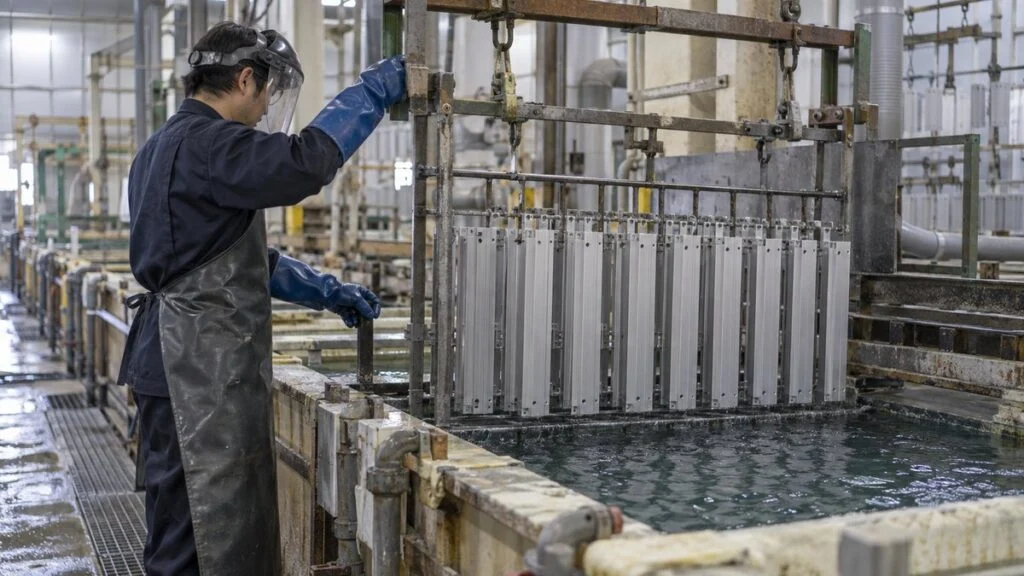
A certificate shows that a supplier has a system for continuing to meet customer quality requirements. It is not a ticket that guarantees aerospace business, it takes real effort to maintain after certification, and it does not guarantee that a specific process or part meets your requirements. Use the checks below when a Japanese supplier quotes JIS Q 9100, or when you prepare your own shop for a Japanese aerospace customer.
- Standard and edition: the certificate states JIS Q 9100:2016 (or 9110 / 9120 if that matches the supplier's business).
- OASIS listing: the supplier appears in OASIS and the certificate status is current.
- Certification body: a body accredited for JIS Q 9100 (in Japan, one of the four JAB-accredited bodies).
- Scope: the certified scope covers the products and processes you are buying, such as machining, surface treatment, or assembly.
- Sites: the plant that will make your parts is covered by the certificate.
- Special processes: which processes are done in-house and which are subcontracted; whether you or your customer requires Nadcap for them.
- Companion standards: FAI to 9102, key characteristics to 9103, and APQP/PPAP to 9145, where your purchase order requires them.
- Record retention: drawing revisions, FAI reports, and traceability records can be kept and retrieved for the period you require.
- Flow-down: the supplier passes your requirements, including counterfeit prevention, to its sub-tier suppliers.
- Revision plan: how the supplier plans to move to the next 9100 edition once it is published.
- If you are seeking certification yourself: quality assurance staff assigned; capacity for corrective actions and yearly audits; an estimate of preparation time (about 1.5 to 2 years per JQA), audit fees, and internal staff hours.
Questions to Ask a Japanese Supplier
- Which certification body issued your JIS Q 9100 certificate, and when does it expire?
- Does the certified scope include the processes and the plant for our part?
- Are you listed in OASIS? Will you grant us access to your latest audit report and PEARs?
- Which special processes do you subcontract, and to whom? Do those processors hold Nadcap accreditation?
- Can you provide FAI reports in AS9102 / SJAC 9102 format, in English?
- How do you identify the drawing revision each part was built to?
- How long do you keep production and inspection records?
Sample Inquiry Email
Short, numbered questions are easier to answer and to forward inside the supplier's company. A template you can adapt:
Subject: JIS Q 9100 certificate details for part [part number]
Dear [Name],
Thank you for your quotation. Before we add your company to our approved supplier list, could you please send us the following:
1. A copy of your current JIS Q 9100 certificate, including the scope and covered sites
2. Your OASIS registration name or number
3. A list of special processes (heat treatment, surface treatment, NDT, etc.) you perform in-house or subcontract, with Nadcap status
4. A sample FAI report (AS9102 / SJAC 9102 format)
5. Your record retention period for production and inspection recordsBest regards,
[Your name]
Limits of This Guide
- Requirements differ by customer and product. The same aerospace customer may ask for different certifications or extra requirements depending on the part, so the customer's purchase order quality requirements always come first.
- Clause summaries here give the intent only. For the exact wording, use the standard itself.
- Audit timelines, nonconformity deadlines, and fee practices are JQA's published examples. Other certification bodies may differ.
- Whether your company accepts a JIS Q 9100 certificate where a contract says "AS9100" is a decision for your quality department and your customer.
- The IA9100 revision status changes over time. Check IAQG, JAQG, and your certification body for current information.
Many JIS Q 9100 requirements extend work a good quality department already does. Solid calibration and traceability records, for example, carry straight over to process verification and record retention. For how Japanese plants divide quality work, see QA vs QC in Japanese companies, and for what a Japanese customer looks for when it audits you, see our supplier audit checklist.
FAQ
Is JIS Q 9100 the same as AS9100?
Yes, in technical content. JIS Q 9100:2016, AS9100D, and EN 9100:2018 are regional editions of the same IAQG standard. Check which name your customer's purchase order requires, and confirm the supplier's certificate scope and status in OASIS.
How often are JIS Q 9100 audits?
Certificates are valid for three years and are renewed through a recertification audit. In between, surveillance audits take place roughly once a year to check operation and process effectiveness (JQA's practice).
Can a company get JIS Q 9100 without aerospace customers?
Yes. JQA's FAQ says no aerospace or defense track record is required, as long as the organization operates a management system based on JIS Q 9100. It can also be certified together with ISO 9001 in a combined audit.
What is the difference between JIS Q 9100 and Nadcap?
JIS Q 9100 certifies the whole quality management system. Nadcap is a separate accreditation program for special processes such as heat treatment, surface treatment, and NDT. According to JQA, Nadcap is needed when a customer requires it; otherwise it is the organization's choice.
How much does JIS Q 9100 certification cost?
There is no fixed public price. JQA calculates audit fees from the number of employees and sites, and the site setup also affects audit effort. Get quotes from several certification bodies early in planning.
Sources
- Relationship of JIS Q 9100, AS9100, and EN 9100; companion standards: JAQG, "Status of JIS Q 9100 related standards" (Japanese)
- Certification scheme (ICOP, JAB, certification bodies, auditors, OASIS): JAQG, "JIS Q 9100 certification scheme" (Japanese); JAQG, certification scheme criteria (Japanese)
- JAQG English overview: Japanese Aerospace Quality Group
- Edition dates (AS9100 Rev D, JIS Q 9100:2016, EN 9100:2018, KS Q 9100, 9102, 9103, 9145): IAQG Standards Register (October 31, 2025)
- JIS Q 9100:2016 issue date and outline: Japanese Standards Association Webdesk, JIS Q 9100:2016 (Japanese)
- Requirements explained: JQA ISO NETWORK Vol. 31, "Introduction to JIS Q 9100" (Japanese); JQA, "Q&A on JIS Q 9100 certification" (Japanese)
- Timeline and audit practice: JQA, JIS Q 9100 / SJAC 9120 FAQ (Japanese); JQA, certification and maintenance flow (Japanese)
- 9100:2016 changes: IAQG, "9100:2016 Overview"
- IA9100 plan: IAQG, "IA9100 Key Change Summary" (November 2023)
- IA9100 revision status: SJAC bulletin, January 2025, report on the APAQG/IAQG Tokyo meeting (Japanese)
- Auditor qualification: IAQG, "IAQG Authentication"
- ISO 9001:2026: ISO, "ISO 9001:2026 Quality management systems – Requirements"
Original article in JapaneseThis guide is adapted from a MONOSCOPE article written for readers in Japan: JIS Q 9100とは|ISO 9001との違い・追加される要求事項と審査の仕組み
About the editor
 MONOSCOPE EditorFOUNDER & EDITOR
Spent about ten years at a plant equipment maker and a plant engineering company, proposing, designing, and commissioning equipment, then moved into web marketing. Now a web consultant for B2B manufacturers, helping them explain their products and technology. Licensed in Japan as an Energy Manager and a Third-Class Chief Electrical Engineer.
Has run an engineering blog since 2017 (500+ articles) and a Japanese YouTube channel with about 20,000 subscribers. Each English guide is written from the Japanese shop-floor point of view and checked against the cited standards.