How to Write an 8D Report: D0–D8 and the Toyota 8-Step
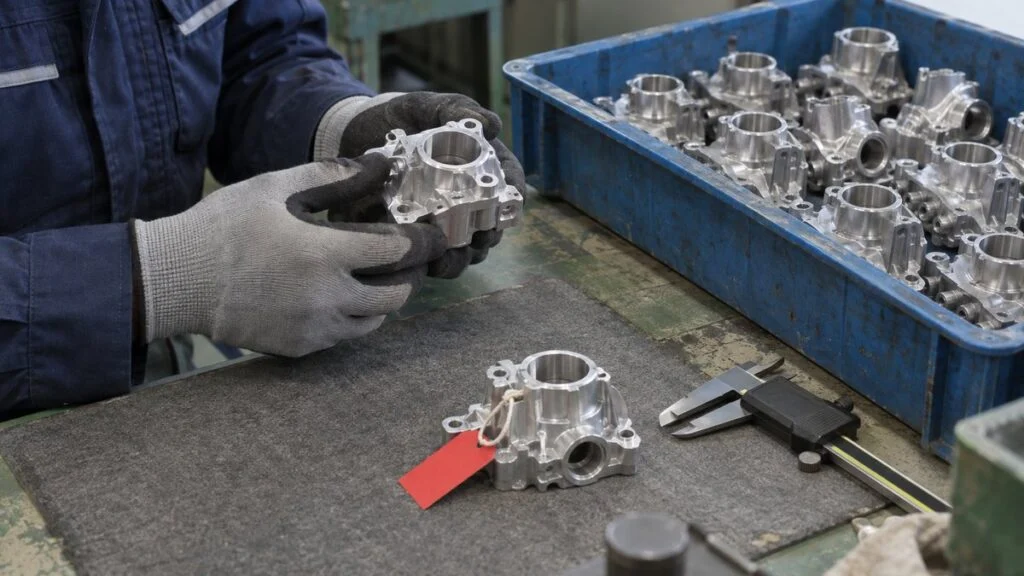
A customer finds out-of-tolerance brackets at receiving inspection. Within hours, its supplier quality engineer emails you: "Please respond with an 8D." Its supplier quality manual gives you 24 hours for the first reply, and if you send the kind of internal defect report that gives one line to the cause and one to the fix, it will often come back to you.
An 8D report is a fixed-sequence report to the customer that covers everything from your first response to the root cause, the corrective action, and how you will prevent recurrence. The core of a good 8D is two separate root causes: the occurrence cause (why the defect was made) and the escape cause (why it was not caught before it reached the customer). Japanese quality teams use the same split and call them hassei gen'in (発生原因, occurrence cause) and ryushutsu gen'in (流出原因, outflow or escape cause).
What the customer judges is not your writing. It is whether you put a system-level fix against each of the two causes. This guide covers where 8D came from and how it differs from the Toyota 8-step method, what to write in each step from D0 to D8, the patterns that get 8Ds rejected, and a checklist and question list you can reuse.
Contents
- What Is an 8D Report?
- When Customers Ask for an 8D, and How Fast
- The D0–D8 Steps at a Glance
- D0–D3: Team, Problem Description, and Containment
- D4: Separate the Occurrence and Escape Root Causes
- D5–D6: Choosing Permanent Actions and Verifying Them
- D7–D8: Preventing Recurrence and Closing Out
- Why 8Ds Get Rejected
- Template: Cause-to-Action Table for D4–D5
- Questions to Ask Your Customer Before You Start
- Limits of This Guide
- FAQ
- Sources
What Is an 8D Report?
An 8D report records how a team solved a quality problem in eight disciplines (steps) and what it found. Siemens describes the 8D report as the result of an eight-step problem-solving process used to deal with manufacturing nonconformities and drive continuous improvement.
"8D" is the name of the method; the report is the record. The point is not to fill in a form. It is to leave a trail of how the team solved the problem, in a form the customer can check later.
Origins: Ford, TOPS, and Global 8D
8D started at Ford Motor Company. Management in Ford's Powertrain organization wanted a method for design, manufacturing engineering, and production staff to work as a team on chronic problems, and in 1986 work began on a manual and a training course.
The first edition of the manual, Team Oriented Problem Solving (TOPS), came out in 1987. In the late 1990s Ford revised it into Global 8D (G8D). The revision added D0, which records the symptoms and any emergency response, and the idea of the escape point: the point where the problem should have been caught but was not.
The nine-step D0–D8 format most customers use today is based on G8D. Some sources note that 8D shares elements with MIL-STD-1520, a 1974 US Department of Defense standard on corrective action for nonconforming material, but whether it directly shaped 8D is disputed. 8D began in the auto industry and has since spread to food, healthcare, and electronics manufacturing.
8D vs. the Toyota 8-Step Problem-Solving Method
The method most often confused with 8D is Toyota's eight-step problem-solving process, also known as TBP (Toyota Business Practices). Both have eight steps, but they come from different places and serve different purposes. 8D, from Ford, is most often used as a format for reporting a defect response to a customer.
Toyota's eight steps run from clarifying the problem and setting a target to finding the true cause (shin'in, 真因) and making the result stick. They are a way of thinking for solving problems inside your own organization, and they are well known for being summarized on a single A3 sheet.
Most of the thinking overlaps, but each has a step the other lacks: containment (D3) in 8D, target setting in Toyota's eight steps.
Step names for Toyota's method vary slightly from source to source. Rows are matched by similar intent, not as an exact one-to-one mapping.
If a customer asks for an 8D and your team already analyzed the problem with Toyota's eight steps, you can reuse most of that work. The problem you narrowed down in the breakdown step goes into D2, the root-cause analysis goes into D4, and the standardization goes into D7.
What you cannot skip is this: an 8D must show the containment scope and the escape cause as separate items. An internal improvement record submitted as-is usually misses both, and that is a common reason for rejection.
Related: Kaizen in Japanese Companies: How Improvement Actually Runs
8D vs. an Internal Defect Report
An internal defect report mainly tells other departments what happened and how it was fixed. Each company writes it its own way, and the cause and the fix may each be one line.
An 8D, by contrast, is a document the customer uses to judge whether you can protect its quality. So it has to show three things separately: how you stopped defective parts from reaching the customer, why they were made, and why they slipped through inspection.
Write an 8D as evidence the customer can use to decide whether you can protect its quality.
Many companies also use 8D thinking for internal defects and keep a simplified in-house version of the form.
In most companies the quality assurance department, as the customer's point of contact, writes the 8D. But root-cause analysis and corrective action cannot move without production, manufacturing engineering, and design.
Related: QA vs QC in Japanese Companies: Who to Contact for What
When Customers Ask for an 8D, and How Fast
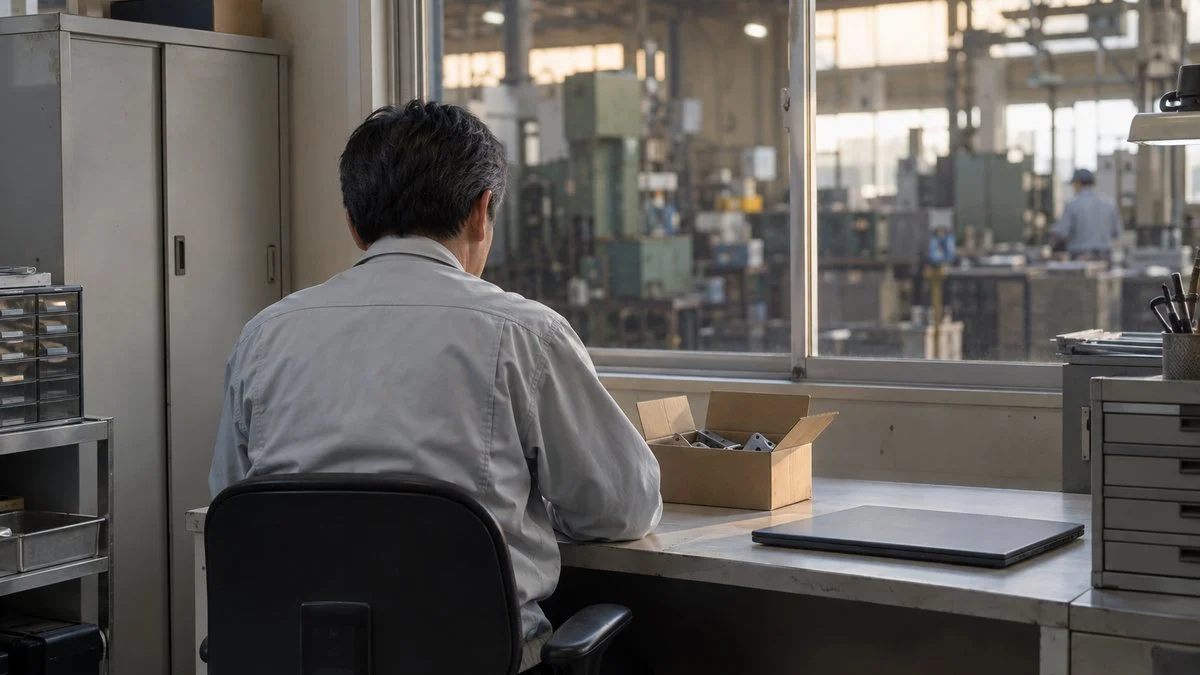
The typical trigger is a defect found in parts you delivered. The customer may find it at receiving inspection or on its assembly line, or it may trace a field failure back to your part.
8D is common in the auto industry largely because of IATF 16949, the automotive quality management standard. Clause 10.2.3, "Problem solving," requires a documented problem-solving process that includes:
- Containment and interim actions
- Root cause analysis
- Systemic corrective actions that consider the impact on similar products and processes
- Verification of effectiveness
- Review and update of documents such as the PFMEA and control plan
That clause also says that when a customer prescribes a specific problem-solving process, tool, or format, you use it unless the customer approves otherwise. So when a customer says "answer in 8D," use the customer's form, not your own.
Industry bodies have also published 8D guidance. The quality management center of the German Association of the Automotive Industry (VDA QMC) issued an 8D booklet in 2018, and the US Automotive Industry Action Group (AIAG) publishes CQI-20, an effective problem-solving guide. One reason forms and detailed requirements vary by customer is that customers follow different guides.
Deadlines Come from the Customer's Manual
Which steps are due by when is set in each customer's supplier quality manual. There is no universal rule, so the form and the deadlines are the first things to confirm.
One example is the "1-5-20 rule" of MAHLE, a German auto parts maker. From the date of the complaint, the supplier must report containment within 1 day (24 hours), the root cause and corrective actions within 5 working days, and the implemented actions and recurrence prevention within 20 working days.
As in this example, customers may ask for the 8D in stages, each with its own deadline, rather than all at once.
This is one company's rule. Deadlines and stages differ by customer, so always check your customer's quality manual.
With staged deadlines, you do not need to know the root cause by the first reply. In fact, writing "cause: operator error" in the first report and correcting it later costs you credibility. Separate what you know from what is still under investigation, and submit on time.
The D0–D8 Steps at a Glance
The steps are easier to follow in four phases: first response to protect the customer, root-cause investigation, permanent action and recurrence prevention, and close-out.
Protect the customer first, find the cause, then prevent recurrence with system-level fixes.
Some customers use only D1–D8 (eight steps) without D0. Step names also vary slightly between forms.
The order matters. D3 containment comes before the root-cause work because the investigation takes time, and defective parts must not keep reaching the customer in the meantime. D5 and D6 are separate because choosing an action and implementing it and proving it works are different jobs. The sections below go through each phase.
D0–D3: Team, Problem Description, and Containment
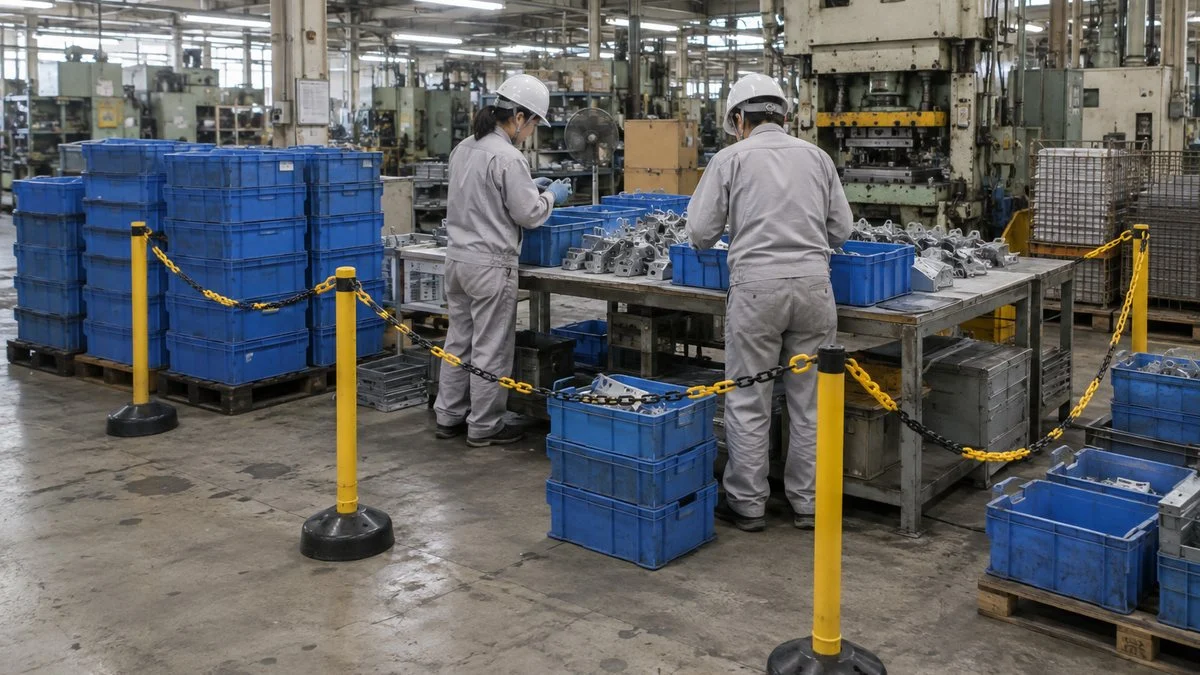
These four steps usually go into your first reply to the customer. If they are vague, the root-cause analysis that follows will drift too.
D0: Emergency Response and the Need for an 8D
In D0, record the symptoms and any emergency actions taken before the formal 8D started. Examples: you stopped shipping the affected lot as soon as the complaint came in, or you sent replacement parts to the customer's line.
Running every internal defect through a full 8D would overwhelm any team, so G8D uses D0 to decide whether an 8D is needed. When the customer has asked for an 8D, though, you have little room to decide that for yourself.
D1: The Team
D1 lists the people working on the problem. Do not list only one quality engineer. Build a cross-functional team with production, manufacturing engineering, design, and, if needed, your own supplier.
MAHLE's manual asks for team members to be listed with their functions and for a team leader who is responsible for carrying out the 8D. It also names a management champion who approves the resources the team needs.
List each member's role, not just name and department. That tells the customer whether the team can actually carry out the actions.
D2: Problem Description with 5W2H and Is/Is Not
Teams often rush D2, and it is one of the steps where the quality of an 8D varies most. Do not write only "appearance defect" or "dimensional defect." State which characteristic was out of spec, and by how much.
A common framework is 5W2H: what, when, where, who, why, how, and how many. Alongside it, collect facts such as:
- Production date
- Shift
- Lot number
- Measurement results
- Quantity of defective parts
Another strong tool is the Is/Is Not comparison. Put the conditions where the defect appears next to similar conditions where it does not, and the list of possible causes shrinks quickly.
The clues to the cause are in the difference between "Is" and "Is Not."
Fictional example for illustration. Here, you would look for a change common to "Press No. 2," "from September 8," and "night shift" (setup, equipment, operators, and so on).
Start asking in D2 whether the same problem could be happening elsewhere. Checking early whether other part numbers that use the same equipment or die are affected makes the roll-out in D7 much easier.
D3: Interim Containment
D3 keeps defective parts away from the customer until the cause is known. MAHLE's manual states that containment is there to protect the customer, and that fixing the defect only on your own line is not enough.
Work backward through the supply chain to set the scope: stock at the customer, parts in transit, your finished-goods warehouse, and work in process. Quarantine suspect parts, then inspect 100%, sort, or rework them.
In the 8D, report more than the action itself. Include:
- Quantity covered at each location
- Sorting results (how many defects out of how many checked)
- Person responsible and start date
The customer will also ask whether your sorting method itself could miss defects. Attaching the inspection method and acceptance criteria makes rejection less likely.
Also state the clean point: the lot from which you are sure only good parts are shipped. Containment is temporary. It stays in place until D6 confirms that the permanent action works.
D4: Separate the Occurrence and Escape Root Causes
D4 is the heart of the 8D and the step customers scrutinize most. The key point: every defect has at least two kinds of cause.
Three Levels of Cause
The first is the occurrence cause: why the defective part was made. The second is the escape cause: why inspection did not stop it before it reached the customer. Siemens also describes D4 as investigating two paths, one for occurrence and one for escape.
MAHLE's manual goes one level deeper and asks why the problem was not prevented, looking at the development phase and the system. This is often called the system root cause, and it asks whether the FMEA or the standards had a gap.
From one defect, trace "why we made it" and "why we shipped it" separately.
The escape cause corresponds to the escape point added in G8D: the control point that should have detected the defect. An 8D that lists only the occurrence cause is likely to be rejected.
If you fix only the occurrence cause and leave the inspection system unchanged, a defect made by some other cause can still reach the customer. Writing the two causes separately lets you act on both fronts: don't make it, and don't ship it.
Choosing an Analysis Tool
Common tools for digging into causes are 5 Whys (called naze-naze bunseki, なぜなぜ分析, in Japan), the fishbone (Ishikawa) diagram, and fault tree analysis (FTA). MAHLE's manual chooses the tool based on whether you already suspect the cause. If you do, use 5 Whys to find and confirm the root cause.
If the cause is unknown and the problem is relatively simple, list candidates on a fishbone diagram first, then narrow them down with 5 Whys or FTA. For more complex problems, the manual also lists statistical methods.
A fishbone diagram usually groups candidates under the 6Ms: man (people), material, measurement, machine, method, and mother nature (environment). In an 8D, the basic rule is to run a separate 5 Whys for the occurrence cause and for the escape cause.
Related: 5 Whys Example: Why-Why Analysis Japanese Customers Accept
The same defect, traced down two paths, points to different places to act.
Same fictional example as Figure 5. Do not stop at "operator carelessness"; keep digging until you reach a gap in the system.
Verify the Root Cause by Reproducing the Defect
The cause you reach with 5 Whys is still a hypothesis. An 8D has to include the results that show this cause actually produced the defect. MAHLE's manual asks suppliers to confirm the root cause by methods such as reproducing the defect or switching the cause on and off to show that the defect appears and disappears.
In the example, test strokes showing that a worn punch produces oversize holes, and that a new punch brings them back into spec, give the customer good evidence for the cause.
Attach the test conditions and results with photos and measurement data. A cause that ends in "presumed" or "it is believed that" tends to be read as not yet verified.
D5–D6: Choosing Permanent Actions and Verifying Them
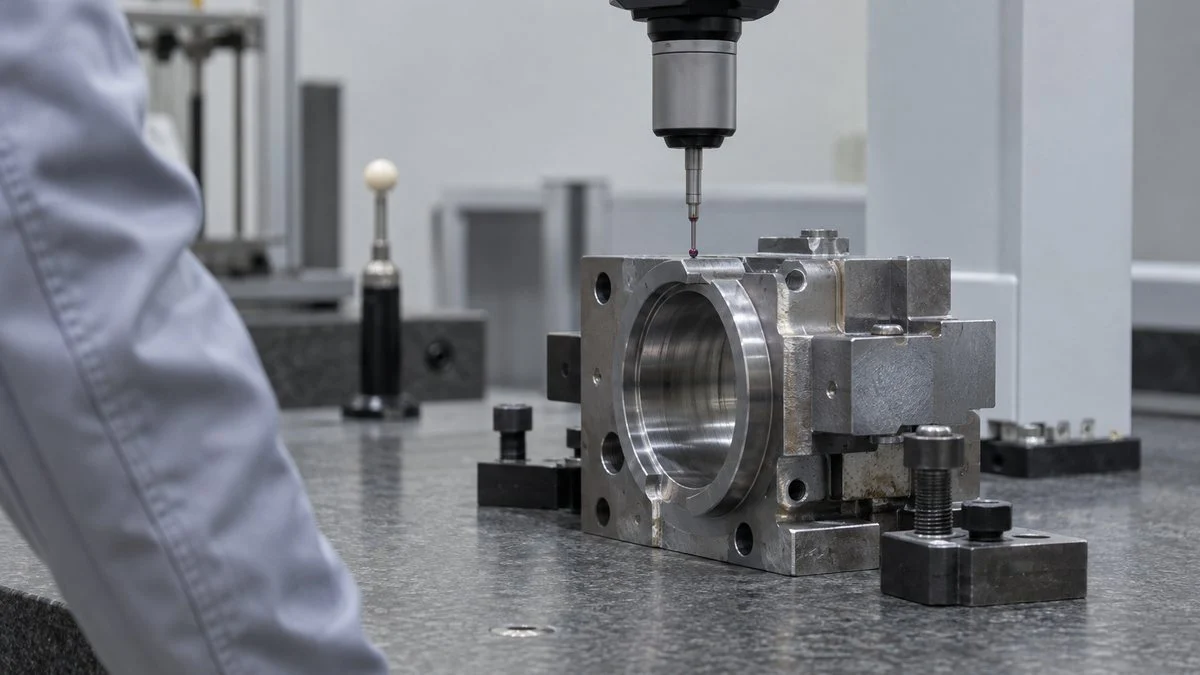
Once D4 confirms the cause, choose a permanent action that removes it, implement it, and prove that it works. Whether you can lift the D3 containment depends on the result.
Match Actions to Causes One to One
In D5, give every cause listed in D4 a matching action. List actions against the occurrence cause and the escape cause separately. A table that pairs each cause with its action lets the customer see quickly if anything is missing.
If you had more than one option, explain why you chose this one by comparing effectiveness, cost, time to implement, and the risk of side effects. Showing that you checked whether the new action could create a different defect makes the report more convincing.
Why "Retraining" Alone Gets Rejected
A frequent reason for rejection is an action that consists only of "retrained the operator" or "posted a warning sign." MAHLE's manual states plainly that in the auto industry, only process improvements count as corrective actions in an 8D. Personnel measures such as reminders and employee training are not considered process improvements.
People make mistakes even when they are careful, and the effect of training fades over time. What customers accept are actions that keep the defect from being made, or from being shipped, even when someone makes a mistake.
Replace actions that rely on people being careful with actions that build prevention into the system.
This does not mean training is unnecessary. When a system change alters the procedure, training on the new procedure is part of D6.
Revising the work instructions achieves nothing if the shop floor does not follow them. Using fixtures and sensors to physically prevent mistakes is known as poka-yoke (error-proofing), and many plants use it.
Related: Standardized Work Instructions: Sagyo Hyojunsho Template
Related: Poka-Yoke Examples and Types From Japanese Plants
Verifying Effectiveness and Lifting Containment
In D6, record the implementation date, the person responsible, and the verification results. MAHLE's manual describes two checks: a quick check right after implementation that deliberately provokes the failure conditions to see if the defect returns, and a long-term check using process capability and failure analysis.
"No defects since the fix" is not enough. Show data, such as defect rates or process capability indices before and after, or production and defect counts over a set period, and state which lots and dates you checked.
Once the permanent action is confirmed, lift the D3 containment (sorting and so on). Record the date you lifted it and the basis for that decision in the 8D.
D7–D8: Preventing Recurrence and Closing Out

By D6 the current defect is solved, but the 8D does not end there. D7 keeps the same type of problem from showing up in other products or in future products.
Update the Standards
In D7, build the fix into your company standards. MAHLE's manual lists documents to update, including:
- Drawings
- FMEAs
- Control plan
- List of special characteristics
- Product and process standards
- Maintenance plan
The FMEA review matters most. If the FMEA never anticipated this failure cause, that gap is itself one of the system causes.
Adding the failure mode and cause, and updating the ratings and the prevention and detection controls, carries the lesson into the next product and process design. For a structured design review that feeds the FMEA, see our guide to DRBFM vs. FMEA.
Related: AIAG-VDA FMEA for Japanese Customers: DFMEA vs PFMEA
Yokoten and Lessons Learned
Roll-out, called yokoten (横展開, horizontal deployment) in Japanese and "read across" in some English-language manuals, means checking existing similar products and processes for the same problem and applying the same fix where needed. In the example, other dies and presses that use the same type of punch would also switch to replacement by stroke count.
Lessons learned, by contrast, keep future product and process designs from repeating the same failure, for example by adding it to design standards and checklists. Customers follow the report more easily when you write them separately: yokoten covers what exists today; lessons learned cover what you will build next.
What to Write in D8
D8 closes the 8D. The team finishes the report, recognizes everyone's work, and shares what it learned and any customer feedback. Many forms ask for the completion date, the approver, and the date of the final report to the customer.
Thanking the team can look like a formality. But it builds a workplace where people want to help solve the next problem, which is why G8D keeps it as a step of its own.
Why 8Ds Get Rejected
Use these points for a final review before you submit. They are the first things a customer's quality engineer checks.
If any one of these fails, the 8D is likely to come back.
The Cause Stops at "Operator Error"
An 8D with "operator did not check" or "careless mistake" in the root-cause field is likely to be rejected. The customer wants to know why the process allowed that operator to make the mistake. Dig into the procedure, fixtures, labeling, and training system that set up the error.
Causes and Actions Don't Match
Another common gap: only some of the D4 causes have actions, or the action list includes items that no listed cause explains. Lay D4 and D5 side by side in a table and confirm that every cause has an action and every action traces back to a cause.
Meeting the Deadline with Thin Content
Marking an unverified cause or an action you have not implemented as "complete" just to hit the deadline is risky. Write "under investigation" for open items, add a target completion date, and answer in stages. In the end, that protects the customer's trust better.
Template: Cause-to-Action Table for D4–D5
This layout puts the one-to-one check from the previous section into a table. Adapt it to your customer's prescribed 8D form. The rows use the fictional bracket example from Figures 5 and 7. Replace them with your own causes and actions.
| Cause type | Root cause (D4) | How it was verified | Permanent action (D5) | Owner / date | Effectiveness evidence (D6) |
|---|---|---|---|---|---|
| Occurrence | No tool-life standard; punch replacement left to each operator | Test strokes: worn punch gives oversize holes; new punch brings them back into spec | Replace punch by stroke count; press counter signals change timing | (name / date) | (defect rate or capability before and after; lots and period checked) |
| Escape | Control plan inspection frequency did not account for tool wear | (how you showed that first-piece-only checks miss gradual wear) | Measure hole diameter at set stroke intervals; revise control plan | (name / date) | (lots and period checked) |
| System | (gap in FMEA, control plan, or standards) | (review result) | (D7 update: FMEA, standards, yokoten scope) | (name / date) | (documents updated, revision numbers) |
Questions to Ask Your Customer Before You Start
Forms and deadlines vary by customer, so confirm these points with the customer's supplier quality contact at the start. Customers often explain their requirements in a supplier quality manual; ask for the current version if you do not have it.
- Which 8D form should we use? Do you have a prescribed template?
- What are the deadlines for each stage (for example, containment, root cause, final closure)?
- Do you require D0, or do you use D1–D8 only?
- Which locations should containment cover: your stock, parts in transit, and our stock and WIP?
- How should we report the clean point (the first lot confirmed good)?
- For open items, can we submit "under investigation" with a target date and update the 8D later?
- What evidence do you need to accept the 8D and close it (data period, number of lots)?
A short email works well for the first contact:
"Thank you for informing us of the issue with [part number], lot [number]. We have stopped shipping the affected lot and started containment. To make sure our 8D meets your requirements, could you confirm the form you would like us to use and the deadline for each stage? We will send D1–D3 by [date and time]."
Corrective action requests also come up when a customer audits your plant. See our supplier audit checklist for Japanese customers.
Limits of This Guide
- 8D forms, step names, and deadlines differ by customer. The customer's own supplier quality manual and prescribed form always take priority over this guide.
- The deadlines and requirements quoted here (the 1-5-20 rule, team roles, tool selection, treatment of training, documents to update in D7) come from one company's manual, MAHLE's. Other customers may set different rules.
- Toyota's eight steps are matched to 8D by similar intent. Step names vary between sources, and the match is not exact.
- The bracket example in Figures 5, 7, and 8 and the template is fictional and only shows how to fill in the fields.
FAQ
What Is the Difference Between 8D and the Toyota 8-Step Method?
8D comes from Ford and is most often used to report a defect response to a customer. It has a containment step (D3) and asks for occurrence and escape causes separately. Toyota's eight steps are an internal problem-solving method, usually summarized on an A3 sheet, with a target-setting step that 8D does not have. You can move analysis from one to the other, but an 8D still needs containment and the escape cause written out.
Is 8D Eight Steps or Nine?
The original method had eight disciplines, D1 to D8. Ford's Global 8D added D0 for the emergency response and the decision on whether a full 8D is needed, so many forms now have nine steps, D0 to D8. Some customers still use only D1–D8.
What Is an Escape Point in an 8D?
It is the control point that should have detected the problem but did not, such as an in-process check or outgoing inspection. G8D added the idea. In the report, it is the starting point for the escape cause, the reason the defective part reached the customer.
Is Operator Training an Acceptable Corrective Action?
Not on its own. MAHLE's manual, for example, says that only process improvements count as 8D corrective actions in the auto industry, and reminders or employee training do not. Training is still needed when a system change alters the procedure, and it is reported as part of D6.
Sources
- Origins of 8D, TOPS, G8D, MIL-STD-1520: Wikipedia, "Eight disciplines problem solving"; AllAboutLean, "The History of the Eight Disciplines Problem Solving (8D)"
- Definition of an 8D report and the two paths in D4: Siemens, "8D Report" (Japanese)
- 1-5-20 rule, step requirements, treatment of personnel measures, documents to update: MAHLE Supplier Quality Assurance, "8D Process" (PDF)
- IATF 16949 clause 10.2.3, Problem solving: "IATF 16949:2016 Clause 10.2.3 Problem solving" (commentary); IATF16949 Kouryaku, "10.2.3 Problem solving requirements" (Japanese)
- Toyota's eight-step problem solving and TBP: Gemba Academy, "TBP: Toyota Business Practice"; Lean Enterprise Academy, "Back to Basics: Problem Solving at Toyota"; OJT Solutions, "The 8 Steps of Problem Solving" (Japanese); Toyota Enterprise, "Toyota-style kaizen (problem solving) training" (Japanese)
- VDA 8D booklet: VDA QMC, "8D – Problemlösung in 8 Disziplinen" (1st edition, November 2018)
- AIAG CQI-20: AIAG, "CQI-20 Effective Problem Solving Guide"
Original article in JapaneseThis guide is adapted from a MONOSCOPE article written for readers in Japan: 8Dレポートの書き方|D0〜D8の手順・原因分析とトヨタの8ステップとの違い
About the editor
 MONOSCOPE EditorFOUNDER & EDITOR
Spent about ten years at a plant equipment maker and a plant engineering company, proposing, designing, and commissioning equipment, then moved into web marketing. Now a web consultant for B2B manufacturers, helping them explain their products and technology. Licensed in Japan as an Energy Manager and a Third-Class Chief Electrical Engineer.
Has run an engineering blog since 2017 (500+ articles) and a Japanese YouTube channel with about 20,000 subscribers. Each English guide is written from the Japanese shop-floor point of view and checked against the cited standards.