Price Increase Requests in Japan: How Suppliers Negotiate
An email arrives from one of your Japanese suppliers, or from a subcontractor that supplies your plant in Japan. It asks for a "price discussion" on a list of part numbers, gives a current and a proposed unit price, breaks the increase into labor and material, cites Japan's latest minimum wage figures, and asks for a meeting by a specific date. The tone is polite, but the request is more structured than the "costs are rising, please understand" letters of a few years ago.
There is a reason for that. Since January 1, 2026, Japan's amended Subcontract Act, now called the Fair Transactions Act (toriteki-ho), bans covered buyers from setting prices unilaterally after ignoring a supplier's request for a price discussion, or without giving the explanation the supplier needs. Government guidelines on passing labor costs into prices also tell suppliers how to prepare their requests and tell buyers how to respond. As a result, the negotiation process itself, not just the final price, now matters.
This guide explains the six steps Japanese suppliers are encouraged to follow when they ask for a price increase, the public data they cite, and what they can do when a buyer does not respond. It is written for buyers and engineers outside Japan who receive these requests, and for suppliers and Japan-based plants that need to make one. It ends with a checklist for both sides and a template for a negotiation record. It is a general overview, not legal advice: whether the Act covers a particular transaction is a question for your legal team.

Contents
- What Changed for Price Negotiations in 2026
- Why So Many Requests Mention Labor Costs
- The 6 Steps Japanese Suppliers Follow
- Public Data Japanese Suppliers Cite
- When the Buyer Does Not Respond
- Common Mistakes in Price Increase Requests
- When You Are the Buyer
- Checklist: Handling a Price Increase Request
- Template: Price Negotiation Record
- Limits of This Guide
- Summary
- FAQ
- Sources
What Changed for Price Negotiations in 2026
The Fair Transactions Act is the amended and renamed version of the Subcontract Act (shitauke-ho), which dates from 1956. Its official English title is the Act Against Delay in Payment of Fees, etc. to Small and Medium-sized Entrusted Business Operators in Manufacturing and Other Specified Fields. The amendment took effect on January 1, 2026. Along with the name, the terms changed: the "parent business operator" became the "entrusting business operator," and the "subcontractor" became the "small and medium-sized entrusted business operator." In this guide we simply say "buyer" and "supplier."
The background is the sharp rise in labor, raw material, and energy costs. The Japan Fair Trade Commission (JFTC) says that wages can only rise faster than prices if price pass-through becomes routine across the whole supply chain, which it calls "structural price pass-through." The amendment aims to end business practices that push costs onto suppliers, such as setting prices without discussion.
The rules now cover the negotiation process and payment terms, not only the final price.
Based on JFTC, "Overview of the Subcontract Act Amendment (Fair Transactions Act)" (September 2025, Japanese).
The New Ban on Setting Prices Without Discussion
For price negotiations, the biggest change is a new prohibition on "deciding the price without properly conducting discussions." It applies when a supplier asks for a price discussion and the buyer does not engage, or does not give the necessary explanation, and then sets the price unilaterally in a way that unjustly harms the supplier's interests.
The older rule against beating down prices looks at the outcome: is the price far below what is normally paid on the market? The new rule looks at the process. It targets the case where costs have risen and the buyer keeps the price flat without discussing it.
Holding the price flat while costs rise can now be a problem, not only cutting the price.
Figures are the model example used in JFTC explanatory material. Whether a real case is a violation depends on the facts.
Under the JFTC's interpretive guidelines, "not engaging in discussion" is not limited to an explicit refusal. Ignoring the request or repeatedly postponing the meeting can also count. One Japanese law firm's commentary also lists, as an example of a violation, demanding cost details beyond a reasonable scope and making them a condition for holding the discussion.
The rule starts from one fact: the supplier asked for a discussion. A sales rep saying "things are tough" in passing leaves no record of a request. That is why the steps below put so much weight on making the request in writing and keeping records.
The amendment changed other things too. Promissory notes are banned as a payment method, and electronically recorded receivables or factoring are not allowed when the supplier cannot easily receive the full amount in cash, including fees, by the due date. The JFTC's material gives the example of a 60-day payment term plus a 60-day note, which meant waiting up to 120 days for cash, now cut to 60 days. Purchase order details can be sent by email without the supplier's prior consent, and late-payment interest now applies when a buyer reduces the price after the fact. Wooden patterns and jigs were added, alongside metal molds, to the tooling whose manufacture counts as outsourced manufacturing; our guide to mold storage under the Fair Transactions Act covers tooling in detail. For moldmakers and machining shops, where free storage of customers' molds has long been a problem, this may prompt a review of old practices.
Which Transactions Are Covered
Coverage depends on the type of transaction and on the size of both parties. For outsourced manufacturing of parts, the Act applies when the buyer has capital over JPY 300 million and the supplier JPY 300 million or less; when the buyer has capital over JPY 10 million up to JPY 300 million and the supplier JPY 10 million or less; or, since 2026, when the buyer regularly employs more than 300 people and the supplier 300 or fewer. Individuals count as suppliers. Employees are counted as "regularly employed" workers covered by the company's wage ledger, and the employee threshold is 100 instead of 300 for some other transaction types, such as certain service outsourcing. The mold storage guide shows these combinations in a figure.
The JFTC says the employee test was added because some companies had large operations but small capital, or cut their capital to fall outside the Act, and some buyers even asked suppliers to increase their capital so the Act would not apply. A transaction outside the Act can still raise issues under Japan's Antimonopoly Act as abuse of a superior bargaining position, and the labor-cost guidelines below are applied under both laws. Whether and how either law reaches a company or transaction outside Japan is a question for your legal team or Japanese counsel.
Why So Many Requests Mention Labor Costs
Japan's SMEA surveys 300,000 small and medium-sized suppliers about price negotiations and pass-through after each March and September "Price Negotiation Promotion Month." In the March 2026 survey, published in June 2026, 90.7% of suppliers said a price negotiation took place, but suppliers recovered only 54.2% of their cost increases in price. By cost element, the pass-through rate was 55.7% for raw materials, 50.0% for labor, and 48.9% for energy. Our guide to how Japanese purchasing departments work charts these figures and explains how buyers are expected to respond.
Material costs are easier to justify because market prices and industry indexes exist. Labor costs tend to be seen as something a supplier should absorb through its own efforts, so they lag. When Japan's Guidelines on Price Negotiation for Appropriate Pass-through of Labor Costs were revised in December 2025, they again named manufacturing industries such as general-purpose machinery as sectors where pass-through falls short the deeper a supplier sits in the supply chain, and added examples of what companies in those sectors had done.
Think of an automotive chain running from the carmaker to Tier 1, Tier 2, and the small machine shops below them. If a Tier 1 supplier gets an increase but does not pass the same amount down, the shops at the bottom have the least money left for wage increases. On top of that, Japan's minimum wage for fiscal 2026 rose by JPY 56 to a national weighted average of JPY 1,177 per hour. Most prefectures apply the new rate from October, so requests based on labor costs tend to cluster from autumn to the end of the year.
The 6 Steps Japanese Suppliers Follow
Based on the Act and the labor-cost guidelines, a supplier's price request typically follows six steps. Most of the work happens before and after the meeting: preparing the numbers beforehand and recording the outcome afterward. If you are on the buying side, this is also the sequence you should expect to see.
Three phases: preparation, negotiation, and recording and follow-up.
Organized from the supplier-side actions in the Cabinet Secretariat and JFTC Guidelines on Price Negotiation for Appropriate Pass-through of Labor Costs.
Step 1: Review Customers and Parts
The supplier first decides which parts, for which customers, to start with. Trying to renegotiate everything at once usually means the paperwork cannot keep up and every request ends up half-prepared.
The practical priorities are customers that account for a large share of sales, parts whose margins have fallen, and parts whose unit price has not changed for years. The guidelines specifically flag transactions with prices held flat for a long time, and "spot" orders that are renewed again and again at the same price, as needing discussion.
Step 2: Break Down Costs and Calculate the Increase
Next, the supplier splits each part's cost into labor, material, energy, outside processing, and so on, and calculates how much each has risen. "Everything is up, so we need 5%" gives the buyer nothing to justify internally.
The supplier does not need to disclose every cost detail. If it can show roughly what share of the unit price is labor and material, multiplying each share by its rate of increase gives the amount of the increase.
Cost share times rate of increase gives the starting point for the request.
(assumed 30%)
(JPY 1,121 → 1,177)
(assumed 40%)
(assumed)
The cost shares and the material price increase are assumptions for illustration; the minimum wage figures are the actual fiscal 2026 national averages. If the supplier's own wage increase differs from the minimum wage increase, it uses its actual rate or the annual wage settlement rate.
A supplier can use its own actual wage increase for labor. Putting that number next to public data the buyer can check, however, avoids spending the meeting arguing over whether the number is reasonable.
Step 3: Back the Numbers With Public Data
The labor-cost guidelines list public data that suppliers can use as evidence, including the rate of increase in the minimum wage and the results of the annual spring wage negotiations (shunto).
The guidelines also set expectations for buyers. If a buyer asks for an explanation or supporting documents, it should base the request on public data, and it should respect a proposed price backed by public data as having a reasonable basis. A supplier does not have to hand over its payroll records or detailed cost sheets; public data showing the rate of increase is enough to start the discussion. The next section lists the data most often cited.
Step 4: Request a Discussion in Writing
Once the numbers are ready, the supplier sends a written request or an email to the buyer's purchasing contact. It covers four points:
- The parts concerned
- The current and proposed unit prices
- The reasons for the increase and the supporting data
- A request for a meeting, with a preferred date or time frame
The guidelines ask suppliers to state the price they want rather than waiting for the buyer to offer one. They also ask suppliers to include labor cost increases at their own subcontractors and further down the chain, not only their own.
Timing matters as well. The guidelines suggest using the industry's regular price review periods, or periods when the supplier has relatively more leverage, such as the buyer's busy season. The March and September Price Negotiation Promotion Months are another natural opening. A template for this kind of request is in our guide to Japanese purchasing departments.
Step 5: Explain the Basis and Reach Agreement
In the meeting, the supplier walks through the calculation from Step 2 and the evidence from Step 3. If the buyer asks for more documents, the supplier answers within the scope of public data and decides carefully whether to disclose confidential cost details.
Having a fallback ready, such as a phased increase or a later effective date, makes a flat "no" less likely if the full amount is refused. If the agreed increase falls short, the supplier asks the buyer to explain the reason for its decision and sets the date of the next discussion.
Step 6: Record the Outcome and Make It Regular
After the meeting, the supplier writes up the date, attendees, each side's position, what was agreed, and next steps, and shares the record with the buyer. The guidelines name creating a negotiation record and having both buyer and supplier keep it as an action for both sides.
The record prevents disagreements about what was agreed, and it is also evidence if the buyer later fails to engage. With costs still rising, a single negotiation is not enough; building in regular reviews, once a year or every six months, is the realistic way to keep up.
Public Data Japanese Suppliers Cite
For labor, the easiest evidence is the change in the regional minimum wage. In fiscal 2026 the national weighted average rose from JPY 1,121 to JPY 1,177, an increase of JPY 56, or about 5.0%. Amounts and effective dates differ by prefecture, so a supplier uses the figure for the prefecture where its plant is located. The effect is most direct at plants with many part-time or agency workers paid close to the minimum wage.
For regular employees, suppliers can cite the spring wage negotiation results. In the final tally for 2026, the Japanese Trade Union Confederation (Rengo) reported an average wage increase of 5.01% overall and 4.69% at unions with fewer than 300 members. A supplier whose own wage increase is in that range can present it as in line with the market.
For materials, suppliers cite price increase notices from steel, resin, and other vendors, and prices published by industry associations or market reports. Our guide to Japan's 2026 steel price increases shows how to check a steel-based request. For energy, they use rate revision notices from power and gas utilities and the trend in their own electricity bills.
Beyond the data, the guidelines describe how each side should behave. Figure 5 shows the actions they ask of suppliers and of both sides.
Of the guidelines' 12 codes of conduct, four apply to suppliers and two to both sides.
From the Cabinet Secretariat and JFTC Guidelines on Price Negotiation for Appropriate Pass-through of Labor Costs (issued November 2023, revised December 2025). The six buyer-side actions are listed later in this guide.
When the Buyer Does Not Respond
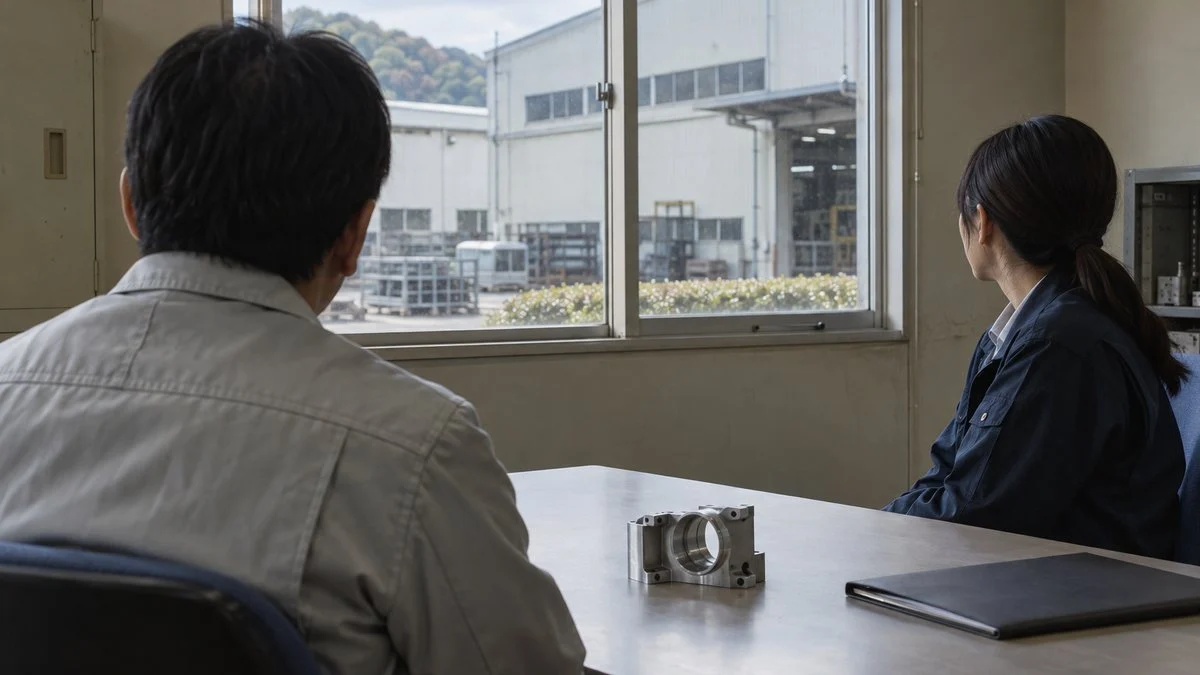
No reply to a written request, a meeting date that keeps slipping, or the old price offered again with no reason after the supplier has shown its evidence: in a covered transaction, any of these may amount to unilateral pricing without discussion under the Act.
Going straight to a government agency is often unrealistic because of the effect on the business relationship. Japanese suppliers usually escalate in stages: a renewed request inside the customer, then outside advisory services, and only then a report to the authorities. Buyers outside Japan should know this path exists, because it explains why a supplier may send a second, more formal letter to a manager above the buyer.
With records in hand, the supplier brings in outside help one stage at a time.
The Act bans retaliation, such as reducing orders, against a supplier for reporting. From 2026, reports to the minister overseeing the industry are also covered.
Enforcement is active. For fiscal 2025 (April 2025 to March 2026), the JFTC reported 39 recommendations (published administrative findings that tell a company to correct a violation) and 8,261 guidance cases, and buyers returned about JPY 2.56 billion to suppliers. From 2026, ministers who oversee each industry, such as the Ministry of Economy, Trade and Industry (METI) for manufacturing, can also give guidance and advice. More places to report, combined with the ban on retaliation, give Japanese suppliers more confidence to push a request.
Common Mistakes in Price Increase Requests
Suppliers that struggle to pass on costs tend to fail in similar ways. In each case, the problem is preparation and record-keeping, not negotiating skill.
Mentioning It Only Verbally
A sales rep mentions during a meeting that "material costs are killing us," the buyer says "we'll look into it," and six months go by. Nothing on file shows that a discussion was requested. The starting point is a written request or email with a date and a named recipient.
Waiting for the Buyer's Number
A supplier that waits for the buyer to propose terms usually receives a number set by the buyer's budget. The guidelines ask suppliers to state their price first because the first number on the table tends to become the reference point.
Leaving Out Subcontractor Increases
When plating, heat treatment, or painting is outsourced, the subcontractors' increases also feed into the supplier's cost. A calculation based only on the supplier's own labor means every increase it accepts from its subcontractors comes straight out of its own margin.
Treating One Increase as the End
Japan's minimum wage has risen by more than JPY 40 every year since fiscal 2023. A supplier that relaxes after one increase and puts off the next request will see its margin squeezed again the following year. Agreeing on the timing of regular reviews in advance actually makes negotiating less work.
Price increases cannot cover everything, either. Cutting labor hours through automation or shorter changeovers, alongside the price request, gives both sides more room to reach agreement.
When You Are the Buyer
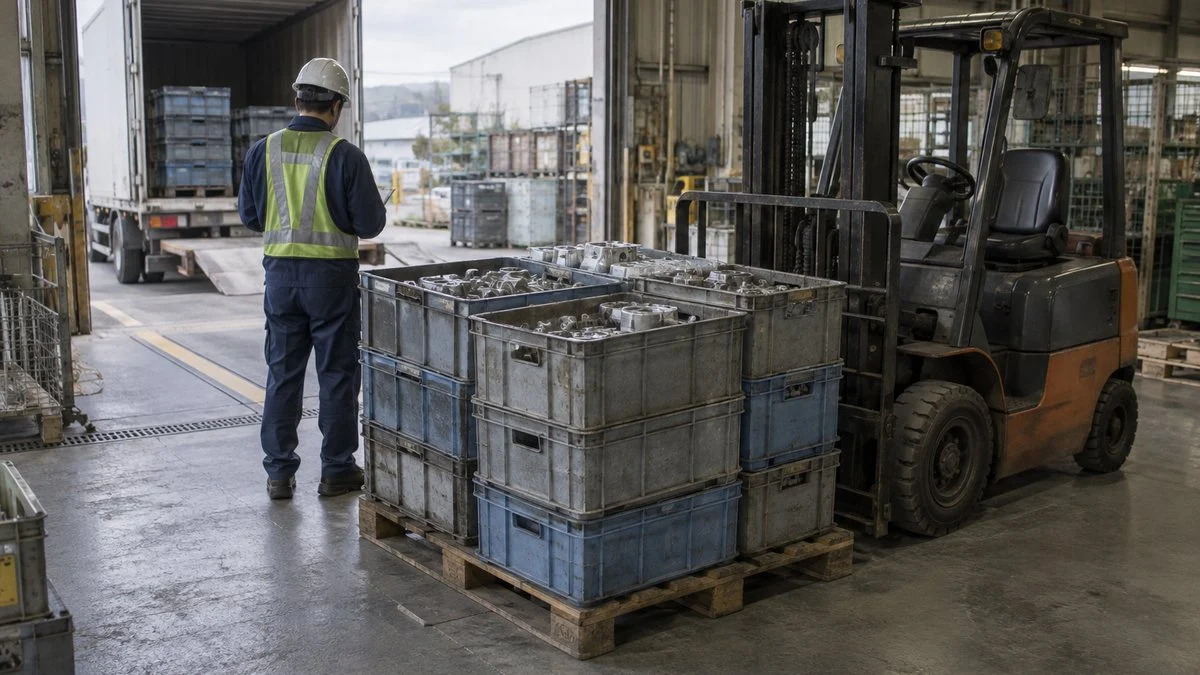
Most parts makers sit in the middle: they supply carmakers or equipment makers, and they buy outsourced machining and finishing from smaller shops. If its capital or employee count meets the thresholds, a parts maker can be covered by the Act as a buyer too. Asking customers for increases while ignoring requests from your own subcontractors is hard to defend.
The labor-cost guidelines list six actions for buyers:
- Top management decides on a policy of accepting cost pass-through and communicates it inside and outside the company
- Hold regular price discussions even if the supplier does not ask
- When asking for supporting documents, base the request on public data
- Keep pass-through across the whole supply chain in mind
- Come to the table when a supplier asks for a discussion
- Offer suggestions on how to approach the increase where needed
In practice, a purchasing department can start by naming a contact point for price requests, setting a response deadline, and keeping a record of each discussion. In covered transactions, ending payment by promissory note and reviewing payment terms are also part of compliance. The guidelines state that a buyer that follows all of its codes of conduct properly will not normally face problems under the Antimonopoly Act or the Fair Transactions Act. For more on how Japanese buying teams are organized, see our guide to the purchasing process at Japanese manufacturers.
Checklist: Handling a Price Increase Request
If you receive a request from a Japanese supplier:
- Reply in writing within a set period and propose a meeting date, even if you cannot agree yet
- Check which parts are covered and when each part's price was last revised
- Check the cost split: what share of the unit price the supplier assigns to labor, material, energy, and outside processing
- Compare the rates of increase with public data (prefectural minimum wage, spring wage settlement results, material price notices)
- Ask for further documents only within reason, and base the request on public data
- If you cannot accept the full amount, explain why and propose options such as a phased increase or a later effective date
- Agree on the date of the next review
- Ask your legal team whether the transaction may be covered by the Fair Transactions Act or the Antimonopoly Act
If you are the one asking (for example, a Japan-based plant or a supplier to a Japanese customer):
- Prioritize parts with large sales, falling margins, or prices unchanged for years
- Break down cost by element and show the calculation, not just a percentage
- Include subcontractor increases for plating, heat treatment, painting, and other outside processing
- Cite public data the buyer can check, and the plant's own prefecture for minimum wage
- Send the request in writing to a named contact, with a requested meeting date
- Prepare a fallback (phased increase or later effective date)
- Write up and share a record after every meeting
- Keep records that show when you asked and how the buyer responded
Template: Price Negotiation Record
The guidelines expect both sides to keep a record of each negotiation. The fictional example below can serve as a starting point; adjust the items to your own company's practice.
| Item | Example entry (fictional) |
|---|---|
| Date and format | [Date], video call |
| Attendees | Buyer: [name, title]. Supplier: [name, title] |
| Parts covered | [Part numbers] |
| Date of request | Supplier's written request of [date] |
| Current and proposed price | JPY 1,000 → JPY 1,047 (+4.7%) |
| Basis presented | Labor: minimum wage increase in [prefecture]; material: vendor notice of [date] |
| Buyer's position | [e.g., accepts labor portion; requests vendor invoice for material] |
| Agreed outcome | [e.g., JPY 1,030 from [date]; remaining JPY 17 to be reviewed] |
| Reason given for any shortfall | [Buyer's explanation] |
| Next steps | [Documents to send, by whom, by when]; next review on [date] |
| Confirmed by | Buyer: [name, date]. Supplier: [name, date] |
A short acknowledgment from the buyer also helps both sides show that the request was received and taken up:
Subject: Re: Request for price discussion, [part numbers]
Dear [Name], thank you for your request of [date]. We have received your cost breakdown and will review it internally. We propose a meeting on [date] to discuss it. If we need any additional information before then, we will let you know by [date]. Best regards, [Name]
Limits of This Guide
This guide summarizes Japanese government material and a law firm commentary; it is not legal advice. Whether the Fair Transactions Act or the Antimonopoly Act applies depends on the type of transaction, the size of both companies, and the facts. Whether either law reaches a company or contract outside Japan is not addressed in the source material, so confirm it with your legal team or Japanese counsel.
The six steps are a common pattern, not a required procedure, and practice varies by company and industry. Survey figures describe small and medium-sized suppliers in Japan, not how any particular buyer treats overseas suppliers. The cost shares and material increase in the example calculation, and the entries in the template, are fictional.
Summary
- Since January 2026, Japan's Fair Transactions Act bans covered buyers from setting prices unilaterally without discussion, and bans payment by promissory note
- Over 90% of Japanese suppliers now negotiate, but they recovered only 54.2% of cost increases, and 50.0% for labor
- Suppliers follow six steps: review parts, break down costs, gather public data, request in writing, discuss, and record
- The usual evidence is the minimum wage increase and spring wage settlement rates
- If a buyer does not respond, suppliers escalate in stages, from the customer's management to advisory services and the authorities
A price increase request involves more than the sales team. Production control and accounting know the costs, sales makes the request and keeps the records, and purchasing handles the subcontractors.
FAQ
Can a Japanese customer refuse a price increase request?
Yes. The Act does not require a buyer to accept the requested price. What it bans, in covered transactions, is ignoring or refusing a supplier's request for discussion, or not giving the necessary explanation, and then setting the price unilaterally. A buyer that discusses the request and explains its decision is in a different position from one that does not respond.
What data do Japanese suppliers use to justify a price increase?
Mostly public data. For labor, the regional minimum wage increase (JPY 1,121 to JPY 1,177 national average in fiscal 2026, about 5.0%) and spring wage settlement results (5.01% overall and 4.69% at smaller unions in 2026). For materials and energy, vendor price notices, published market prices, and utility rate revisions.
Does a supplier have to disclose its full cost breakdown?
No. The labor-cost guidelines ask buyers to base requests for documents on public data. One Japanese law firm lists demanding cost details beyond a reasonable scope as a condition for discussion as an example of a violation. Showing the rough cost shares and the rates of increase is usually enough to start.
When do Japanese suppliers usually ask for price increases?
The guidelines point suppliers to the industry's regular price review periods and to times when they have more leverage, such as the buyer's busy season. The March and September Price Negotiation Promotion Months are another opening, and labor-based requests tend to cluster in autumn, after the new minimum wage takes effect (October in most prefectures).
Does the Fair Transactions Act apply to buyers outside Japan?
It depends, and this guide does not give a yes-or-no answer. Coverage depends on the type of transaction and the size of both parties, and how Japanese law applies to a foreign company or contract is a question for your legal team or Japanese counsel.
Sources
- Amendment, coverage tests, and interpretive guidelines: JFTC, "Overview of the Subcontract Act Amendment (Fair Transactions Act)" (September 18, 2025, Japanese)
- Overview of the Act: JFTC, Fair Transactions Act page (Japanese); SMEA Mirasapo Plus, changes under the Fair Transactions Act effective January 1, 2026 (Japanese)
- Official English name of the Act: JFTC (English)
- Elements and examples of unilateral pricing without discussion: Seiwa Law Firm commentary (January 2026, Japanese)
- Labor-cost guidelines and the 12 codes of conduct: JFTC, Guidelines on Price Negotiation for Appropriate Pass-through of Labor Costs (English); Cabinet Secretariat and JFTC, overview of the December 2025 revision (Japanese); JFTC press release (December 26, 2025, Japanese)
- Pass-through rates: METI, results of the follow-up survey for the March 2026 Price Negotiation Promotion Month (June 26, 2026, Japanese)
- Minimum wage: Jiji Press, national average minimum wage JPY 1,177 (September 3, 2026, Japanese); Ministry of Health, Labour and Welfare, minimum wage increases by year (Japanese)
- Spring wage negotiations: Rengo, 2026 spring wage negotiations, final tally (July 2026, Japanese)
- Enforcement in fiscal 2025: JFTC, enforcement of the Act in fiscal 2025 (June 10, 2026, Japanese)
- Advisory services: SMEA, trade dispute consultation desks (Japanese); J-Net21, price pass-through support desks at Yorozu Support Centers (Japanese)
Original article in JapaneseThis guide is adapted from a MONOSCOPE article written for readers in Japan: 取適法で価格転嫁はどう進める?部品メーカーの価格交渉6ステップ
About the editor
 MONOSCOPE EditorFOUNDER & EDITOR
Spent about ten years at a plant equipment maker and a plant engineering company, proposing, designing, and commissioning equipment, then moved into web marketing. Now a web consultant for B2B manufacturers, helping them explain their products and technology. Licensed in Japan as an Energy Manager and a Third-Class Chief Electrical Engineer.
Has run an engineering blog since 2017 (500+ articles) and a Japanese YouTube channel with about 20,000 subscribers. Each English guide is written from the Japanese shop-floor point of view and checked against the cited standards.