Japanese Procurement: QCD Negotiation and Supplier Ratings
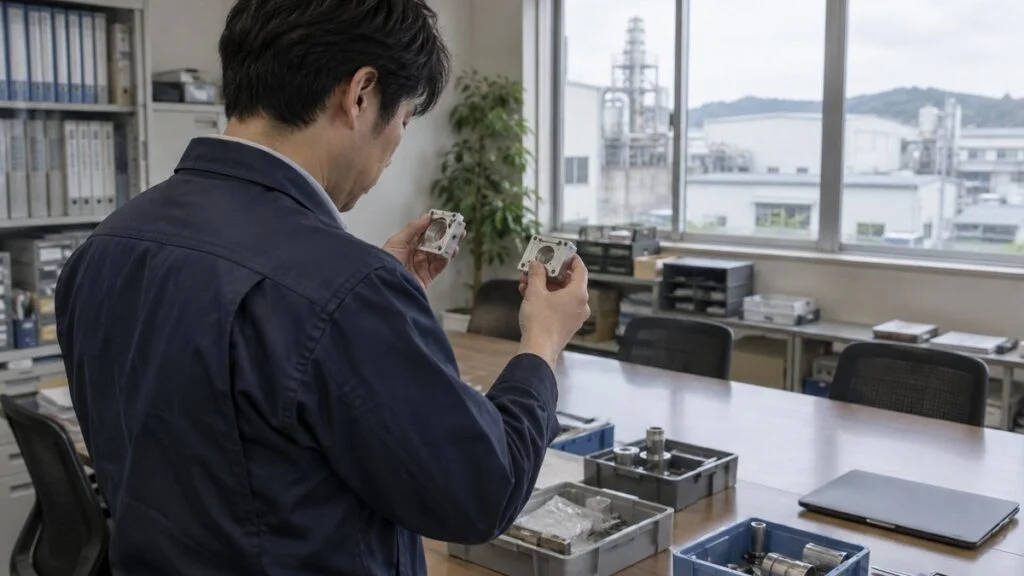
Your Japanese customer's buyer asks for a cost breakdown before accepting your quote. A year later, the same buyer sends a supplier scorecard, mentions that a second source is being qualified, and asks for this year's price reduction. When your resin and labor costs rise, you are not sure whether asking for a price increase will hurt the relationship. Each of these moves comes from the same place: the Japanese purchasing department and the way it is expected to manage quality, cost, delivery, and supply risk.
This guide explains how a purchasing department at a Japanese manufacturer thinks: what it buys, how it weighs QCD (quality, cost, delivery), why it asks for cost breakdowns, how it rates and develops suppliers, and which Japanese rules shape its behavior, including the January 2026 law that changed how buyers must respond to price increase requests. It is written for suppliers and engineers in the US, India, and Southeast Asia who sell to Japanese manufacturers or work alongside their purchasing teams. The purchasing process itself (purchase request, supplier search, RFQ, evaluation and negotiation, selection and contract, ordering, delivery tracking, acceptance and payment, and supplier evaluation) is covered in our step-by-step guide to the purchasing process at Japanese manufacturers; this one focuses on the role and the reasoning behind it.
Contents
- What a Japanese Purchasing Department Does
- QCD: How Japanese Buyers Weigh Quality, Cost, and Delivery
- Price Increase Requests: How Japanese Buyers Are Expected to Respond
- Supplier Management: Ratings, Development, and Second Sources
- Japanese Rules That Shape How Buyers Behave
- Checklist: Working With a Japanese Purchasing Department
- Questions to Ask Your Japanese Buyer
- Where This Picture Does Not Apply
- FAQ
- Sources
What a Japanese Purchasing Department Does
A purchasing department obtains the goods and services a manufacturer needs from outside the company, on the right terms. At a manufacturer, that mostly means parts and raw materials. The department name varies by company: kobai-bu (購買部, purchasing department), shizai-bu (資材部, materials department), and chotatsu-bu (調達部, procurement department) are all common.
The department takes requests from internal teams ("we need this"), decides where to buy, at what price, by when, and on what terms, and follows the order until the goods arrive. Its decisions weigh most heavily on product cost and delivery at assembly-type manufacturers, which machine few parts in-house and buy most of them.
Japanese government statistics show why buyers matter so much. In 2024, Japanese manufacturers shipped JPY 381.654 trillion worth of goods and created JPY 117.2071 trillion in value added, according to the 2025 Economic Structure Survey by the Ministry of Economy, Trade and Industry (METI) and the Ministry of Internal Affairs and Communications. Value added was only about 30% of shipments. Most of the rest was spent on things bought from outside: raw materials, parts, fuel, and outsourced processing (the gap also includes depreciation and taxes). When more than half of sales goes to outside suppliers, a 1% improvement in purchasing goes straight to profit.
Kobai vs. Chotatsu: Purchasing vs. Procurement
Japanese companies often use kobai (購買, purchasing) and chotatsu (調達, procurement) almost interchangeably, and there is no official distinction. In practice, many companies split them roughly as shown below: kobai is the day-to-day work of buying set items from set suppliers on set terms, while chotatsu also covers strategy, meaning where and how to buy. Large manufacturers sometimes have separate "strategic procurement" or "procurement planning" sections apart from the team that places orders.
Day-to-day ordering is usually called purchasing (kobai). Once the work includes designing how to buy, it is usually called procurement (chotatsu).
There is no official definition. Department names and scope vary by company. This guide uses "purchasing" for both.
Four Categories a Buyer Handles
What a purchasing department buys falls into items that go into the product and items that do not. Equipment and outsourced processing are handled as separate areas because they need different expertise and controls.
Direct materials are the core, but each area is managed differently.
At some companies, production engineering buys equipment directly and general affairs buys indirect materials.
Direct materials include raw materials such as steel and resin pellets, standard parts such as screws and bearings, custom parts made to the customer's drawings, and units such as motors and circuit boards. Missing any one of them stops the line. Because the same part is bought by the thousands or tens of thousands every month, a few yen on the unit price adds up to a large amount over a year. A quality problem can lead to a product recall, so buyers judge a supplier's quality control, not only its price.
Indirect materials are things that do not go into the product: cutting tools, gloves, lubricants, office supplies, and services such as cleaning and security. Each order is small, but the number of items is huge, and each department buying on its own tends to pay more. Companies cut both workload and cost by introducing purchasing websites and consolidating suppliers. This area gets less attention than direct materials, but it often delivers company-wide savings quickly.
Equipment and molds can cost from several million to several hundred million yen per order. The specification, and the condition the equipment must meet after installation to be accepted, need to be settled in advance. In many companies, production engineering writes the specification and purchasing compares quotes and handles the contract terms. See our guide to the equipment purchase specification (kobai shiyosho).
Outsourced processing means handing part of the company's own process to an outside shop. These suppliers are often small and medium-sized companies, so Japan's Fair Transactions Act (covered below) applies directly, and buyers have to be careful with how they write purchase orders and set payment terms.
The Buyer Sits Between Departments
If you supply a Japanese manufacturer, your buyer is rarely the only decision-maker. The buyer works with design on specifications, with quality assurance on supplier audits, with production control on quantities and dates, and with finance and legal on payment terms and contracts, and balances these internal demands against what suppliers can actually deliver. That position brings pressure from both sides: "cheaper and faster" from inside the company, and "please accept a price increase" from suppliers. When parts run short, the buyer takes the blame even if the supplier caused it. Larger decisions also go through a formal internal approval (ringi), which is one reason answers can take time. See Ringi in Japan: why approvals are slow.
The buyer's job is to match what the company needs with what suppliers can deliver.
QCD: How Japanese Buyers Weigh Quality, Cost, and Delivery
Price is only one part of what a Japanese buyer negotiates. The basic framework is QCD: quality, cost, and delivery. Chasing only one of the three usually pushes problems onto the other two.
Delivery weighs especially heavily at plants that run just-in-time production under the Toyota Production System and keep minimal inventory: there, a one-day delay can stop the line. Many companies issue routine orders automatically from production systems such as ERP or MES, so buyers spend their time on exceptions and on spotting signs of delay early, from material arrivals and how busy each supplier is.
Push hard on one, and the other two take the hit.
Here is how that plays out. Suppose a buyer switches to a supplier whose unit price is 10% lower. If defects then rise and parts need sorting or rework, the total cost can end up higher, not lower. What the buyer is supposed to watch is not the unit price but the total cost of using that part.
For suppliers, this cuts both ways. A higher quote can still compete if you can show lower total cost: fewer defects, shorter lead time, or cheaper logistics. In the other direction, a quality escape costs you more than the rework itself, because it changes how the buyer sees your total cost.
Why Japanese Buyers Ask for Cost Breakdowns
Negotiation rests on a cost review (kosuto satei): the buyer splits the quote into its elements, checks whether each is reasonable, and looks for room to improve. A typical breakdown has five elements:
- Material cost
- Processing cost (machine hour rate × processing time)
- Overhead
- Profit
- Freight
The purpose is not just to squeeze your margin. A blanket price cut with no basis wears suppliers down and does not last. The buyers who earn trust on both sides propose ways to lower the cost itself together with the supplier: using material more efficiently, changing the process, or changing the order lot size. If you share a breakdown, expect questions element by element, and expect suggestions in return. For how Japanese suppliers build quotes on the other side of the table, see RFQ to a Japanese manufacturer: the hikiai process.
Development Purchasing: Building Cost In at the Design Stage
Most of a part's cost is locked in once the drawing is done. The official site of the Japan Management Association's CPP (Certified Procurement Professional) program lists, as a common problem, that 80% of cost is decided before design for mass production.
That is why many Japanese manufacturers practice development purchasing (kaihatsu kobai): buyers join at the R&D and design stage and propose materials, standard parts, and ways to use suppliers' technology. Working out a cheaper design before the drawing is fixed has more effect than negotiating price afterward. Even in day-to-day work, buyers are expected to push back on requests: is the specification excessive, and could a standard part do the job? Loosening a tolerance slightly can cut machining cost sharply. If you are invited early in a project, your suggestions on material, tolerance, and process are exactly what the buyer wants from you.
Price Increase Requests: How Japanese Buyers Are Expected to Respond
With raw material, energy, and labor costs rising, Japanese buyers are no longer only the side that asks for price cuts. They are also expected to handle price increase requests properly, and the government is watching.
Japan's Small and Medium Enterprise Agency (SMEA) designates March and September as "Price Negotiation Promotion Months," because many companies revise prices twice a year, in April and October. After each one, it surveys small and medium-sized suppliers about how negotiations and price pass-through went.
Negotiation is now routine, but suppliers recovered only about half of their cost increases in price.
Source: SMEA, follow-up survey for the March 2026 Price Negotiation Promotion Month. Sent to 300,000 small and medium-sized suppliers in Japan; 69,625 responded.
The same survey shows that the deeper a supplier sits in the supply chain, the lower its pass-through rate tends to be. When a buyer turns a request away without discussion, the burden moves further down the chain. Among suppliers that negotiated but could not pass through their full cost increase, about 6 in 10 said the customer gave them a convincing explanation.
Two sets of rules now back this up. Japan's Fair Transactions Act, in force since January 2026, bans covered buyers from setting prices unilaterally when they ignore a supplier's request for a price discussion or fail to give the necessary explanation (details below). And the Japan Fair Trade Commission (JFTC) and the Cabinet Secretariat have issued Guidelines on Price Negotiation for Appropriate Pass-through of Labor Costs, which ask buyers, among other things, to set up regular opportunities for price discussions themselves. The expected behavior for a Japanese buyer today is to check the basis of a request, sit down and discuss it, and explain the reason for the outcome.
For a supplier, the practical takeaway is that a documented request gives the buyer what this process needs. Showing which cost element rose, by how much, and from what date makes it easier for the buyer to justify the change internally. The email template at the end of this guide follows that structure.
Supplier Management: Ratings, Development, and Second Sources
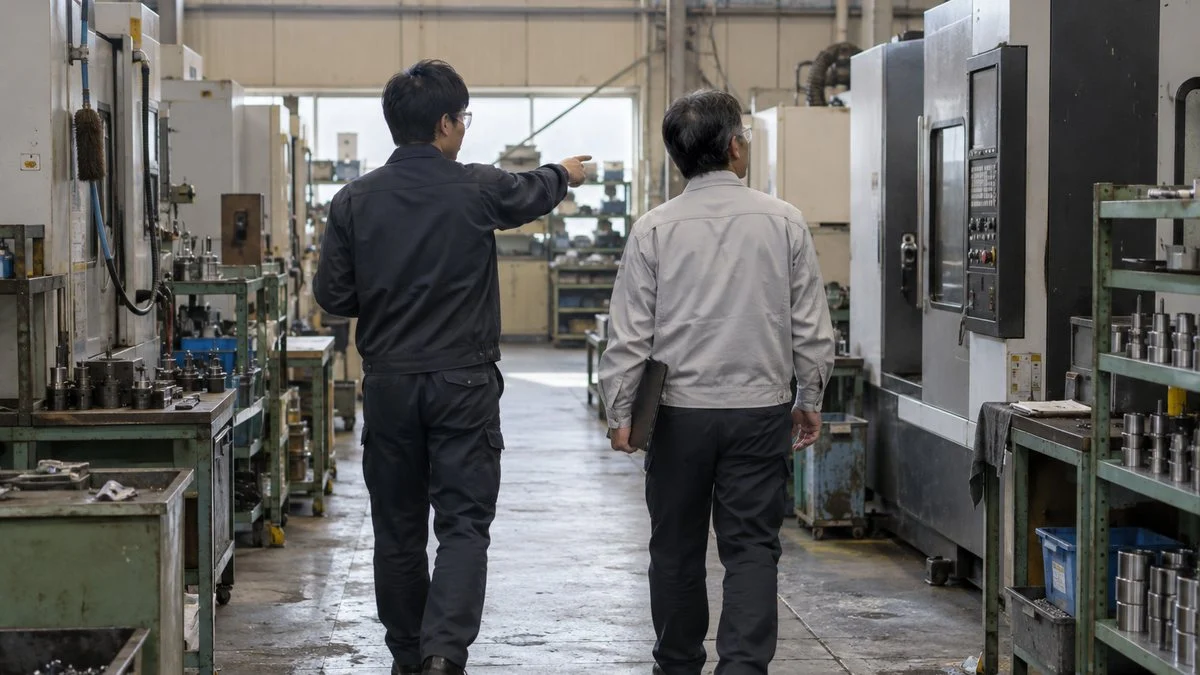
Supplier management means continuing to evaluate suppliers after they are chosen, supporting their improvement, and preparing for supply interruptions. Much of a part's quality and delivery is decided in the supplier's plant, so a supplier's capability directly affects the quality and delivery of the manufacturer's own products.
Evaluation is not the end. How the buyer works with you changes with the result.
Evaluation items and frequency vary by company.
How a New Supplier Is Selected
When choosing a new supplier, a Japanese buyer looks beyond price at quality management, production capacity, financial health, and location. A plant visit to check equipment and controls is common before a first order. Once a supplier is chosen, the two sides sign a master transaction agreement and a quality assurance agreement, which settle points such as who bears responsibility when defects occur and how drawings are kept confidential.
Ratings and Supplier Development
Japanese buyers rate suppliers from two angles: performance data such as on-time delivery rate and defect rate, and management systems checked in a plant audit. Quality audits are often done jointly with quality assurance, with the buyer acting as the contact who arranges dates and collects improvement plans. To prepare, see our supplier audit checklist for Japanese customers.
A low score does not necessarily mean you will be replaced. Qualifying a new supplier takes time and money, so in many cases it pays off for the buyer to support your improvement and build capability together.
Single Sourcing, Multiple Sourcing, and BCP
Ordering a part from one supplier concentrates volume and tends to lower the unit price. But if that supplier stops because of a disaster, a fire, or financial trouble, the buyer's own production stops too.
For critical parts, Japanese buyers therefore split orders between two or more suppliers on purpose, or qualify a backup supplier in advance. Deciding, part by part, how far to favor low price versus uninterrupted supply is a central decision in procurement strategy. So if a buyer qualifies a second source for your part, it may be risk management (BCP, business continuity planning) rather than a judgment on your performance; ask.
More companies are also reviewing their sources because of tariffs and geopolitical risk (see US tariffs on Japanese imports in 2026). Without visibility into the Tier 2 and Tier 3 suppliers behind each Tier 1, supply can break in unexpected places. Expect buyers to ask where your own materials come from. For how tiers work in Japanese automotive supply chains, see Japanese automotive supply chain: tiers and keiretsu.
Japanese Rules That Shape How Buyers Behave
A buyer places orders on behalf of the company, so a Japanese buyer cannot afford to ignore the laws on business transactions. A major change took effect in 2026.
Of the 4 obligations and 11 prohibited acts, these matter most in daily purchasing work.
Coverage depends on capital or employee count (300 employees for outsourced manufacturing). Violations can lead to recommendations and guidance from the authorities, and to fines.
The Fair Transactions Act (Formerly the Subcontract Act)
On January 1, 2026, Japan's Subcontract Act (shitauke-ho) was amended and took effect under a new name: the Act Against Delay in Payment of Fees, etc. to Small and Medium-sized Entrusted Business Operators in Manufacturing and Other Specified Fields (中小受託取引適正化法, toriteki-ho for short), which the JFTC shortens to the Fair Transactions Act. The terms "parent business operator" and "subcontractor" were replaced with "entrusting business operator" and "small and medium-sized entrusted business operator," dropping wording that implied a hierarchy.
In substance, an employee-count test was added to the existing capital test, so more transactions are now covered. The two new bans, on unilateral pricing without discussion and on payment by promissory notes and similar instruments, have the biggest effect on daily purchasing work. Leaving a supplier's request for a price discussion unanswered, or continuing to pay by promissory note out of habit, can now be a violation. Many Japanese companies have had to review their purchase order templates and payment terms because of these changes.
Whether and how the Act applies to a supplier or buyer outside Japan is a question for your legal team. Our guide to mold storage under the Fair Transactions Act covers the coverage tests in more detail.
The Partnership Building Declaration
The Partnership Building Declaration (partnership kochiku sengen) is a program in which a buying company declares, in the name of its representative, that it will pursue fair transactions and shared prosperity with its suppliers, including price pass-through. It began in July 2020, and METI reported that the number of declaring companies reached 100,000 as of July 6, 2026.
The declaration carries the top executive's name, but it is the buyers who deal with suppliers every day, and METI has asked declaring companies to make sure the people who place orders know its content. If your Japanese customer has made a declaration, its terms are a fair reference point in a price discussion.
Human Rights and Environmental Requirements
Supplier selection criteria now go beyond QCD to social responsibility. In September 2022, the Japanese government issued its Guidelines on Respecting Human Rights in Responsible Supply Chains, which ask companies to identify and address human rights risks, including at their suppliers.
On the environmental side, more companies are calculating not only their own emissions but also Scope 3 emissions, which include emissions from the products and services they buy. Purchasing is often the department that asks suppliers for emissions data and reductions. ISO 20400 also provides international guidance on sustainable procurement. Expect these questions to appear in supplier surveys and evaluation forms alongside QCD.
Related: Product Carbon Footprint Calculation for Japanese Customers
Checklist: Working With a Japanese Purchasing Department
Use this list to prepare before you quote, negotiate, or respond to an evaluation.
- Quote on equal terms. Confirm drawings, quantities, delivery dates, packaging, and inspection conditions are the same ones your competitors received, so your quote can be compared fairly.
- Be ready to break down cost. Prepare material, processing (machine hour rate × time), overhead, profit, and freight, and know which ones you can actually reduce.
- Sell total cost, not unit price. Quantify what you save the customer in defects, lead time, freight, or tooling.
- Offer design input early. If you see a tolerance, material, or standard-part change that lowers cost, propose it before the drawing is fixed.
- Know your scorecard. Ask which metrics you are rated on (on-time delivery, defect rate, and others), how often, and what score triggers an improvement request.
- Answer improvement requests with a plan. Respond with causes, actions, owners, and dates; a specific plan shows the buyer the problem is under control.
- Document cost increases. Show which element rose, by how much, from when, and with what evidence (index, invoice, wage change).
- Map your own supply chain. Be ready to name your key Tier 2 sources and backup options, and your BCP.
- Prepare ESG data. Expect questions on human rights practices and emissions data.
- Check order terms in writing. Price, payment date, payment method, and who pays bank transfer fees should be clear on each order.
Questions to Ask Your Japanese Buyer
- Who else is involved in this decision (design, quality assurance, production engineering), and who should we talk to directly about technical points?
- Which QCD criteria carry the most weight for this part?
- Which cost breakdown format do you use, and at what level of detail?
- When are prices reviewed (for example, twice a year), and when should a price revision request be submitted to be considered?
- How are suppliers rated, how often, and will we see our results?
- Is a second source being qualified for BCP reasons, and what would change our share of volume?
- What information will you need from us on our own suppliers, human rights practices, or emissions?
Email Template: Requesting a Price Revision
This is a fictional example. Replace the bracketed items with your own data.
Subject: Request for price discussion: [part number] from [effective date]
Dear [Name],
Thank you for your continued business. We would like to request a discussion about the price of [part number / description].
Since [date of last price agreement], our costs for this part have risen as follows:
- Material ([grade]): [X]% increase, based on [index or supplier invoice]
- Labor: [X]% increase from [date], following [wage change]
- Energy: [X]% increase, based on [utility bill]The attached cost breakdown shows the effect on the unit price, from JPY [current] to JPY [proposed] (or [currency]). We have also included the measures we have taken to absorb part of the increase.
We would appreciate a meeting by [date] so that any revision can be reflected from [effective date]. We are happy to review the breakdown line by line and discuss options such as lot size or process changes.
Best regards,
[Name]
[Company]
Where This Picture Does Not Apply
- Department names, the split between purchasing and procurement, evaluation items, and approval routes differ by company and industry. Treat this guide as a general picture, not a description of any specific customer.
- Survey figures are from Japan's government survey of small and medium-sized suppliers in Japan. They do not describe how any particular buyer treats overseas suppliers.
- Whether the Fair Transactions Act covers a transaction depends on the type of transaction and on the capital or employee count of both parties; this guide is not legal advice. The Partnership Building Declaration is a voluntary commitment that applies only to companies that have made it.
- Some companies have production engineering buy equipment, or general affairs buy indirect materials, without going through purchasing.
FAQ
What does QCD mean in procurement?
QCD stands for quality, cost, and delivery, the three axes Japanese buyers use to judge suppliers. Cost means the total cost of using the part, including tooling, freight, payment terms, and defect handling, not just the unit price. Environmental and social factors are now often added.
What is the difference between kobai and chotatsu?
There is no official distinction. Many companies use kobai (purchasing) for day-to-day ordering of set items on set terms, and chotatsu (procurement) for the wider work that includes supplier strategy, early involvement in development, and risk planning.
Why do Japanese customers ask for a cost breakdown?
To check whether each element of the quote is reasonable and to find room to reduce cost together with the supplier. A typical breakdown covers material, processing (machine hour rate × time), overhead, profit, and freight.
Can I ask a Japanese customer for a price increase?
Yes. Japanese buyers are expected to discuss price increase requests, and since January 2026 the Fair Transactions Act bans covered buyers from setting prices unilaterally when a supplier asks to discuss them. A request backed by cost data and dates is the easiest for a buyer to take through internal approval.
Why is my Japanese customer qualifying a second supplier?
Often for business continuity. For critical parts, Japanese buyers deliberately split orders or keep a qualified backup so that one supplier's disaster, fire, or financial trouble does not stop their line. Ask the buyer directly whether it is a BCP measure or a response to performance.
Sources
- Shipments and value added of Japanese manufacturers, 2024: METI and Ministry of Internal Affairs and Communications, results of the 2025 Economic Structure Survey for manufacturing (July 29, 2026) (Japanese)
- Fair Transactions Act obligations, prohibited acts, and coverage: Government of Japan public relations online, "The Subcontract Act becomes the Fair Transactions Act in January 2026" (Japanese); JFTC, Fair Transactions Act page (Japanese)
- Price pass-through rates: METI, results of the follow-up survey for the March 2026 Price Negotiation Promotion Month (June 26, 2026) (Japanese)
- Labor cost pass-through guidelines: JFTC, Guidelines on Price Negotiation for Appropriate Pass-through of Labor Costs (Japanese)
- Partnership Building Declaration: METI, "Number of companies making the Partnership Building Declaration reaches 100,000" (July 7, 2026) (Japanese)
- Human rights guidelines: METI, Guidelines on Respecting Human Rights in Responsible Supply Chains (September 13, 2022) (Japanese)
- Scope 3 emissions: Ministry of the Environment, Green Value Chain Platform, supply chain emissions (Japanese)
- ISO 20400: ISO, "ISO 20400:2017 Sustainable procurement — Guidance"
- CPP program and the 80% cost figure: Japan Management Association, CPP (Certified Procurement Professional) official site (Japanese)
Original article in JapaneseThis guide is adapted from a MONOSCOPE article written for readers in Japan: 購買・調達とは?メーカーでの仕事内容・QCD交渉・サプライヤー管理
About the editor
 MONOSCOPE EditorFOUNDER & EDITOR
Spent about ten years at a plant equipment maker and a plant engineering company, proposing, designing, and commissioning equipment, then moved into web marketing. Now a web consultant for B2B manufacturers, helping them explain their products and technology. Licensed in Japan as an Energy Manager and a Third-Class Chief Electrical Engineer.
Has run an engineering blog since 2017 (500+ articles) and a Japanese YouTube channel with about 20,000 subscribers. Each English guide is written from the Japanese shop-floor point of view and checked against the cited standards.