Plant Manager Role in a Japanese Plant: Duties and KPIs
Your Japanese supplier has a recurring defect, and the fix needs a process change. The quality engineer agrees with you, but production says it has no people to spare, and the planner warns that your next shipment will slip. Everyone tells you the same thing: "We need to discuss this with the kojo-cho." In a Japanese plant, that person is the plant manager, and conflicts like this one end up on their desk.
A kojo-cho (工場長, plant manager) runs one plant and answers for its results. Production, production control, quality assurance, maintenance, production engineering, and general affairs all report to this one person. The plant manager does not need to be an expert in every field. Their job is to hear each department's case and decide what the plant as a whole puts first.
This guide is for engineers, supplier quality engineers, and buyers who deal with Japanese plants, or who work at a Japanese-owned plant. It covers what the plant manager is responsible for, which decisions they usually make, the legal role they can hold in Japan, the KPIs they track, and the calendar they work to. It ends with a checklist and an email template for escalating an issue to a Japanese plant manager.
Contents
- What Is a Kojo-cho (Plant Manager) in Japan?
- Plant Manager Responsibilities: S, Q, C, D, E, and P
- Who Decides What in a Japanese Plant
- The Plant Manager's Legal Role in Japan
- Plant Manager KPIs: The KPI Tree
- The Plant Manager's Calendar: Daily, Monthly, Yearly
- What Makes an Effective Plant Manager
- Checklist: Before You Escalate to a Japanese Plant Manager
- Limits of This Guide
- FAQ
- Sources
What Is a Kojo-cho (Plant Manager) in Japan?
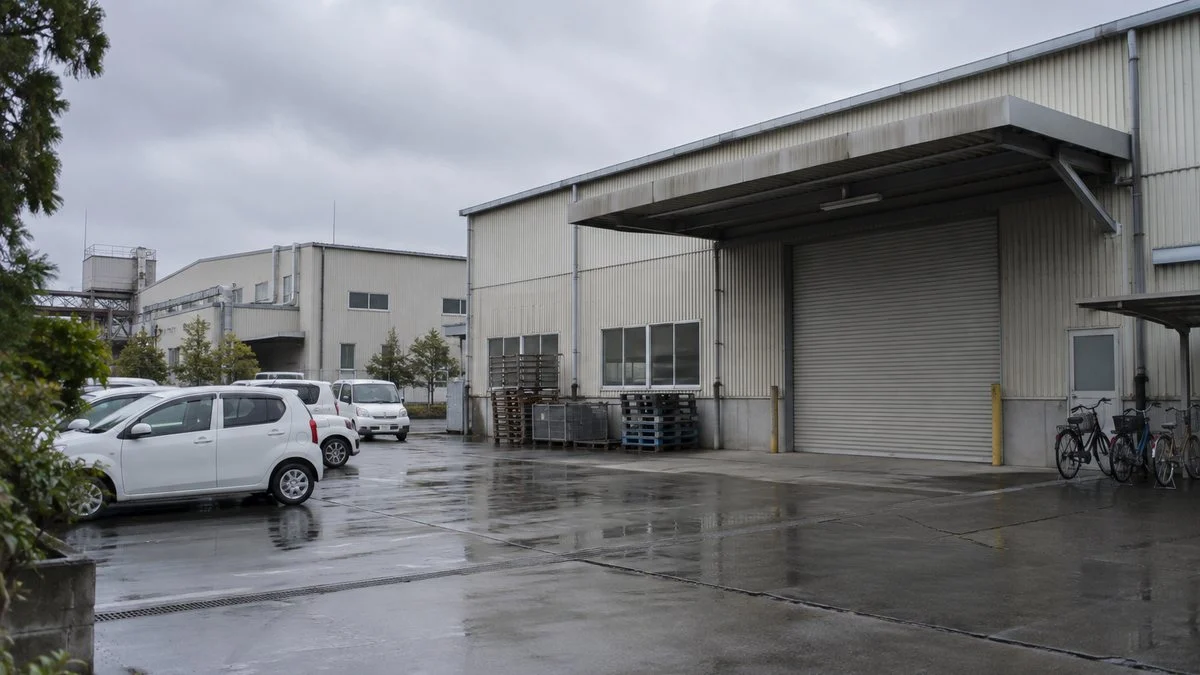
Seen from headquarters or the business division, the plant manager is the person who receives a policy and a budget and reports back with results in numbers. Seen from the shop floor, they are the person who makes the final call. The role sits between the two.
Titles vary. Besides kojo-cho, you may see seizosho-cho (製造所長, works manager), jigyosho-cho (事業所長, site manager), or simply "plant head" on a business card. Rank varies too: depending on the company and the size of the plant, a plant manager can rank anywhere from section manager (kacho) level to executive officer level. What matters is not the title but who actually runs the plant's operations. Japanese safety law takes the same view, as explained further down.
The plant manager takes direction from headquarters and leads every department in the plant.
Department names and boundaries vary by company. At small plants, the plant manager may also head one or more departments.
Conflicts between departments are normal. Quality assurance wants more inspection, production is short of people, and production control wants to hit the shipping date. Each position is reasonable, but they cannot all be met at the same time. Weighing them against each other and choosing is the plant manager's job.
Plant Manager Responsibilities: S, Q, C, D, E, and P
If you have seen an SQCDP board on a shop floor, the plant manager's scope will look familiar. A simple way to map it is the classic manufacturing set of S, Q, C, and D (safety, quality, cost, delivery), plus environment and people: six areas in total.
S, Q, C, and D, plus environment and people, make up the plant manager's scope.
Many plants put S first and state that "safety comes before everything."
Safety: The Starting Point
Safety is the plant manager's first responsibility. However productive a plant is, a serious accident stops the line and can change a worker's life. That is why many Japanese plant managers state openly that safety ranks above quality and delivery. When the plant manager personally leads hazard reviews, safety patrols, and the sharing of hiyari hatto (near misses), it shapes how seriously the shop floor takes safety. For how near-miss reporting works in Japan, see Hiyari Hatto Near-Miss Reports.
Quality: Keeping Promises to Customers
Quality means not making defects and not letting the ones you do make reach the customer. Daily inspection and defect analysis belong to quality assurance. The plant manager makes the calls that trade quality against cost or delivery, such as "Do we stop shipping?" or "Do we invest in equipment to change the process?" When a serious quality problem occurs, the plant manager is the one who explains it to the customer and commits to preventing a recurrence.
Cost: Making the Budgeted Profit
In most companies, a plant is expected to make products at a set cost. The plant manager has to keep materials, labor, energy, and equipment depreciation within budget and deliver the planned profit. Sales depend on the sales team and the market, but much of the cost is within the plant's control. Each month the plant manager reviews the cost variance (the gap against budget) and has to explain why it moved.
Delivery and Volume: Shipping on the Promised Date
Day-to-day scheduling and progress tracking belong to production control. The plant manager checks that production is on plan and steps in when it is not. If a breakdown or a late part leaves the plant short, the plant manager decides how to respond: recover the volume with weekend shifts, or talk to the customer about a new date.
Environment and Energy: Obligations to the Community
Wastewater, emissions, noise, and waste all affect the area around a plant. The plant manager is responsible for meeting the legal limits and for keeping good relations with neighbors and the local government. Decarbonization has now been added to this list. Reducing electricity and fuel use cuts cost and also answers requests from customers, so many plant managers now pursue it with numerical targets.
People: Hiring, Training, and Work Hours
In the end, people produce the plant's results. The plant manager holds final responsibility for hiring, assignment, evaluation, training, and how people work, including shift patterns and overtime. In plants where experienced workers are retiring one after another, building a system to pass on skills is a major theme. Developing the people who will run the plant five or ten years from now rarely shows up in short-term numbers, but only the plant manager is in a position to make that investment.
Who Decides What in a Japanese Plant
Knowing which level owns a decision tells you where to take your request. The table below sums up the split described in this guide. Treat it as a typical pattern, not a rule: approval limits are set by each company's internal rules.
| Decision | Usually handled by | Plant manager's role |
|---|---|---|
| Daily production schedule, progress tracking | Production control | Checks that the plan is on track |
| Daily inspection and defect analysis | Quality assurance | Reviews serious cases; explains them to the customer |
| Stopping shipments for a quality problem | Plant manager | Decides, weighing quality against delivery and cost |
| Weekend shifts vs. a new delivery date after a shortfall | Plant manager | Decides the priority |
| Process change that needs equipment investment | Plant manager, within the plant's budget | Decides or proposes; larger amounts go to headquarters |
| Annual budget, production targets, capital spending limit | Headquarters / business division | Prepares the plan and negotiates it |
| Safety priorities, hazard reviews, safety patrols | Plant manager (with safety staff) | Final responsibility; may also be the legal safety lead |
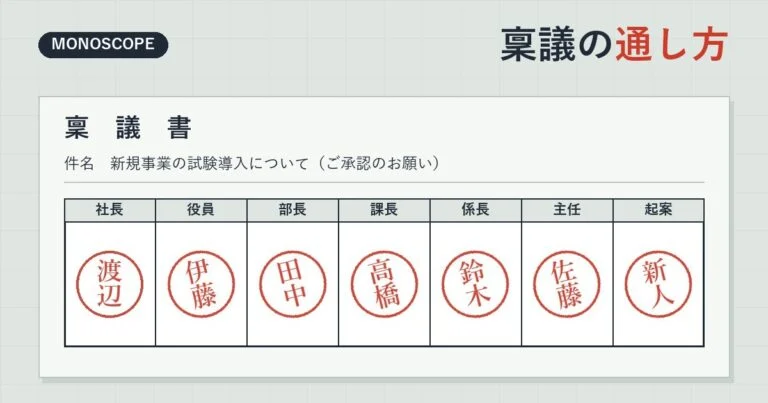
Spending beyond the plant's own budget usually needs approval above the plant, often through ringi, the Japanese written approval process. If your request depends on new equipment, ask early whether it fits the plant's current budget or must wait for headquarters approval. See Ringi in Japan: Why Approvals Are Slow and How to Help.
The Plant Manager's Legal Role in Japan
No Japanese law defines the job title "plant manager." At larger plants, however, the plant manager also becomes the legally responsible person for safety and health. Under Article 10 of the Industrial Safety and Health Act, each workplace above a set size must appoint a general safety and health manager (sokatsu anzen eisei kanrisha, 総括安全衛生管理者). This person directs the safety managers and health managers and oversees work such as:
- Measures to prevent hazards to workers
- Safety and health education
- Medical examinations
- Investigating the causes of work-related injuries and preventing recurrence
In manufacturing (including processing), the requirement applies to workplaces that regularly employ 300 or more workers. The law says this post must go to "the person who has overall control of the business at the workplace." In practice, at a plant of that size, the plant manager is the legal head of safety and health. The appointment must be made within 14 days after it becomes required and reported to the local Labor Standards Inspection Office.
The required roles grow with the number of workers a site regularly employs.
Based on Articles 2–5 of the Order for Enforcement of the Industrial Safety and Health Act. Headcount is the number of workers regularly employed at each site. Larger sites have extra rules on full-time and multiple appointments.
The reason for these rules is that manufacturing accidents remain common in Japan. Ministry of Health, Labour and Welfare (MHLW) figures for 2025 show 115 deaths in manufacturing, and 26,371 workers killed or injured with four or more days off work.
Safety law is not the only one. Under Japan's Energy Conservation Act, a company whose total energy use reaches 1,500 kL of crude oil equivalent per year becomes a "specified business operator." It must appoint an energy management lead and file regular reports. A single plant using 3,000 kL or more per year is designated as a Type 1 designated energy management factory and carries its own obligations. This is one reason energy intensity shows up on a Japanese plant manager's KPI list.
Plant Manager KPIs: The KPI Tree
Numbers reach the plant manager every day, week, and month. A KPI (key performance indicator) is a number that shows whether the plant is on track toward its targets. Plant KPIs are not a random list. They form a tree that leads up to plant profit, and breaking it down from the top shows which number drives which.
Profit sits at the top. It breaks down into volume, cost, and quality, then into shop-floor metrics.
Which metrics a plant picks as KPIs depends on its industry and its problems. This example shows ones common in assembly and machining plants.
Overall Equipment Effectiveness (OEE)
Equipment-heavy plants pay special attention to overall equipment effectiveness (OEE), a metric developed by the Japan Institute of Plant Maintenance (JIPM). It also appears in IATF 16949 (the automotive quality management standard) and in ISO 22400-2.
OEE multiplies three rates: availability, performance, and quality rate. One number captures three different losses: stoppages, slow running, and defects. Plant managers use the overall figure as a signal and ask the people in charge to dig into which loss is the biggest.
Because OEE is a product of three rates, one low rate pulls the whole number down.
Work to raise OEE is closely tied to TPM (total productive maintenance), which JIPM promotes. TPM aims for zero accidents, zero defects, and zero breakdowns, with everyone from top management to frontline workers taking part in removing losses. In many plants, the plant manager leads this effort. Jishu Hozen 7 Steps explains the operator-led part of TPM.
Safety Metrics: Frequency Rate and Severity Rate
To compare safety performance with other plants or the industry, Japanese plants use two rates:
- Frequency rate (dosu-ritsu, 度数率): deaths and injuries from work accidents per 1,000,000 total hours actually worked. It shows how often accidents happen.
- Severity rate (kyodo-ritsu, 強度率): workdays lost per 1,000 total hours actually worked. It shows how serious accidents are.
In MHLW's 2025 survey of sites with 100 or more workers, manufacturing had a frequency rate of 1.33 and a severity rate of 0.07. The base hours differ from the OSHA rates many US plants report (per 200,000 hours), and so do the cases counted. Check the definitions before you compare a Japanese plant's figures with your own. Even when injuries are at zero, a good plant manager keeps tracking near misses.
Why KPIs Pull Against Each Other
KPIs trade off against one another. Cutting inventory raises the risk of shortages, and adding inspection raises cost. Chasing one number often makes another one worse. That is why plant managers are expected to look past the numbers and check what is happening on the floor. Genchi genbutsu ("go and see the actual place and the actual thing"), the principle made famous by the Toyota Production System, and kaizen (continuous improvement) are how they connect the numbers to the floor.
Related: Kaizen in Japanese Companies: How Improvement Actually Runs
For you, this means a request that improves one KPI at the cost of another (more inspection, a faster delivery, a smaller lot) will be judged on the trade-off. Say what you expect it to do to cost and schedule, not just to quality.
The Plant Manager's Calendar: Daily, Monthly, Yearly
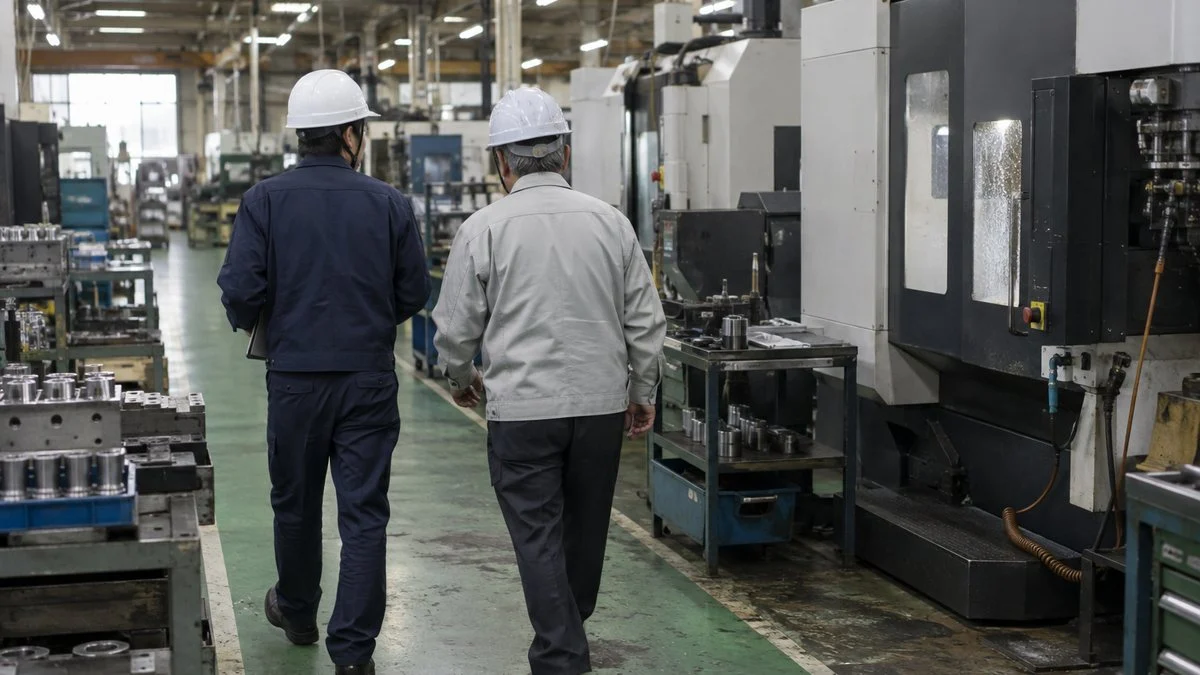
The plant manager's work runs on several overlapping cycles, from the daily floor check to the annual budget. The timing matters to you: an issue raised at the right point in the cycle gets handled faster.
Short cycles catch problems. Long cycles decide the plant's future.
- Morning meeting: yesterday's results and today's plan
- Floor walk: safety and 5S checks
- Decisions on breakdowns and quality problems
- Visitors and customer audits
- Production, cost, and quality review meeting
- Analysis of budget variances and countermeasures
- Safety and health committee
- Results report to headquarters
- Next year's budget and production plan
- Capital spending and staffing plans
- Announcement of plant policy and targets
- Certification audits and filings with authorities
Content and frequency vary by company and plant size. In Japan, sites above a set size must hold a safety and health committee meeting at least once a month.
Daily: Catching Problems on the Floor
Many plant managers start the day with a morning meeting on the previous day's output, defects, equipment trouble, and safety. Many then walk the floor to see things for themselves. The point is not to watch over the workers. It is to catch warning signs before they show up in the numbers, such as an untidy work area or an unusual sound or smell, and to hear about problems directly from the people on the line.
Monthly: Reviewing the Numbers and Acting
Once a month, the plant manager reviews volume, cost, quality, and safety together. Where results differ from the budget, the plant manager asks each department to explain the causes and propose countermeasures, then reports to headquarters or the business division. The data comes from the production management and ERP systems. The plant manager's role is not to compile it but to decide the next move from it.
Yearly: Setting the Budget and the Plant's Direction
The annual budget is one of the plant manager's most important tasks. Based on next year's volume outlook, the plant manager sets staffing, capital spending, and cost targets, and negotiates them with headquarters. Decisions such as whether to replace aging equipment, invest in automation, or add people shape the plant's competitiveness for years. Because headquarters' budget is limited, the plant manager must justify each investment in numbers.
If you need a Japanese plant to buy equipment for your product, ask when its budget is set. Many Japanese companies use an April–March fiscal year, but confirm this with your supplier. A request that misses the budget round may wait a full year or go through a separate approval.
What Makes an Effective Plant Manager
The work above calls for three kinds of strength. A balance of all three matters more than excelling at one.
Numbers, the shop floor, and people: the plant runs only when all three come together.
Dealing with outsiders (customer audits, authorities, the local community) calls on all three at once.
Deciding by the numbers. A plant manager is asked not only whether a technology is good but how much money it makes and when an investment pays back. Cost accounting and reading a profit and loss statement are areas where plant managers who came up from the floor often struggle at first. Detailed calculations can go to accounting, but the reasoning behind each decision must be the plant manager's own.
Reading the shop floor. The numbers are only the result of what happened on the floor. The same defect rate calls for very different action depending on whether the cause is the equipment, the material, or the work method. The plant manager does not need to master every process, but needs enough grounding in processes and equipment to hear an explanation and go check whether it is really true. This is where a technical background pays off.
Moving people. A plant manager has to get hundreds of people pointing the same way. That means stating the policy in plain words and, when departments' interests clash, hearing both sides before deciding. One person can do only so much, so the plant manager delegates to section and team leaders and takes final responsibility even when things go wrong. That stance builds a team that thinks and acts on its own.
The Plant Manager as the Plant's Face to Outsiders
The plant manager also represents the plant to the outside world. That includes:
- Hosting customer audits of the plant
- Explaining serious quality problems to customers
- Dealing with the Labor Standards Inspection Office and the local government
- Taking part in local community events
During customer audits, the plant manager may personally explain how the quality system works in practice. Whether they explain the facts honestly has a direct effect on the customer's trust.
Where Japanese Plant Managers Come From
Paths differ by company, but a typical plant manager starts in a technical or production role and rises through team leader, section manager, and department manager. After the plant, some move on to head a business division or join the executive team. Backgrounds include production, production engineering, quality assurance, production control, and maintenance. Experience across several departments tends to count for more than a background in any one function. Some companies rotate future plant manager candidates through different departments, transfer them to other plants, or send them to start up overseas plants.
Checklist: Before You Escalate to a Japanese Plant Manager
Use this when an issue at a Japanese supplier or a Japanese-owned plant needs a decision above the department level.
| Check | Why it matters |
|---|---|
| Have you raised it with the right department first (QA, production control, production engineering)? | The plant manager usually decides on the department's input. Skipping the department slows things down. |
| Can you state which of S, Q, C, D, E, P the issue touches? | This is how the plant manager frames priorities. |
| Have you described the trade-off (cost, schedule, extra inspection) and not just the request? | KPIs pull against each other; the decision is about the trade-off. |
| Does the fix need new equipment or extra spending? | It may exceed the plant's authority and need headquarters approval (ringi). |
| Do you know when the plant's budget is set and the fiscal year starts? | A request outside the budget cycle may wait or need a separate approval. |
| Is it a safety issue? | Safety comes first in most Japanese plants. State it clearly at the top. |
| Do you have data and a date for when it happened? | Plant managers check facts on the floor (genchi genbutsu). Give them something to check. |
| Is there a meeting where the plant manager will be present (monthly review, audit closing)? | A decision is easier when the issue reaches them through the normal review cycle. |
Questions to Ask a Japanese Supplier's Plant
- Who is the plant manager, and which departments report to them?
- Up to what amount can the plant approve spending without headquarters?
- Who can decide to stop or hold shipments for a quality problem?
- Which KPIs does the plant track monthly, and is our part's defect rate one of them?
- When does your budget planning for next fiscal year start?
- Who will attend the closing meeting of our audit?
Email Template: Requesting a Decision from the Plant Manager
Send this through your usual contact (often QA or sales). Keep it short and factual so it can be translated or forwarded as is.
Subject: Request for decision – [part number] [issue in a few words]

Dear [Contact name],

We would like to ask for the plant manager's decision on the following issue.

1. Issue: [what happened, when, quantity affected]
2. Current status: [containment in place, what QA has confirmed]
3. Our request: [e.g., process change / 100% inspection until X / revised delivery date]
4. Expected impact: Quality: [ ]  Cost: [ ]  Delivery: [ ]
5. Safety-related: [Yes / No]
6. Decision needed by: [date], because [reason]

If this needs approval from your headquarters, please let us know
the expected timeline and what information would help.

Best regards,
[Name]
[Company]
Limits of This Guide
The role described here is a general picture, and it varies a lot by company and plant size. At a large manufacturer, a plant manager may lead hundreds or thousands of people and may be an executive or close to it. At a small company, the president or a director may double as plant manager, or someone in their thirties or forties may run the plant. In small plants the plant manager is often on the floor personally and may even handle sales and hiring. Department names, approval limits, and KPI choices are set by each company. The legal thresholds above apply to sites in Japan; plants outside Japan follow local law. When in doubt, ask for the organization chart and the approval rules.
FAQ
What Does Kojo-cho Mean?
Kojo-cho (工場長) means plant manager or factory manager: the person who runs one plant and holds final responsibility for its safety, quality, cost, delivery, environment, and people. Some companies use other titles, such as seizosho-cho (works manager) or jigyosho-cho (site manager).
What KPIs Does a Plant Manager Track?
Typically plant profit against the cost target, production plan attainment, on-time delivery, cost per unit and cost variance, in-process defect rate, customer complaints, OEE, labor productivity, days of inventory, energy intensity, and safety metrics such as injury frequency and severity rates and near-miss reports. The exact set depends on the industry and the plant.
Is the Plant Manager Legally Responsible for Safety in Japan?
At manufacturing sites that regularly employ 300 or more workers, yes. The Industrial Safety and Health Act requires a general safety and health manager, and that post must go to the person who runs the site, which in practice is the plant manager. Smaller sites still need safety managers, health managers, and an industrial physician from 50 workers up.
What Is SQCDP?
SQCDP stands for safety, quality, cost, delivery, and people, the areas many plants track on shop-floor boards. Japanese plant managers use a similar frame, often with environment added, to set priorities.
Sources
- General safety and health manager, appointment and duties: Japanese Law Translation, Industrial Safety and Health Act, Article 10
- Site sizes requiring each role: e-Gov, Order for Enforcement of the Industrial Safety and Health Act, Articles 2–5 (Japanese)
- Appointment deadline, reporting, and committee frequency: e-Gov, Ordinance on Industrial Safety and Health, Articles 2 and 23 (Japanese)
- Manufacturing deaths and injuries in 2025: MHLW, occupational accident statistics for 2025 (Japanese)
- Frequency and severity rates: MHLW, 2025 Survey on Industrial Accidents (Japanese)
- TPM and OEE: Japan Institute of Plant Maintenance, "What Is TPM" (Japanese)
- Energy Conservation Act obligations: Agency for Natural Resources and Energy, energy conservation rules for factories (Japanese)
Original article in JapaneseThis guide is adapted from a MONOSCOPE article written for readers in Japan: 工場長の仕事とは?責任範囲・管理するKPI・求められる力を整理
About the editor
 MONOSCOPE EditorFOUNDER & EDITOR
Spent about ten years at a plant equipment maker and a plant engineering company, proposing, designing, and commissioning equipment, then moved into web marketing. Now a web consultant for B2B manufacturers, helping them explain their products and technology. Licensed in Japan as an Energy Manager and a Third-Class Chief Electrical Engineer.
Has run an engineering blog since 2017 (500+ articles) and a Japanese YouTube channel with about 20,000 subscribers. Each English guide is written from the Japanese shop-floor point of view and checked against the cited standards.