Seisan Gijutsu: Japanese Production Engineering Explained
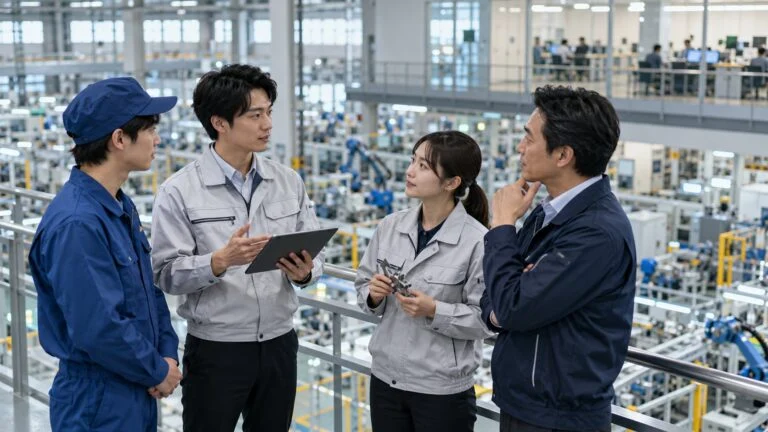
A new line is coming to your plant in Ohio, Chonburi, or Pune, and a team from the Japanese parent company is flying in to set it up. Their business cards say "Production Engineering Department," or 生産技術部 (seisan gijutsu-bu). They want your takt time data, your floor layout, and your maintenance history for similar machines. And it seems to be them, not your maintenance team, who decide on the equipment. Who are these people, and what exactly do they own?
The short answer: seisan gijutsu (生産技術, "production engineering") is the group in a Japanese manufacturer that decides how a product will be made and then builds that method into the factory. It covers process design, equipment and jigs, the mass-production launch, and ongoing improvement. It sits between product design and the shop floor, and it is different from seizo gijutsu (manufacturing/process engineering), setsubi hozen (equipment maintenance), and seisan kanri (production control).
This guide explains what a seisan gijutsu team does, where it gets involved from development to mass production, what a typical day looks like, and how it differs from the other factory roles. It ends with a rough guide to matching Japanese titles to English ones, a checklist for working with the team, and an email template you can adapt.
- Seisan gijutsu = "how to make it": process sequence, equipment, jigs, work methods, and the line launch.
- Five main jobs: process and line design, equipment and jig sourcing, mass-production launch, improvement and cost reduction, and capital investment planning.
- At many Japanese manufacturers, the team joins product development early and comments on designs from a production point of view.
- Seizo gijutsu runs and fine-tunes lines that are already running. Hozen keeps the equipment running. Seisan kanri plans what to make and when. Ask which phase someone owns, not just what their title is.
Contents
- What Is Seisan Gijutsu (Production Engineering)?
- What a Seisan Gijutsu Team Does
- Where Seisan Gijutsu Fits from Development to Mass Production
- A Day in Seisan Gijutsu
- Seisan Gijutsu vs. Seizo Gijutsu, Hozen, and Seisan Kanri
- Matching Japanese Titles to English Ones
- Skills a Seisan Gijutsu Engineer Brings
- Working with a Seisan Gijutsu Team
- Where This Guide Does Not Apply
- FAQ
- Sources
What Is Seisan Gijutsu (Production Engineering)?
Seisan gijutsu is an engineering role that decides how a product will be made and puts that method in place on the factory floor. In Japanese manufacturers, technical roles fall roughly into three groups: design and development decide what to make, seisan gijutsu decides how to make it, and manufacturing (seizo) actually makes it.
A drawing from the design department is not automatically ready for mass production. A part may be hard to machine, the assembly sequence may not work in practice, or the plant may have no equipment that can hold the required accuracy. Seisan gijutsu finds these problems and lines up the process, equipment, and work methods until the product can be built in volume.
JIS Z 8141:2022, the Japanese Industrial Standard for production management terms, does not define seisan gijutsu as a job. It does, however, define the activities these engineers handle every day. Process planning (tejun keikaku) means using a product's design information to decide the required operations, the process and operation sequence, and the operating conditions. Line organization means deciding where equipment and workers go on a production line and where materials and parts are supplied. The same standard also defines production design (seisan sekkei): turning a functional design into one that is practical and economical to produce. Working with designers to move a drawing toward a shape that is easier to make is a core part of the job.
Seisan gijutsu decides "how to make it," between design and the shop floor.
Note: Organization and department names vary by company. At some companies, seisan gijutsu also covers seizo gijutsu or maintenance.
The goal is a way of making the product that meets quality, cost, and delivery (QCD) at the same time. A high-quality part that takes too long to make loses money, and a cheap part with a high defect rate is no use. Balancing all three in the process design is what seisan gijutsu engineers are judged on.
What a Seisan Gijutsu Team Does
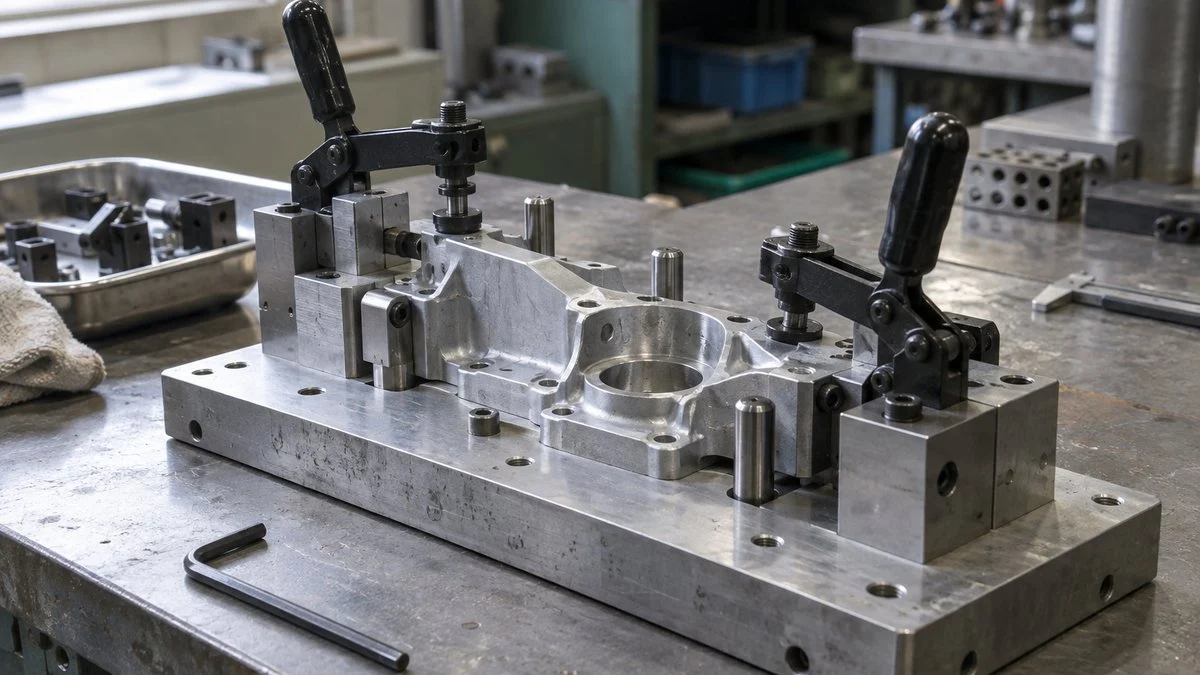
The scope depends on the product and the size of the company, but the work falls into five areas.
The team both builds the line and keeps making it better.
Note: Large companies split this work among process design and equipment design specialists. At smaller companies, one person often covers all of it.
Process and Line Design
Process design (kotei sekkei) sets the sequence and conditions of the work. For a metal part, that means deciding the order of cutting, machining, drilling, heat treatment, washing, and inspection, and the conditions for each step.
From the daily output target, the team then calculates takt time, the time available to make one unit, and places equipment and people so that cycle times at each station are balanced. If one station is slower than the rest, work-in-process piles up in front of it and the whole line loses capacity. This thinking overlaps with the basics of the Toyota Production System and kaizen.
Equipment and Jig Sourcing
Once the process is set, the team gets the equipment to run it. That may mean buying standard machine tools or robots, ordering special-purpose machines from an equipment maker, or designing and building them in-house. Seisan gijutsu writes the equipment specification, compares quotes, and manages everything from the purchase order to installation. If your plant receives an equipment purchase specification from Japan, it often comes from this team (see Equipment Purchase Specification).
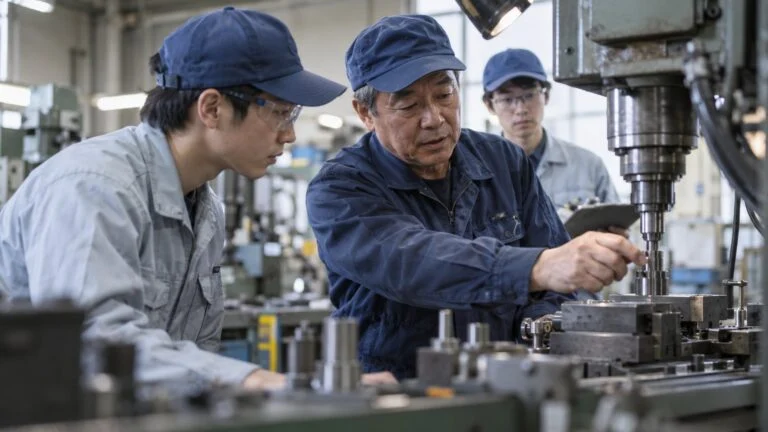
The team also designs jigs (jigu) that hold parts in a fixed position, and the tooling used for setups. Jig design has a large effect on quality and cycle time, so this unglamorous work matters. At quite a few companies, seisan gijutsu engineers also write the PLC programs that control the equipment themselves.
Related: How to Read Japanese PLC Programs: Mitsubishi X/Y/M/D
Mass-Production Launch
New equipment rarely produces good parts at the target rate on day one. When the team runs prototypes and pre-production trials, problems that were invisible on the drawings start to appear: dimensional variation, part-feeding errors, and choko-tei (short, frequent stops).
The mass-production launch (ryosan tachiage) means fixing these problems one by one until the line delivers the planned quality and volume consistently, then handing it over to manufacturing. The schedule is set backward from the product's release date or the customer's start-of-production date, so this is usually the busiest period of the job.
Improvement and Cost Reduction
The work continues after mass production starts. The team tracks defect rate, equipment availability, and labor time per unit. When a process gets worse, they find the cause and fix it. Typical improvements include:
- Automating material handling to reduce manual work
- Cutting changeover time
- Adjusting machining conditions to extend tool life
On a line that runs every day, savings of a few seconds or a few yen per unit add up to a large difference in annual profit.
Capital Investment Planning and New Technology
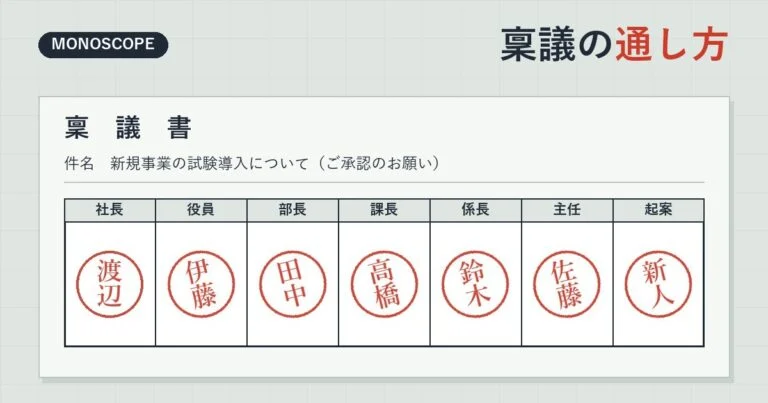
For new products or capacity increases, seisan gijutsu estimates how much to invest in which equipment and how many years it will take to pay back. Over the medium term, the team looks at new production technology such as robot automation and IoT systems that collect equipment data. From management's point of view, it is the department that proposes, on technical grounds, where to invest to make the factory more competitive. Larger investment proposals in Japanese companies typically go through a formal ringi approval (see Ringi in Japan).
Where Seisan Gijutsu Fits from Development to Mass Production
Seisan gijutsu is not a department that gets called in after design is finished. At many Japanese manufacturers, it joins product development early and gives input on the design from a mass-production point of view. Seiko Epson's careers page, for example, describes its production engineers as joining commercialization studies from the concept design stage, with the aim of mass production at high quality, low cost, and high productivity.
Involved from development, and responsible until mass production is stable.
Note: Phase names and boundaries vary by industry and company.
Development: Designing for Production
If someone discovers late in design that "this shape can't be machined," the result is a costly loop of drawing revisions and remade molds. To avoid that, seisan gijutsu speaks up in design reviews (DR) about how easy a part is to machine and assemble and whether existing equipment can handle it.
Related: DRBFM vs FMEA: Design Review Steps, Template & Example
More and more teams also use 3D CAD and CAE data to check assembly sequences and interference with equipment before any hardware is built. The earlier a problem is found, the less it costs to fix.
Production Preparation: Sourcing and Verifying Equipment
In this phase, the main work is sourcing and verifying equipment. The team checks operation at the equipment maker's factory before shipment, installs the equipment after delivery, and runs real parts to confirm accuracy and capacity. These steps are similar to what you may know as FAT and SAT (see FAT and SAT with Japanese Suppliers).
For large equipment or a rollout to an overseas plant, this phase can run on a schedule measured in months. A late equipment delivery pushes back the start of production, so schedule management is part of the job.
Mass Production: Handover and Improvement
Right after mass production starts, it is common to set a period called shoki ryudo kanri (初期流動管理, roughly "initial-flow control") in which quality is monitored more closely than usual. Once the problems have settled and manufacturing can run the line on its own, seisan gijutsu hands it over. After that, the team keeps improving the line and feeds what it learned into the design and equipment specifications for the next product.
A Day in Seisan Gijutsu
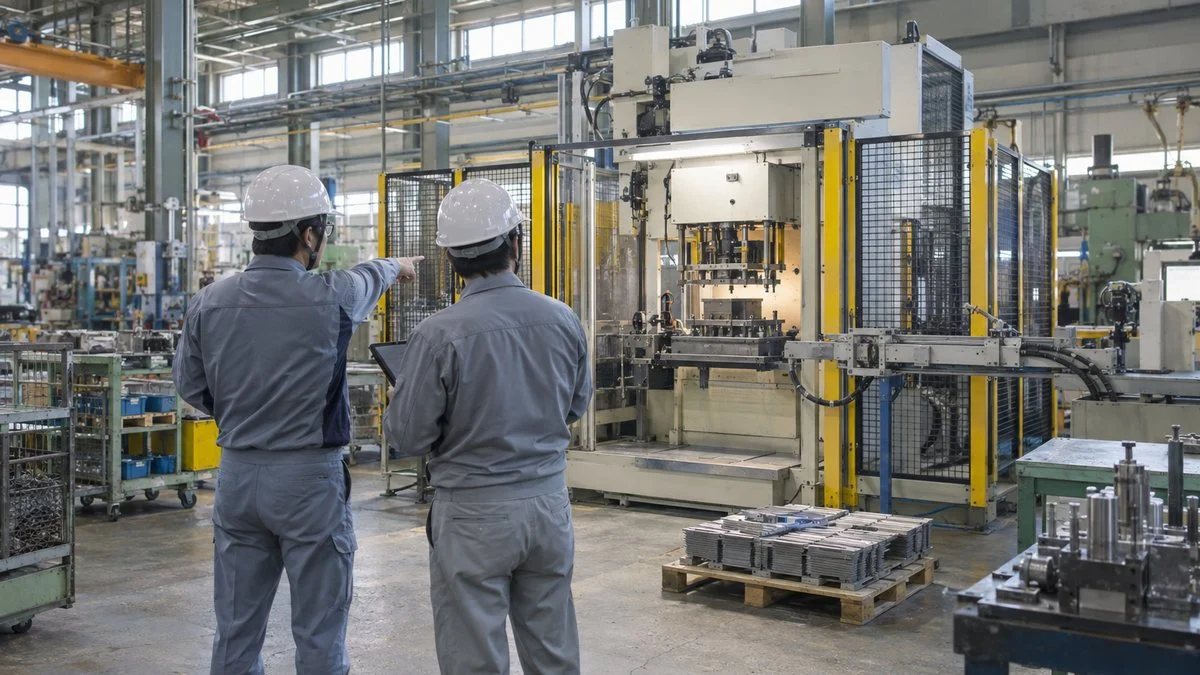
A seisan gijutsu engineer's day moves back and forth between desk work in the office and checks on the shop floor. Decisions are rarely made from drawings and numbers alone; the engineers go to the equipment and look at the actual parts. Sumitomo Rubber Industries' careers site describes a similar day for its production engineers: a morning meeting, then attending trials of processes with new materials or equipment, meetings with other departments and equipment makers, tests to check the effect of process conditions, and schedule coordination.
The example below shows a day during a new-equipment installation.
Moving between the office and the shop floor, coordinating with other departments.
- 8:30Morning meeting and yesterday's resultsChecks output, defects, and equipment stoppages on the assigned lines, and decides which issues come first
- 9:30Meeting with designPoints out features on the next product's drawings that are hard to machine or have tight tolerances
- 10:30Trial run on new equipmentRuns prototype parts with the equipment maker's engineer and measures dimensions and cycle times
- 13:00Data review and countermeasuresSummarizes the morning's measurements and works out condition changes or jig modifications
- 15:00Coordination with manufacturing and QAAgrees on changes to work instructions and inspection methods with the departments involved
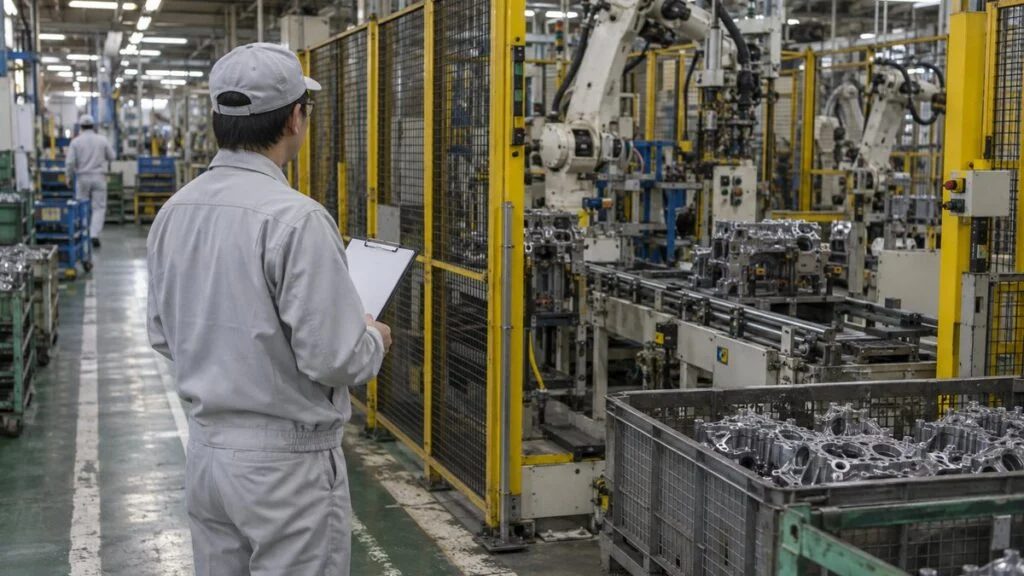
- 16:30Line walk and next-day planningChecks the improved line and decides the next day's tests and arrangements
Note: A general example based on several companies' recruiting information. The content varies widely by project phase and assignment.
The workload changes a lot with the project phase. Just before a mass-production launch, equipment problems and quality issues tend to mean more overtime. Once production is stable, the work shifts to tasks that can be planned, such as evaluating improvement projects and planning future equipment.
The job also involves travel: equipment trials at the maker's site and line rollouts to related plants in Japan and abroad. Seiko Epson, for example, says its production engineers build mass-production systems together with manufacturing sites in China and Southeast Asia. At manufacturers with overseas plants, the role can include overseas trips and assignments. That is one reason the seisan gijutsu engineer from Japan may be the person setting up your line.
Seisan Gijutsu vs. Seizo Gijutsu, Hozen, and Seisan Kanri
Seisan gijutsu is easy to confuse with three other factory roles: seizo gijutsu (manufacturing/process engineering), setsubi hozen (equipment maintenance), and seisan kanri (production control). All four are technical or management roles in the plant. What separates them is the phase they work in and what they are responsible for.
Seisan gijutsu builds the line; the other three mainly run it or keep it running.
Note: Some companies include seizo gijutsu in seisan gijutsu or place maintenance inside the production engineering department. The boundaries are not fixed.
Seizo Gijutsu (Manufacturing/Process Engineering)
This is the hardest one to tell apart. Generally, seisan gijutsu launches new lines and equipment, while seizo gijutsu (製造技術) manages the conditions of processes that are already running and improves their quality and efficiency.
For example, planning and installing a new machining line is seisan gijutsu. Fine-tuning machining conditions after start-up to reduce defects and writing standard work is seizo gijutsu. The split varies by company. Some companies have no seizo gijutsu department and seisan gijutsu covers both; others put both under a single "Production Engineering Department." Instead of relying on the job title, ask which phase of the work the person owns.
Setsubi Hozen (Equipment Maintenance)
JIS Z 8141 defines equipment maintenance (setsubi hozen, 設備保全) as the activities that prevent and measure equipment deterioration and restore deteriorated equipment, in order to maintain equipment performance. Through daily and periodic inspection, parts replacement, and breakdown repair, maintenance keeps existing equipment running without stopping.
A simple way to think about it: seisan gijutsu brings equipment in, and maintenance keeps it running. The two are not opposing sides; they are linked from installation through to upkeep.
Applying lessons from maintenance to new equipment helps reduce line breakdowns.
Predictive maintenance, which uses sensors to watch equipment condition and act before a failure, is also becoming more common. Where to put sensors and what data to collect needs to be considered from the time the equipment is introduced, so seisan gijutsu and maintenance increasingly work on it together.
Related: Predictive Maintenance ROI: How Japanese Plants Justify It
Seisan Kanri (Production Control) and Quality
Seisan kanri (生産管理) takes orders and sales plans and decides what to make, when, and how many, then arranges materials and schedules. Seisan gijutsu builds the line's capacity; production control uses that capacity to ship products on plan.
Quality control and quality assurance (hinshitsu hosho) check that products meet the standards and lead root-cause analysis and recurrence prevention when defects occur. Seisan gijutsu works closely with them on inspection process design and defect countermeasures, and the quality department's approval is usually required before a mass-production launch is signed off.
Matching Japanese Titles to English Ones
English job titles do not line up neatly with the Japanese ones. The table below is a rough guide to what each Japanese title usually means and which English titles people often use for similar work. Treat the right-hand column as a starting point, not a definition, and confirm the scope with the person.
| Japanese title | What it usually covers | English titles often used for similar work |
|---|---|---|
| 生産技術 seisan gijutsu | New processes, equipment, jigs, line launch, investment planning | Production engineering, manufacturing engineering, new product introduction (NPI) engineering |
| 製造技術 seizo gijutsu | Process conditions and standard work on running lines | Process engineering, sustaining manufacturing engineering |
| 設備保全 setsubi hozen | Inspection, repair, and parts replacement for existing equipment | Maintenance, maintenance engineering |
| 生産管理 seisan kanri | What to make, when, and how many; materials and schedules | Production planning and control, production scheduling |
| 品質保証 hinshitsu hosho | Quality standards, inspection, root cause, launch approval | Quality assurance, quality engineering |
The same English title can mean different things at different companies, too. "Manufacturing engineer" at one US plant may launch new lines, while at another the same title supports running lines. That is why the phase question matters more than the title on either side.
Skills a Seisan Gijutsu Engineer Brings
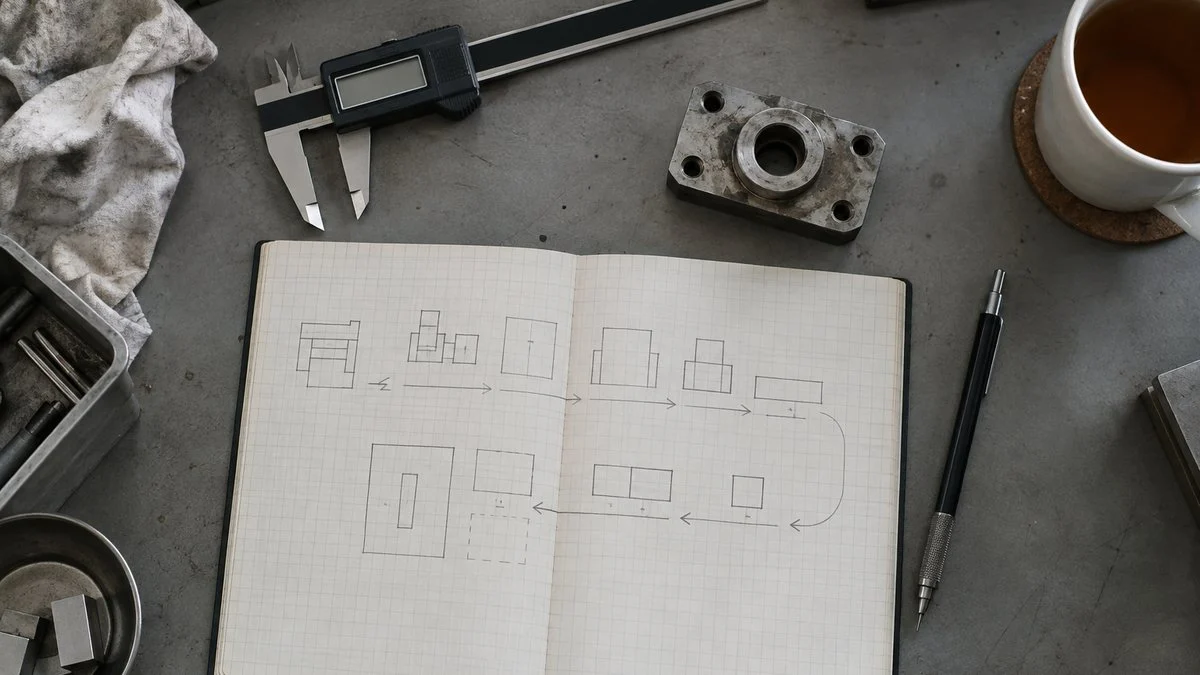
Because the role covers so much ground, seisan gijutsu engineers are expected to combine mechanical, electrical, and information technology knowledge rather than go deep in only one area. The job suits people who enjoy combining different technologies to solve problems, and new equipment and digital tools keep arriving. The main skills are:
- Reading drawings and judging how hard a part will be to machine or assemble (mechanical drawing, tolerances)
- Drawing jigs and equipment layouts in CAD
- Knowledge of processes, materials, and equipment (machining, welding, pressing, molding, assembly)
- Basic knowledge of equipment control and robots (PLCs, sensors, pneumatics)
- Collecting data and analyzing causes (statistical methods, QC tools)
- Estimating costs and investment payback
- Coordinating with design, manufacturing, quality, equipment makers, and other stakeholders
No specific certificate is required for the job, and Japanese companies tend to value hands-on experience over certificates: which equipment or line launches someone has worked on, and what they improved. Engineers usually start under a senior colleague with jig design, equipment trials, and improvement themes. With experience, they take on whole-line concepts and new plant launches. Later paths include managing the production engineering department, becoming a plant manager, or running an overseas plant. Some move into production control, quality assurance, or technical sales for equipment makers.
Working with a Seisan Gijutsu Team
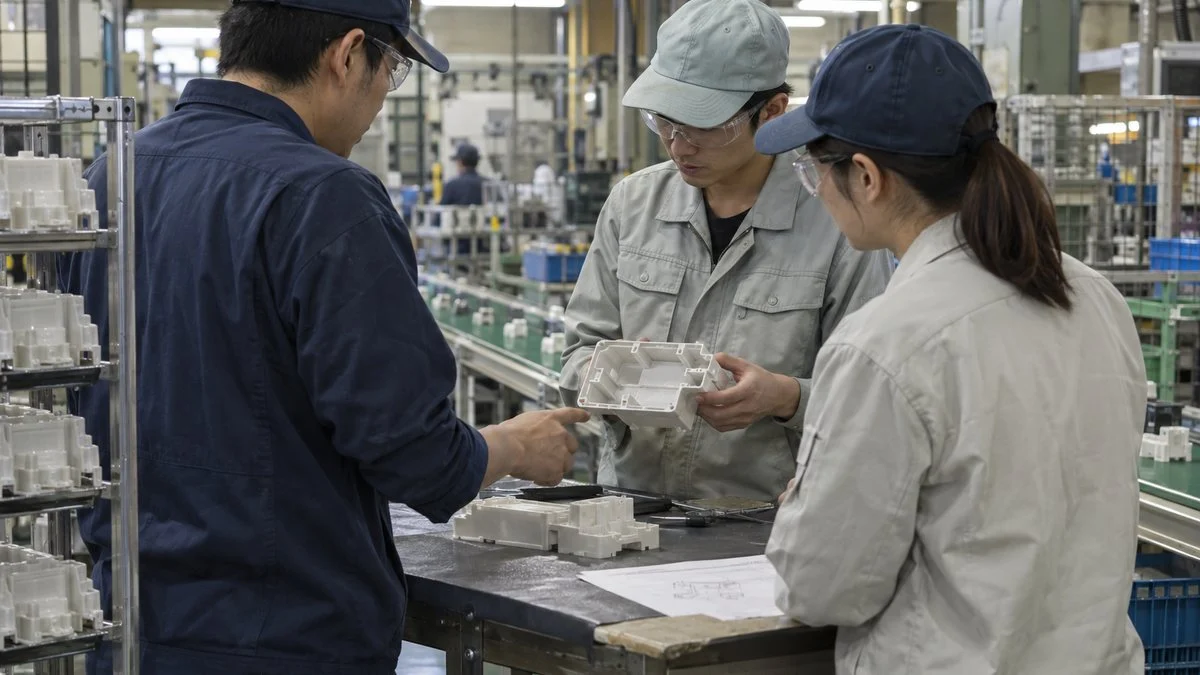
Seisan gijutsu engineers sit between many groups: design, manufacturing, quality assurance, production control, purchasing, and equipment makers. Olympus's careers page describes the role as a bridge that connects people in development and in the factory. In practice, that means they spend much of their time finding a solution that each side can accept, and they rely on what they see on the shop floor: equipment noise and vibration, scratches on parts, and how operators move.
If you are a local engineer, supplier, or plant manager working with such a team, the questions below help you avoid surprises. Who answers each one varies by company, so the first step is always to find out who owns what.
Checklist: Questions to Ask the Japanese Side
Roles and ownership
- Who owns this line now: seisan gijutsu, seizo gijutsu, or manufacturing? On what date does ownership change?
- Does your company have a separate seizo gijutsu group, or does seisan gijutsu cover running lines too?
- Who approves changes to process conditions, jigs, or equipment after handover?
- Who is our contact in quality assurance, and do they sign off on the launch?
Before equipment arrives
- What takt time and daily output is the line designed for?
- Which equipment is bought from makers, and which is built in-house?
- Will there be a factory acceptance test at the maker's site, and can we attend?
- Who writes and maintains the PLC programs, and will we receive the source files?
- What maintenance history or inspection points should we share so they can be reflected in the equipment specification?
Launch and handover
- How long is the shoki ryudo (start-up quality monitoring) period, and what are the exit criteria?
- What documents come with the handover: process sheets, standard work, inspection standards, jig drawings, spare parts lists?
- Who do we contact for equipment problems after handover: the seisan gijutsu team in Japan, the equipment maker, or local maintenance?
- How will improvements found here be fed back to the next line or product?
Email Template: Clarifying Roles Before a Line Launch
Short, numbered questions are easier for Japanese colleagues to answer, forward internally, or run through a translation tool. Adapt the details to your project.
Subject: Line 3 launch – roles and handover plan
Dear Mr./Ms. [Name],
Thank you for supporting the Line 3 launch at our plant. To prepare our team, could you please confirm the following?
1. Which department owns Line 3 until handover (seisan gijutsu or another group), and the planned handover date.
2. The length of the start-up quality monitoring (shoki ryudo) period and the criteria for ending it.
3. Who approves changes to process conditions, jigs, and PLC programs after handover.
4. The list of documents we will receive at handover (process sheets, standard work, inspection standards, jig drawings, spare parts list).
5. Our contact for equipment problems after handover.
If any of these are still undecided, please let us know when they will be decided.
Best regards,
[Your name]
[Title, plant]
Where This Guide Does Not Apply
- Department names and boundaries differ by company. Some companies fold seizo gijutsu into seisan gijutsu, place maintenance inside the production engineering department, or use different names altogether.
- The scope depends on company size. Large companies split the work among process design and equipment design specialists; at smaller companies one person often covers all of it.
- Phase names and boundaries vary by industry and company, including what counts as "pre-production" and how long initial-flow control lasts.
- The sample day is an illustration built from several companies' recruiting pages, not a fixed schedule.
- The English title mapping is approximate. Always confirm scope and decision rights directly.
FAQ
What does seisan gijutsu mean?
Seisan gijutsu (生産技術) means "production engineering." In a Japanese manufacturer, it is the group that decides how a product will be made, covering process design, equipment, jigs, and work methods, and launches the mass-production line.
What is the difference between production engineering and manufacturing engineering in Japanese companies?
Generally, seisan gijutsu (production engineering) launches new lines and equipment, while seizo gijutsu (manufacturing or process engineering) manages and improves processes that are already running. Some companies combine the two, so ask which phase each person owns.
Is seisan gijutsu the same as maintenance?
No. Seisan gijutsu brings equipment in; setsubi hozen (maintenance) keeps it running through inspection, repair, and parts replacement. The two work together, for example by feeding breakdown history into the specifications for the next equipment.
When does seisan gijutsu hand a line over to manufacturing?
Usually after the shoki ryudo kanri period (closer quality monitoring right after start-up), once quality has stabilized and manufacturing can run the line on its own. The exact criteria and timing vary by company, so ask for them before the launch.
Why do Japanese production engineers come to overseas plants?
At manufacturers with overseas plants, seisan gijutsu often builds production systems together with those sites. Seiko Epson, for example, names sites in China and Southeast Asia. Line rollouts and equipment trials can mean overseas trips and assignments.
Sources
- Definitions of process planning, line organization, production design, equipment maintenance, and maintenance prevention: Japanese Standards Association, JIS Z 8141:2022 Glossary of terms used in production management (Japanese)
- Role of production engineering and the stages it covers, including work with sites in China and Southeast Asia: Seiko Epson careers, "Production Engineering" (Japanese)
- Production engineering as a bridge between development and the factory: Olympus new-graduate recruiting, "What is production engineering development?" (Japanese)
- Example of a production engineer's day: Sumitomo Rubber Industries careers, "Production Engineering: Equipment Development" (Japanese)
Original article in JapaneseThis guide is adapted from a MONOSCOPE article written for readers in Japan: 生産技術とは?仕事内容・1日の流れ・製造技術や設備保全との違い
About the editor
 MONOSCOPE EditorFOUNDER & EDITOR
Spent about ten years at a plant equipment maker and a plant engineering company, proposing, designing, and commissioning equipment, then moved into web marketing. Now a web consultant for B2B manufacturers, helping them explain their products and technology. Licensed in Japan as an Energy Manager and a Third-Class Chief Electrical Engineer.
Has run an engineering blog since 2017 (500+ articles) and a Japanese YouTube channel with about 20,000 subscribers. Each English guide is written from the Japanese shop-floor point of view and checked against the cited standards.