Teishu (Plant Turnaround) in Japan: Cycles, Laws, Prep
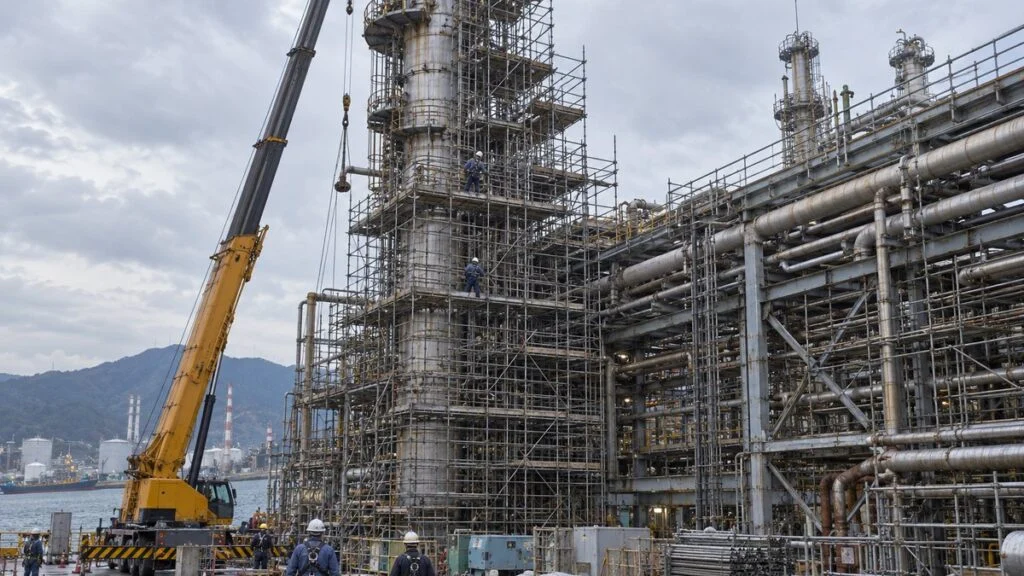
If you sell equipment, chemicals, or services to a Japanese plant, or buy feedstock or products from one, sooner or later you will hear the word teishu (定修). A customer asks you to deliver a replacement heat exchanger "before teishu." A supplier warns that a product will be unavailable "during our teishu in May." A maintenance contractor asks for your crew's safety training records months before the work starts.
Teishu is short for teiki shuri (定期修理, "scheduled repair"): the planned turnaround in which a continuously operating plant is shut down, opened up, inspected, cleaned, and repaired. This guide explains how often Japanese plants shut down and why, what happens during a turnaround, who does the work, and what has been squeezing turnarounds in recent years. It ends with a preparation checklist, questions to ask the Japanese side, and a sample inquiry email.
- Teishu is a Japanese plant turnaround: a planned shutdown to open equipment that cannot be opened while running, then inspect, clean, repair, and replace it
- The default cycle is once a year, set by legally required inspections such as the safety inspection under the High Pressure Gas Safety Act. Sites certified by the national government can run for about 4 years, or up to 8 years
- Duration depends on unit size and workload. A major turnaround of an ethylene plant with about 600,000 tonnes per year of capacity (fiscal 2017) took about two months and needed up to 3,000 outside workers a day at peak
- Typical work: opening and inspecting columns, vessels, and heat exchangers; overhauling pumps, compressors, and other rotating equipment; opening and inspecting piping and valves; and servicing instruments
- Labor shortages and Japan's legal caps on overtime are pushing the industry to spread turnaround dates out and shift work from turnarounds to routine maintenance
Contents
- What Is Teishu (Teiki Shuri)?
- Why Japanese Plants Shut Down Every Year: Statutory Inspections
- Certified Sites: How 4- and 8-Year Runs Work
- The Teishu Timeline: From Planning to Startup
- Who Does the Work: Owner, Main Contractor, and Subcontractors
- Pressures on Teishu: Labor Shortages, Longer Outages, and Overtime Caps
- How the Industry Is Responding
- What to Prepare When You Work With a Japanese Plant's Teishu
- Limits of This Guide
- FAQ
- Sources
What Is Teishu (Teiki Shuri)?
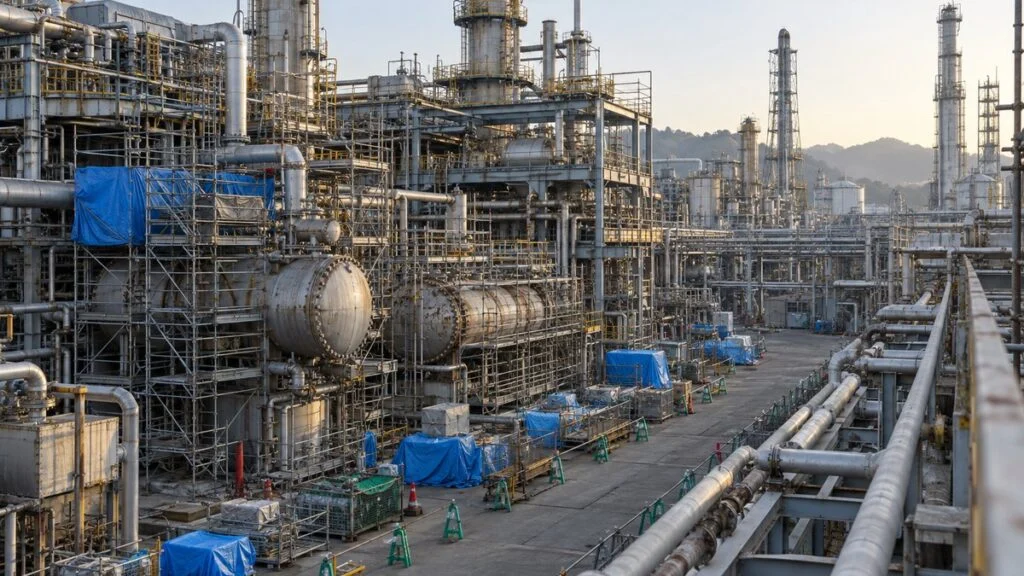
Teishu is the period in which a plant that normally runs 24 hours a day is deliberately shut down so its equipment can be opened, inspected, cleaned, repaired, and replaced. In oil refining and petrochemicals, the goal is to return the plant to a condition in which it can run safely until the next shutdown. The English-speaking world calls this a turnaround (TA) or shutdown; Japanese sites also use the term shutdown maintenance (SDM).
As mentioned above, the default interval is once a year, while certified sites can run continuously for about 4 years, or up to 8 years (more on this below). Compared with routine maintenance, which spreads patrols and small repairs across every day of the year, teishu concentrates a huge amount of work into a short window.
Maintenance done while running and maintenance done during a shutdown play different roles.
Note: Some shutdowns cover only part of a unit, and some are unplanned shutdowns to deal with trouble.
A 2019 report by the Turnaround Study Group, organized by the Japan Petrochemical Industry Association (JPCA), groups turnaround work into five categories:
- Opening, inspecting, and cleaning static equipment such as columns, vessels, and heat exchangers
- Overhauling rotating equipment such as compressors and pumps
- Opening and inspecting piping and valves
- Inspecting and servicing instruments
- Preparatory and supporting work
Scale is the other defining feature. According to the same report, a major turnaround in fiscal 2017 at an ethylene plant with about 600,000 tonnes per year of capacity took about two months, with up to 3,000 outside workers a day at peak.
The people and money involved in one turnaround of a 600,000-tonne-per-year unit.
Source: Turnaround Study Group, "Report on the Future of Scheduled Turnarounds" (December 2019; Japanese). Figures vary widely with unit size and scope.
While a unit is down, it makes no product, so a turnaround is a period of heavy spending with no sales. Plants still do it because Japanese law requires inspections that can only be done with the equipment shut down and opened.
Why Japanese Plants Shut Down Every Year: Statutory Inspections
Many of the feedstocks and products handled at Japanese petrochemical complexes count as high-pressure gases or hazardous materials. That brings them under what the industry calls the four safety laws (hoan yonpo): the High Pressure Gas Safety Act, the Fire Service Act, the Industrial Safety and Health Act, and the Act on the Prevention of Disasters in Petroleum Industrial Complexes and Other Petroleum Facilities.
What drives the turnaround schedule is the set of statutory inspections that can only be done with the equipment stopped and opened. The plant has to shut down before each inspection deadline, so the turnaround cycle follows the inspection cycle.
The default cycle is one year. Each law has its own separate way to extend it.
Safety inspection
Performance inspection (boilers, Class 1 pressure vessels)
Periodic inspection
Outdoor tank inspections
Note: Cycles vary with equipment type and conditions. Actual inspection dates depend on each site's permits and certifications.
High Pressure Gas Safety Act: Annual Safety Inspection
A company that produces high-pressure gas above a set scale under a prefectural governor's permit is a "Class 1 producer." Under Article 35 of the High Pressure Gas Safety Act, a Class 1 producer must have its designated facilities, those where an explosion or similar accident could occur, undergo periodic safety inspections.
The inspections are carried out by the prefectural governor, the High Pressure Gas Safety Institute of Japan (KHK), or a designated inspection body. For sites in industrial complexes, Article 34 of the Industrial Complex Safety Regulations sets the frequency at once a year. Article 79 of the General High Pressure Gas Safety Regulations, which covers other sites, sets the same frequency (except for facilities for which the minister has set a different period). This is why people say Japanese plants "shut down once a year."
Boilers and Class 1 Pressure Vessels: Performance Inspection
Boilers and Class 1 pressure vessels covered by the Industrial Safety and Health Act carry an inspection certificate valid for one year (Ordinance on Safety of Boilers and Pressure Vessels, Articles 37 and 72). To renew it, the equipment must pass a performance inspection by a registered inspection body.
As a rule, the equipment is inspected after it has been cooled, cleaned, and opened (Articles 40 and 75). A site that meets the requirements of a government notice and is certified by its local Labor Standards Inspection Office can extend this open-inspection interval to 2, 4, 6, 8, or 12 years. The 12-year option was added by a Ministry of Health, Labour and Welfare notice in March 2021.
A common misunderstanding is worth flagging: what gets extended is the interval between open inspections, not the performance inspection itself. In the years when the equipment is not opened, it is still inspected, either while running or while stopped but closed.
Fire Service Act: Periodic Inspections and Tank Inspections
Facilities that handle hazardous materials are subject to periodic inspection under Article 14-3-2 of the Fire Service Act. Covered facilities include manufacturing facilities and general handling facilities that handle 10 or more times the designated quantity, and outdoor tank storage facilities holding 200 or more times that quantity. Operators inspect these facilities themselves at least once a year, as a rule, and keep records.
Large outdoor tanks have longer cycles. Tanks of 10,000 kL or more get a safety inspection by the municipal authority every 8 years as a rule. Tanks of 1,000 kL to under 10,000 kL need an internal inspection of bottom-plate thickness and welds every 13 or 15 years.
So even within a single site, different equipment falls under different laws on different cycles. Maintenance planners list every deadline and decide which shutdown will cover which inspection.
Related: TBM vs CBM: Time-Based vs Condition-Based Maintenance
This system differs from what many readers know. The Turnaround Study Group report sorted regulation of high-pressure gas units into three types: strict legal control in Japan and South Korea; inspections left to the operator in the United States, Taiwan, and Thailand; and, in Europe, operator inspections combined with certification by government and third-party bodies. In the US, Taiwan, and Thailand, the report notes, the law sets no fixed interval, but plants still run turnarounds on a regular cycle because skipping them raises fire, explosion, and business-interruption insurance rates.
Certified Sites: How 4- and 8-Year Runs Work
When someone mentions a "4-year run" or "8 years" in connection with teishu, they are talking about certification under the High Pressure Gas Safety Act. The government certifies sites with strong safety management, lets them carry out their own inspections, and allows them to run for more than a year without a shutdown. A new certification system took effect in December 2023.
"4 years" and "8 years" are the continuous-run periods allowed for each certification type.
Certified site
Super-certified site
Class B (Certified Advanced Safety Operator)
Class A (Specified Certified Advanced Safety Operator)
Sources: KHK; Ministry of Economy, Trade and Industry (METI); Order for Enforcement of the High Pressure Gas Safety Act, Article 10-2. English names of the certification types are descriptive translations.
Old System: Certified and Super-Certified Sites
Under the old system, operators certified by the Minister of Economy, Trade and Industry could carry out their own completion and safety inspections. Certified sites could run continuously for 4 years or another period approved by the minister. Super-certified sites, introduced in April 2017, could run for a period the operator set, up to 8 years.
The bar was high. When the Turnaround Study Group report was compiled in 2019, only 94 production sites, or 0.3% of all high-pressure gas sites in Japan, held certification. For most sites, the turnaround is still an annual event.
New System: Certified Advanced Safety Operators
An amended law promulgated in June 2022 launched the Certified Advanced Safety Operator system on December 21, 2023. It certifies operators that can use technology to maintain a high level of safety on their own, and it streamlines procedures and inspections in line with each operator's safety capability.
There are four requirements: commitment from top management, an advanced risk management system, use of technology, and handling of related risks, including cybersecurity. Cybersecurity is on the list because the system assumes the use of IoT devices and similar technology.
There are two classes. Class B (Certified Advanced Safety Operator) allows about 4 years of continuous operation, and Class A (Specified Certified Advanced Safety Operator) allows up to 8 years. Both can carry out their own completion and safety inspections and no longer have to file inspection records with the prefectural governor, though they must still keep them.
The 4 and 8 years are continuous-run periods, not the term of the certification itself. Certification lasts 5 years for Class B and 7 years for Class A (Order for Enforcement of the High Pressure Gas Safety Act, Article 10-2), and must be renewed. KHK publishes lists of certified operators on its website (in Japanese).
Class A operators can also decide inspection timing based on the actual condition of their equipment and carry out safety inspections without shutting down.
Related: Predictive Maintenance ROI: How Japanese Plants Justify It
Reading "4 Years" and "8 Years" Correctly
These numbers are the continuous-run periods allowed for certified sites: about 4 years for Class B and up to 8 years for Class A. They do not mean every plant shuts down only every 4 or 8 years. In one chemical company example in the Turnaround Study Group report, the turnaround cycle was roughly 2–4 years.
Certification under the High Pressure Gas Safety Act does not by itself extend the open-inspection interval for boilers and pressure vessels; that requires a separate certification. A whole unit can run longer only when the deadlines under every applicable law line up.
The Teishu Timeline: From Planning to Startup
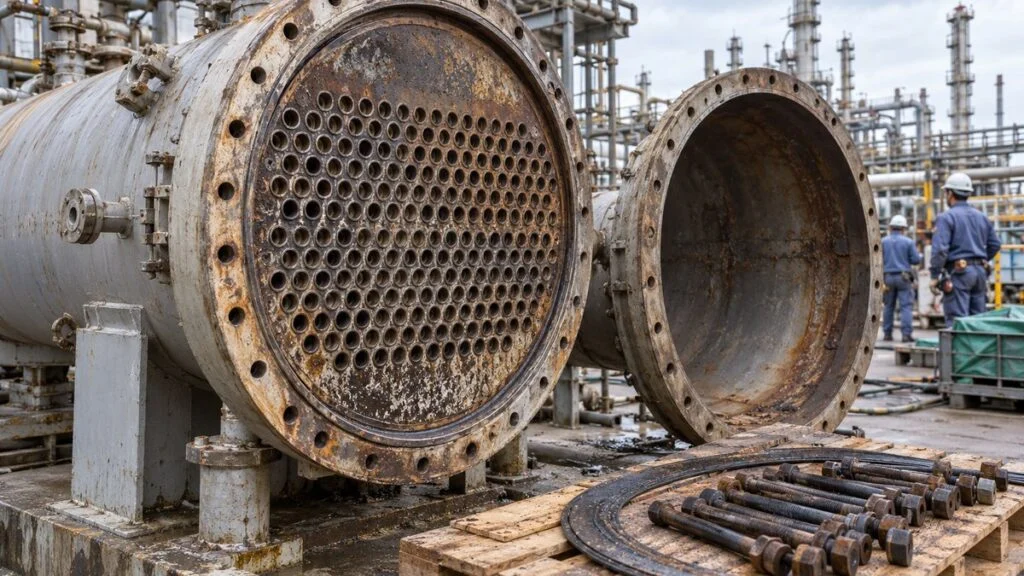
A turnaround is not just the weeks the plant is down. It runs in three phases: preparation, when the scope is set and work is ordered; the shutdown itself, when equipment is stopped and opened; and restart.
The work moves through three phases: preparation, shutdown, and restart.
Note: This is a general outline. The order and terms vary with the type of unit and each site's rules.
Preparation: Fix the Scope and Order Early
A turnaround is largely won or lost before the plant stops. The owner has to compare the equipment due for statutory inspection, repairs deferred from the last turnaround, and problems found during operation, and then lock in the work list. Until it does, contractors cannot line up their crews.
The Turnaround Study Group report describes a gap in what "early ordering" means. Maintenance contractors consider an order early if it is placed six months to a year before the turnaround starts, while the petrochemical companies placing the orders consider ordering by one month before the start to be early. That gap is one reason contractors struggle to secure enough workers.
Shutdown and Opening: Cutting Off Energy and Contents
After shutdown, operators lower the temperature and pressure and drain the process fluid. Flammable or toxic substances left inside could cause a fire or poisoning when equipment is opened, so the usual sequence is to purge the inside with nitrogen or steam and isolate the work area by blinding the piping.
Japanese law sets requirements for this. Article 275 of the Industrial Safety and Health Regulations covers dismantling chemical equipment or working inside it. It requires isolation by closing two valves or cocks in series (double block) or by inserting a blind plate (blank), together with locking, warning signs, or similar measures.
Equipment purged with nitrogen is oxygen-deficient, so before anyone enters, it is ventilated with air and tested for oxygen, flammable gas, and toxic gas. A Ministry of Health, Labour and Welfare guideline on non-routine work at chemical facilities calls for continuous ventilation inside vessels to keep oxygen at 18% or more, flammable gas at one-fifth of the lower explosive limit (LEL) or less, and hydrogen sulfide at 10 ppm or less.
During a turnaround, workers from many companies are inside the same unit at once. Locks and tags keep anyone from operating a valve or switching on power to equipment where someone else is working. The actual isolation, gas-testing, and entry procedures are set by each site's permit system, so contractors follow the owner's rules on site.
Related: Lockout/Tagout in Japan: Japanese Law vs. OSHA 1910.147
Inspection and Repair: A Relay of Trades
Opening and closing even one piece of equipment involves a sequence of trades. The report describes the opening, inspection, and cleaning work in this order:
- Scaffolding erected by tobi (scaffolders and steel erectors)
- Flanges opened by juryo tobi (heavy-lift riggers)
- Inside of the equipment cleaned
- Inspection by a nondestructive testing (NDT) company
- Repairs and finishing as needed
- Inspection and sign-off by the plant owner
- Manholes closed, flanges painted, insulation restored
- Scaffolding removed
Each trade has to wait for the one before it, so a single delay ripples through everything downstream. Another difficulty is that some deterioration only shows up once the equipment is opened, and unplanned repairs can decide the schedule. The report notes more cases of material degradation as equipment ages, and says repair work is harder than new construction.
Reinstatement and Startup: A Stage That Needs Extra Care
Once repairs are done, crews close the equipment, check for leaks, restore insulation and paint, and take down the scaffolding. Operators then raise temperature and pressure in stages to bring the unit back online.
The report states that when turnarounds overlap without enough people, trouble during the turnaround and problems at restart do occur. Shutdown and restart involve a series of non-routine operations, which makes hazard identification before the work especially important.
For one Japanese approach to pre-job hazard identification, see kiken yochi (KY) hazard prediction training.
Related: Risk Assessment in Japanese Plants vs. JHA, HSE, ISO 12100
Who Does the Work: Owner, Main Contractor, and Subcontractors
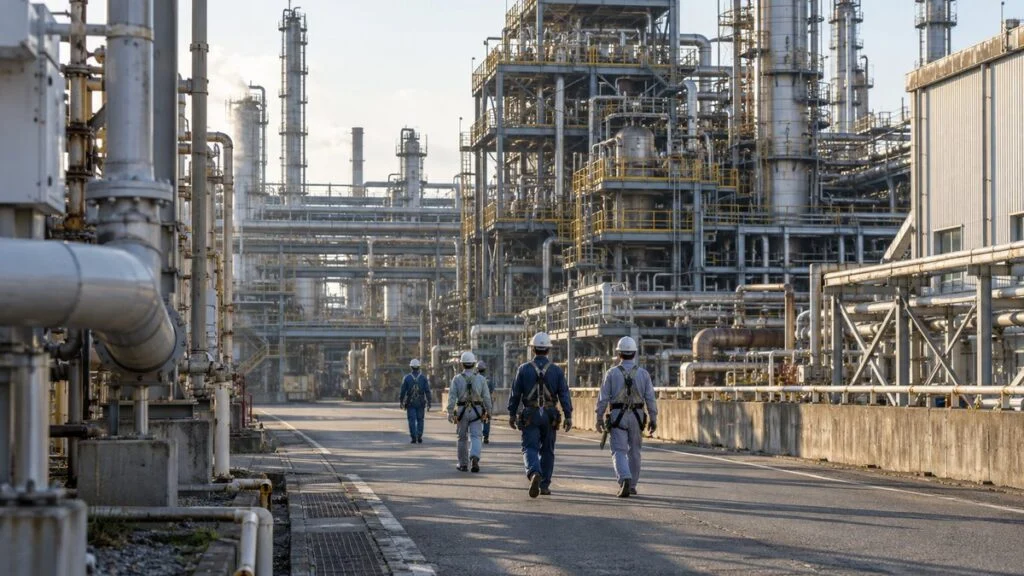
The plant owner's own employees cannot come close to handling a turnaround alone. A maintenance company serves as the main contractor (motouke), and specialist subcontractors are lined up beneath it to supply the workforce.
From the owner down to specialist firms, the work is split across layers.
Note: In one chemical company example in the report, four main contractors had more than 20 subcontractors in total beneath them.
The report cites a 2016 survey by the plant maintenance contractors' association (Nihon Maintenance Kogyokai): maintenance companies had sales of JPY 965.2 billion. By type of work, scheduled turnarounds were the largest share at 37%, or JPY 352 billion, so turnarounds are a core business for the maintenance industry too.
According to the same report, the maintenance workforce totals about 45,000 people, of whom about 25,000 are employees of maintenance companies. The remaining 20,000 or so are outsourced. Companies with 50 or fewer employees make up 74% of maintenance firms, and the usual pattern is for a large company to act as main contractor and bring in small and medium-sized firms.
No single region has enough workers, so crews traveling in from other regions are a built-in assumption. Work on static equipment such as columns and vessels is heavily outsourced, while pumps, compressors, and other rotating equipment require specialized skills, and companies often compete for the workers who can handle them.
Pressures on Teishu: Labor Shortages, Longer Outages, and Overtime Caps
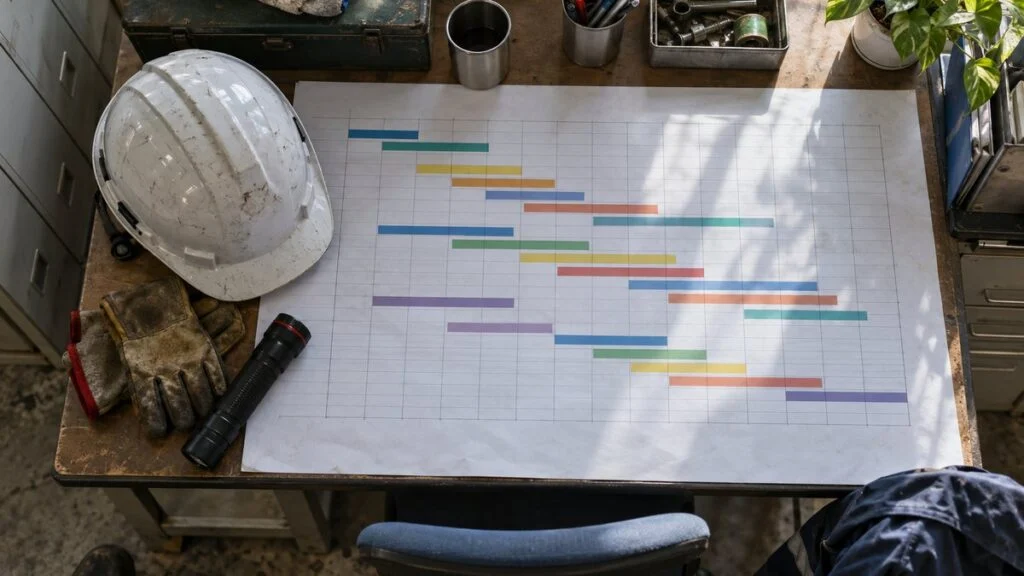
The way turnarounds are run is now under pressure. In 2019, JPCA set up the Turnaround Study Group to sort out the issues, working with outside experts and five industry groups: the Petroleum Association of Japan, the Japan Chemical Industry Association, the Japan Plastics Industry Federation, and the Japanese trade associations for plant maintenance contractors (Nihon Maintenance Kogyokai) and nondestructive inspection companies (Nihon Hihakai Kensa Kogyokai).
Together, they make it harder to secure workers and hold the schedule.
Source: Turnaround Study Group, "Report on the Future of Scheduled Turnarounds" (December 2019; Japanese). Figures are as of the report.
Seasonal Crowding and Longer Outages
Turnarounds cluster in spring and fall, when outdoor work is easiest. The report notes concerns that summer turnarounds would lower work efficiency and add the burden of heatstroke prevention. Because so many companies choose the same seasons, there are not enough traveling workers or cranes and other equipment to go around.
Aging equipment has also increased the workload per turnaround, and longer continuous runs tend to pile more work into each shutdown. In 2019, the report projected that more than half of Japan's ethylene plants would be over 50 years old by 2022, and noted that turnarounds had stretched from 25–30 days to 50–60 days.
Fewer Workers, Older Workers
The share of maintenance workers in their 60s rises every year. The construction workforce, which has long supplied extra crews for turnarounds, is also shrinking, and the report expects that help from construction to be hard to count on.
The most serious shortage is of site supervisors who can manage the work. Even with enough workers, the job cannot proceed without people who can manage the schedule and safety. Because the role depends so heavily on experience, companies have to build skill transfer and training deliberately.
Japan's Overtime Caps
Japan began phasing in legal caps on overtime in April 2019, and construction, which had a grace period, has been covered since April 2024. Even under special circumstances, overtime must stay within 720 hours a year, under 100 hours a month including holiday work, and no more than 80 hours a month averaged over any two to six months.
When the report was compiled, overtime for employees and construction workers during turnarounds averaged over 80 hours a month across two months, with some cases over 100 hours. The old approach of pushing work through a short window with heavy overtime is no longer legally sustainable.
The report also stresses that owners cannot avoid responsibility by pointing to the contract, and notes that the government has asked industry associations to urge their members not to place unreasonable orders with business partners or subcontractors.
How the Industry Is Responding
The responses fall into three layers: the industry as a whole, owners and main contractors, and technology and regulation.
Who acts determines which of three layers a measure belongs to.
Based on the Turnaround Study Group report and METI materials on the Certified Advanced Safety Operator system.
Spreading Out Turnaround Dates
The Turnaround Study Group saw spreading out turnaround dates as the most promising measure. If turnarounds do not overlap, competition for workers and equipment eases, which helps both work quality and stable product supply.
Because this means competitors coordinating schedules, JPCA consulted the Japan Fair Trade Commission and obtained its understanding for turnaround scheduling. The report proposed a "turnaround council" and guidelines run by a neutral association secretariat and academic experts, with turnarounds from 2023 onward as the target for coordination.
Moving Turnaround Work Into Routine Maintenance
The other approach is to lower the peak itself. The report includes an estimate for a refinery. Hot work, the core of the turnaround, ran 41 days with up to 1,900 workers at peak, while routine maintenance peaked at 650.
By adopting on-stream inspection (OSI) and similar methods and moving 10% of turnaround work into routine maintenance, the refinery could cut its peak from 1,900 to 1,510 workers, according to the estimate. The more condition data you can collect while running, the less you need to open up during a shutdown.
For how Japanese sites organize operator-led routine maintenance, see jishu hozen (autonomous maintenance).
Standardizing Procedures and Training to Free Up Work Time
Site-entry procedures and safety training also eat up time during a turnaround. The report proposed standard forms for work permits and similar documents, core safety training modules valid across sites, and cloud sharing of workers' qualifications and training records. Finishing safety training in the quiet summer or winter months keeps it from cutting into work time during the turnaround.
Using Certification and Smart Safety
The Certified Advanced Safety Operator system launched in 2023 was designed in part to deal with shortages of safety personnel. Sites that track equipment condition through continuous sensor monitoring and data analysis gain more freedom in setting run lengths and inspection timing.
Fewer turnarounds mean lower overall labor demand, but more work per turnaround. Longer intervals and a manageable workload per turnaround have to be planned together.
What to Prepare When You Work With a Japanese Plant's Teishu
Teishu matters beyond the plant fence. What it means for you depends on your role:
- Buyers of feedstock or products: A supplier's turnaround is a period when its supply stops. The report notes that customer industries see a need to build inventory in advance and worry about supply when turnarounds overlap. It also notes that some products change over time in storage, so stocking up ahead cannot always cover demand
- Equipment and parts suppliers: Replacement and modification work is scheduled into turnarounds, so proposal and delivery deadlines are worked out backward from the turnaround dates
- Maintenance and production staff: Knowing which law covers each piece of equipment and when its next inspection is due makes the logic of the turnaround plan easier to follow
- Contractors and inspection firms: Scope is often fixed later than contractors would like, entry procedures and safety training take time, and overtime is legally capped. Plan crews and paperwork with those constraints in mind
Turnaround dates are often shared with business partners early. Simply asking "When is your next teishu, and on what cycle?" tells you a lot about a customer's or supplier's investment and production plans.
Preparation Checklist
- Turnaround start and end dates, and whether it covers the whole site or only some units
- Which units and equipment you supply or depend on, and whether they are in this turnaround's scope
- The deadline for equipment or parts to arrive on site, worked backward from the shutdown date
- Any factory acceptance test (FAT) or witness inspection that must finish before shipment
- Site-entry paperwork, safety training, and qualification records your crew must submit, and the deadline for each
- Whether you will work under the owner directly or under a main contractor, and who issues your work permits
- For buyers: how many days of supply stop, and how much inventory you need to cover it
- The next turnaround after this one, so you can plan beyond the current cycle
For equipment that ships before a turnaround, see FAT and SAT with Japanese suppliers.
Questions to Ask the Japanese Side
- When does the next teishu (定修) start and end, and is it a full or partial shutdown?
- Is the turnaround cycle annual, or does the site hold certification that allows a longer run?
- When will the work scope be fixed, and when will orders be placed?
- By what date must our equipment, parts, or documents be on site?
- What site-entry procedures and safety training are required, and can any training be done before the turnaround?
- Will we contract with your company directly or through a main contractor (motouke)?
- For suppliers: which products will be unavailable, for how long, and when should we place orders to build stock?
Sample Inquiry Email
The email below is a fictional example. Adjust the details to your situation.
Subject: Schedule for your next teishu (scheduled turnaround)
Dear Mr. Tanaka,
To plan our deliveries and staffing, could you share the following about the next teishu at your plant?
1. Start and end dates, and whether it is a full or partial shutdown
2. The date by which our replacement parts must be on site
3. Site-entry procedures and safety training our crew must complete, and the deadlines
4. Whether we will work under your company directly or under a main contractorIf any dates are still tentative, tentative dates would help us start preparing.
Best regards,
Limits of This Guide
- The laws and cycles described here are the general rules. Each site's actual inspection dates depend on its own permits and certifications, and the equipment involved
- Figures on turnaround scale, workforce, and overtime come from a report compiled in 2019 and reflect conditions at that time. They vary widely by plant and industry
- The report and examples mainly cover petrochemicals and oil refining. Other industries may follow different practices
- This article describes safety rules and practices for background only. On site, the owner's work permits and procedures govern all isolation, gas testing, and confined-space entry
- English names of Japanese laws and certification types are translations; check the original Japanese terms when it matters
FAQ
What does teishu mean?
Teishu (定修) is short for teiki shuri (定期修理), a scheduled turnaround: a planned shutdown of a continuously operating plant to open, inspect, clean, repair, and replace equipment. Japanese sites also call it shutdown maintenance (SDM).
How often do Japanese plants have a turnaround?
Once a year by default, because the High Pressure Gas Safety Act requires annual safety inspections. Certified sites can run for about 4 years (Class B) or up to 8 years (Class A), and actual cycles vary. One example in the industry report had a cycle of roughly 2–4 years.
How long does a teishu take?
It depends on the unit and the workload. The 2019 industry report found that turnarounds had grown from 25–30 days to 50–60 days, and a major turnaround of an ethylene plant with about 600,000 tonnes per year of capacity took about two months.
Why are Japanese turnarounds concentrated in spring and fall?
Those seasons are best for outdoor work; summer turnarounds raise concerns about lower efficiency and heatstroke prevention. Because overlapping turnarounds compete for workers and equipment, the industry is working to spread the dates out.
Does supply stop during a supplier's teishu?
Yes, for the units that are shut down. Plan on no output from those units during the turnaround, ask your supplier for the dates early, and build inventory ahead where the product allows it.
Sources
- Definition, scale, challenges, and recommendations: Turnaround Study Group, "Report on the Future of Scheduled Turnarounds" (December 25, 2019; Japanese), summary version (Japanese)
- Background of the Turnaround Study Group: Japan Petrochemical Industry Association (Japanese)
- Safety inspections: High Pressure Gas Safety Act, Article 35, Industrial Complex Safety Regulations, Article 34, General High Pressure Gas Safety Regulations, Article 79 (e-Gov, Japanese)
- Old certification system: KHK, super certification and voluntary safety certification (Japanese)
- Certified Advanced Safety Operator system: METI High Pressure Gas Safety Office, operation of the new certification system (March 26, 2024; Japanese), KHK, Certified Advanced Safety Operators (Japanese), Order for Enforcement of the High Pressure Gas Safety Act, Article 10-2 (e-Gov, Japanese)
- Boiler and Class 1 pressure vessel inspections: Ordinance on Safety of Boilers and Pressure Vessels, Articles 37, 38, 40, 72, 73, and 75 (e-Gov, Japanese), MHLW notice on certification of open-inspection intervals for boilers (March 29, 2021; Japanese)
- Safety measures for opening equipment and entering vessels: Industrial Safety and Health Regulations, Article 275 (e-Gov, Japanese), MHLW guideline on safety and health for non-routine work at chemical facilities (February 28, 2008; Japanese)
- Hazardous-material facility inspections: Fire and Disaster Management Agency, overview of safety inspections and periodic inspections (Japanese)
- Overtime caps: MHLW work style reform site, construction industry (Japanese)
Original article in JapaneseThis guide is adapted from a MONOSCOPE article written for readers in Japan: 定修(ていしゅう)とは|プラントの定期修理の周期・期間・工程と人手不足の課題
About the editor
 MONOSCOPE EditorFOUNDER & EDITOR
Spent about ten years at a plant equipment maker and a plant engineering company, proposing, designing, and commissioning equipment, then moved into web marketing. Now a web consultant for B2B manufacturers, helping them explain their products and technology. Licensed in Japan as an Energy Manager and a Third-Class Chief Electrical Engineer.
Has run an engineering blog since 2017 (500+ articles) and a Japanese YouTube channel with about 20,000 subscribers. Each English guide is written from the Japanese shop-floor point of view and checked against the cited standards.