kcal/h to kW, BTU/h, and Tons: Chart for Japanese Specs
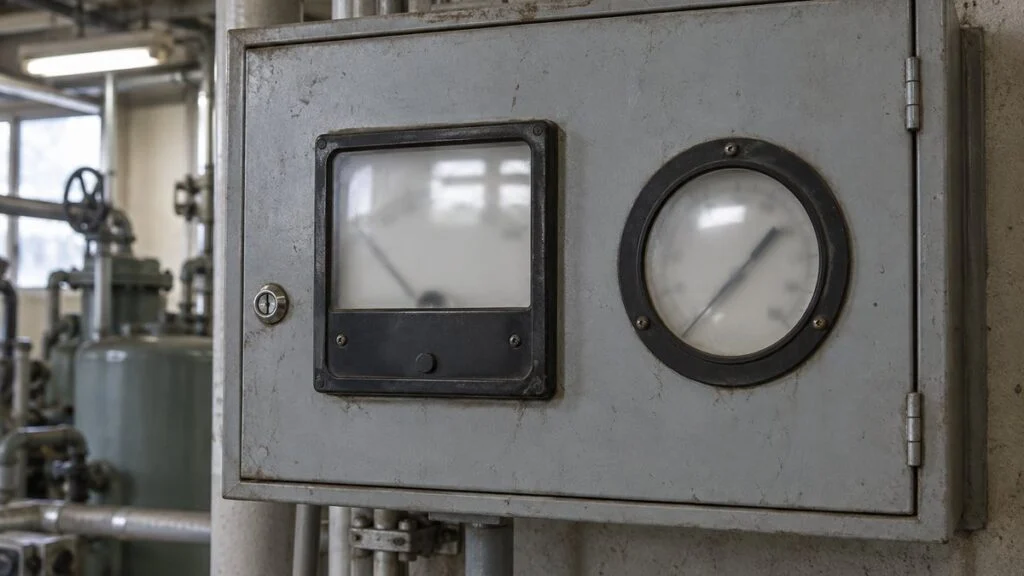
An older Japanese hot-water heater on your line has a nameplate that reads 能力 50,000 kcal/h. A Japanese chiller catalog lists cooling capacity in kW, with kcal/h in parentheses, and a spec sheet from a Japanese engineering firm sizes a cooling tower in "tons" without saying which ton. To compare any of these with US or local equipment, you need to turn them into kW, BTU/h, or tons of refrigeration.
The short answer: 1 kW ≈ 860 kcal/h, and 1 kcal/h ≈ 1.16 W ≈ 3.97 BTU/h. To go from kcal/h to kW, divide by 860. Note the "/h": a calorie alone is an amount of heat, and you cannot convert it to watts until you know over what time the heat is delivered.
This guide explains what kcal/h and kW measure, which calorie a Japanese document is likely using, the conversion formula, a quick-reference chart from Japanese units to kW, BTU/h, and tons of refrigeration (including the Japanese refrigeration ton), and a worked heating example. It ends with a checklist, questions for the Japanese supplier, and a short inquiry you can send.
Contents
- kcal/h vs kW: Heat vs Heat Rate
- Which Calorie? Thermochemical vs International Table
- kcal/h to kW Formula
- Japanese Nameplate Units to kW, BTU/h, and Tons
- kcal to kJ and kWh: Converting Amounts of Heat
- Worked Example: Sizing an Electric Water Heater
- Checklist for Japanese Nameplates and Spec Sheets
- Limits of This Guide
- FAQ
- Sources
kcal/h vs kW: Heat vs Heat Rate
The joule (J), the kilocalorie (kcal), and the kilowatt-hour (kWh) are amounts of energy, such as the heat needed to warm a tank of water. The watt (W), kcal/h, and BTU/h are rates: how much energy a heater or chiller can deliver or remove per second or per hour. On Japanese equipment, a rate usually appears as 能力 (noryoku, capacity), for example 加熱能力 (kanetsu noryoku, heating capacity) or 冷凍能力 (reito noryoku, refrigerating capacity).
Divide a total amount of energy by time and you get a heating or cooling capacity.
A watt is one joule per second. Heater output, heat exchanger duty, pump shaft power, and generator output are all stated in watts or kilowatts.
A joule is the work done when a force of 1 N moves an object 1 m in the direction of the force.
Using joules for heat and watts for capacity puts both in one system. The 9th General Conference on Weights and Measures (1948) adopted the joule as the unit of heat and asked that calorimetric results be given in joules wherever possible.
Keep kWh separate from kW. 1 kWh is the energy of 1 kW running for one hour, so it is an amount, not a capacity.
Which Calorie? Thermochemical vs International Table
The calorie started as the heat needed to warm 1 g of water by 1°C. Because the specific heat of water changes with temperature, that description alone does not give an exact conversion factor. Today two calories are defined directly in joules: the thermochemical calorie and the International Table (IT) calorie.
The two definitions give slightly different factors, both close to 860 kcal/h per kW.
| Definition | 1 cal | 1 kW | 1 W |
|---|---|---|---|
| Thermochemical calorie | 4.184 J | ≈ 860.421 kcal/h | ≈ 0.860421 kcal/h |
| International Table calorie | 4.1868 J | ≈ 859.845 kcal/h | ≈ 0.859845 kcal/h |
The joule factors are exact by definition. Per-hour values are rounded. With either calorie, 1 kW ≈ 860 kcal/h and 1 W ≈ 0.86 kcal/h.
The two differ by less than 0.1%, so for comparing equipment ratings both give the same answer to three significant figures. When you need to match someone else's figures to more digits, state which calorie you used. This guide uses the thermochemical calorie (1 kcal = 4.184 kJ) unless noted. Japanese refrigeration figures such as 1 USRT = 3,024 kcal/h match the IT calorie, so values from Japanese HVAC catalogs may differ from this guide's in the fourth digit.
When you convert fuel heating values, units are not the only thing to match. Check whether the value includes the latent heat of water vapor: higher heating value (HHV) or lower heating value (LHV).
Why Newer Japanese Documents Use kW
Japan's Measurement Act limits the units that may be used in trade and certification. The calorie is allowed only for a "specific use": measuring the heat content of what people and animals eat, or the energy they use through metabolism. Food nutrition labels fall under this exception, and there the calorie is defined as 4.184 J. For industrial equipment, ratings used in trade and certification are stated in statutory units: J or Wh for heat, and W for capacity.
The rule covers trade and certification, not internal records. The Ministry of Economy, Trade and Industry (METI) also accepts a non-statutory unit shown as a reference value next to the statutory one. In practice, a Japanese catalog may list a capacity as, for example, "58.1 kW (50,000 kcal/h)", while older nameplates, drawings, and in-house calculation sheets may show kcal/h only.
kcal/h to kW Formula
The conversion is easiest in two steps: convert calories to joules, then convert hours to seconds. With the thermochemical calorie:
To get kcal/h, multiply cal/s by 3,600 seconds per hour and divide by 1,000 to turn cal into kcal. For 1 kW, start from 1,000 W:
Going the other way, divide kcal/h by 860.421 to get kW. For a quick estimate, kcal/h ÷ 860 ≈ kW.
Each row shows the same heating or cooling capacity in both units.
| kcal/h | kW |
|---|---|
| 100 | ≈ 0.116222 |
| 500 | ≈ 0.581111 |
| 1,000 | ≈ 1.16222 |
| 5,000 | ≈ 5.81111 |
| 10,000 | ≈ 11.6222 |
| ≈ 860.421 | 1 |
| ≈ 8,604.21 | 10 |
| ≈ 86,042.1 | 100 |
Thermochemical calorie (1 cal = 4.184 J). kW to kcal/h: multiply by 3,600 ÷ 4.184. kcal/h to kW: multiply by 4.184 ÷ 3,600. Values are rounded.
Japanese Nameplate Units to kW, BTU/h, and Tons
US equipment is usually rated in BTU/h, MBH (1,000 BTU/h), and tons of refrigeration. Use the chart below to put a Japanese rating next to it. Values are rounded to three or four significant figures, which is close enough for comparing ratings with either calorie.
Read across each row. The first column is what you may see on a Japanese nameplate, catalog, or spec sheet.
| On the Japanese document | kW | kcal/h | BTU/h | US ton (USRT) |
|---|---|---|---|---|
| 1 kW | 1 | ≈ 860 | ≈ 3,412 | ≈ 0.284 |
| 1,000 kcal/h | ≈ 1.16 | 1,000 | ≈ 3,970 | ≈ 0.33 |
| 10,000 kcal/h | ≈ 11.6 | 10,000 | ≈ 39,700 | ≈ 3.31 |
| 100,000 kcal/h | ≈ 116 | 100,000 | ≈ 397,000 | ≈ 33.1 |
| 1 USRT (米国冷凍トン, US refrigeration ton) | ≈ 3.517 | ≈ 3,024 | 12,000 | 1 |
| 1 JRT (日本冷凍トン, Japanese refrigeration ton) | ≈ 3.86 | 3,320 | ≈ 13,200 | ≈ 1.098 |
| 1 MBH (US unit, for reference) | ≈ 0.293 | ≈ 252 | 1,000 | ≈ 0.083 |
BTU = International Table BTU (1 BTU/h ≈ 0.2930711 W, NIST). 1 USRT = 12,000 BTU/h ≈ 3.516853 kW (NIST). The 3,024 kcal/h and JRT values are as given by Trane Japan. kcal/h columns use either calorie; differences are below 0.1%.
Two related conversions often show up on the same documents:
- Fuel heating value in kcal/kg: 1 kcal/kg (IT) = 4.1868 kJ/kg = exactly 1.8 BTU/lb, because 1 BTU/lb is defined as 2.326 kJ/kg. With the thermochemical calorie, the factor is 1.799. Heating values of gases in kcal/Nm3 also depend on the reference state of the gas; see Nm3 vs m3: Conversion Formula and Chart for Japanese Specs.
- Older motor or engine plates in PS: PS is metric horsepower (about 735.5 W). US horsepower is about 745.7 W, so 1 PS ≈ 0.986 hp. Do not treat them as the same unit.
US Refrigeration Ton vs Japanese Refrigeration Ton
Both tons are based on the heat needed to freeze one "ton" of 0°C water into 0°C ice in 24 hours. They differ in what a ton of water weighs. The US refrigeration ton (USRT) uses 2,000 lb (907 kg) of water and works out to 12,000 BTU/h, or about 3.517 kW. The Japanese refrigeration ton (JRT, Nihon reito-ton) uses 1,000 kg of water: 1,000 kg × 79.68 kcal/kg ÷ 24 h = 3,320 kcal/h, about 3.86 kW. 1 JRT ≈ 1.098 USRT, so mixing them up changes a capacity by about 10%.
According to Trane Japan, USRT is the common standard in Japan too, and large centrifugal chillers are usually rated in USRT. JRT is still used in some fields, such as ice making and chemical cooling. Small chillers are often rated in kcal/h or kW. If a Japanese document says only 冷凍トン (reito-ton) or "RT", ask which ton it means.
A third "ton" can appear on Japanese refrigeration equipment: the statutory refrigeration capacity used for permits under Japan's High Pressure Gas Safety Act, sometimes called 法定冷凍トン (hotei reito-ton). It is not a measured cooling output. It is calculated from the equipment itself: for many compressors, from the piston displacement per hour divided by a constant; for centrifugal compressors, each 1.2 kW of motor rated output counts as 1 ton per day; for absorption units, each 27,800 kJ/h of generator heat input counts as 1 ton per day. Do not convert this number to kW or compare it with a cooling capacity. If it matters for a project, the Japanese supplier or the local authority decides how it applies.
kcal to kJ and kWh: Converting Amounts of Heat
For total heat rather than capacity, convert kcal to kJ, then to kWh if needed. Because 1 kWh = 3,600 kJ, 1 kWh ≈ 860.421 kcal with the thermochemical calorie. One kcal is also about 3.966 BTU.
This chart compares amounts of energy. Divide by time to get capacity in kW.
| kcal | kJ | kWh |
|---|---|---|
| 1 | 4.184 | ≈ 0.00116222 |
| 100 | 418.4 | ≈ 0.116222 |
| 1,000 | 4,184 | ≈ 1.16222 |
| 9,000 | 37,656 | 10.46 |
| 10,000 | 41,840 | ≈ 11.6222 |
| ≈ 860.421 | 3,600 | 1 |
Thermochemical calorie (1 cal = 4.184 J). kcal to kJ: multiply by 4.184. kJ to kWh: divide by 3,600. Reverse the operations for the other direction.
Boiler steam output in kg/h and heat output in kW are different quantities. You can relate them through an equivalent evaporation calculation, which uses the enthalpy difference between the steam and the feedwater.
Worked Example: Sizing an Electric Water Heater
How large an electric heater do you need to heat 300 kg of water from 20°C to 50°C in 10 minutes?
The calculation treats the specific heat of water as a constant 1 kcal/(kg·°C) and ignores heat taken up by the tank and lost to the surroundings. The result, 62.76 kW, is a theoretical minimum under these assumptions, using the thermochemical calorie.
Find the heat needed, convert it to joules, then divide by the heating time.
= 9,000 kcal
= 37,656 kJ
= 62.76 kJ/s = 62.76 kW
Assumes constant specific heat and no losses. A real heater selection also accounts for the tank and heat losses.
The heat equation is Q = mcΔT, where Q is the heat required, m is the mass of water, c is its specific heat, and ΔT is the temperature rise, here 30°C.
Check it with the chart: 9,000 kcal in 10 minutes is 54,000 kcal/h. Divided by 860, that is about 62.8 kW, which matches within rounding. Or check it in kWh: the heat is 10.46 kWh and the time is 1/6 hour, so 10.46 ÷ (1/6) = 62.76 kW.
For a US comparison, 62.76 kW × 3,412 ≈ 214,000 BTU/h, or about 214 MBH. In practice, estimate the heat that reaches the water separately from the heat lost to the tank and surroundings, using a heat balance.
Checklist for Japanese Nameplates and Spec Sheets
Use this list when a Japanese document gives a heating or cooling capacity:
- Unit: is it a rate (kW, kcal/h, BTU/h, RT) or an amount (kJ, kcal, kWh)? A number in kcal without "/h" is not a capacity.
- Calorie: if several digits matter, which calorie (thermochemical 4.184 J or IT 4.1868 J) was used?
- Ton: does 冷凍トン or "RT" mean USRT (3.517 kW) or JRT (3.86 kW)?
- Statutory ton: is a "ton" figure the permit capacity under the High Pressure Gas Safety Act rather than a cooling output?
- Rating conditions: inlet and outlet water temperatures, air temperatures, and flow at which the capacity was rated.
- Heat value basis: for fuels, HHV or LHV, and for gases, per Nm3 at which reference state.
- Other nameplate items: voltage and frequency, since Japanese equipment may be built for 50 Hz or 60 Hz. See Japan's 200 V industrial power and 50/60 Hz.
Questions for the Japanese Supplier
- Is this capacity a heating or cooling output, a power input, or a heat input?
- Is the "ton" (RT) a US refrigeration ton or a Japanese refrigeration ton? Or is it the statutory capacity for permits?
- At what conditions is the capacity rated (temperatures, flow, voltage, frequency)?
- Can you give the capacity in kW, and in BTU/h or USRT for our records?
- For old equipment rated only in kcal/h, is a current datasheet in kW available?
A short inquiry you can adapt:
Subject: Capacity units for [equipment tag]
The nameplate and datasheet for [equipment tag] list the capacity as 50,000 kcal/h and 15 RT. Please confirm (1) whether "RT" is a US refrigeration ton (12,000 BTU/h) or a Japanese refrigeration ton (3,320 kcal/h), (2) whether these values are output capacities or inputs, and (3) the rating conditions. If possible, please also give the capacities in kW at the rated conditions.
Limits of This Guide
- The conversions are unit conversions only. They do not tell you whether a heater or chiller suits your process; that depends on rating conditions, losses, and the project specification.
- The worked example assumes constant specific heat and no losses, so it gives a theoretical minimum.
- Calorie values in this guide use the thermochemical calorie unless noted. Japanese catalogs may use the IT calorie; differences are below 0.1%.
- The description of the statutory refrigeration ton is a summary of a prefectural permit guide. How it applies to a specific unit is decided by the supplier and the local authority under the High Pressure Gas Safety Act.
- Usage of USRT, JRT, and kcal/h varies by maker, industry, and the age of the document. Always check the definition on your own datasheet.
FAQ
How Do You Convert kcal/h to kW?
Divide by 860 for a quick estimate, or by 860.421 for the thermochemical calorie (859.845 for the IT calorie). For example, 50,000 kcal/h ÷ 860.421 ≈ 58.1 kW. To go from kW to kcal/h, multiply by the same number.
How Many BTU/h Is 1 kcal/h?
About 3.97 BTU/h (3.966 with the thermochemical calorie, 3.968 with the IT calorie). So 10,000 kcal/h is about 39,700 BTU/h. Going the other way, 1 BTU/h ≈ 0.252 kcal/h.
How Many Watts Is 1 kcal?
That depends on the time. 1 kcal is 4,184 J (thermochemical), so delivered in 1 second it is 4,184 W, and delivered over 1 hour it is about 1.16222 W. The same rule applies to 1 cal: 4.184 W over 1 second, 2.092 W over 2 seconds.
Why Is 1 W About 0.86 kcal/h?
1 W = 1 J/s, which is 3,600 J per hour. With 1 kcal = 4,184 J, that is 3,600 ÷ 4,184 ≈ 0.860421 kcal/h.
Is 860 Exact?
No. It is a rounded factor for estimates. For precise work, choose the calorie definition and use 3,600 ÷ 4.184 (thermochemical) or 3,600 ÷ 4.1868 (IT) without rounding along the way.
Sources
- Calorie, BTU, ton of refrigeration, and horsepower factors: NIST SP 811, Guide for the Use of the SI, Appendix B.9
- Joule as the unit of heat: BIPM, 9th CGPM (1948), Resolution 3
- Units allowed in trade and certification: e-Gov, Measurement Act, Articles 5 and 8 (Japanese); METI, Regulation of units in trade and certification (Japanese)
- Specific uses and the definition of the calorie: e-Gov, Cabinet Order on Units of Measurement, Article 5 and Appended Table 6 (Japanese); METI, Non-SI units limited to specific uses (Japanese)
- Internal use and reference values: METI, FAQ on trade, certification, and units of measurement (Japanese)
- US and Japanese refrigeration tons: Trane Japan, "Refrigeration ton, COP, IPLV" (Japanese)
- Statutory refrigeration capacity for permits: Chiba Prefecture, Guide to High Pressure Gas Production Permit Applications (Refrigeration), section 2 (Japanese)
- MBH = 1,000 BTU/h: Burnham Commercial, Boiler Ratings Definitions
Original article in JapaneseThis guide is adapted from a MONOSCOPE article written for readers in Japan: ワットとカロリーの換算方法|1kW≒860kcal/hの求め方と早見表
About the editor
 MONOSCOPE EditorFOUNDER & EDITOR
Spent about ten years at a plant equipment maker and a plant engineering company, proposing, designing, and commissioning equipment, then moved into web marketing. Now a web consultant for B2B manufacturers, helping them explain their products and technology. Licensed in Japan as an Energy Manager and a Third-Class Chief Electrical Engineer.
Has run an engineering blog since 2017 (500+ articles) and a Japanese YouTube channel with about 20,000 subscribers. Each English guide is written from the Japanese shop-floor point of view and checked against the cited standards.