US Manufacturing Reshoring in 2026: Data and Japan’s Role
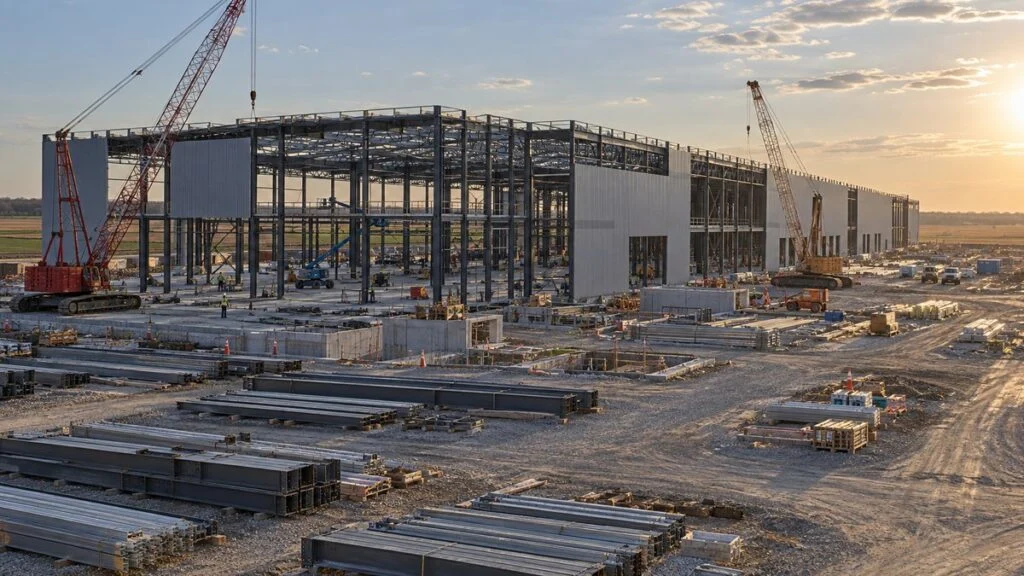
Your Japanese parent company announces a new plant in the US. A Japanese customer asks your shop in Thailand or India to quote equipment for a project in Ohio or North Carolina. A team of startup engineers from Japan is booked to spend six months at your site. Behind all of these is the same question: is manufacturing really coming back to the United States, and where do Japanese manufacturers fit in?
The short answer, as of October 2026: the US has built factories at a record pace, but manufacturing output and jobs have not yet moved. Spending on factory construction in 2024 averaged about $244 billion a year, roughly three times the 2021 level. Manufacturing employment and the manufacturing production index, however, are still about where they were in 2019. The clearest change so far is where US imports come from, not how much the US makes at home.
This guide covers why the US wants factories back, how subsidies and tariffs drove investment, what the data shows, how Japanese manufacturers are involved, and what is slowing the shift. It ends with questions to ask when a Japanese company brings you into a US project.
Contents
- What Is Reshoring?
- Why the US Wants Its Factories Back
- How Policy Moved Factory Investment
- How Far Has Reshoring Come? The Data
- How Japanese Manufacturers Are Involved
- What Is Slowing Reshoring
- What This Means If You Work With Japanese Manufacturers
- Questions to Ask About a US Project
- Limits of This Guide
- FAQ
- Sources
What Is Reshoring?
Reshoring means bringing production that moved overseas back to the home country. The idea is a shift from "make it cheaply abroad" to "make it close by, where supply won't be cut off."
The destination is not always the home country. Moving production to a neighboring country or to an allied country is usually discussed as part of the same trend.
The name depends on where production goes. In the US, all three are happening at the same time.
In this guide, "reshoring" mainly means building factories and producing inside the US. The shift of imports from China to other countries is covered separately in the data section.
Why the US Wants Its Factories Back
The push comes from decades of shrinking domestic production.
Manufacturing Jobs Peaked in 1979
According to the US Bureau of Labor Statistics (BLS), manufacturing employment hit its all-time high of 19.55 million in June 1979. It fell sharply in the 2000s, bottoming out at 11.44 million in February 2010.
Jobs have recovered slowly since then, but in September 2026 the figure was 12.65 million. About one-third of the jobs at the 1979 peak are still gone. That gap underpins the political call to bring factories back.
Even after bottoming out in 2010, employment remains far below the 1979 level.
Source: BLS Current Employment Statistics, seasonally adjusted (via FRED series MANEMP). June 1979 is the all-time high; February 2010 is the most recent low.
Manufacturing's weight in the economy has also declined. In US Bureau of Economic Analysis (BEA) data, manufacturing value added fell from 11.8% of GDP in Q1 2010 to 9.7% in Q2 2026.
Three Events That Turned It Into Policy
A slow decline alone would not have produced policy on this scale. Three developments pushed it forward:
- The rise of China: by 2017, China supplied 22% of US goods imports.
- Pandemic parts shortages: semiconductors and other parts stopped arriving, and some automakers had to halt production.
- Economic security: relying on Taiwan and South Korea to make leading-edge chips came to be seen as a national security risk.
Japan went through the opposite move decades earlier: after the 1985 Plaza Accord sent the yen sharply higher, Japanese manufacturers shifted plants overseas. Seen against that history, the US is now trying to use government policy to reverse the "make it where it's cheapest" trend.
How Policy Moved Factory Investment
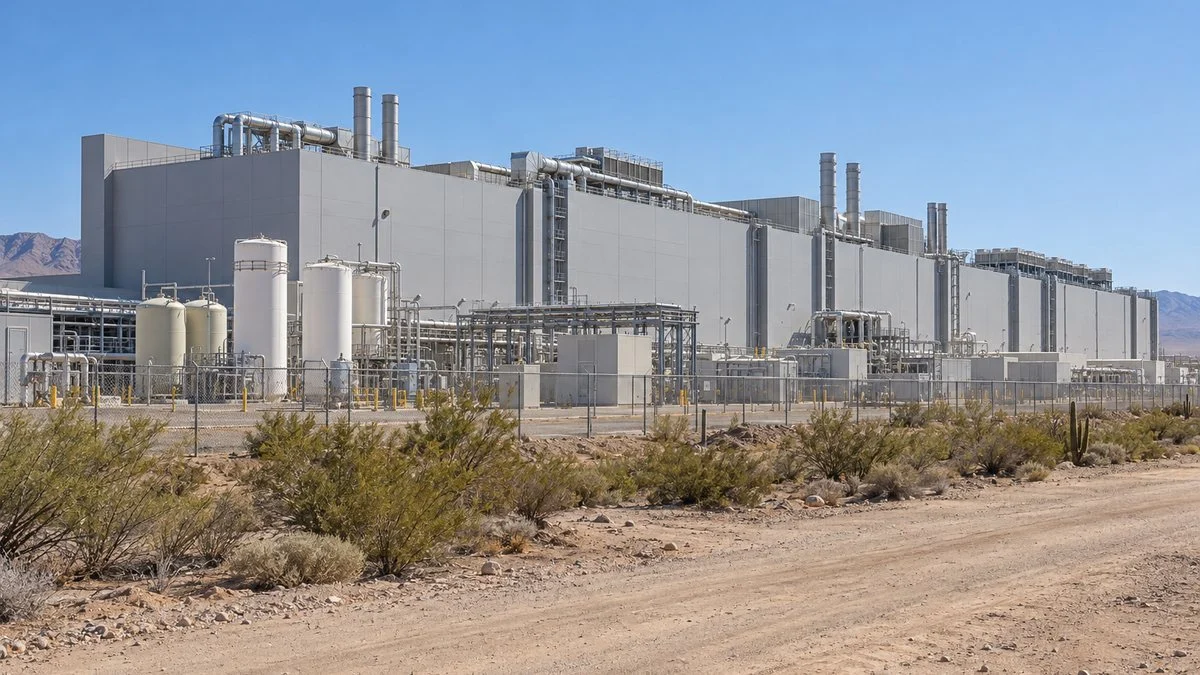
US reshoring policy uses two main tools: subsidies and tax credits that pay companies to build plants, and tariffs that make imports more expensive so domestic production looks better.
Subsidies and Tax Credits: The CHIPS Act and the IRA
The CHIPS and Science Act, passed in 2022, provides about $50 billion for semiconductor research and manufacturing: $39 billion in incentives for building fabs and $11 billion for R&D.
It also created the Section 48D advanced manufacturing investment tax credit, which lets companies subtract part of their plant investment from their federal income tax. The credit started at 25% and was raised to 35% by a law enacted in July 2025. Only projects that begin construction by the end of 2026 qualify, which encourages companies to break ground early.
The Inflation Reduction Act (IRA), also passed in 2022, uses tax credits to support domestic production of EVs, batteries, and renewable energy equipment. In a June 2023 analysis, the US Treasury linked the growth in manufacturing construction spending to these laws.
After the change of administration in 2025, the use of subsidies changed too. In August 2025, Intel and the US government agreed that the government would take a 9.9% stake in Intel, funded by government grants that Intel had been awarded but not yet received.
At the same time, the federal tax credit for consumers buying EVs ended for vehicles acquired after September 30, 2025. The tax support for EV demand, which battery and EV plants were planned around, was withdrawn mid-course.
Tariffs: From 2025 Through the 2026 Reset
In 2025, tariffs became the center of US trade policy. The administration imposed country-by-country "reciprocal" tariffs and product-specific tariffs on steel, autos, and other goods under Section 232 of the Trade Expansion Act of 1962.
On February 20, 2026, the US Supreme Court ruled that the International Emergency Economic Powers Act (IEEPA), the law behind the reciprocal tariffs, does not authorize tariffs. The administration then imposed a temporary 10% surcharge under Section 122 of the Trade Act of 1974, which is limited to 150 days, and replaced it with Section 301 tariffs on July 24, 2026. Section 232 product tariffs were outside the scope of the ruling and remain in effect.
As of October 2026, imports from Japan generally face a combined rate of 12.5% (or the normal MFN rate, if that is higher). Autos and auto parts face 15% in total, and steel and aluminum generally face 50%. For the full timeline, how the 12.5% rate is calculated, and what to ask your supplier, see US Tariffs on Japanese Imports in 2026.
Both aim to increase domestic production, but they work differently and have different weak points.
The legal basis for tariffs is also often contested, which makes future rates hard to predict and investment decisions harder.
How Far Has Reshoring Come? The Data
Whether reshoring has "worked" depends on which numbers you look at.
Investment has surged, but output and jobs have not followed yet.
Sources: construction spending from the US Census Bureau; production index (2017 = 100) from the Federal Reserve Board; jobs from BLS; import shares from PIIE analysis of Census Bureau data.
Factory Construction Tripled, Peaking in 2024
In US Census Bureau construction spending data, manufacturing construction ran at $70–80 billion a year through 2021. It jumped from 2022 and hit a record seasonally adjusted annual rate of $250.2 billion in September 2024.
Spending surged from 2022, peaked in 2024, and has been falling since.
Jan–Aug
USD billions. Average of monthly US Census Bureau values for each year (seasonally adjusted annual rate, nominal), as published in October 2026 (FRED series TLMFGCONS).
Spending has declined since 2025. The August 2026 annual rate was $170.7 billion, still more than twice the 2019 level.
Most of the growth came from plants for computers, electronics, and electrical equipment. In its June 2023 analysis, the US Treasury found that real construction spending in this category had nearly quadrupled since early 2022.
Keep in mind that a single front-end semiconductor fab costs a great deal, so a small number of very large projects drive the total. TSMC's March 2025 announcement shows the scale: it added $100 billion to its US investment plans, bringing the total to $165 billion.
Construction spending is also a nominal dollar figure. It rises when materials and labor get more expensive, so higher spending does not mean the number of plants or the volume of output rose by the same amount.
Output and Jobs Are Flat
Output and employment have barely moved. The Federal Reserve's manufacturing production index (2017 = 100) was 100.9 in January 2019 and 99.1 in August 2026. Manufacturing employment went from 12.79 million to 12.65 million over roughly the same period.
A semiconductor fab takes years to go from construction to volume production, so the effect on output and jobs is still ahead, and it is too early to judge.
Imports Shifted From China to Neighbors and Allies
The clearest change is in where imports come from. According to the Peterson Institute for International Economics (PIIE), China's share of US goods imports fell from 22% in 2017 to 9% in 2025.
Taiwan, Vietnam, and Mexico gained share, and total US real imports rose 9% in 2025. The bigger change is in which countries supply the US, not in how much the US makes at home.
How Japanese Manufacturers Are Involved
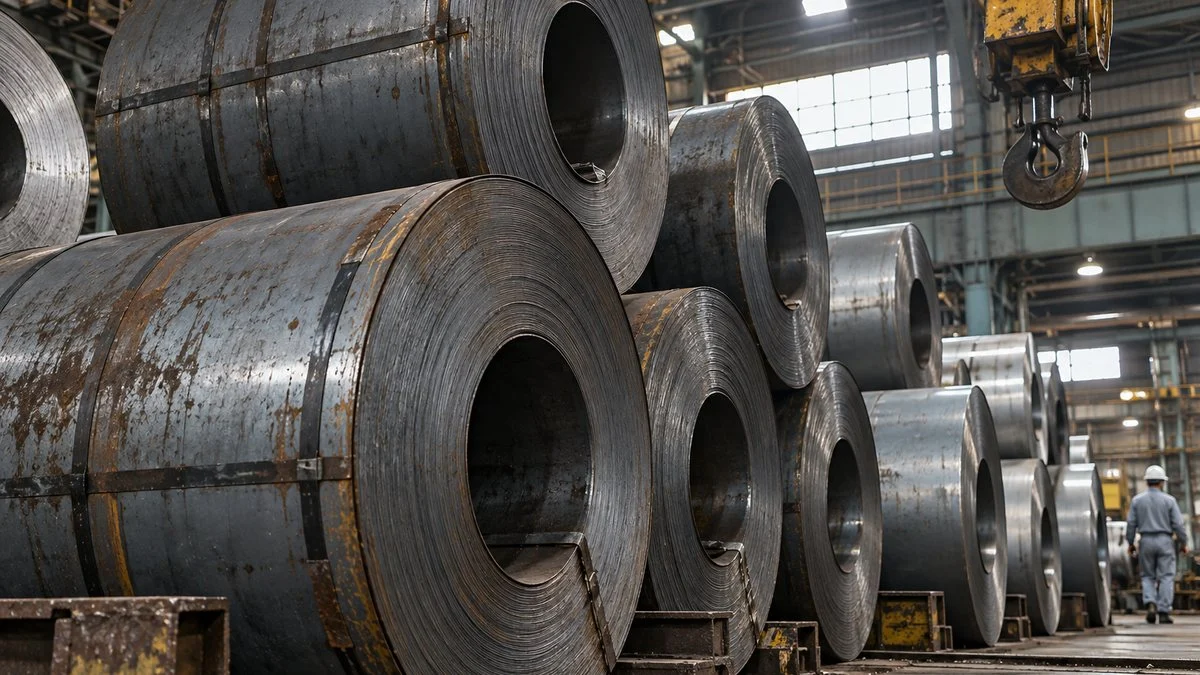
Japanese companies are among the largest players in US factory investment. According to BEA, Japan held the largest stock of foreign direct investment (FDI) in the US at the end of 2025, at $776.3 billion.
Japan also led new FDI in the US in 2025 with $50.5 billion. Across all countries, manufacturing accounts for 42.8% of the total FDI stock in the US.
Japanese companies take part in three main ways:
- Acquisitions: Nippon Steel completed its acquisition of U.S. Steel in June 2025 and committed about $11 billion in new investment by 2028.
- New plants: Toyota is investing about $13.9 billion in its North Carolina battery plant and plans capacity of more than 30 GWh a year by 2030.
- Equipment and materials supply: in the first three US–Japan strategic investment projects, Japanese equipment and materials makers have expressed interest in supplying the projects.
Toyota also opened a battery research center in the US in October 2026.
Related: Toyota’s Michigan Battery Center: What Changes for Suppliers
The US–Japan strategic investment initiative is the framework for the $550 billion of investment Japan committed to under the 2025 tariff agreement. According to Japan's Ministry of Economy, Trade and Industry (METI), the first three projects were announced on February 18, 2026:
- Synthetic industrial diamond production (about $600 million): Asahi Diamond Industrial, Noritake, and others are interested in buying the output.
- Crude oil export infrastructure (about $2.1 billion): Mitsui O.S.K. Lines, Nippon Steel, JFE Steel, MODEC, and others are interested in supplying equipment.
- Gas-fired power generation for AI data centers (about $33.3 billion): Toshiba, Hitachi, Mitsubishi Electric, SoftBank Group, and others have expressed interest.
METI's announcement also names small and mid-sized companies interested in machining parts or supplying equipment. The US factory boom can bring work even to Japanese companies that never set up a US site.
The type of involvement decides which teams on the Japanese side get busy.
Company examples are based on public announcements. The work listed shows typical links, not the actual organization of any company.
What Is Slowing Reshoring
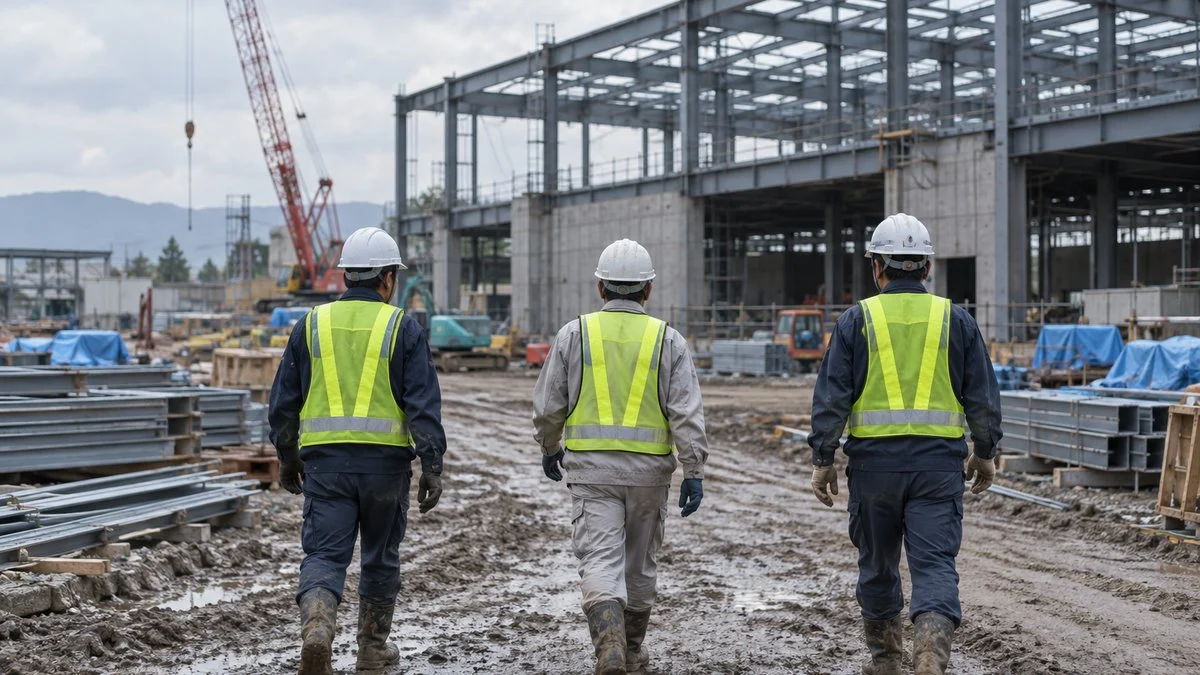
Money to build a plant does not raise output by itself. A plant also needs people to run it and stable rules.
- Labor: an April 2024 study by Deloitte and The Manufacturing Institute estimated that US manufacturers will need as many as 3.8 million new workers by 2033, and that about 1.9 million of those jobs could go unfilled.
- Sending startup engineers: in September 2025, immigration authorities detained 475 people at a Hyundai–LG Energy Solution battery plant under construction in Georgia. According to NPR, more than 300 of them were South Korean.
- Shifting rules: the consumer EV tax credit ended early, and the legal basis for tariffs was replaced entirely. For plant investments that pay back over a decade, rules that change every few years are a heavy burden.
The Georgia case matters for Japanese companies too. Visa rules and how they are enforced can stop companies from sending specialist engineers on short assignments, so companies need a plan to cover the gap until local staff are trained.
Japanese-owned US plants have also run into trouble. Warabeya Nichiyo's Ohio plant halted operations after a customer's situation changed. See Warabeya's Ohio Plant Halt for what it shows about new-plant risk.
What This Means If You Work With Japanese Manufacturers
The effect depends on where you sit.
- At a US plant owned by a Japanese company: expect more expatriate engineers and startup support trips from Japan, and more technical communication in English. Visa timing can affect startup schedules.
- At a supplier selling to Japanese companies: Japanese exporters of finished goods and parts keep comparing tariff costs with the cost of producing in the US. If their production moves, your delivery destination, specifications, or volumes may change too. For how Japanese automotive supply chains are organized, see Japanese Automotive Supply Chain Tiers.
- At an equipment or materials supplier: new US plants are new customers. Japan is strong in areas such as semiconductor manufacturing equipment and materials and power generation equipment, and those areas are well placed to benefit from the US factory boom.
- In purchasing or production control: tariff rates depend on the country of origin, so Japanese customers may ask you to confirm the origin of the parts and materials you supply.
Related: Japanese Auto Parts Tariffs: Pricing and Production Moves
Questions to Ask About a US Project
When a Japanese company brings you into a US plant project, these questions help you understand the scope, schedule, and risks early. Ask them through your usual contact, such as the purchasing (kobai) or production engineering (seisan gijutsu) team.
| Topic | Question | Why it matters |
|---|---|---|
| Project type | Is this a new plant, an expansion, or an acquired plant? | Specs, approved suppliers, and documents can differ between these cases. |
| Incentives | Does the project depend on a federal tax credit or grant? Are there start-of-construction deadlines? | Deadlines such as the end-2026 start of construction for Section 48D can compress your delivery schedule. |
| Standards | Should equipment follow JIS or US codes and standards? Who confirms local code compliance? | Confirm this before you quote and design. |
| Origin and tariffs | Where will each part be made, and who is the importer of record? | The tariff rate follows the country of origin, and the importer pays the duty. |
| Startup staff | How many engineers will come from Japan, for how long, and on what visa basis? | Visa problems can delay commissioning and training. |
| Local sourcing | Which parts must be sourced in the US, and which will come from Japan or third countries? | Tells you what you will supply, and whether directly or through a trading company. |
| Changes | If tariffs or incentives change, how will price and scope be revised? | Policy has changed several times since 2025. |
A short email you can adapt:
Subject: Questions about the [project name] US plant
Thank you for including us in the [project name] project. To prepare an accurate quote and schedule, could you confirm the following? (1) Whether the plant is new, an expansion, or an acquired site. (2) Which standards the equipment must follow (JIS or US codes), and who will confirm local code compliance. (3) The country of origin you expect for each item and who will act as importer of record. (4) Any incentive-related deadlines that affect delivery. (5) How price and scope will be adjusted if tariffs change. Thank you for your help.
Limits of This Guide
- Figures are for the dates shown, based on values published as of October 2026. Government statistics such as construction spending are revised, so check the current release before using them.
- Tariff rates and tax credit rules are still changing. This guide is not legal, tax, or customs advice. Confirm rates for each HTS code with a customs broker or official guidance.
- National averages hide large differences by sector and state. Chips and batteries look very different from the rest of manufacturing.
- The work listed in Figure 6 shows typical patterns. How each Japanese company organizes a US project varies.
FAQ
Is manufacturing coming back to the US?
Partly. Factory construction spending in 2024 was about three times the 2021 level, but in the latest data (August–September 2026), manufacturing output and employment were still close to 2019 levels. Many large plants, especially chip fabs, take years to reach volume production.
What is the difference between reshoring, nearshoring, and friendshoring?
Reshoring brings production back to the home country. Nearshoring moves it to a nearby country, such as Mexico or Canada for the US. Friendshoring moves it to allied or friendly countries.
How much do Japanese companies invest in the US?
Japan had the largest FDI stock in the US at the end of 2025, at $776.3 billion, and led new FDI in 2025 with $50.5 billion, according to BEA. Japan also committed $550 billion of investment under the 2025 US–Japan agreement.
What tariffs apply to Japanese imports now?
As of October 2026, most goods from Japan face a combined 12.5% rate (or the MFN rate if higher), autos and parts 15%, and steel and aluminum generally 50%. See US Tariffs on Japanese Imports in 2026 for details.
What is holding reshoring back?
Mainly labor shortages, the difficulty of bringing in foreign startup engineers, and frequent changes in tariffs and incentives, which make long-term plant investment riskier.
Sources
- Manufacturing construction spending: U.S. Census Bureau, "Construction Spending" (series data: FRED, "Total Construction Spending: Manufacturing")
- Breakdown of manufacturing construction: U.S. Department of the Treasury, "Unpacking the Boom in U.S. Construction of Manufacturing Facilities" (June 27, 2023)
- Manufacturing employment: U.S. Bureau of Labor Statistics, "All Employees, Manufacturing" (FRED)
- Manufacturing production index: Federal Reserve Board, "Industrial Production: Manufacturing" (FRED)
- Manufacturing share of GDP: U.S. Bureau of Economic Analysis, "Value Added by Industry: Manufacturing as a Percentage of GDP" (FRED)
- CHIPS and Science Act funding: NIST, "CHIPS for America"
- Section 48D credit increase: 26 U.S.C. §48D (Cornell LII); IRS, "Correction to the 2025 Instructions for Form 3468 (Section 48D)"
- US government stake in Intel: Intel, "Intel and Trump Administration Reach Historic Agreement" (August 22, 2025)
- End of the consumer EV tax credit: IRS, "FAQs for modification of sections 25C, 25D, 25E, 30C, 30D, 45L, 45W, and 179D"
- Supreme Court ruling: Supreme Court of the United States, Learning Resources, Inc. v. Trump (February 20, 2026)
- Section 301 tariffs: USTR, "USTR Takes Action in Forced Labor Section 301 Investigations" (July 23, 2026); EY Tax News (July 24, 2026)
- US–Japan agreement executive order: The White House, "Implementing the United States–Japan Agreement" (September 4, 2025)
- Shift in import sources: PIIE, Chad P. Bown (March 16, 2026)
- FDI stock in the US: BEA, "Direct Investment by Country and Industry, 2025" (July 21, 2026)
- New FDI in the US: BEA, "New Foreign Direct Investment in the United States, 2025"
- Nippon Steel and U.S. Steel: Nippon Steel and U.S. Steel joint release (June 18, 2025)
- Toyota battery plant: Toyota Newsroom (October 31, 2023)
- First US–Japan strategic investment projects: METI press release (February 18, 2026, Japanese)
- TSMC US investment: TSMC press release (March 4, 2025)
- Manufacturing workforce needs: The Manufacturing Institute (April 3, 2024)
- Detentions at the Georgia battery plant: NPR (September 6, 2025)
Original article in JapaneseThis guide is adapted from a MONOSCOPE article written for readers in Japan: アメリカの製造業回帰はどこまで進んだか|補助金・関税と日本企業
About the editor
 MONOSCOPE EditorFOUNDER & EDITOR
Spent about ten years at a plant equipment maker and a plant engineering company, proposing, designing, and commissioning equipment, then moved into web marketing. Now a web consultant for B2B manufacturers, helping them explain their products and technology. Licensed in Japan as an Energy Manager and a Third-Class Chief Electrical Engineer.
Has run an engineering blog since 2017 (500+ articles) and a Japanese YouTube channel with about 20,000 subscribers. Each English guide is written from the Japanese shop-floor point of view and checked against the cited standards.