Citizen Machinery: Cincom vs Miyano Lathes and LFV Explained
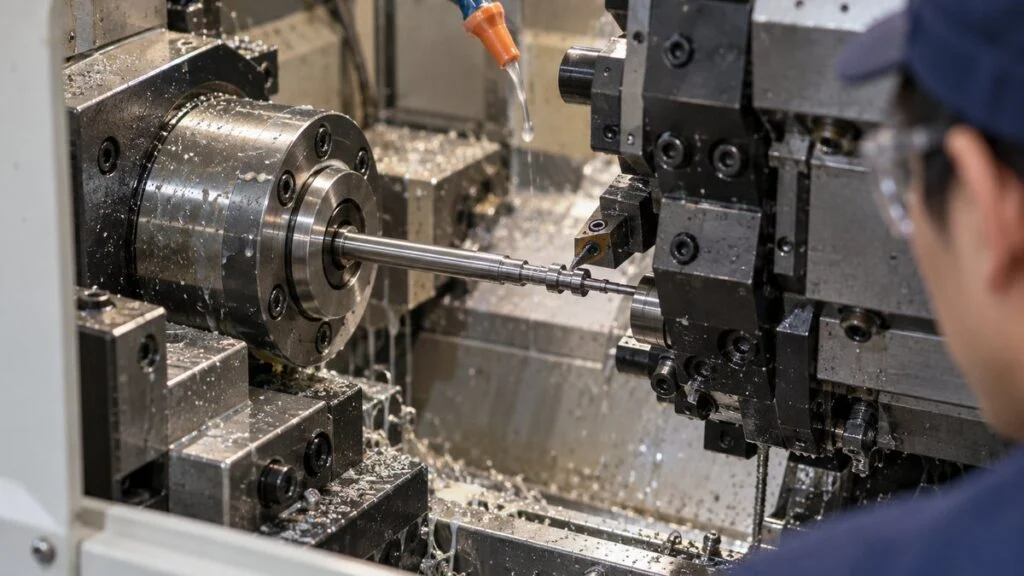
A supplier's equipment list says "Citizen L20 with LFV." A quote for turned pins comes from a shop running "Cincom" and "Miyano" machines. Or your own team is comparing Swiss-type lathes and Citizen is on the shortlist. All three names lead back to one Japanese company: Citizen Machinery, the machine tool arm of the watchmaker Citizen Watch.
The short version: Citizen Machinery builds CNC automatic lathes under two brands. Cincom machines are sliding-headstock (Swiss-type) lathes for slender parts, and Miyano machines are fixed-headstock lathes for larger-diameter parts. Its in-house LFV (low-frequency vibration) cutting breaks chips into short pieces, and two new models announced in October 2026 take on milling-type work that usually goes to a machining center.
This guide covers who the company is, where it operates in the US, India, and Southeast Asia, the Cincom vs. Miyano split, how LFV works, the new models, and recent results. It ends with a checklist, questions to ask, and a sample inquiry email. All figures come from Citizen's published reports, press releases, and trade press, listed under Sources.
Contents
- Citizen Machinery at a Glance
- Where Citizen Operates in the US, India, and Southeast Asia
- From Watch Parts to Automatic Lathes
- Cincom vs. Miyano: Sliding vs. Fixed Headstock
- LFV: Low-Frequency Vibration Cutting
- New High-Spec Models Shown at JIMTOF 2026
- Tool Monitor Plus: Tool Condition From Motor Current
- Business Results: JPY 86.2 Billion, Over 80% Overseas
- What This Means for Buyers and Sourcing Teams
- Limits of This Guide
- FAQ
- Sources
Citizen Machinery at a Glance
Citizen Machinery Co., Ltd. is a wholly owned subsidiary of Citizen Watch Co., Ltd. Its headquarters is in Miyota, Nagano Prefecture, and it has other sites in Tokorozawa (Saitama), Kitakami (Iwate), and Saku (Nagano). It develops, builds, and sells CNC automatic lathes.
A CNC automatic lathe feeds bar stock into the machine, turns it, cuts the finished part off, and repeats the cycle. No one has to load blanks one by one, so the machine can run off thousands of identical parts such as screws, pins, and shafts. That continuous bar-fed cycle, from feeding to cutoff, is what sets it apart from a standard lathe.
Related: Japanese Machine Tool Industry: Builders, Dealers, Service
A dedicated maker of automatic lathes that runs Citizen Watch's machine tool business.
Source: Citizen Machinery company profile, history, and overseas locations pages. Paid-in capital: JPY 2,651.25 million.
Where Citizen Operates in the US, India, and Southeast Asia
If you buy or service a Citizen machine outside Japan, you will usually deal with a local group company rather than the Japanese headquarters. Citizen Machinery's own overseas locations page lists the following bases relevant to readers in the Americas and Asia.
| Region | Company or office | Role listed by Citizen |
|---|---|---|
| United States | Marubeni Citizen-Cincom Inc. (MCC), Allendale, New Jersey | US sales base, set up in 1985 |
| India | Citizen Machinery Technical Center, a division of Citizen Watches (India) Pvt. Ltd. (Bangalore head office, New Delhi branch) | Sales and technical support |
| Thailand | Citizen Machinery Asia Co., Ltd. (CMA), Ayutthaya | Manufacturing base, set up in 2001 |
| Vietnam | Citizen Machinery Vietnam Co., Ltd. (CMV), Hai Phong | Manufacturing base, set up in 2006 |
| Philippines | Citizen Machinery Philippines Inc. (CMP), Batangas | Group company (founded in 2008 as Miyano Philippines) |
| China | Citizen (China) Precision Machinery Co., Ltd. (CCM), Zibo, Shandong | Manufacturing base, with sales branches in Shanghai, Dongguan, Dalian, and Ningbo |
| Taiwan | Cincom Miyano Taiwan Co., Ltd. (CMTW), Taipei | Sales company |
Europe is covered by group companies in Germany, the UK, Italy, France, and Spain. Citizen's locations page also refers customers in the Americas to the regional distributors that MCC works with, listed on the MCC website. Your first contact in the US may therefore be a distributor rather than MCC itself.
From Watch Parts to Automatic Lathes
Citizen Watch says it has built machine tools since 1936, drawing on the skills it developed making small, precise watch parts. Its annual securities report (the Japanese equivalent of a 10-K) gives a different starting point: production began in 1941, when Citizen merged with Nitto Seiki. The year you see depends on the document.
In 1970, Citizen developed the Cincom D16 NC automatic lathe, the origin of today's Cincom brand. In 2011, Citizen Machinery merged its operations with Miyano, a maker of fixed-headstock automatic lathes, and in 2015 the combined company took its current name, Citizen Machinery. The merger joined Citizen's strength in slender parts with Miyano's strength in mid-diameter parts, and that split still defines the product line.
Cincom vs. Miyano: Sliding vs. Fixed Headstock
Automatic lathes come in two basic designs. In a sliding-headstock machine (shujikudai ido-gata, 主軸台移動形), the headstock that grips the bar moves back and forth along the Z axis. In a fixed-headstock machine (shujikudai kotei-gata, 主軸台固定形), the headstock stays put and the tools move. Citizen sells the first type as Cincom and the second as Miyano, so the two brands cover parts from long, slender shafts to short, mid-diameter components.
Sliding-headstock machines, better known in English as Swiss-type lathes, cut right next to a guide bushing that supports the bar. Long, thin parts deflect less as a result. Fixed-headstock machines grip a short length of stock firmly, which suits thicker parts and multi-operation work that combines turning with drilling and grooving.
Part diameter and length decide which brand fits.
Source: Citizen Machinery product information and press release (October 8, 2026).
For a buyer, this means you can give one sales contact your part diameter and length and let them suggest the brand. Citizen Watch's annual report also lists a "global sales strategy for the Miyano brand (mid-size and large machines)" as a priority, so expect a bigger push for Miyano outside Japan.
LFV: Low-Frequency Vibration Cutting
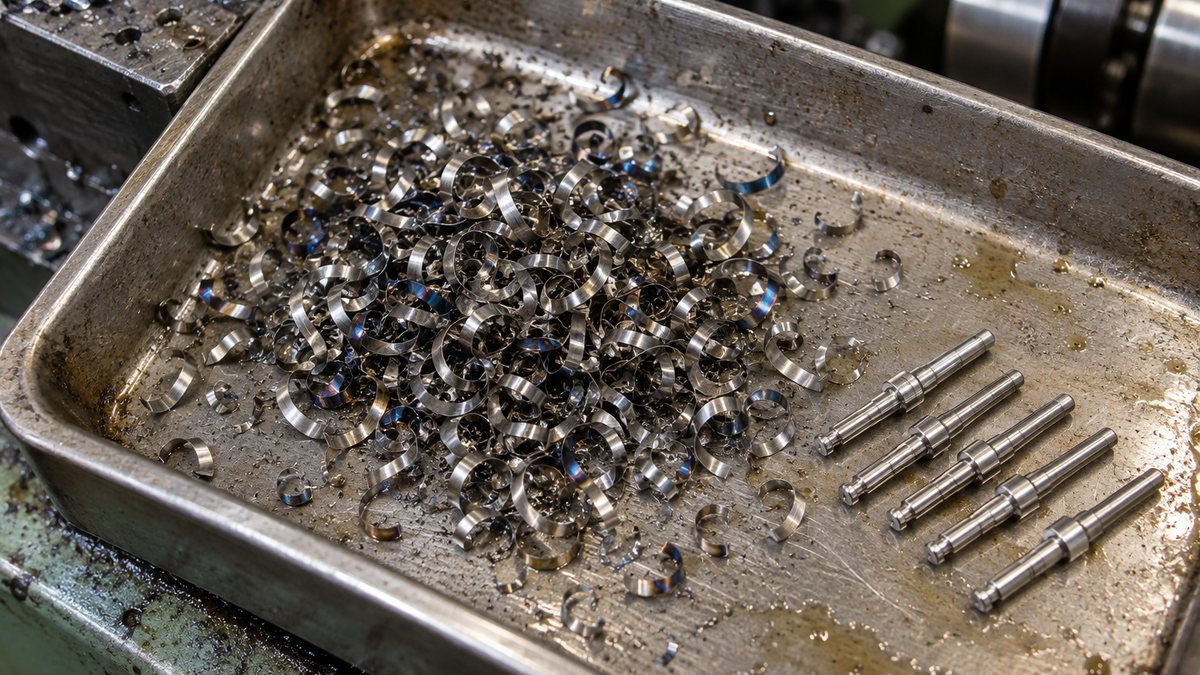
When you turn metal, the chip often comes off the tool as one long ribbon that wraps around the part or the tool. Tangled chips can scratch the finished surface or chip the cutting edge, and they are one of the main reasons a lathe cannot run unattended for long.
Citizen's LFV (low-frequency vibration) cutting vibrates the X and Z servo axes in the cutting direction, in sync with spindle rotation. On each cycle the tool briefly leaves the material and "air cuts." Each air cut breaks the chip, so chips come out in short pieces instead of a continuous string.
The tool vibrates slightly, and the chip breaks at each moment it leaves the material.
Drawn from Citizen Machinery's "LFV technology" page. The vibration is synchronized with spindle rotation.
Citizen lists Inconel, titanium, stainless steel, steel, copper, nylon, and other plastics as materials where LFV helps. To use it, you add two commands, one to start and one to end, to an existing NC program, and the control handles the vibration. You can also switch it on and off line by line.
Citizen first offered LFV on a machine in 2013 and has since added it to more models. According to the company, about 60% of the Cincom L20 machines shipped in Japan carry LFV. Fewer stops to clear chips make night and weekend unattended runs easier, which matters most for shops that are short on operators.
New High-Spec Models Shown at JIMTOF 2026
Citizen Machinery debuts two new models at JIMTOF 2026 (the Japan International Machine Tool Fair, October 26–31, 2026, Tokyo Big Sight): the Cincom L32 high-spec model and the Miyano BNE-65ATC high-spec model. Both combine a B axis (which tilts the tool) with an ATC (automatic tool changer) for simultaneous 5-axis machining. Citizen plans to start taking orders in February 2027.
The goal is to finish angled holes, curved surfaces, and milled features inside the automatic lathe, work that has often needed a machining center or other separate equipment. Cutting out part transfers, setups, and re-positioning is meant to raise productivity through process consolidation, which Japanese shops call kotei shuyaku (工程集約).
Work split between a lathe and a machining center moves onto one automatic lathe.
MC = machining center. Drawn from Citizen's press release (October 8, 2026).
The L32 handles slender parts; the BNE-65ATC handles mid-diameter parts.
Source: Citizen press release (October 8, 2026). Orders are planned to start in February 2027. Specifications, prices, and release dates may change.
Why Citizen Is Moving Into Machining-Center Work
At the October 8 press briefing, president Hideo Ina explained that a machining center needs an operator to mount the workpiece in a fixture. Even where robots handle part of that job, people still tend to step in, and every manual step brings a risk of human error. With an automatic lathe, bar feeding is easy to automate, so part supply stays steady without extra labor. Ina also said customers increasingly invest to solve a specific problem, often a shortage of workers, and more of them are looking at lines that consolidate processes.
Citizen gave one example: a medical device part that took 13 minutes on a small European-made machining center was cut to 8 minutes 20 seconds on the L32 high-spec model. That is a single example for one specific part and comparison. A test cut on your own part is the reliable way to see whether the gain carries over.
What These Machines Will and Will Not Replace
Because automatic lathes cut parts from bar stock, only parts that fit within the bar capacity are candidates: up to 32 mm on the L32 and 65 mm on the BNE-65ATC. Parts cut from large blocks or plate, and large, heavy workpieces, stay on machining centers.
Citizen says demand is growing for small, complex parts with angled holes and curved surfaces in AI, semiconductors, medical, and aerospace. Plants that now split such parts between a lathe and a machining center have the most to gain.
Tool Monitor Plus: Tool Condition From Motor Current
Also on October 8, Citizen Machinery announced Tool Monitor Plus, software that detects tool breakage and wear from motor current during cutting. It calculates several features from the current on each axis and raises an alarm when a value goes above or below thresholds set by learning. Because it watches the lower limit too, it can also flag air cutting, when the tool is not touching the workpiece.
It needs no extra sensors, measuring devices, or PC, and it can be installed on existing compatible machines. Supported machines are the Windows-based Cincom L20 and L32, and the NC option Tool Life Management I is required. Orders open on October 26, 2026, but Citizen will launch it in Japan first and then expand models and regions. Outside Japan, ask your local Citizen office when it will be offered.
Business Results: JPY 86.2 Billion, Over 80% Overseas
Citizen Watch's annual securities report for the fiscal year ended March 31, 2026, shows machine tool segment sales of JPY 86.2 billion, up 16.1%, and operating income of JPY 7.7 billion, up 36.4%. That is an operating margin of about 9%, with profit growing faster than sales. Citizen Machinery and its subsidiaries run most of this segment, so the segment figures are the best public view of the company.
The segment makes up about a quarter of group sales of JPY 346.8 billion. It is the group's second-largest business after watches (JPY 197.0 billion) and ahead of devices (JPY 63.5 billion). By region, customers in Japan account for only JPY 13.5 billion. Japanese sales fell as automotive demand stayed weak, while semiconductor demand in China and medical and aerospace demand in Europe lifted the total.
About 84% of sales are outside Japan, with Asia and Europe almost level.
Source: Citizen Watch annual securities report for the 141st term, revenue from contracts with customers by region (machine tool segment, total JPY 86.3 billion). Rounding means the total does not match the JPY 86.2 billion in the text. Overseas share calculated by MONOSCOPE.
Outlook: JPY 104 Billion Expected
Growth has continued. In April–June 2026, segment sales reached JPY 25.6 billion (up 35.0% year over year) and operating income JPY 3.2 billion (up 112.5%). Semiconductor-related sales rose in Japan as well, and automotive demand showed a gradual recovery.
At the October briefing, Citizen forecast segment sales of JPY 104 billion for the fiscal year ending March 2027, up 20%. That would hit the JPY 100 billion target in its medium-term plan, set for the fiscal year ending March 2028, one year early.
Where the Demand Comes From
Semiconductors lead the growth. In China, demand is strong for the Cincom R series, which mass-produces contact probes, the fine pins that touch chip terminals in semiconductor test equipment. Citizen expects demand related to semiconductor manufacturing and test equipment to keep rising until around 2030. Data center construction for AI is also boosting production of semiconductors, memory, connectors, and server components, along with precision parts such as cooling pumps and pipe fittings. Medical sales are solid in the Americas and Europe, and aerospace is recovering in Europe.
Industries that need large volumes of small precision parts are driving orders.
Sources: Citizen Watch annual securities report (FY ended March 2026), Q1 earnings release for the FY ending March 2027, MONOist (October 13, 2026).
Capacity and Parts Supply
To meet demand, Citizen completed a new building at its Kitakami plant in October 2025, with 5,200 m² (about 56,000 sq ft) of floor space. Moving warehouse and office functions into it freed up production space for Miyano machines. Kitakami's maximum capacity rose about 20%, bringing Citizen Machinery's capacity in Japan to 170 machines a month, with full operation planned from April 2026.
Citizen expects production in the fiscal year ending March 2027 to be 1.53 times the previous year, and its plants are running at full capacity. With the whole industry busy, ball screws, bearings, and linear motion parts are getting harder to source, and some motor-related electrical parts are delayed. Citizen says it is ordering early to secure them. If your schedule is tight, confirm the delivery lead time before you commit.
What This Means for Buyers and Sourcing Teams
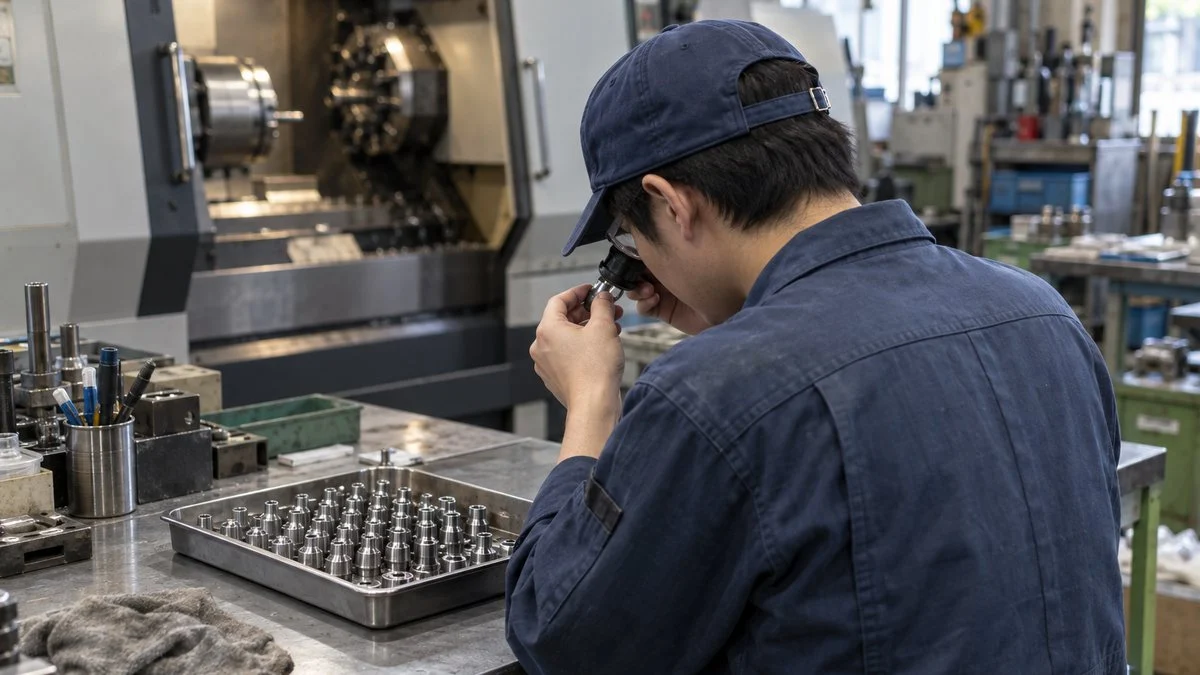
In Japan, Citizen Machinery runs solution centers in eastern Japan, Nagoya, and western Japan, where it handles machining questions as well as machine sales. Outside Japan, start with the local office or distributor listed above. What you need to check depends on whether you are buying a machine or choosing a shop that runs one.
The same public information answers different questions for different readers.
Before You Request a Quote
- Part size: maximum diameter and length, and whether it fits within 32 mm (Cincom L32) or 65 mm (Miyano BNE-65ATC)
- Material: grade and bar form; note any stringy materials such as stainless steel, titanium, Inconel, copper, or plastics where chip control matters
- Features: angled holes, curved surfaces, milled flats or slots, and which of them now go to a second machine
- Current process: machines used today, cycle time per part, and number of setups and transfers
- Volume: annual quantity and lot size
- Unattended running: how many hours you want the machine to run without an operator
- Drawings and samples: part drawings and sample bar stock for a test cut
Reading a Supplier's Equipment List
If you outsource turned parts, the machine list tells you a lot. Cincom and Miyano model names on a shop's list point to a shop set up for high-volume, small-diameter turned parts. Cincom suggests slender shafts and pins, and Miyano suggests mid-diameter parts with several operations. Ask whether those machines have LFV when you need stainless steel, titanium, or other materials where long chips are a problem.
Related: RFQ to a Japanese Manufacturer: The 7-Step Hikiai Process
Questions to Ask Citizen or Its Distributor
- Which office or distributor covers our plant, and who provides service and spare parts locally?
- Does our part fit a Cincom or a Miyano machine better, and which model do you recommend?
- Is LFV available on that model, and which vibration mode suits our material and operation?
- Can you run a test cut on our part and share the cycle time and chip condition?
- When will the L32 and BNE-65ATC high-spec models be available to order in our country?
- Is Tool Monitor Plus available in our country, and does our machine have the required NC option?
- What is the current delivery lead time to our site, and from which plant would the machine ship?
- What training, documentation in English, and acceptance testing are included?
Related: FAT and SAT with Japanese Suppliers: Steps & Free Checklist
Sample Inquiry Email
Use this as a starting point when you contact Citizen's local office or distributor. Replace the bracketed parts.
Subject: Machine inquiry - [part name] on Cincom/Miyano, [plant name, city]

Hello,

We are evaluating automatic lathes for [part name] at
[plant name, city, country].

- Part: [material], max. diameter [mm], length [mm]
- Features: [turning / angled holes / milled flats / curved surfaces]
- Current process: [machines used], cycle time [min/part],
  [number] setups per part
- Volume: [annual quantity], lot size [quantity]
- Goal: [shorter cycle time / fewer setups / unattended running]

Could you recommend a suitable Cincom or Miyano model, tell us
whether LFV is available on it, and arrange a test cut on our part?
Please also let us know the current lead time to our site.

We can send drawings and [quantity] bars of sample material.

Best regards,
[Name], [Title]
[Company], [Phone]
Limits of This Guide
- Specifications for the two high-spec models come from the October 8, 2026, press release. Orders start in February 2027, and specs, prices, and release dates may change.
- The 13-minute to 8-minute-20-second example is a single case reported by Citizen. Results on your part will depend on the part and conditions.
- Financial figures cover the fiscal year ended March 2026 and April–June 2026, in Japanese yen as reported. The JPY 104 billion figure is a forecast.
- Product availability, options, and support vary by country. Confirm them with the Citizen office or distributor that covers your site.
- This guide does not compare Citizen with other automatic lathe makers on price or performance.
FAQ
Is Citizen Machinery part of Citizen Watch?
Yes. Citizen Machinery is a wholly owned subsidiary of Citizen Watch and runs the group's machine tool business. Its results appear in Citizen Watch's financial reports as the machine tool segment.
What is the difference between Citizen Cincom and Miyano?
Cincom machines are sliding-headstock (Swiss-type) automatic lathes for slender, long parts such as shafts and pins. Miyano machines are fixed-headstock automatic lathes for mid-diameter, shorter parts with multiple operations. The Miyano brand came from Miyano, which merged its operations with Citizen Machinery in 2011.
What is LFV on a Citizen lathe?
LFV stands for low-frequency vibration cutting. The servo axes vibrate in sync with spindle rotation so the tool briefly leaves the material and breaks the chip. It helps with stringy materials such as stainless steel, titanium, Inconel, copper, and plastics, and you turn it on with start and end commands in the NC program.
When can I order the new Cincom L32 high-spec model?
Citizen plans to start taking orders for the Cincom L32 and Miyano BNE-65ATC high-spec models in February 2027. Ask your local office when they will be offered in your country.
Does Citizen Machinery have offices in India and Southeast Asia?
Yes. In India, Citizen Machinery Technical Center operates as a division of Citizen Watches (India) Pvt. Ltd., with a head office in Bangalore and a branch in New Delhi. In Southeast Asia, Citizen has manufacturing bases in Thailand and Vietnam and a group company in the Philippines.
Sources
- New models: Citizen Watch press release on the Cincom L32 and Miyano BNE-65ATC high-spec models (October 8, 2026) (Japanese)
- Tool Monitor Plus: Citizen Watch press release on Tool Monitor Plus (October 8, 2026) (Japanese)
- Press briefing, forecast, demand, and parts supply: MONOist, report on Citizen Machinery's growth strategy (October 13, 2026) (Japanese)
- Results, regional sales, segment strategy, and history (1941): Citizen Watch, annual securities report for the 141st term (April 2025–March 2026) (Japanese)
- April–June 2026 results: Citizen Watch, Q1 earnings release for the fiscal year ending March 2027 (August 14, 2026) (Japanese)
- Machine tool production since 1936: Citizen Watch, "Group Strengths" (Japanese)
- Company profile, history, and locations: Citizen Machinery company profile, history, and overseas locations (Japanese)
- Products and LFV: Citizen Machinery product information and "LFV technology" (Japanese)
- US distributors: Marubeni Citizen-Cincom Inc. (MCC)
- Kitakami plant expansion: MONOist (October 10, 2025) (Japanese)
Original article in JapaneseThis guide is adapted from a MONOSCOPE article written for readers in Japan: シチズンマシナリーとは?自動旋盤の強みとマシニング領域への拡大
About the editor
 MONOSCOPE EditorFOUNDER & EDITOR
Spent about ten years at a plant equipment maker and a plant engineering company, proposing, designing, and commissioning equipment, then moved into web marketing. Now a web consultant for B2B manufacturers, helping them explain their products and technology. Licensed in Japan as an Energy Manager and a Third-Class Chief Electrical Engineer.
Has run an engineering blog since 2017 (500+ articles) and a Japanese YouTube channel with about 20,000 subscribers. Each English guide is written from the Japanese shop-floor point of view and checked against the cited standards.