Risk Assessment in Japanese Plants vs. JHA, HSE, ISO 12100
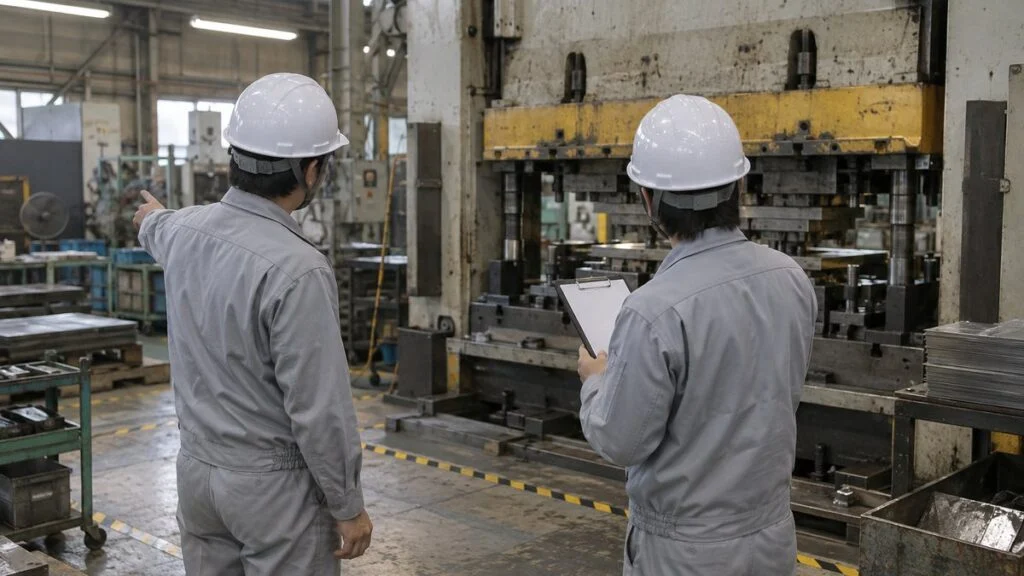
Your Japanese parent company or customer asks for a "risk assessment" before a new line starts up. The template that arrives does not look like the Job Hazard Analysis (JHA) your plant already uses. It has columns for severity and likelihood, a 4×4 matrix, a "risk before measures" and "risk after measures" column, and a note that the work must not start until the measures are in place. People on the Japanese side often just call it RA.
That template comes from a national guideline that Japan's Ministry of Health, Labour and Welfare (MHLW) issued in 2006. This article explains how Japanese plants run risk assessment under that guideline, step by step, and compares it with what English-speaking readers usually know: OSHA's JHA/JSA in the US, the UK Health and Safety Executive (HSE) five steps, and ISO 12100 for machinery design. It ends with questions to ask the Japanese side before you fill in their sheet.
This guide describes methods and documents. It is not a work procedure. Your plant's safety staff and the laws that apply where you work decide what you actually do.
Contents
- What Japanese Plants Mean by "Risk Assessment"
- Japanese Risk Assessment vs. JHA, UK HSE, and ISO 12100
- When and by Whom It Is Done
- The Six Steps of a Japanese Risk Assessment
- Steps 1–2: Prepare and Identify Hazards
- Step 3: Estimate the Risk
- Steps 4–5: Set Priorities and Reduce the Risk
- Step 6: Record, Inform, and Review
- Why Risk Assessment Becomes a Formality
- Quick Reference: Terms on a Japanese Risk Assessment Sheet
- Questions to Ask Before You Fill In a Japanese RA Sheet
- Limits of This Guide
- Summary
- FAQ
What Japanese Plants Mean by "Risk Assessment"
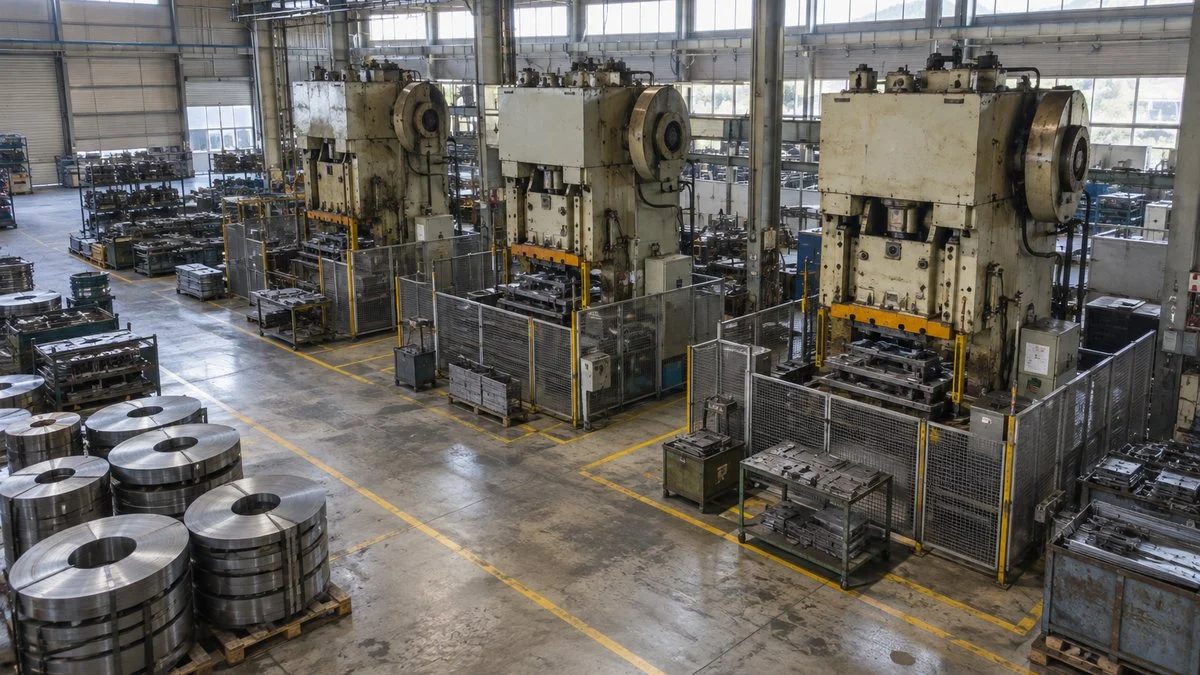
In Japan, risk assessment means identifying the hazards in a workplace, estimating each risk from how severe the injury or illness could be and how likely it is, and then reducing the risks in order of priority. The legal term is kiken-sei mata wa yugai-sei to no chosa (危険性又は有害性等の調査), "investigation of danger or harm." MHLW's commentary states that this means the same thing as what the ILO and others call risk assessment.
Japanese safety law sets minimum standards that every employer must meet. Risk assessment sits on top of those standards. It is the employer's own search for hazards that fit its specific equipment, materials, and work methods.
How strong the duty is depends on the hazard:
- Machines and work in general: Article 28-2 of the Industrial Safety and Health Act makes risk assessment an "effort" duty, meaning employers must try to do it, but it is not a strict obligation. For hazards other than chemicals, the duty covers employers in manufacturing and certain other industries.
- Chemicals that require labels or a safety data sheet (SDS): Article 57-3 makes risk assessment mandatory.
Both are called risk assessment, but the legal basis and the strength of the duty differ.
Details for non-chemical hazards are in MHLW's guideline on investigating danger or harm. Machinery has its own guideline, MHLW's comprehensive safety standards for machinery.
According to MHLW, Japan's manufacturing sector had 115 work-related deaths in 2025 and 26,371 workers who were killed or lost 4 or more days of work. The most common accident type was being caught in or between machinery (hasamare / makikomare), with 5,992 cases. It also caused 47 deaths, about 40% of all manufacturing deaths.
Caught-in accidents are a good fit for risk assessment. If you list in advance where on a machine people reach in, and during which task, there is a lot you can fix before anyone gets hurt.
These laws apply to workplaces in Japan. At a plant in the US, India, or Southeast Asia, local law applies. A Japanese parent may still ask you to use its format as a company standard.
Japanese Risk Assessment vs. JHA, UK HSE, and ISO 12100
All four methods find hazards before someone is hurt and rank them so the worst get fixed first. They differ in legal status, in what they analyze, and in who uses them. The table below compares them based on the documents named in the first row.
| Japan (MHLW guideline) | US (OSHA JHA/JSA) | UK (HSE five steps) | ISO 12100 (machinery) | |
|---|---|---|---|---|
| Reference document | MHLW guideline on investigating danger or harm (2006) and its commentary | OSHA 3071, Job Hazard Analysis (2002, revised) | Management of Health and Safety at Work Regulations 1999, regulation 3; HSE guidance | ISO 12100:2010 (Japanese version: JIS B 9700:2013, identical) |
| Legal status | Effort duty for machines and work in manufacturing; mandatory for listed chemicals | A guidance booklet. OSHA notes that compliance with OSHA standards for your industry is mandatory | Legal duty to make a "suitable and sufficient" assessment | A design standard for machine builders |
| Who uses it | The employer, for its own workplace | The employer, with the workers who do the job | The employer | The machine designer and manufacturer |
| Unit of analysis | Tasks and equipment in the workplace, including non-routine work | One job, broken down into steps | The workplace and its activities | One machine over its life cycle |
| How risk is rated | Severity × likelihood (matrix, scoring, or risk graph) | Jobs with the most likely and most severe hazards are analyzed first | How likely harm is and how serious it could be | Severity of harm and probability of occurrence |
| Order of controls | Legal requirements first, then inherent measures → engineering → administrative → PPE | Engineering (including elimination and substitution) → administrative → PPE | Remove the hazard if possible; otherwise reduce the risk as far as reasonably practicable | Inherently safe design → safeguarding and complementary measures → information for use |
| Records | Five items, plus date and assessor; keep until the next assessment | A written analysis per job | Significant findings must be recorded if you employ 5 or more people | Residual risks go into the information for use (manual) |
For broader context, NIOSH's hierarchy of controls lists five levels, from most to least effective: elimination, substitution, engineering controls, administrative controls, and PPE. The Japanese order puts elimination and substitution together under "inherent measures," so the two lists line up.
If you already run JHAs, these points of the Japanese method will feel different:
- Triggered by change, not the calendar. The guideline ties assessments to new or changed equipment, materials, and procedures, and expects the risk reduction to be finished before the work starts.
- Legal items come first. Anything the law requires is done regardless of the risk score.
- Worst credible severity. Severity is rated on the most serious injury that could reasonably happen, not on the injuries you have seen so far.
- A "before and after" score. The sheet records the risk after the measures, and that residual risk drives the next round.
- The foreman (shokucho) does the core work. Safety staff run the process, but the people closest to the job identify hazards and propose fixes.
- The machine builder's residual risks are an input. For new equipment, the guideline asks the user to get the maker's own risk assessment results.
The Japanese guideline also says employers should take measures as high in the order as possible, unless the cost would be grossly out of proportion to the benefit and the measure clearly unreasonable to require. Readers who know the UK "reasonably practicable" test will recognize a comparable idea, though the two are written under different laws.
How It Differs from KY, Hiyari Hatto, and FMEA
Japanese plants run several activities that look similar. Mixing them up leads to claims like "we do KY, so we don't need risk assessment." Each one has its own role.
They serve different purposes at different times, so plants combine them rather than replace one with another.
Hazards found in KY or near-miss reports are more likely to lead to equipment fixes when they are fed into risk assessment.
For the daily routine, see our guide to kiken yochi (KY) training, which also compares KY with JHA. For close-call reporting, see hiyari hatto near-miss reports. FMEA also ranks items by severity and frequency, but it looks at product and process failures; see DRBFM vs. FMEA. A simple way to keep them apart: risk assessment follows the paths by which a person gets hurt.
When and by Whom It Is Done
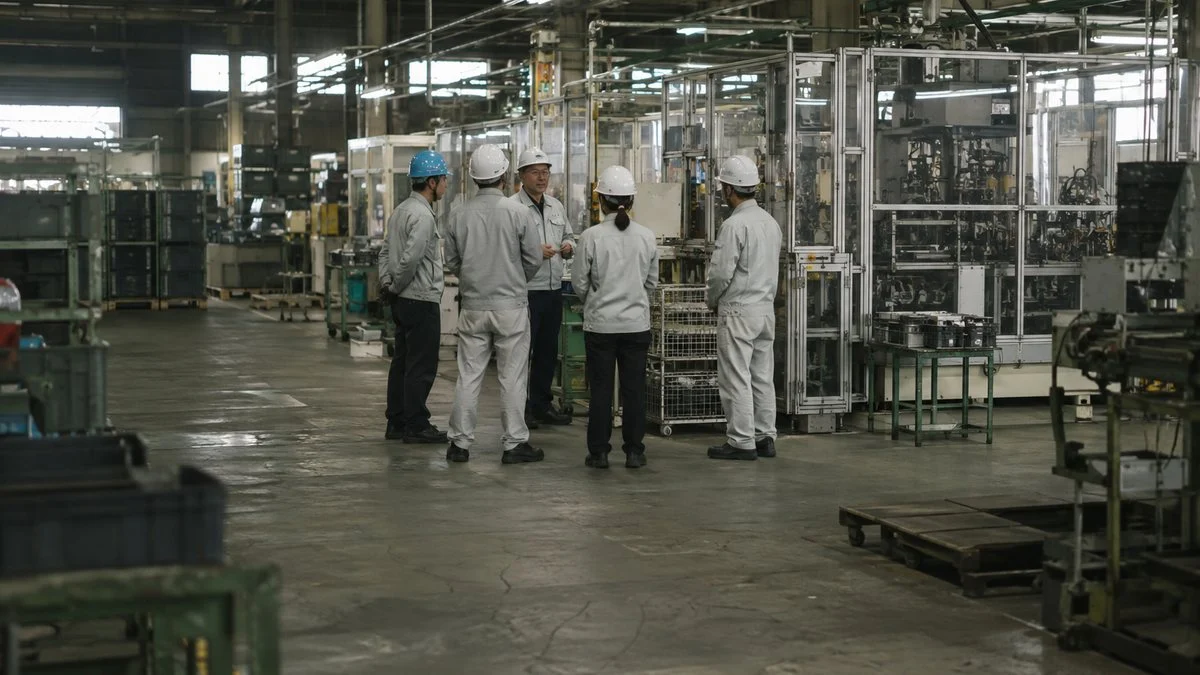
Many people think of risk assessment as a once-a-year exercise. The guideline asks for it whenever the risks in the workplace change, and it also sets out who leads and who does the analysis.
When to Carry It Out
The guideline lists these occasions:
- When a building is constructed, moved, modified, or demolished
- When new equipment is introduced or existing equipment is changed
- When new raw materials are introduced or existing ones are changed
- When work methods or procedures are introduced or changed
- When an accident shows that an earlier assessment had gaps
- When time has passed since the last assessment and equipment has aged, workers have changed, or new knowledge has built up
For new equipment and changed procedures, the key point is to finish the risk reduction measures before the work starts. The guideline adds that the assessment should ideally be done at the planning stage. Once a machine is installed, the fixes tend to be add-on covers and warning signs.
When production engineers (seisan gijutsu), who plan new lines and equipment upgrades, join the assessment from the concept stage, there is a better chance of designing a hazard out instead of guarding it later. See seisan gijutsu (production engineering) explained.
Who Does What
The guideline splits the roles: the head of the site oversees the whole effort, safety managers run it, and foremen (shokucho) who know the work best do the analysis. An assessment done at a desk by people who do not know the job tends to miss what really happens.
Three layers (oversight, management, and analysis), with workers and specialists taking part.
The guideline also requires employers to train the people involved.
Top management is involved because the results often call for costly decisions, such as modifying equipment or changing how work is done. In Japan, the plant manager (kojo-cho) often holds the legal role of general safety and health manager; see the plant manager's role in a Japanese plant.
The Six Steps of a Japanese Risk Assessment
The guideline defines four actions: identify hazards, estimate risks, set priorities and plan risk reduction measures, and carry out the measures, plus keeping records. In practice there is preparation before identification and a review after the measures, so this guide arranges the work into six steps.
One cycle ends only after you estimate the risk again once the measures are in place.
This guide arranges the actions and records in MHLW's guideline into six practical steps.
Steps 1–2: Prepare and Identify Hazards
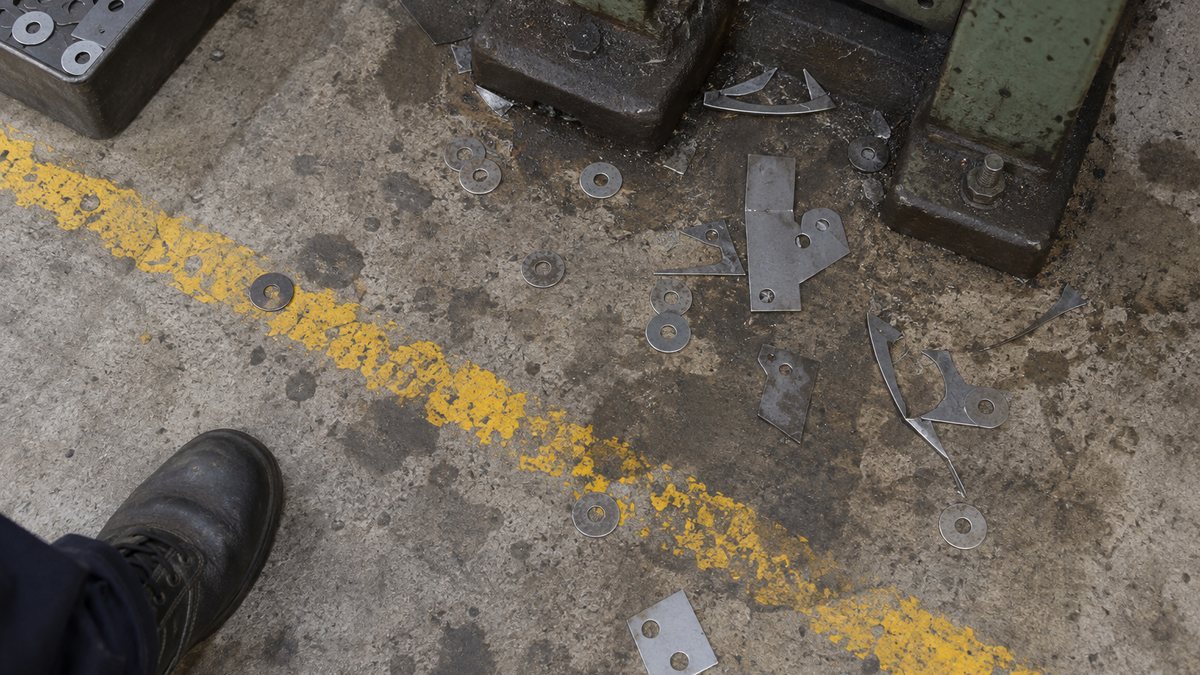
These first two steps decide most of the quality of the assessment. A hazard you miss never gets estimated or fixed.
Choose the Tasks to Assess
Assessing every motion in a workplace would be an enormous job. The guideline focuses on injuries and illnesses that are "reasonably foreseeable," such as tasks where accidents or dangerous events have happened before. Obviously minor items, such as walking along a flat aisle, can be left out.
"Minor" here means an injury that would not need a doctor's treatment. A task does not count as minor just because past injuries happened to be light.
Gather Information
The guideline asks employers to collect and use materials such as these before the assessment:
- Work standards, work procedures, and operating instructions
- Equipment specifications and manuals; SDSs for chemicals
- The surroundings of the work, such as the equipment layout
- Workplace environment measurements and the results of special health examinations
- Plans for work done alongside contractors in the same area
- Accident cases from inside and outside the company, near misses, trouble records, and tasks that workers feel uneasy about
Non-routine work is easy to miss. The implementation notice for the guideline also lists maintenance and repair, response to foreseeable emergencies, and changeovers as areas to gather information on. Tasks that assume the machine is stopped are where people are most likely to end up past the safety devices. Bringing in maintenance staff reduces gaps; see hozen (equipment maintenance) in Japanese plants.
Related: Lockout/Tagout in Japan: Japanese Law vs. OSHA 1910.147
When you buy new equipment, the guideline says to ask the equipment maker for its own risk assessment from the design and manufacturing stage and to obtain the results. The residual risks listed in the manual, meaning hazards the maker could not fully design out, are the starting point for your own assessment.
Break Down the Task and Write Out Each Hazard
Split the task along the work procedure, for example "load the material," "start the machine," "remove the part," and "clear a jam." Then write out the hazards in each step using categories you set in advance.
The guideline calls for risks to be estimated separately for the hazard types below. Using them as a checklist keeps the team from looking only at machine hazards:
- Physical action, such as being caught in machinery or falling from height
- Physical effects of chemicals, such as explosion and fire
- Harmful effects of chemicals, such as poisoning
- Harmful effects of physical agents, such as vibration disorders
The trick is to write what happens, how it happens, and what injury results as one sentence. A two-word note like "pinch hazard" leaves the people who estimate the risk and plan the measures guessing which situation you meant.
Write the situation, cause, and result, and the estimate and the measures become concrete.
Watch out for the press
Danger underfoot
Solvent inhalation
You can't tell which task or which moment is dangerousWhile adjusting the workpiece, a hand reaches between the dies from the side, the slide comes down, and a finger is crushed
A worker trips on scrap scattered around the base of the press, falls, and hits a hip or arm
While opening the wash tank lid to take out parts, a worker inhales solvent vapor and gets a headache or dizziness
The press and fall examples are based on the sample records in MHLW's commentary on the guideline.
Step 3: Estimate the Risk
For each hazard, combine the severity of the possible injury or illness with its likelihood to estimate how big the risk is. The goal of scoring is not precision. It is to compare hazards with each other so you can decide which to fix first.
Severity and Likelihood Levels
MHLW's commentary gives an example that puts severity on four levels, based mainly on lost work time, so that different kinds of injuries can be compared on one scale:
- Fatal: death, or permanent damage to part of the body
- Serious: 1 month or more of lost time, or many people injured at once
- Moderate: less than 1 month of lost time, or several people injured at once
- Minor: no lost time, or about the level of a scratch
Likelihood also has four levels, based on how often and how long people are near the hazard and how easily they can avoid it:
- Very likely: routine work done for long periods; hard to avoid
- Fairly likely: routine work; avoidable
- Possible: non-routine work; avoidable
- Almost none: rare work; avoidable
Three Ways to Estimate
The guideline gives three example methods:
- Matrix method: put severity and likelihood on the two axes of a table and read the risk assigned to the cell where they meet
- Scoring method: give severity and likelihood a score each, then add or multiply them
- Risk graph: branch through severity, how often people are exposed to the hazard, and whether it can be avoided
For a site that is new to risk assessment, the matrix method is easy to understand and to make a habit. The commentary's scoring example gives severity 30, 20, 7, or 2 points and likelihood 20, 15, 7, or 2 points. A total of 30 or more is "high," 10–29 is "medium," and under 10 is "low."
The cell where likelihood (rows) meets severity (columns) gives the risk level and priority.
Example from Annex 4 of MHLW's commentary on the guideline. The outlined cell is severity "Serious" × likelihood "Fairly likely": risk 4, high priority.
The levels and scores are examples, and each workplace can set its own. To keep ratings consistent between assessors, though, put the level definitions and worked examples on one page and share it with everyone. If your plant uses a different matrix, such as a 5×5 one in an existing JHA program, ask the Japanese side whether you should convert to theirs or whether yours is acceptable.
Common Mistakes in Estimation
The guideline asks you to rate severity on the most serious injury that could happen in the worst case, not on injuries that actually happened before. If a task has only caused bruised fingertips so far, but could cause an amputation when conditions line up, rate it as an amputation.
The second mistake is trusting existing safety devices too much. The guideline also asks you to consider:
- How reliable the safety devices are and how well they are maintained
- The chance that people will defeat or ignore the safety devices
- Foreseeable misuse, such as skipped steps or operating errors
For example, a press may have a light curtain, but if the machine's layout lets operators reach in from outside the protected zone to keep production moving, the risk on that path is still there. Added factors such as worker fatigue are also considered at the identification stage.
Steps 4–5: Set Priorities and Reduce the Risk
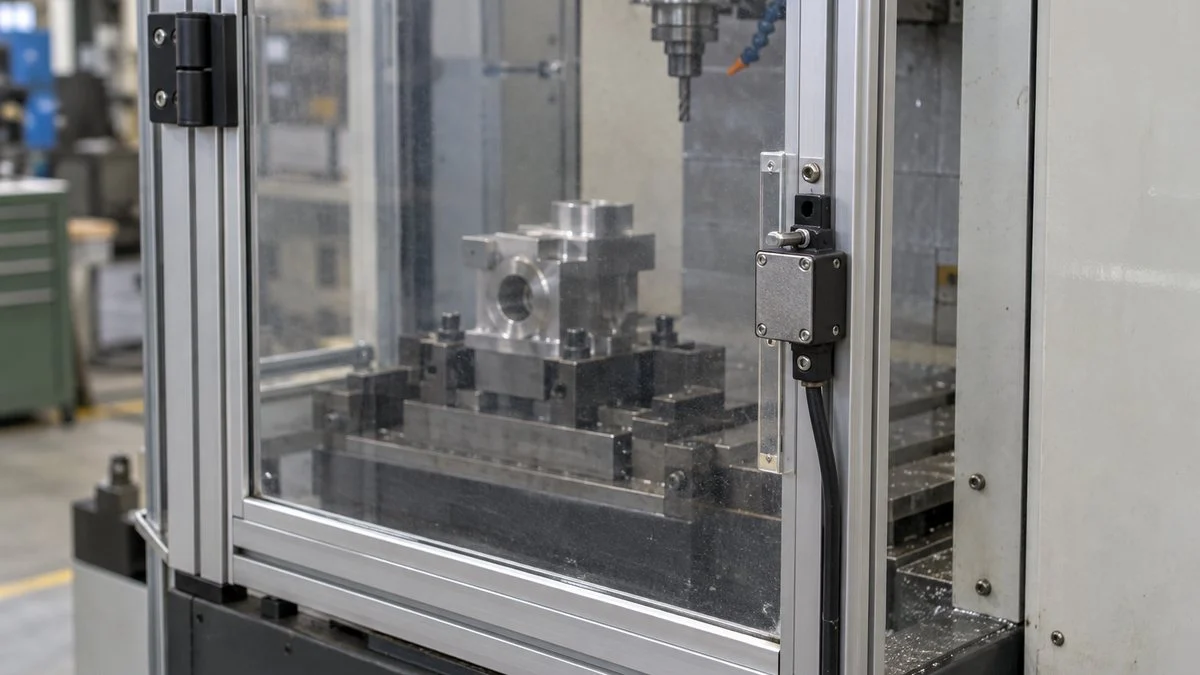
Once the risks are estimated, plan measures starting with the highest ones. The most important idea here is that the types of measures have an order of priority.
The Order of Risk Reduction Measures
The guideline requires that measures required by law be carried out first. It then sets the order below for planning further measures. The higher levels work without relying on people's attention, so they are more effective and last longer.
Consider them from the top down, and choose measures as high on the list as you can.
MHLW's commentary says this order follows the same idea as the ILO guidelines on occupational safety and health management systems. For machinery design, the closest equivalent is the three-step method in ISO 12100 (JIS B 9700): inherently safe design, safeguarding and complementary protective measures, then information for use.
A common pattern on the shop floor is that measures drift toward training, reminders, and PPE, because they cost little time or money. The guideline asks for the highest-level measure possible, except where its burden would be grossly out of proportion to the effect.
According to the implementation notice, when death or serious permanent disability is likely, the measures should be taken even if they are expensive. The notice also asks that risks be reduced to a level that protects older workers, people who do not fully understand Japanese, and inexperienced workers. At a plant outside Japan, the same idea applies to workers who do not read the language the procedures are written in.
Interim Measures When a Fix Takes Time
The most effective measures, such as modifying equipment, usually take the longest. For risks that could cause death, permanent disability, or serious illness, the guideline says that if the proper measure will take time, interim measures must be taken right away.
One example is marking off the work area to restrict entry until the modification is done. Which interim measure is adequate depends on the machine and the hazard, and the site's safety staff decide. Waiting "until the budget is approved" means continuing to work with the risk still high.
Estimate the Risk Again After the Measures
After the measures are in place, estimate the risk again on the same scale. The risk that remains is called residual risk (zanryu risuku). The implementation notice says the record of measures taken should include this post-measure estimate.
If the re-estimated risk is still not acceptable, add further measures to the next improvement round. Not stopping at a "done" checkmark is what keeps the cycle running.
Step 6: Record, Inform, and Review
The guideline requires five items to be recorded. The implementation notice adds the date and the name of the person who did the assessment, and asks that records be kept until the next assessment.
- The tasks that were assessed
- The hazards identified
- The estimated risks
- The priority set for each risk reduction measure
- The measures taken (including the post-measure risk estimate)
There is no fixed form, but MHLW's commentary includes a sample record for press work. The figure below arranges that sample so it is easier to read.
Put the risk before and after the measures side by side, so one row shows what to do next.
| Task (equipment) | Hazard and possible accident | Existing measures | Risk before | Risk reduction measure | Risk after | Next step |
|---|---|---|---|---|---|---|
| Punching (Press No. 1) | The press has two-hand controls and a light curtain, but a helper's hand can enter from the side and be caught in the dies | Two-hand control; light curtain | Serious × Possible Medium (3) | Install covers on both sides of the press | Serious × Almost none Medium (3) | Install a cover at the rear as well |
| Punching (Press No. 2) | A worker trips on scrap scattered around the base, falls, and bruises a hip or injures an arm | Housekeeping training | Moderate × Fairly likely Medium (3) | Enforce housekeeping | Moderate × Almost none Low (1) | Check regularly, for example at the morning meeting (note: modify the die so scrap does not scatter) |
Based on the sample in Annex 5 of MHLW's commentary on the guideline. A real form also records the assessment date, the assessor, and the date the measures were carried out.
In the Press No. 2 row, housekeeping lowers the likelihood, and the note names an engineering fix, modifying the die, as the next move. A good record shows this flow: administrative controls that lowered the risk first are later replaced by equipment-side fixes.
For chemical risk assessment, informing workers of the results is mandatory. Since April 2023, employers must also keep records until the next assessment (3 years if the next one comes within 3 years). Results are shared by posting them at the workplace or handing out documents, so workers can check them at any time.
When to Review
Review the record when:
- Equipment, procedures, or materials change
- An accident or near miss happens
- Time has passed and people or equipment have changed
Start each review on the floor by checking whether the post-measure risk really went down. That keeps the review from becoming a paper update.
Why Risk Assessment Becomes a Formality
The steps themselves are not difficult. Where risk assessment fails, the problem is usually how it is run, not the method. Four failures come up often.
Filling In the Form Becomes the Goal
When completing the form is the goal, the work turns into copying last year's sheet in the office. Do the assessment on the floor while watching the actual work. Just asking operators "Which moment scares you most?" can reveal hazards that are not on any document.
Every Measure Is a Reminder or PPE
If the measures column is full of "be careful," "train workers," and "wear gloves," the order of priority has been lost. One fix is a rule that each proposal must record whether the team considered, first, eliminating the task and, second, stopping the hazard on the machine side. That builds the habit of thinking about higher-level measures.
Ratings Are Too Lenient and Everything Is "Low"
Low scores usually come from assuming the safety devices are always used correctly, or from rating severity on past injuries. Write into the rating criteria that severity is based on the worst case, and that defeated safety devices and skipped steps must be treated as possible.
It Was Done Once and Never Updated
The more often a plant changes equipment and setups, the faster old records drift from reality. Add a risk assessment field to the request forms for new equipment and procedure changes, and build it into the management-of-change process, so no change skips it. Some risks also vary by season, such as summer heat, and need a yearly review.
Quick Reference: Terms on a Japanese Risk Assessment Sheet
| Japanese | Romaji | English |
|---|---|---|
| リスクアセスメント (RA) | risuku asesumento | Risk assessment |
| 危険性又は有害性 | kiken-sei mata wa yugai-sei | Hazard (danger or harm) |
| 重篤度 | jutokudo | Severity |
| 発生の可能性 (の度合) | hassei no kanosei | Likelihood |
| リスクの見積り | risuku no mitsumori | Risk estimation |
| 優先度 | yusendo | Priority |
| リスク低減措置 | risuku teigen sochi | Risk reduction measure |
| 本質的対策 | honshitsu-teki taisaku | Inherent measure (elimination, substitution) |
| 工学的対策 | kogaku-teki taisaku | Engineering control |
| 管理的対策 | kanri-teki taisaku | Administrative control |
| 個人用保護具 | kojin-yo hogogu | Personal protective equipment (PPE) |
| 残留リスク | zanryu risuku | Residual risk |
| 非定常作業 | hiteijo sagyo | Non-routine work |
| 暫定措置 | zantei sochi | Interim measure |
| 職長 | shokucho | Foreman / first-line supervisor |
| 安全管理者 | anzen kanrisha | Safety manager (a legal role in Japan) |
Questions to Ask Before You Fill In a Japanese RA Sheet
When a Japanese parent or customer asks for a risk assessment, these questions help you agree on what they expect before you start:
- Scope: Which equipment, tasks, and shifts are in scope? Are non-routine tasks (maintenance, changeovers, jam clearing, cleaning) included?
- Format: Must we use your sheet and your 4×4 matrix, or can we submit our existing JHA or local-format assessment? If you need yours, do you have a conversion rule from our scale?
- Criteria: Can you send your severity and likelihood definitions, with worked examples, so our ratings match yours?
- Timing: Must the measures be in place before production starts, or before a certain milestone (installation, trial run, start of mass production)?
- Equipment maker input: For equipment from Japan, can the maker provide its risk assessment and the list of residual risks in English?
- Legal basis: Is this a company standard, or is it tied to a Japanese legal requirement? Which local laws and standards should we follow where they differ?
- Approval: Who reviews and approves the sheet on your side, and who signs on ours?
- Records: In what language, and for how long, should we keep the records? Should the post-measure risk and next steps be included?
- Review triggers: Which changes (equipment, materials, procedures, people) require us to update and resubmit?
A short request you can adapt:
"Before we start the risk assessment for [line/equipment], could you send your RA template, your definitions for severity and likelihood with examples, and the maker's list of residual risks for [equipment]? Please also let us know whether the measures must be completed before the trial run or before mass production, and who will approve the sheet on your side."
Limits of This Guide
- This article summarizes the MHLW guideline, its commentary, and English-language reference documents. It is not legal advice and not a work procedure.
- Japanese law applies to workplaces in Japan. At plants in other countries, local occupational safety law decides what is required; the Japanese method may be a company standard on top of it.
- The matrix, scores, and severity levels are MHLW examples. Each company, and often each site, sets its own.
- The comparison with OSHA, HSE, and ISO 12100 is a high-level summary. Specific OSHA standards, UK regulations, and machinery standards add their own requirements; check them with your safety and compliance staff.
- Chemical risk assessment in Japan has its own rules and methods, which this guide only touches on.
Summary
- Japanese risk assessment lists hazards, rates them by severity and likelihood, and fixes them in order of risk
- For machines and work, it is an "effort" duty under Article 28-2 of the Industrial Safety and Health Act; for listed chemicals, it is mandatory under Article 57-3
- When equipment, materials, or procedures change, the risk reduction should be finished before the work starts
- Measures follow the order inherent → engineering → administrative → PPE, after legal requirements, and should be as high in that order as possible
- The risk is estimated again after the measures, recorded, and reviewed after every change or accident
- Compared with a JHA, the Japanese method is triggered by change, rates worst-case severity, and records risk before and after measures
Risk assessment is not only the safety staff's job. In Japanese plants it runs through everyone who works with equipment, from production engineering and maintenance to the plant manager.
FAQ
Is risk assessment mandatory in Japan?
It depends on the hazard. For chemicals that require labels or an SDS, it is mandatory under Article 57-3 of the Industrial Safety and Health Act. For machines and work in general, Article 28-2 makes it an "effort" duty for manufacturing and certain other industries. Laws that require specific safety measures apply in either case.
What is the difference between a risk assessment and a JHA?
A JHA, as described in OSHA 3071, breaks one job into steps and lists the hazards and controls for each. The Japanese method covers tasks and equipment across the workplace, rates each risk with a severity × likelihood matrix or scores, and records the risk before and after measures. The two can be used together.
What risk matrix do Japanese companies use?
MHLW's commentary gives a 4×4 example: four severity levels (fatal, serious, moderate, minor) and four likelihood levels, mapped to risk 1–5 and three priority bands. Companies may set their own levels, so ask for the actual definitions before you rate anything.
How does ISO 12100 relate to the Japanese method?
ISO 12100 is for machine designers, and Japan publishes it as JIS B 9700. Its three-step method (inherently safe design, safeguarding and complementary measures, information for use) is close to the Japanese order of measures. The residual risks listed in the equipment maker's manual are a starting point for the user's own risk assessment.
How often should a risk assessment be reviewed?
The guideline ties reviews to events rather than a fixed interval: changes to equipment, materials, or procedures, accidents that reveal gaps, and the passage of time as equipment ages and people change.
Sources
- MHLW, guidelines on investigating danger or harm (Public Notice No. 1, March 10, 2006) (Japanese)
- MHLW Safety Division, commentary on the guidelines, with sample matrices, records, and the implementation notice (Japanese)
- MHLW, occupational accidents in 2025 and final figures for 2025 (Japanese)
- MHLW, Q&A on chemical risk assessment (Japanese)
- Ordinance on Industrial Safety and Health, Article 24-11 (industries covered) (Japanese)
- MHLW, guidelines on comprehensive safety standards for machinery (2007) (Japanese)
- JIS B 9700:2013 Safety of machinery – General principles for design – Risk assessment and risk reduction (identical to ISO 12100:2010; Japanese)
- US Occupational Safety and Health Administration (OSHA), Job Hazard Analysis (OSHA 3071)
- NIOSH, About Hierarchy of Controls
- UK Health and Safety Executive, Managing risks and risk assessment at work
- UK legislation, Management of Health and Safety at Work Regulations 1999, regulation 3
Original article in JapaneseThis guide is adapted from a MONOSCOPE article written for readers in Japan: 工場のリスクアセスメントのやり方|洗い出しから低減措置まで6ステップ
About the editor
 MONOSCOPE EditorFOUNDER & EDITOR
Spent about ten years at a plant equipment maker and a plant engineering company, proposing, designing, and commissioning equipment, then moved into web marketing. Now a web consultant for B2B manufacturers, helping them explain their products and technology. Licensed in Japan as an Energy Manager and a Third-Class Chief Electrical Engineer.
Has run an engineering blog since 2017 (500+ articles) and a Japanese YouTube channel with about 20,000 subscribers. Each English guide is written from the Japanese shop-floor point of view and checked against the cited standards.