TBM vs CBM: Time-Based vs Condition-Based Maintenance
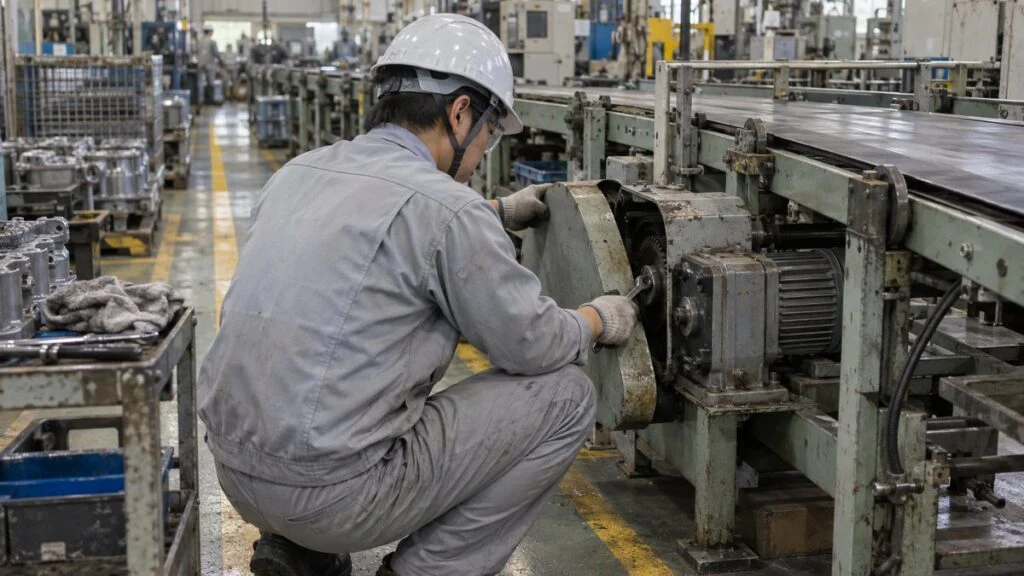
If you maintain equipment at a Japanese-owned plant, or equipment built in Japan, the maintenance plan you inherit is probably full of fixed intervals: "overhaul every March" (take the equipment apart to inspect and service it) or "replace the filter every 5,000 operating hours." Your Japanese counterparts call this TBM, time-based maintenance. At the same time, head office may be asking you to "shift from TBM to CBM" and put sensors on everything. Which items should stay on a fixed interval, which should be monitored, and which can simply run until they fail?
Japanese plants mix three approaches: TBM, CBM (condition-based maintenance), and BM (breakdown maintenance, fixing equipment after it fails). They choose by machine, and often by component. Putting everything on fixed-interval replacement drives up cost, and the replacement work itself can cause failures. This guide compares the three, explains why fixed intervals alone do not prevent most failures, and gives you a decision order, a criticality-based way to combine them, and a checklist for reviewing an existing plan.
Contents
- The Three Maintenance Types: BM, TBM, and CBM
- TBM vs. CBM: Key Differences
- Why Fixed-Interval Replacement Is Not Enough
- Three Conditions for CBM to Work
- How to Choose a Maintenance Type: Four Questions in Order
- Combining Methods by Criticality and Component
- Reviewing Your Maintenance Types: Five Steps and Common Mistakes
- Japanese Maintenance Terms: Quick Reference
- Checklist: Before You Change a Maintenance Method or Interval
- Questions to Ask the Japanese Side
- Limits of This Guide
- Summary
- FAQ
- Sources
The Three Maintenance Types: BM, TBM, and CBM
Maintenance terms vary between companies and industries, so start with the Japanese standard. JIS Z 8115:2019, the Japanese dependability vocabulary (it uses the term numbers of IEC 60050-192), splits maintenance into preventive maintenance and corrective maintenance.
JIS defines preventive maintenance (予防保全, yobo hozen) as maintenance carried out to mitigate degradation and reduce the probability of failure. It has two subtypes. Maintenance done on a set schedule, 時間計画保全 (jikan keikaku hozen, "scheduled maintenance" in IEC terms), is what the shop floor calls TBM (time-based maintenance). Maintenance based on an assessment of physical condition, 状態基準保全 (jotai kijun hozen), is CBM (condition-based maintenance).
Corrective maintenance, called 事後保全 (jigo hozen) and usually shortened to BM (breakdown maintenance) on Japanese shop floors, restores equipment to its required state after a fault is found. For the wider picture of what a Japanese maintenance team does and how these types fit into TPM, see Hozen in Japanese Plants: Maintenance Types, Roles, and TPM. This article focuses on how the three differ and how to choose between them.
Maintenance splits into preventive and corrective. TBM and CBM are the two kinds of preventive maintenance.
Based on the terms and definitions in JIS Z 8115:2019. Japanese plants also use other names, such as 時間基準保全 (jikan kijun hozen) for TBM and 状態監視保全 (jotai kanshi hozen) for CBM.
TBM itself comes in two forms. Periodic maintenance (定期保全, teiki hozen) runs on calendar intervals, while age-based maintenance (経時保全, keiji hozen) runs when accumulated operating time reaches a set value. "Overhaul every March" is periodic; "replace the filter every 5,000 operating hours" is age-based.
None of the three is better than the others. What separates them is the trigger for the work: a failure, the clock, or the equipment's condition. Each suits different equipment and has its own weak point.
Compare the trigger, the best fit, and the weak point.
BM is used in two ways. One is reacting to an unexpected failure on the spot. The other is deciding in advance that a machine will run until it fails. The second is not neglect. It is a legitimate choice made after comparing cost and impact, and the decision section below covers when it fits.
TBM vs. CBM: Key Differences
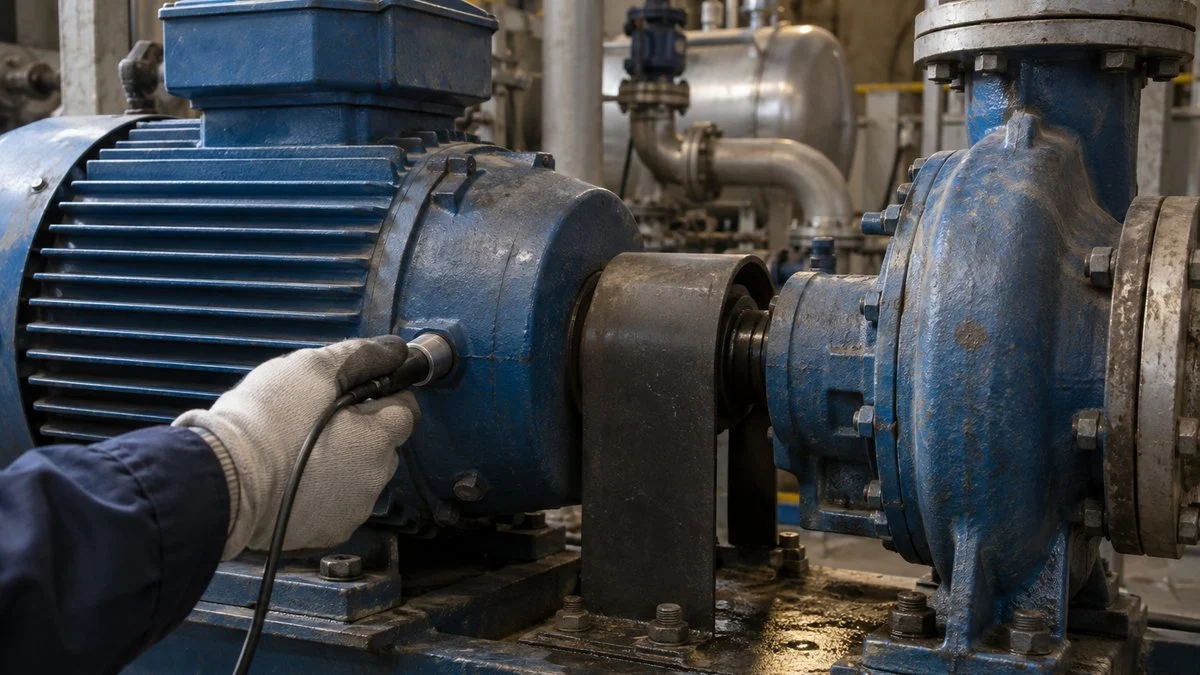
Both are preventive, but they decide when to act in completely different ways. TBM uses the calendar or the hour meter. CBM measures the condition of the equipment itself.
Whether the decision rests on time or on condition changes what you need to prepare and where each method is strong or weak.
Both are forms of preventive maintenance. One machine often uses both.
TBM: Set by Calendar or Operating Hours
TBM's biggest advantage is that you can fit maintenance into the production plan well ahead of time. An overhaul scheduled for a long holiday shutdown, or an inspection on the first days of each month, lets you reserve the downtime, the people, and the parts in advance.
The downside is that intervals drift toward the safe side. You end up replacing parts that still have plenty of life, which inflates parts cost and labor hours. And once an interval is set, it often stays in use for years after everyone has forgotten why it was chosen.
CBM: Set by Measured Condition
JIS Z 8115 defines CBM as preventive maintenance based on an assessment of physical condition. A note adds that the assessment may come from scheduled operator observation or from condition monitoring of system parameters.
So an operator who listens for abnormal noise or feels for heat on a daily check (日常点検, nichijo tenken), and calls maintenance when something is off, is doing CBM. Expensive sensors are not a requirement. What matters is having a way to measure condition and a clear rule such as "service it when this value is exceeded." In TPM plants, these daily operator checks are part of jishu hozen (autonomous maintenance).
CBM vs. Predictive Maintenance (Yochi Hozen)
You will often hear Japanese colleagues say 予知保全 (yochi hozen, predictive maintenance). The term defined in JIS Z 8115:2019, however, is condition-based maintenance. Yochi hozen usually means using condition-monitoring data to forecast when a failure will occur and acting before it does.
Because it relies on collecting data continuously and reading trends, predictive maintenance is best seen as an advanced form of CBM. In everyday Japanese usage the two words often overlap, so when someone says "yochi hozen," ask whether they mean trend-based forecasting or simply condition checks. For how to get condition data from older machines, see Retrofit Machine Monitoring on Older Japanese Machines.
Related: Predictive Maintenance ROI: How Japanese Plants Justify It
Why Fixed-Interval Replacement Is Not Enough
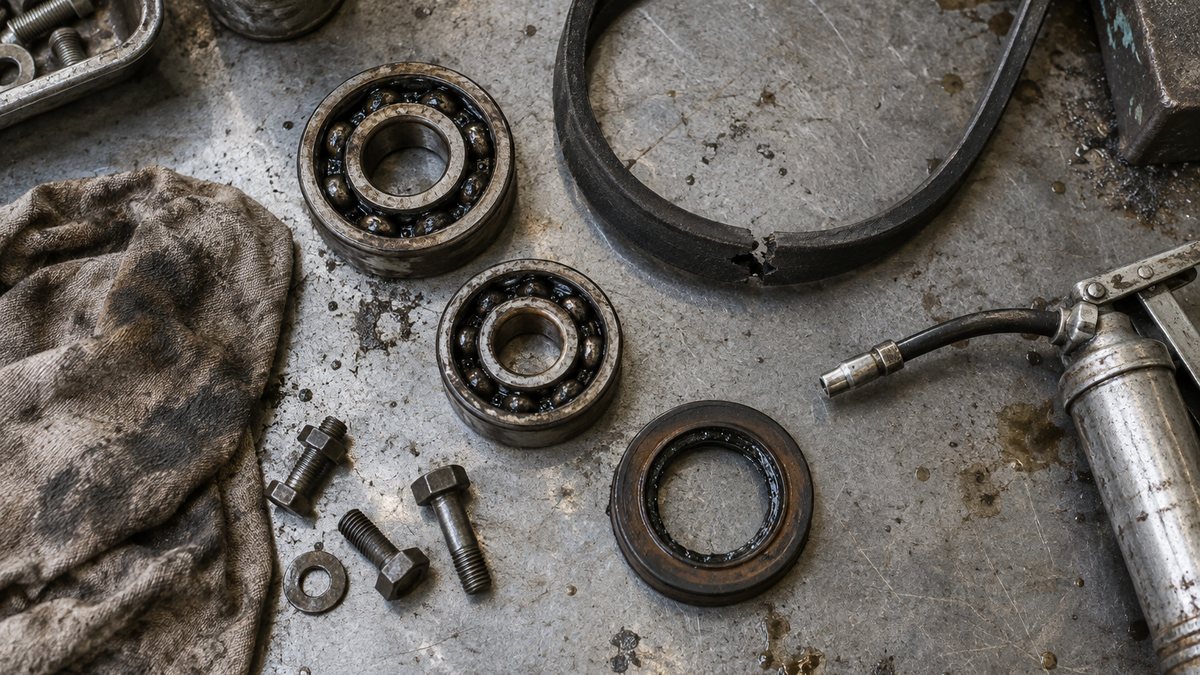
TBM assumes that parts have a life and will not fail if you replace them before the end of it. Studies in the airline industry showed that far fewer failures fit this assumption than most people expect.
F. Stanley Nowlan and Howard F. Heap of United Airlines (UAL) sorted how aircraft components failed over their service age into six patterns. Their report, Reliability-Centered Maintenance, was published in 1978.
According to NASA's Reliability-Centered Maintenance (RCM) guide, three studies (UAL in 1968, a Swedish follow-up in 1973, and a U.S. Navy follow-up in 1982) found that random failures unrelated to age made up 77–92% of all failures, while age-related patterns accounted for only 8–23%.
Most failures have no link to age, so time-based replacement alone cannot prevent them.
Source: NASA, "Reliability-Centered Maintenance Guide for Facilities and Collateral Equipment" (2008). The studies covered aircraft and naval vessels; the figures do not transfer directly to factory equipment.
Few Parts Have a Predictable Wear-Out Age
The NASA guide explains that a clear wear-out pattern is typical of single-piece and simple items, while in complex items a marked wear-out age is not common. If you treat a whole motor, pump, or gear reducer as one item with one interval, shortening that interval may do nothing to reduce failures.
TBM does work well on parts that are used up steadily, such as V-belts, filters, and brake linings. Before you pick a method, ask one question first: does this part really degrade in proportion to use?
Overhauls Can Introduce New Failures
The same guide notes that in many cases scheduled overhaul increases the overall failure rate by introducing early-life failures into an otherwise stable system. Assembly errors, under-tightened fasteners, and contamination all get another chance to occur every time a machine is taken apart.
"It ran worse after the inspection" is a familiar complaint among maintenance crews. CBM lets you leave alone what does not need touching, and that is one of its real advantages.
Three Conditions for CBM to Work
That does not mean you should put every machine on CBM. It only pays off when three conditions are all met. The P-F curve, widely used in maintenance, shows the logic.
CBM lives in the time between point P, where signs of degradation first become detectable, and point F, where the equipment loses its function.
The order of detection methods is a general guide to which ones catch signs earliest (based on an article in ISA's InTech magazine). The length of the P-F interval varies widely with the failure mode and the detection method.
1. Degradation Shows a Measurable Sign
First, some measurable change must appear before the failure. Bearing damage shows up as vibration, a loose electrical connection as heat, and degraded lubricant as oil contamination or a change in its chemistry. Each failure mode has its own indicator.
The earlier you catch the sign, the more time you have to respond. That is why oil analysis and vibration measurement tend to find problems sooner than sensory checks.
2. There Is Time Between the Sign and the Failure
Second, the time from P to F, the P-F interval, must be long enough to inspect, order parts, stop the machine, and repair it. If the P-F interval is short, a monthly inspection will miss the warning and the machine will fail anyway.
A common rule of thumb is to inspect at intervals shorter than half the P-F interval, so you get more than one chance to catch the sign. If the P-F interval is extremely short, switch to continuous monitoring or choose a method other than CBM.
3. Monitoring Pays for Itself
Third, the numbers must add up. Add the cost of installing sensors, storing data, and the hours people spend judging the data. If that exceeds the losses you would prevent and the replacement costs you would save, CBM makes little sense.
Extend continuous monitoring to small motors or to equipment with a standby unit, and the monitoring system itself can become a maintenance burden. Apply advanced monitoring first to the equipment you can least afford to lose, and work down from there.
How to Choose a Maintenance Type: Four Questions in Order
Turn the points above into a procedure for each machine or component, and you get the sequence below. Ask the questions from the top; the first "yes" decides the method.
Work down from the top question. The first "yes" sets the method.
Failures that could injure people or harm the environment never count as "small impact" at Q2.
Q1: Legally Required Intervals Come First
Check the law first. In Japan, for example, the Ordinance on Safety of Cranes requires periodic self-inspections of cranes at least once a year and once a month. Under the Ordinance on Industrial Safety and Health, forklifts need a specified self-inspection (特定自主検査, tokutei jishu kensa) at intervals of no more than one year and a periodic self-inspection at intervals of no more than one month.
For this kind of equipment, you inspect at the legal interval no matter how good its condition is. CBM can be added on top of the legal inspections, but it does not replace them. Your own country has its own rules for cranes, lifts, pressure equipment, and similar items; check which apply before you change any interval.
Better monitoring can sometimes justify longer legal intervals, though. According to the High Pressure Gas Safety Institute of Japan (KHK), a "super-certified" site under Japan's High Pressure Gas Safety Act can set its own continuous operation period of up to eight years, compared with periods such as four years for ordinary certified sites. One of the extra requirements for super certification is adopting new technologies such as IoT and big data.
Q2: Low Impact? Choose BM
Next, look at what happens when the equipment stops. The NASA RCM guide treats run-to-failure (reactive maintenance) as a deliberate decision that is acceptable for some equipment. Its examples include non-critical electric motors under 7.5 hp (about 5.5 kW), comfort cooling, restroom exhaust fans, small low-temperature water heaters, and other items where the consequences of failure are negligible.
In a factory, candidates include office air conditioning, small pumps with a standby unit, and lighting. If preventive inspection and replacement would cost more than fixing the item after it breaks, BM is the rational choice.
Q3 and Q4: Measurable Signs Mean CBM, Predictable Life Means TBM
For equipment with a large impact, apply the three CBM conditions from the previous section. If you can measure the signs and the P-F interval leaves enough margin, use CBM. If the degradation advances with use, like wear, so you can roughly predict the life, use TBM. When both apply, CBM wastes fewer parts.
None of the Above: Improve the Design
If a failure gives no warning and its timing cannot be predicted, no maintenance method will solve it; the equipment itself has to change. Improvement maintenance (改良保全, kairyo hozen) revises materials or structure, and maintenance prevention (保全予防, hozen yobo) feeds the lessons into the design of the next machine.
Some failures are hidden. Safety devices and standby systems normally sit idle, so a failure goes unnoticed until they are needed. For these, schedule periodic checks that confirm they actually operate. To list failure modes and their effects systematically, use FMEA.
Related: AIAG-VDA FMEA for Japanese Customers: DFMEA vs PFMEA
Combining Methods by Criticality and Component
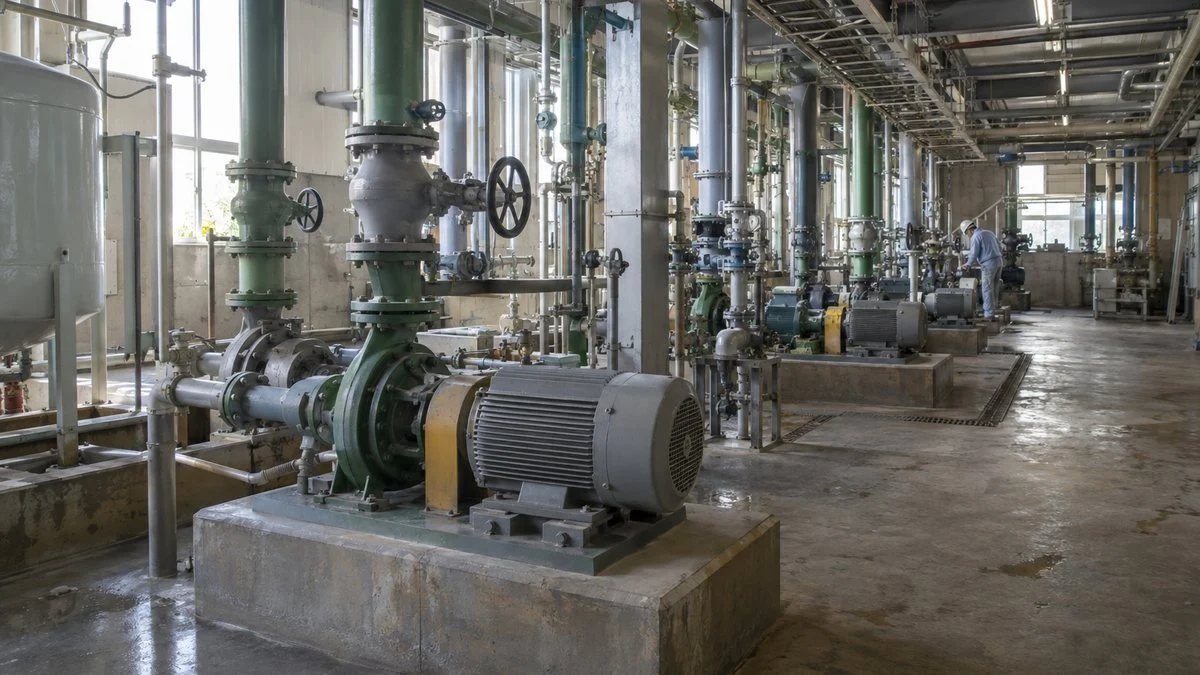
Even with a decision order, working through every machine in a plant one by one is a big job. The common approach is to rank equipment by criticality, set a default method for each rank, and then go down to component level only for the critical machines. The criticality ranking itself is covered in Maintenance Workflow at Japanese Plants.
Set the default by criticality, and watch the condition of critical equipment more closely.
Each plant sets its own number of ranks and criteria. An ISA InTech article gives a rough distribution: about 10–20% of assets high criticality, 20–30% medium, and 40–60% low.
Set the Default by Criticality Rank
Typical ranking criteria include:
- Impact on production when the equipment stops
- Impact on safety and the environment
- Impact on quality
- Time and cost to repair
- Whether a standby unit exists
Plants often score each criterion and add up the points. The goal is to concentrate maintenance effort and money on the most critical equipment. If every machine gets the same level of inspection, the critical ones get too little attention.
One Machine, Different Methods by Component
Even a Rank A machine ends up with a mix of methods once you break it into components. A pump-and-motor set might look like this:
- Bearings: CBM based on vibration measurement
- V-belts and gland packing: TBM, replaced on a fixed interval
- Indicator lamps: BM, replaced when they burn out
Rather than labeling the whole machine "CBM," assign a method to each component based on how it actually fails. You will waste less money and effort.
What BM Equipment Still Needs
Choosing BM does not mean doing nothing. To repair the equipment quickly when it fails, have these ready:
- Spare parts in stock
- A repair procedure
- An estimate of how long replacement takes
Always record each failure. If the same machine keeps failing, the assumption that its impact is small no longer holds, and it is time to review its rank or method.
Reviewing Your Maintenance Types: Five Steps and Common Mistakes
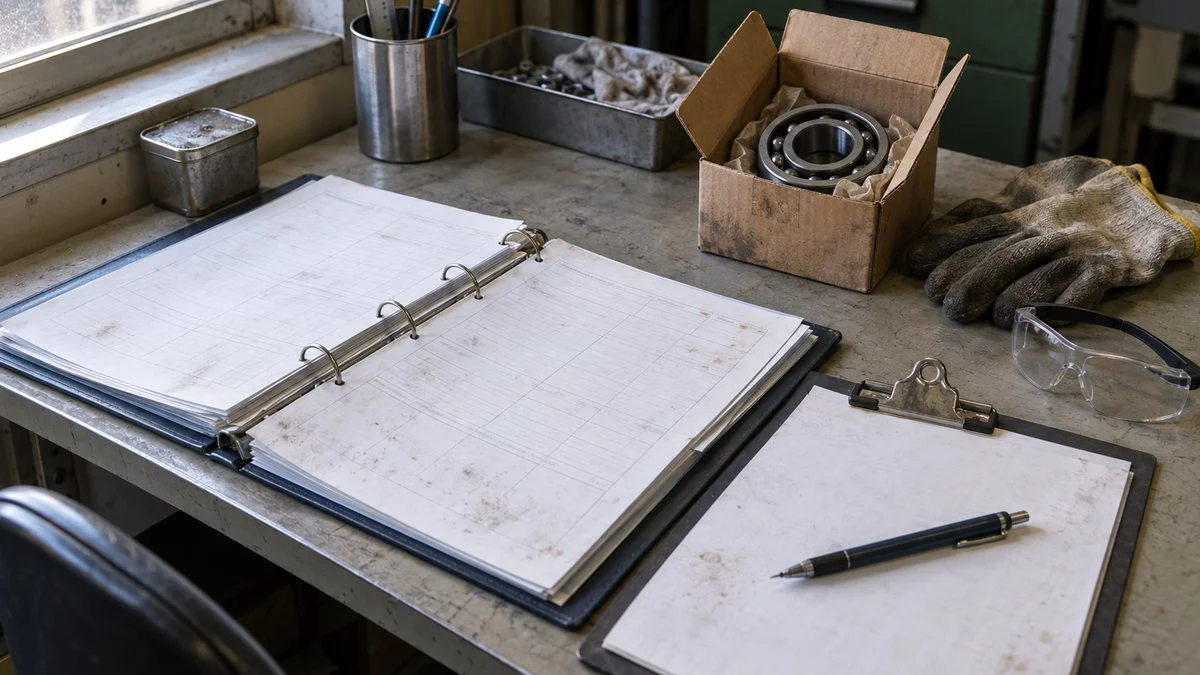
Maintenance types are not set once and forgotten. You adjust them as failure data comes in. To review an existing maintenance plan, work through five steps.
Start with an equipment inventory, then keep adjusting methods and intervals based on results.
You do not have to review every machine at once. Starting with Rank A equipment is the practical approach.
In step 5, the most useful data is a record of the condition of each part you replaced. If parts replaced under TBM still have plenty of life, you can extend the interval. If they are already damaged when you replace them, shorten the interval or consider switching to CBM.
Three mistakes come up again and again during these reviews:
Related: Maintenance Workflow at Japanese Plants: 8 Steps in 3 Phases
- Trying to put everything on CBM: sensors go onto low-impact equipment and onto failure modes that give no warning, and the monitoring workload keeps growing
- Keeping TBM intervals with no basis: maker recommendations or a predecessor's settings stay in use unchanged, so over-maintenance and missed problems go uncorrected
- No preparation for BM equipment: with no spare parts or procedure, a minor failure turns into a long stop
The first mistake has become more common as IoT spreads. Labor shortages and aging equipment have pushed many companies toward condition monitoring. Keep the goal in view: reducing the combined cost of failure losses and maintenance, not monitoring for its own sake. Unplanned stops also show up as breakdown losses in OEE; see OEE and the 7 Big Losses vs. Six Big Losses in TPM.
The NASA RCM guide calls the approach of combining methods based on how equipment fails and what the consequences are reliability-centered maintenance. It states that a balanced RCM program often cuts the annual maintenance budget by 30–50%. Results vary by facility and equipment, but the figure shows that re-choosing maintenance types is itself a way to cut cost.
Japanese Maintenance Terms: Quick Reference
| Japanese | Romaji | English / abbreviation |
|---|---|---|
| 予防保全 | yobo hozen | Preventive maintenance (PM) |
| 時間計画保全 / 時間基準保全 | jikan keikaku hozen / jikan kijun hozen | Time-based maintenance (TBM); "scheduled maintenance" in IEC 60050-192 |
| 定期保全 | teiki hozen | Periodic (calendar-based) maintenance, a type of TBM |
| 経時保全 | keiji hozen | Age-based (operating-hour-based) maintenance, a type of TBM |
| 状態基準保全 / 状態監視保全 | jotai kijun hozen / jotai kanshi hozen | Condition-based maintenance (CBM) |
| 予知保全 | yochi hozen | Predictive maintenance (often used loosely for CBM) |
| 事後保全 | jigo hozen | Breakdown / corrective maintenance (BM) |
| 改良保全 | kairyo hozen | Improvement maintenance (often abbreviated CM in TPM; not the same as "corrective maintenance") |
| 保全予防 | hozen yobo | Maintenance prevention (MP) |
| 日常点検 | nichijo tenken | Daily inspection, often done by operators |
| 五感点検 | gokan tenken | Sensory inspection (look, listen, touch, smell) |
Checklist: Before You Change a Maintenance Method or Interval
- Is the interval set by law or regulation (in Japan or in your country)? If so, keep it and add CBM only on top.
- Do you know why the current interval was chosen (maker recommendation, failure history, a past incident)?
- What happens if this component fails: production stop, safety or environmental risk, quality escape?
- Does the failure mode give a measurable warning (vibration, temperature, oil condition, current)?
- Is the P-F interval long enough to inspect at less than half of it, order parts, and schedule the repair?
- Does the part degrade in proportion to hours or cycles, so its life is roughly predictable?
- Would monitoring cost less than the losses and replacement costs it prevents?
- For run-to-failure items: are spares, a repair procedure, and a repair-time estimate in place?
- Will you record the condition of replaced parts so the next review has data?
Questions to Ask the Japanese Side
Use these when the maintenance plan comes from a Japanese parent company or equipment builder, or when you want to change it:
- Which items in this plan are TBM, which are CBM, and which are BM by design?
- For each TBM interval, what is the basis: maker recommendation, failure data, or law?
- Which inspections are legally required in Japan, and does the same requirement apply at our site, or only the local law?
- When you say "yochi hozen," do you mean trend-based forecasting or condition checks in general?
- For CBM items, what are the measurement points, methods, and thresholds that trigger work?
- Which equipment is Rank A at the mother plant, and what criteria put it there?
- If we extend an interval based on the condition of replaced parts, who approves the change, and does it affect the equipment warranty?
Limits of This Guide
- The failure-pattern percentages come from aircraft and naval studies. They show a tendency, not values that apply directly to factory equipment.
- The 30–50% budget reduction is NASA's statement about RCM programs at facilities. Your results depend on the plant and the starting point.
- The Japanese legal examples (cranes, forklifts, high-pressure gas) apply in Japan. Outside Japan, follow your local regulations, and check with the people responsible for compliance at your site before changing any legally related interval.
- Criticality ranks, criteria, and maintenance terms differ between companies and industries. Treat the rank examples here as a starting point, not a standard.
- This article explains how to choose maintenance methods. It is not a work instruction; follow your site's lockout and safety rules for any actual maintenance work.
Summary
- Maintenance splits into preventive and corrective (BM). Preventive maintenance covers TBM (time-based) and CBM (condition-based).
- TBM is easy to plan but tends toward over-maintenance. CBM wastes less but needs a way to measure condition and clear decision criteria.
- Most failures are not tied to age, so fixed-interval replacement alone cannot prevent them.
- Choose in this order: legal requirements, impact of failure, measurable warning signs, predictable life.
- Set a default by criticality rank, assign methods by component on critical equipment, and keep reviewing with real data.
Choosing the right mix starts with knowing your equipment and how it fails.
FAQ
What is the difference between TBM and CBM?
TBM (time-based maintenance) services or replaces parts at fixed calendar or operating-hour intervals. CBM (condition-based maintenance) acts only when measurements or inspections show signs of degradation. Both are preventive maintenance; they differ in what triggers the work.
Is CBM the same as predictive maintenance?
Not exactly. CBM covers any maintenance based on measured condition, including operator checks. Predictive maintenance usually means using monitoring data to forecast when a failure will occur, so it is best seen as an advanced form of CBM. Japanese plants often use 予知保全 (yochi hozen) loosely for both.
When is run-to-failure maintenance acceptable?
When a failure has little effect on production, safety, and quality, and preventive work would cost more than the repair. NASA's RCM guide lists items such as non-critical motors under 7.5 hp, restroom exhaust fans, and small water heaters. Keep spares and a repair procedure ready, and never apply it to failures that could hurt people or the environment.
How often should you inspect under CBM?
A common rule of thumb is to inspect at intervals shorter than half the P-F interval, the time between the first detectable sign and functional failure. That gives you more than one chance to catch the problem. If the P-F interval is very short, use continuous monitoring or a different method.
Does CBM require sensors?
No. JIS Z 8115 notes that condition can be assessed through scheduled operator observation as well as condition monitoring. Daily checks for abnormal noise or heat with a clear "call maintenance when" rule count as CBM. Sensors pay off on critical equipment where earlier detection is worth the cost.
Sources
- Maintenance terms and definitions: JIS Z 8115:2019, Glossary of terms used in dependability (Japanese); IEC Electropedia, 192-06-12 scheduled maintenance
- Condition-based maintenance concept: Institute of Electrical Engineers of Japan, Power and Energy Society, "Glossary No. 147: Condition-Based Maintenance" (Japanese)
- Failure-pattern studies, run-to-failure examples, overhaul effects, RCM savings: NASA, "Reliability-Centered Maintenance Guide for Facilities and Collateral Equipment" (September 2008)
- P-F curve, detection methods, criticality distribution: ISA InTech, "Improving maintenance by adopting a P-F curve methodology" (2019)
- Inspection interval and P-F interval: Power-MI, "The P-F Curve: A Cornerstone in Condition-Based Maintenance"
- Crane self-inspections: JISHA Safety and Health Information Center, Ordinance on Safety of Cranes, Articles 34 and 35 (Japanese)
- Forklift specified and periodic self-inspections: e-Gov, Ordinance on Industrial Safety and Health, Articles 151-21, 151-22, and 151-24 (Japanese)
- Continuous operation period for super-certified sites: High Pressure Gas Safety Institute of Japan (KHK), "Super Certification and Voluntary Safety Certification" (Japanese)
Original article in JapaneseThis guide is adapted from a MONOSCOPE article written for readers in Japan: 設備保全のTBMとCBMの違い|事後保全を含めた選び方と使い分け
About the editor
 MONOSCOPE EditorFOUNDER & EDITOR
Spent about ten years at a plant equipment maker and a plant engineering company, proposing, designing, and commissioning equipment, then moved into web marketing. Now a web consultant for B2B manufacturers, helping them explain their products and technology. Licensed in Japan as an Energy Manager and a Third-Class Chief Electrical Engineer.
Has run an engineering blog since 2017 (500+ articles) and a Japanese YouTube channel with about 20,000 subscribers. Each English guide is written from the Japanese shop-floor point of view and checked against the cited standards.