A5052 Equivalent: JIS Aluminum Designations vs. AA/ASTM
A Japanese drawing arrives with A5052P-H34 in the material box of the title block, labeled 材質 (zaishitsu, "material"). A supplier's quote lists A6061P-T651 plate. These are JIS (Japanese Industrial Standards) designations for wrought aluminum, and they map closely onto the alloy and temper system used with ASTM specifications: A5052P-H34 is 5052-H34 sheet or plate, which a US buyer would normally order to ASTM B209.
The alloy number carries over directly, but the product standard and the minimum properties are JIS's own. This guide shows how to decode a JIS aluminum designation, gives a quick-reference table of AA, UNS, EN, and ASTM counterparts, compares A5052, A6061, and A7075, and ends with a checklist of what to confirm with the Japanese side before you substitute local material.
Contents
- How to Read a JIS Aluminum Designation: A5052P-H32 Decoded
- Quick Reference: JIS Aluminum Alloys and Their Closest Equivalents
- 1000 to 7000 Series: Heat-Treatable and Non-Heat-Treatable Alloys
- A5052 vs. A6061 vs. A7075 at a Glance
- Temper Designations: How H32 and T6 Change the Material
- Choosing by Strength, Weight, and Stiffness
- Choosing by Weldability
- Choosing by Finish, Machinability, and Product Form
- Decision Flow: Which Alloy to Start From
- What to Confirm Before You Substitute
- Limits of This Guide
- Summary
- FAQ
- Sources
How to Read a JIS Aluminum Designation: A5052P-H32 Decoded
On the Japanese shop floor, the four-digit alloy number is called the bante (番手). JIS builds the full product designation around it: the leading "A" stands for aluminum, the letters after the number give the product form, and the code after the hyphen is the temper, or shitsubetsu (質別).
The four digits are an internationally registered alloy number. According to the Japan Aluminium Association (JAA), when JIS A5052 and European EN AW-5052 share the same four digits, their chemical composition is exactly the same. The Aluminum Association (AA) keeps the registration record for these wrought alloy numbers, so JIS A5052 is AA 5052 with a JIS prefix. The same reading works for Japanese drawings and for material certificates from other countries.
From left to right, the designation tells you: aluminum, alloy series, product form, and how the strength was produced.
Sources: Japan Aluminium Association, "About Aluminum"; JIS H 0001. The four digits (5052) are the internationally registered alloy number, shared with standards outside Japan.
The Four Digits: Series, Modification, and Alloy ID
The first digit matters most. A 1 means pure aluminum, and 2 through 8 identify the main alloying element, so the first digit tells you the general character of the alloy. A 5 identifies an aluminum-magnesium alloy, and a 6 an aluminum-magnesium-silicon alloy.
The second digit shows whether the alloy is a modification. A 0 is the original alloy, and 1 through 9 are modified versions numbered in order of registration. Modified versions of 2024, for example, are 2124, 2224, and 2324.
In alloys, the last two digits are simply an identifier with no specific meaning. Pure aluminum (1000 series) is the exception: the last two digits give the purity after the decimal point, so 1050 means at least 99.50% aluminum and 1070 means at least 99.70%.
Alloys developed in Japan carry an "N" in the number. 6N01, used in railcars and other applications, was later registered internationally as 6005C. When you see an N alloy such as 6N01 or 7N01 on a Japanese drawing, you are looking at a Japan-specific designation.
The Letters After the Number: Product Form
The one to three letters after the alloy number show the product form, which also reflects how the material was made. The most common are:
- P: plate, sheet, strip, or disk (PS is a special class)
- BE: extruded bar; BD: drawn bar
- S: extruded profile (shapes with a cross section like a window frame or framing member)
- W: drawn wire; TE / TD: extruded / drawn seamless tube
- FD: die forging; H: foil
A trailing "S" (as in BES or BDS) marks a special class with tighter dimensional tolerances. The same alloy number with a different form letter is a different standard product, covered by a different JIS:
- Sheet, strip, and plate: JIS H 4000
- Bars and wire: JIS H 4040
- Extruded profiles: JIS H 4100
The ASTM side splits its specifications by product form too, so the form letter tells you which ASTM specification to compare against.
Quick Reference: JIS Aluminum Alloys and Their Closest Equivalents
For the common wrought alloys, drop the "A" and you have the AA alloy number. The table below adds the UNS number and EN designation that cross-reference tables pair with each one.
| JIS alloy | AA alloy | UNS | EN designation | Type |
|---|---|---|---|---|
| A5052 | 5052 | A95052 | EN AW-5052 (AlMg2.5) | Non-heat-treatable |
| A5083 | 5083 | A95083 | EN AW-5083 | Non-heat-treatable |
| A6061 | 6061 | A96061 | EN AW-6061 (AlMg1SiCu) | Heat-treatable |
| A6063 | 6063 | A96063 | EN AW-6063 | Heat-treatable |
| A7075 | 7075 | A97075 | EN AW-7075 (AlZn5.5MgCu) | Heat-treatable |
| 6N01 (Japan-origin) | 6005C (later international registration) | Confirm | Confirm | Heat-treatable |
Product Standards: Which JIS Matches Which ASTM
The alloy number does not tell you which standard the material was made to. For the three main JIS product standards, the closest ASTM specifications by scope are:
| Product form | JIS standard (form letters) | Closest ASTM specification |
|---|---|---|
| Sheet, strip, and plate | JIS H 4000, Aluminium and aluminium alloy sheets, strips and plates (P) | ASTM B209 (inch-pound) / B209M (metric), Aluminum and Aluminum-Alloy Sheet and Plate |
| Bars and wire | JIS H 4040, Aluminium and aluminium alloy bars and wires (BE, BD, W) | ASTM B221 for extruded bar, rod, and wire; ASTM B211 for rolled or cold-finished bar, rod, and wire |
| Extruded profiles | JIS H 4100, Aluminium and aluminium alloy extruded profiles (S) | ASTM B221, Aluminum and Aluminum-Alloy Extruded Bars, Rods, Wire, Profiles, and Tubes |
Putting the alloy, form, and temper together, typical Japanese designations translate like this:
| On a Japanese drawing | Read as | Closest ASTM specification |
|---|---|---|
| A5052P-H32 | 5052-H32 sheet or plate | ASTM B209 |
| A5052P-H34 | 5052-H34 sheet or plate | ASTM B209 |
| A6061P-T6 / A6061P-T651 | 6061-T6 / 6061-T651 sheet or plate | ASTM B209 |
| A6061BE-T6 | 6061-T6 extruded bar | ASTM B221 |
| A6061BD-T6 | 6061-T6 drawn bar | ASTM B211 |
| A7075P-T651 | 7075-T651 plate | ASTM B209 |
| A6063S (temper as specified) | 6063 extruded profile | ASTM B221 |
A5052-H32 vs. 5052-H32: Close, Not Identical
The chemistry matches, but each standard sets its own mechanical property limits and thickness bands. The differences are small, which is exactly why they get missed:
| Property | JIS H 4000 | ASTM B209 |
|---|---|---|
| 5052-H32 tensile strength | 215–265 MPa (thickness over 1.3 to 2.9 mm) | 31.0–38.0 ksi (about 214–262 MPa) |
| 5052-H32 yield strength (0.2% offset), min. | 155 MPa, applies only when the purchaser requests it | 23.0 ksi (about 159 MPa) |
| 5052-H34 tensile strength | 235–285 MPa | 34.0–41.0 ksi (about 234–283 MPa) |
| 6061-T6 tensile strength, min. | 295 MPa (thickness over 0.5 to 6.5 mm) | 42 ksi (about 290 MPa) |
| 6061-T6 yield strength, min. | 245 MPa (same band) | 35 ksi (about 241 MPa) |
Two points follow. First, the JIS minimums for 6061-T6 are slightly higher than the commonly cited ASTM values, so material certified only to B209 does not by itself prove it meets the JIS figure. Second, for A5052P the JIS yield requirement applies only when the purchaser asks for it. If yield strength matters to the design, agree with the Japanese side on whether it must be specified and reported on the mill certificate (often called a "mill sheet," ミルシート, in Japan).
1000 to 7000 Series: Heat-Treatable and Non-Heat-Treatable Alloys
The alloys fall into two groups, depending on how they gain strength.
Source: Japan Aluminium Association, "About Aluminum." The 8000 series covers "other alloys" that do not belong to series 1 through 7.
The JAA divides aluminum alloys into wrought alloys, which are rolled or extruded into shape, and casting alloys, which are melted and poured into molds. Only wrought alloys use the four-digit numbers.
Wrought alloys split again into non-heat-treatable alloys, strengthened by cold work, and heat-treatable alloys, strengthened by heat treatment. This split decides which temper codes you will see and how much strength a weld will cost you.
Non-Heat-Treatable Alloys (1000, 3000, 4000, and 5000 Series)
These alloys gain strength through work hardening, such as rolling, and heat softens them. Thanks to good corrosion resistance and weldability, the 5000 series comes in many variants and has a wide range of uses.
Strength in the 5000 series rises with magnesium content. 5052, with a moderate amount, goes into sheet metal parts and vehicles. 5083, with about 4.5–5% magnesium, is the strongest of the non-heat-treatable alloys and is used for welded structures such as ships and LNG tanks.
Heat-Treatable Alloys (2000, 6000, and 7000 Series)
These alloys are heated to dissolve the alloying elements, quenched, and then aged so that fine precipitates form and add strength. The 2000-series duralumins rival steel in strength, but their high copper content lowers corrosion resistance, so they need corrosion protection in harsh environments.
The 6000 series balances strength and corrosion resistance. Typical examples are 6063, used in large volumes for aluminum window frames, and 6061, whose yield strength is comparable to structural steel. The 7000 series includes copper-bearing alloys such as 7075, among the strongest aluminum alloys, and copper-free alloys for welded structures, such as 7N01.
Casting and Die-Casting Alloys: A Separate System
Die-cast parts, common in engine components and housings, use a different code such as ADC12. Casting alloys have no international registration system like the one for wrought alloys, so the codes differ from country to country. ADC12 (JIS H 5302) is often cross-referenced to 383 / A383, but published tables do not agree and the composition limits differ, so confirm the counterpart with the Japanese side. A part machined from plate or bar and a part cast to shape come from different material systems altogether.
A5052 vs. A6061 vs. A7075 at a Glance
A5052, A6061, and A7075 are the alloys you will see most often for machine parts, equipment frames, and fixtures. They belong to different series and gain strength in different ways, so start with the overall picture.
As strength goes up, welding and corrosion resistance become more limited.
Non-heat-treatable
Heat-treatable
Heat-treatable
Composition ranges per JIS H 4000. Properties per Japan Aluminium Association, "About Aluminum," and the property and application notes in JIS H 4000 and H 4040.
The table below narrows the comparison to strength, welding, and when to choose each alloy.
| A5052 | A6061 | A7075 | |
|---|---|---|---|
| Series | 5000 (Al-Mg) | 6000 (Al-Mg-Si) | 7000 (Al-Zn-Mg-Cu) |
| How it gains strength | Cold work (H32, H34) | Heat treatment (T6) | Heat treatment (T6) |
| Sheet tensile strength (JIS) | 215–265 MPa (H32) | 295 MPa min. (T6) | 540 MPa min. (T6) |
| Corrosion resistance | Good, including seawater | Good | Lower |
| Welding | Well suited | Possible, but the weld zone loses strength | Prone to cracking in arc welding |
| Choose it for | Sheet metal and welded parts | Bolted structures and machine parts | Areas that need maximum strength |
The JAA calls A5052 its "most representative alloy." It is a medium-strength alloy whose fatigue strength is high relative to its static strength, and it resists seawater well, which makes it the usual first candidate when there is no reason to choose otherwise.
A6061 is a heat-treatable alloy with a small copper addition, and T6 treatment gives it a fairly high yield strength. A7075, developed in Japan, is widely known there as 超々ジュラルミン (cho-cho-jurarumin, "extra super duralumin"). It is among the strongest aluminum alloys, but of the three it is the most limited in corrosion resistance and weldability.
JIS guarantees A7075-T6 sheet more than twice the tensile strength of A5052-H32.
Values from JIS H 4000 (sheets, strips and plates), Table 3, and vary by thickness band. The yield value for A5052P applies only when the purchaser requests it. Check actual values on the mill certificate.
When you compare numbers, always match both the temper and the thickness band. Annealed A5052 (O temper) and A5052-H34 differ greatly in strength, and even within one temper the specified values change from one thickness band to the next.
Related: SUS304, SUS316, SUS430: JIS Grades and AISI/ASTM Equivalents
Temper Designations: How H32 and T6 Change the Material
The temper code shows which process set the condition of the as-fabricated material.
Source: JIS H 0001 (temper designations). JIS also defines W, an unstable condition in which the alloy ages naturally after solution heat treatment.
The alloy number tells you what the material is made of. The temper code after the hyphen tells you what condition it was finished in. JIS H 0001 defines five basic codes: F, O, H, W, and T. The standard was prepared based on ISO 2107 and also references ANSI H35.1, the US temper standard. Common codes such as H32, T6, and T651 are written the same way in AA usage, but confirm any less common code with the Japanese side.
H Tempers: Strength from Cold Work
H tempers apply to non-heat-treatable alloys. The first digit shows how the material was finished:
- H1: strain-hardened only
- H2: strain-hardened, then partially annealed
- H3: strain-hardened, then stabilized
The second digit is the hardness level: 2 is quarter-hard, 4 is half-hard, and 8 is full-hard. A5052-H32 and H34, both common in sheet metal, are the same stabilized material at quarter-hard and half-hard. H34 is stronger but harder to bend.
A5052-H32 vs. H34: Which to Use
H32 versus H34 is a frequent question on sheet metal drawings and quotes. Both are strain-hardened and stabilized, and they differ only in hardness level.
JIS H 4000 sets the tensile strength of H32 at 215–265 MPa and H34 at 235–285 MPa, so the H34 range sits about 20 MPa higher. The exact values depend on the thickness band.
- Sheet metal parts with many bends or tight bend radii: H32, with more elongation to spare, is less likely to crack
- Covers and panels used flat with few bends: H34, if you want a little more strength and dent resistance
- Availability: stocked tempers vary by distributor. One example is thin sheet mostly in H34 and plate thicker than about 6 mm mostly in hot-rolled H112 (hot-worked or lightly cold-worked, with guaranteed mechanical properties)
If a drawing says only "A5052P" with no temper, the supplier decides which one you get. For parts with bending or strength requirements, specify the temper, and if in doubt, make a test bend to check for cracking. If you receive such a drawing from Japan, ask which temper the designer intended.
T Tempers: Strength from Heat Treatment
T tempers apply to heat-treatable alloys. T4 is solution heat-treated (heated to dissolve the alloying elements, then quenched) and naturally aged at room temperature. T6 is solution heat-treated and then artificially aged by heating. T6 is the usual temper for A6061 and A7075.
This process works differently from quenching and tempering steel. Quenching hardens the structure of steel itself, while heat-treatable aluminum alloys gain strength when the elements dissolved during quenching later precipitate as fine particles.
Related: Quenching, Tempering, Annealing, Normalizing on JIS Drawings
T651, common in thick plate and bar, is stretched after solution heat treatment to relieve residual stress and then artificially aged. For precision parts where you want to limit warping after machining, this difference shows up in machining accuracy.
Same Alloy, Different Temper, Different Material
A common mix-up in quotes and orders is specifying just "A6061" with no temper. 6061 in the O temper is finished in its softest condition and is a different material from T6, which is processed for maximum strength.
Treat the material box as one specification made of alloy, product form, and temper. If you are new to Japanese drawings, break each material designation into its parts and check them one by one. That habit prevents ordering mistakes.
Related: How to Read Japanese Engineering Drawings (JIS B 0001)
Choosing by Strength, Weight, and Stiffness
Low weight is the main reason to choose aluminum. According to the JAA, aluminum has a specific gravity of 2.7, about one-third that of iron (7.8). The weight savings pay off most in moving parts of conveying equipment, handheld fixtures, and vehicle parts.
For the same cross section, however, aluminum deflects more than steel. JAA data give the Young's modulus (resistance to elastic deformation) of pure aluminum as 68.3 GPa.
Young's modulus varies little between alloys and tempers, so a stronger alloy does not make a part noticeably stiffer. This is easy to overlook. Where stiffness is the problem, increasing the thickness or adding ribs usually helps more than switching to 7075.
In practice, base strength checks on yield strength (0.2% proof stress), a practical indicator of where permanent deformation begins, rather than on tensile strength, and check deflection separately.
- Medium strength is enough, and the part is formed or welded: A5052
- Yield strength close to steel is needed, and the part is bolted: A6061-T6
- Maximum strength is needed within tight weight and size limits: A7075-T6
Choosing by Weldability
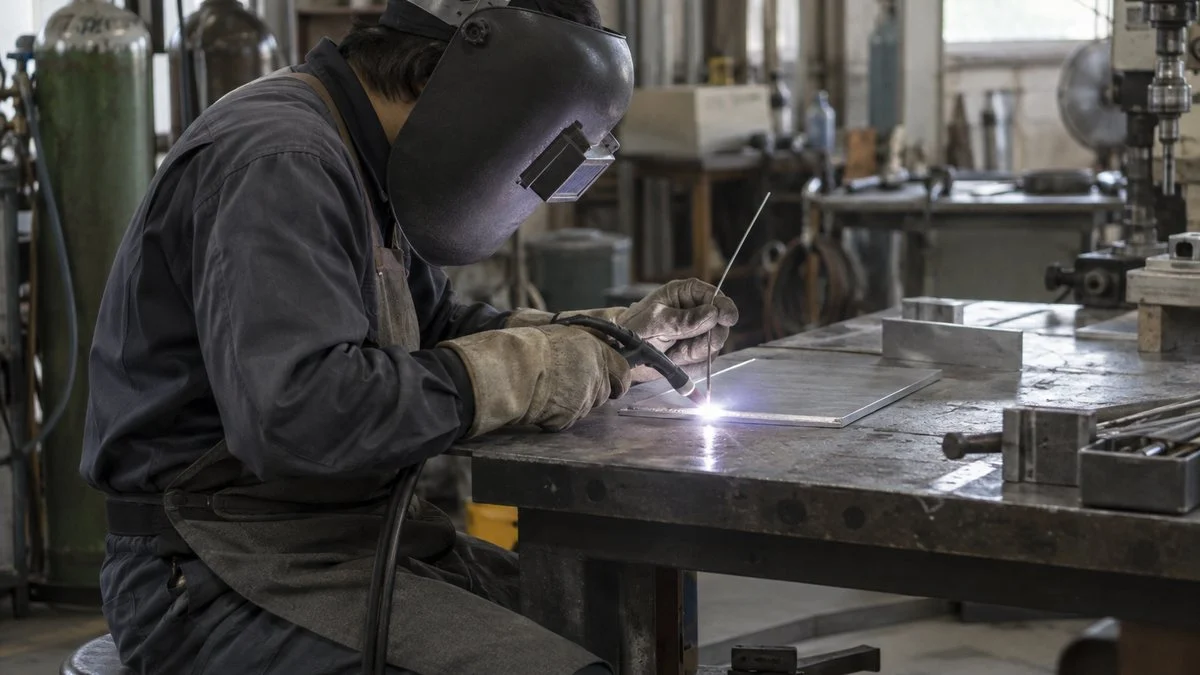
Welding is where the three alloys differ most clearly. Decide early in material selection whether the part will be welded.
The more an alloy relies on heat treatment for strength, the more strength it loses to welding heat.
Sources: Japan Aluminium Association, "About Aluminum"; JIS H 4000 / H 4040; Japan Welding Engineering Society, Welding Information Center Q&A; Nature Communications (2019).
Because A5052 and A5083 are non-heat-treatable, welding heat costs them relatively little strength, which makes them suitable for welded structures. That is why large welded structures such as ships and tanks so often use the 5000 series. A6061-T6, by contrast, can be welded, but the heat undoes the effect of aging.
A technical Q&A from the Japan Welding Engineering Society gives an example of a butt weld in 3.2 mm (about 1/8 in) 6061-T6. The base metal softened up to about 20 mm from the bead center, and within about 10 mm of the center, strength fell to roughly 60–70% of its pre-weld level.
If the part can be given a new T6 treatment after welding, the same source reports that this loss almost disappears.
A7075 is known for cracking during arc welding. A 2019 study in Nature Communications, discussing high-strength alloys such as 7075, notes that weld cracking has kept them out of wider use. Designs in 7075 therefore usually assume bolted or riveted joints.
Choosing by Finish, Machinability, and Product Form
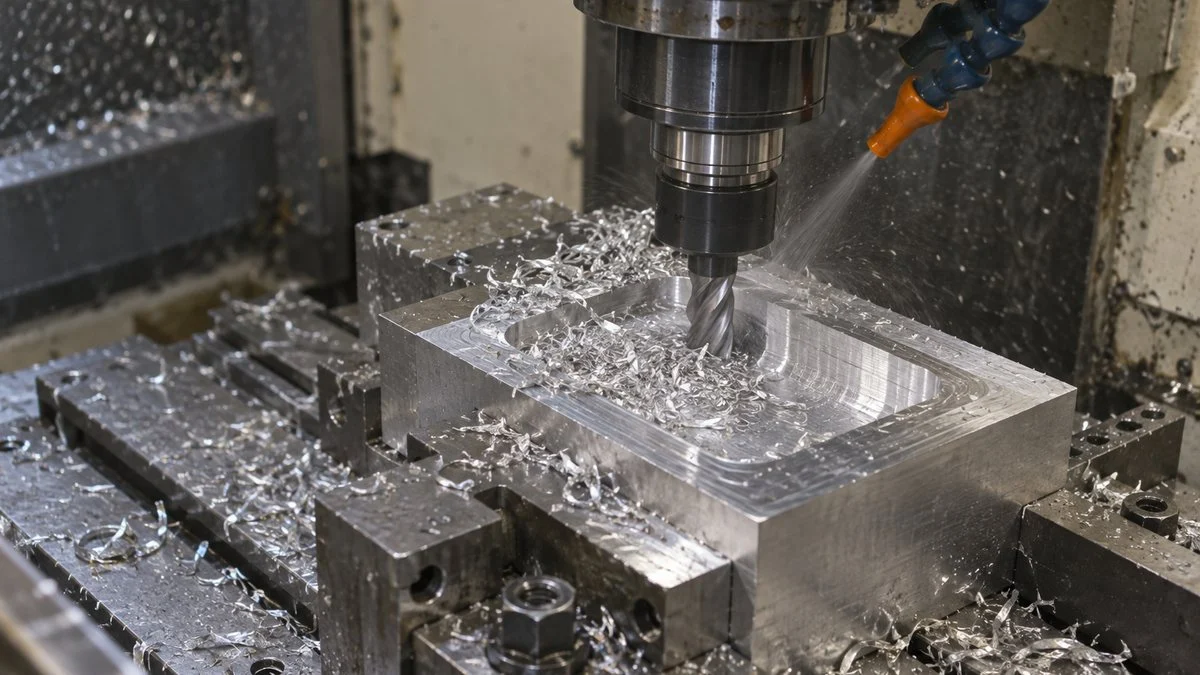
After strength and welding, the next factors are surface treatment, ease of machining, and whether the material is available in the form you need.
Related: JIS Plating Callouts (Ep-Fe/Zn8/CM2) and ASTM Equivalents
Anodizing
Anodizing, often called arumaito (アルマイト) in Japan, is a common surface treatment for aluminum. It grows a hard, thick oxide layer on the surface to improve corrosion and wear resistance. Unlike plating on steel parts, which adds metal from outside, anodizing converts the base metal itself into the coating.
Related: Alumite (Anodizing) on Japanese Drawings: Types and Callouts
The color of the coating depends on the alloy's composition. JAA data describe A5056 as an alloy that anodizes and dyes well.
A surface treatment company in Japan reports that A2017 and A7075, with their high copper or zinc content, take on a color even with clear anodizing. For cosmetic parts, decide the material and the treatment conditions together.
Machinability
Machinability also varies by alloy. The property notes in JIS H 4040 rate 2017 as having good machinability and free-cutting 2011 as having very good machinability. Both are used for machine parts and screws.
Machined parts sometimes use these 2000-series alloys for their machinability, but both contain a lot of copper and have lower corrosion resistance. The choice comes down to whether ease of machining or corrosion resistance matters more. Actual machinability also depends on tooling and cutting conditions, so decide together with the machine shop.
Product Form and Availability
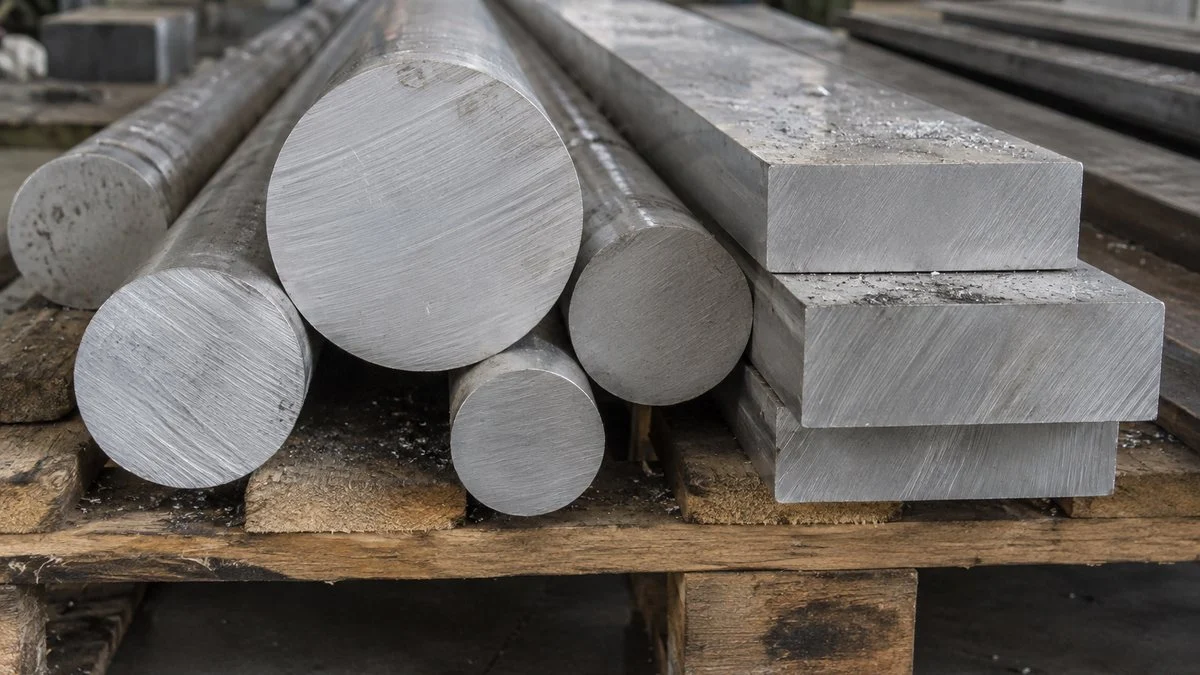
Check whether the alloy is sold in the form you need. A5052 is the typical choice for sheet, while A6061, A2017, and A7075 are common in thick plate and bar.
For extruded profiles with complex cross sections, such as window frames and framing, A6063 is the usual alloy. It is weaker than 6061 but extrudes easily and has good corrosion resistance and surface finishing properties.
If you design with profiles, the practical approach is to choose from extrusion alloys such as 6063 or 6N01 (6005C). 6061 and 7075 are harder to extrude than 6063, so they are less suited to profiles with complex cross sections.
Decision Flow: Which Alloy to Start From
Work from the top down, and start from the candidate where you first answer yes.
This is a rule of thumb. Actual selection should also consider loads, service environment, surface treatment, cost, and what the supplier has in stock.
The first two questions to settle are whether the part will be welded and what form it takes. Those two answers narrow the candidates considerably, and you can then move up to a stronger alloy only as far as the required strength demands.
Where A5052 Fits
A5052 suits mainly sheet metal parts that are bent or welded, such as covers, panels, brackets, and enclosures. Good corrosion resistance and relatively high fatigue strength also suit it to vehicle parts under vibration and to outdoor or wet-area parts. For sheet metal, A5052 is the default starting point.
Where A6061 Fits
A6061 suits bolted structural parts such as equipment frames, base plates, fixtures, and machine parts. The property notes in JIS describe it mainly as a structural material for bolted and riveted joints, and it is often machined from thick plate or round bar.
Where A7075 Fits
A7075 suits parts that push both weight and strength to the limit, such as aircraft components, sporting goods, robot arms, and heavily loaded fixtures. Because it has lower corrosion resistance, tends to color when anodized, and is not suited to arc welding, reserve it for areas that truly need its strength.
When to Look Beyond the Three
Depending on the application, other candidates include:
- 1000 series for busbars and heat sinks that need high electrical or thermal conductivity
- 3000 series for thin formed products such as beverage cans and roofing
- 5083 for large welded structures exposed to seawater
For complex parts made in volume, die castings such as ADC12 are also worth comparing with wrought material.
What to Confirm Before You Substitute
When a Japanese drawing or quote specifies a JIS aluminum designation and you want to source locally or accept an AA/ASTM equivalent, confirm these points in writing with your Japanese customer, designer, or supplier before you order.
- Is the designation complete? Alloy, product form, and temper should all be stated. If the drawing says only "A5052P" or "A6061," ask which temper the designer intended.
- Which JIS product standard applies? H 4000 (sheet and plate), H 4040 (bar and wire), or H 4100 (extruded profiles) tells you whether to compare against ASTM B209, B211, or B221.
- Is an ASTM or EN equivalent acceptable? If so, must the material also meet the JIS minimums (for example, 295 MPa tensile for A6061P-T6 in the 0.5–6.5 mm band), or only the substitute standard?
- Is a different temper acceptable? For example, H32 instead of H34 if that is what is in stock, T651 instead of T6, or H112 for thick plate.
- Which properties must be certified? For A5052P, JIS applies the yield requirement only on request. Confirm whether yield must be specified and reported.
- Will the part be welded, anodized for appearance, or heavily machined? These decide whether a different alloy, such as 2017 or 7075 in place of 6061, is acceptable.
- Is the alloy Japan-specific? For N alloys such as 7N01, or castings such as ADC12, ask the designer which counterpart they will accept.
- What documents must you submit? Usually a mill certificate that names the standard and shows the actual chemistry and mechanical properties.
Limits of This Guide
- The alloy-number matches follow the international registration system. Product standards, tolerances, and property limits still differ between JIS and ASTM, and cross-reference tables do not always agree.
- Property values are standard minimums or ranges from the sources listed below. Standards are revised (JIS H 4000 was revised in 2022), so check the current editions of JIS and ASTM before you rely on any number.
- Aerospace, pressure equipment, structures built to a design code, and other regulated applications may require a specific specification. The owner, the designer of record, or the code authority decides whether a substitute is acceptable.
- Tube, forgings, foil, and castings are covered by other standards and are not mapped here.
- The decision flow and the "where it fits" notes are rules of thumb, not a substitute for a design review of loads and service conditions.
Summary
- A JIS designation such as A5052P-H34 is alloy 5052, form P (sheet or plate), temper H34. Drop the "A" to get the AA alloy number.
- The same four digits mean the same chemical composition, but the product standard differs: JIS H 4000 sheet and plate corresponds most closely to ASTM B209.
- Minimum properties and thickness bands are not identical between JIS and ASTM, so confirm which standard the material must meet.
- The first digit gives the series: 5 is Al-Mg, 6 is Al-Mg-Si, and 7 is Al-Zn-Mg. The 1000, 3000, 4000, and 5000 series gain strength by cold work; the 2000, 6000, and 7000 series by heat treatment.
- Temper changes strength significantly. Alloy, product form, and temper together make one specification.
- As a starting point: A5052 for welded parts, A6061-T6 for bolted structures, and A7075-T6 for maximum strength.
FAQ
Is A5052 the same as 5052 aluminum?
The alloy is the same. JIS A5052 uses the internationally registered alloy number 5052, and the Japan Aluminium Association states that the same four digits mean exactly the same chemical composition. The product standards differ, however, so mechanical property limits and tolerances can differ slightly between JIS H 4000 and ASTM B209.
What is the ASTM equivalent of A5052P-H34?
The closest equivalent is 5052-H34 sheet or plate to ASTM B209 (or B209M for metric limits). The "P" means sheet, strip, or plate under JIS H 4000, and H34 means strain-hardened, stabilized, and half-hard.
A6061 vs. 6061: is there any difference?
The chemistry is the same, but the minimum properties depend on the standard. For T6 sheet, JIS H 4000 sets 295 MPa tensile and 245 MPa yield for thicknesses over 0.5 to 6.5 mm, while commonly cited ASTM B209 minimums are 42 ksi (about 290 MPa) and 35 ksi (about 241 MPa). Confirm which standard applies before you substitute.
Which ASTM specification corresponds to JIS H 4000?
ASTM B209 (B209M in metric) is the closest match. Both cover aluminum and aluminum-alloy sheet and plate. For bars and wire under JIS H 4040, compare ASTM B221 (extruded) or B211 (rolled or cold-finished). For extruded profiles under JIS H 4100, compare ASTM B221.
What is the difference between H32 and H34?
Both are strain-hardened and stabilized. H32 is quarter-hard and H34 is half-hard. For A5052 sheet, JIS H 4000 sets tensile strength at 215–265 MPa for H32 and 235–285 MPa for H34, so H34 is stronger but less forgiving in tight bends.
Sources
- Alloy series, designation rules, alloy properties, and specific gravity: Japan Aluminium Association, "About Aluminum" (PDF, Japanese)
- International alloy registration record: The Aluminum Association, "Teal Sheets"
- Sheet composition and mechanical properties: JIS H 4000, Aluminium and aluminium alloy sheets, strips and plates (Japanese)
- Bar designations and properties: JIS H 4040, Aluminium and aluminium alloy bars and wires (Japanese)
- Extruded profiles: JIS H 4100, Aluminium and aluminium alloy extruded profiles (Japanese)
- Current JIS editions and English titles: JIS H 4000:2022, JIS H 4040:2023, JIS H 4100:2022 (Japanese Standards Association previews)
- Temper designations: JIS H 0001, Aluminium, magnesium and their alloys – Temper designation (Japanese)
- ASTM specifications: ASTM B209, ASTM B211/B211M, ASTM B221
- ASTM B209 values for 5052: Wikipedia, "5052 aluminium alloy"; 6061 designations and T6 minimums: Wikipedia, "6061 aluminium alloy"; 7075 designations: Wikipedia, "7075 aluminium alloy"
- Strength loss in 6061-T6 welds: Japan Welding Engineering Society, Welding Information Center, Q&A Q-01-05-03 (Japanese)
- Weld cracking in 7075: Sokoluk et al., "Nanoparticle-enabled phase control for arc welding of unweldable aluminum alloy 7075," Nature Communications (2019)
- Clear anodizing color by alloy: Koike Techno, "Clear anodizing color by aluminum alloy" (Japanese)
Original article in JapaneseThis guide is adapted from a MONOSCOPE article written for readers in Japan: アルミ合金の種類と番手の見方|A5052(H32・H34)・A6061・A7075の違いと選び方
About the editor
 MONOSCOPE EditorFOUNDER & EDITOR
Spent about ten years at a plant equipment maker and a plant engineering company, proposing, designing, and commissioning equipment, then moved into web marketing. Now a web consultant for B2B manufacturers, helping them explain their products and technology. Licensed in Japan as an Energy Manager and a Third-Class Chief Electrical Engineer.
Has run an engineering blog since 2017 (500+ articles) and a Japanese YouTube channel with about 20,000 subscribers. Each English guide is written from the Japanese shop-floor point of view and checked against the cited standards.