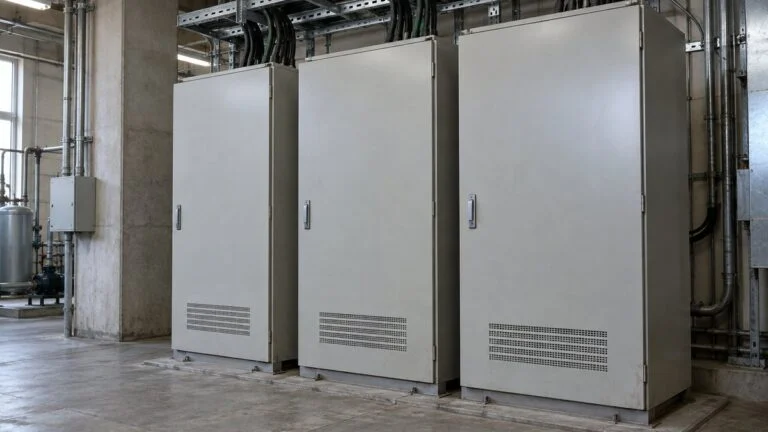
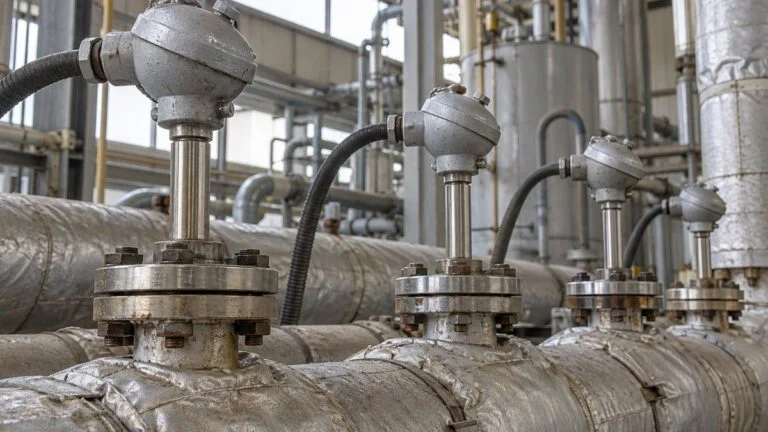
Ex d vs Ex e: Japanese Explosion-Proof Marks and TIIS
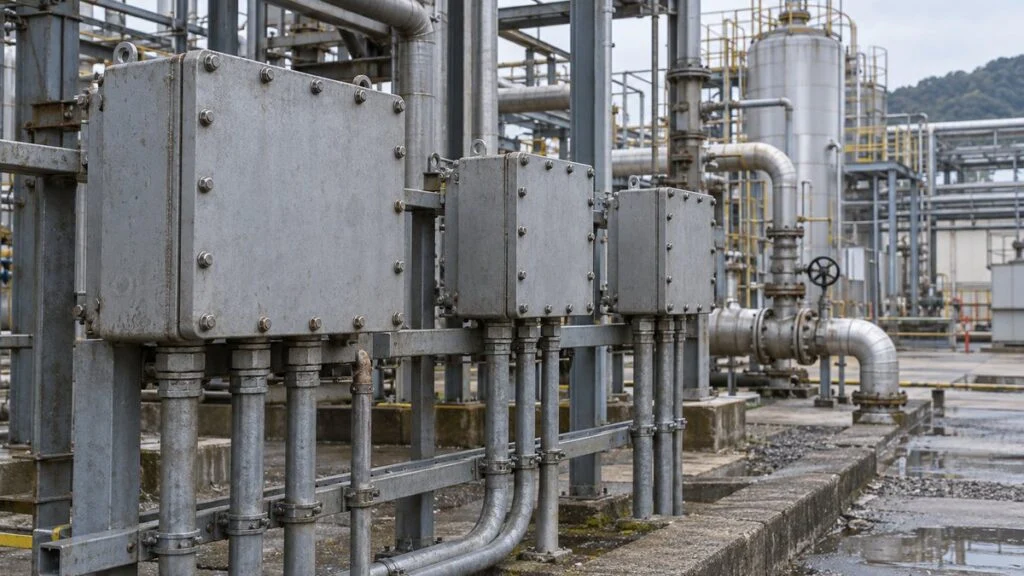
A pump skid arrives from Japan, and the motor nameplate reads d2G4. Another unit on the same skid shows Ex db IIB T4 Gb and a Japanese certificate number. Or you are on the other side of the deal: your Japanese customer wants a junction box marked Ex eb, and you have been told that your IECEx certificate "is not enough for Japan." Either way, you need to know what the letters d and e mean, how Japan certifies explosion-protected equipment, and what to ask before the equipment goes into a hazardous area.
In short, increased safety (Ex e) adds safety measures so that equipment does not create sparks or hot spots in the first place. Flameproof (Ex d), close to what North American codes call "explosionproof," lets gas get into the enclosure but contains any explosion inside it so the flame cannot ignite the gas outside. This guide explains both, shows how to read Japanese and IEC markings, and maps them to zones, IECEx, ATEX, and the US NEC as far as we could verify. It ends with a checklist and an email template you can send to your Japanese supplier.
Safety note: This article explains concepts and what to check. It is not a selection procedure. Area classification and equipment selection must be decided by qualified engineers and confirmed with the certification body and the regulations that apply at your site.
Contents
- Ex d vs. Ex e at a Glance
- Explosion Protection Basics
- How Japan Certifies Explosion-Protected Equipment
- How to Read an IEC Ex Marking
- What Is Increased Safety (Ex e)?
- What Is Flameproof (Ex d)?
- Ex d vs. Ex e: Side-by-Side Comparison
- Choosing by Hazardous Area: Zones 0, 1, and 2
- How Japan's System Relates to IECEx, ATEX, and the NEC
- Specification and Maintenance Checks
- Checklist: Moving Ex Equipment Between Japan and Your Site
- Limits of This Guide
- FAQ
- Sources
Ex d vs. Ex e at a Glance
Both types protect electrical equipment in places where flammable gas or vapor can form an explosive mixture with air. They stop ignition in different ways, and that difference decides which parts of the equipment need attention during selection and maintenance.
- Ex e (increased safety, 安全増防爆 anzen-zo boubaku): for equipment that does not produce sparks, arcs, or ignition-capable temperatures in normal operation. Secure terminals, insulation distances, and temperature limits keep it that way.
- Ex d (flameproof, 耐圧防爆 taiatsu boubaku): the enclosure withstands an internal explosion, and its joints keep the escaping gases from igniting the atmosphere outside. Switch contacts and other parts that spark in normal use can go inside.
The letter alone does not tell you where the equipment can be installed. You also need the equipment protection level (EPL), gas group, temperature class, and, for Japan, the details of the Japanese type examination. The sections below cover each.
Explosion Protection Basics
Explosion protection keeps electrical equipment from igniting an explosive atmosphere. Where flammable gas or the vapor of a flammable liquid mixes with air, an electrical spark or a hot equipment surface can act as the ignition source.
Storing a flammable material does not by itself mean an explosion can happen at any moment. The danger arises when three conditions meet: a mixture within the flammable concentration range, oxygen, and enough energy to ignite it.
Figure 1: Vapor release and electrical ignition sources
Plants combine two measures: ventilation to reduce the explosive mixture, and equipment that does not act as an ignition source.
Concept diagram for gas and vapor explosion protection. Concentration and ignition energy also decide whether an explosion can occur.
Plants reduce the risk in three ways: dilute the gas with ventilation, limit equipment temperature, and use equipment designed so that sparks cannot affect the surroundings. Ex e and Ex d are two different ways of preventing ignition at the electrical equipment itself.
In Japan, Article 280 of the Ordinance on Industrial Safety and Health covers locations where an explosion hazard remains even after ventilation and other measures. There, the basic rule is to use electrical equipment with explosion-protected construction suited to the type of gas and the degree of hazard.
Buying explosion-protected equipment does not complete the job on its own. Release sources and ventilation design, equipment selection, and correct wiring and maintenance belong to one plan.
Gases and vapors use a different system of hazardous areas and markings from combustible dust suspended in air. This article covers gases and vapors only, not dust Zones 20, 21, and 22.
How Japan Certifies Explosion-Protected Equipment
This is where engineers outside Japan most often get stuck. Japan uses the same IEC-based concepts you know, but it has its own legal certification step, and older equipment carries a Japanese marking system that does not translate letter for letter.
Two Sets of Technical Rules
Japan's legal standard is the 電気機械器具防爆構造規格 (denki kikai kigu boubaku kozo kikaku), the construction standard for explosion-protected electrical equipment issued by the Ministry of Health, Labour and Welfare (MHLW). It defines the construction and performance of each protection type.
Alongside it, Japan has technical guidelines aligned with the IEC 60079 series. The National Institute of Occupational Safety and Health, Japan (JNIOSH) publishes them, and equipment examined to these IEC-harmonized requirements carries IEC-style markings such as Ex db or Ex eb. As a result, you can find both marking systems in the same Japanese plant.
Type Examination and TIIS
Under Japan's Industrial Safety and Health Act, explosion-protected electrical equipment must pass a 型式検定 (keishiki kentei), or type examination, before it can be used in Japan. The registered examination body for this equipment is the Technology Institution of Industrial Safety (TIIS). An MHLW list shows its registration dating from March 2004, with the current period running to March 2029.
Points that matter when equipment crosses the border:
- Imported equipment needs it too. TIIS states that equipment must pass the Japanese examination before use in Japan, even if a foreign body has already certified it.
- IECEx test reports can reduce testing, not replace the examination. TIIS can accept an IECEx test report (ExTR) as prior test data if it covers the product, comes from a valid IECEx certification body, and carries an IECEx identification number. To skip physical testing, it must also meet the current Japanese guideline and include data on Japan's national differences. A complete finished unit is still needed as a sample.
- Certificates are granular and expire. A 2017 certification guide from CML, a UK body that MHLW recognized for Japanese certification, says Japan issues a separate certificate for each combination of type, gas group, temperature class, and Ex code, unlike the single product-range certificate common under ATEX or IECEx. MHLW material states that a type examination certificate is valid for three years and must be renewed by re-examination.
- Overseas bodies exist, but check the current list. MHLW has recognized some overseas bodies for Japanese certification or test data (TIIS listed DEKRA Certification B.V. as a designated foreign inspection agency as of March 2023). Designations have fixed periods, so confirm the current status with MHLW or TIIS.
An IECEx, ATEX, or North American mark and a Japanese type examination pass are separate things. For imported equipment, put the Japanese certificate number and its conditions into the specification, not just the name of the foreign certificate.
Reading Older Japanese Markings Such as d2G4
Nameplates made to the Japanese construction standard show short codes such as d2G4. Here d means flameproof, 2 is the 爆発等級 (bakuhatsu tokyu, explosion class), and G4 is the 発火度 (hakkado, ignition class). Together they describe the protection type and the gas properties the equipment covers.
Do not read the 4 in G4 as a measured temperature, and do not rewrite it as the IEC temperature class T4. G is the Japanese ignition class and T is the IEC temperature class. They are separate classifications, so look each one up in the table of the document that applies.
Acetone, a common solvent, shows the difference. Japanese classification examples put it in explosion class 1 and ignition class G1, while the IEC-harmonized system puts it in IIA and T1. Look up the gas first, then check whether the equipment marking covers it, and never mix letters from the two systems into a code of your own.
When you replace equipment, copying only the short code from the old nameplate into a purchase specification leaves out conditions. Record the model, certificate number, target gas, and power supply as well, so you can compare the old unit with a new product certified to a different standard.
How to Read an IEC Ex Marking
The IEC 60079 series is the international basis for explosion protection. A typical marking is Ex db IIB T4 Gb: Ex marks explosion protection, db is flameproof at protection level b, IIB is the equipment group for gases, T4 is the temperature class, and Gb is the equipment protection level.
Figure 2: Read an Ex marking as separate parts: protection type, gas, temperature, and protection level
Example marking for illustration. Do not decide the installation location from the letter d or e alone.
protected
level db
for the gas
135°C (275°F)
for Zones 1 and 2
Check ambient temperature, specific conditions of use, and the Japanese examination details separately. Older markings such as Ex d IIB T5 follow the edition of the standard in use when the equipment was certified.
Group I covers mines susceptible to firedamp; Group II covers all other explosive gas atmospheres. The subgroups IIA, IIB, and IIC reflect how easily a gas ignites and how a flame propagates through gaps. They do not describe gas concentration. Hydrogen and acetylene fall in IIC, and equipment marked IIC also covers IIA and IIB.
Temperature class limits from T1 to T6 are 450, 300, 200, 135, 100, and 85°C (842, 572, 392, 275, 212, and 185°F). A higher number means a lower maximum surface temperature, so the equipment can be considered for gases with lower ignition temperatures.
When you consider T4 equipment, for example, compare its 135°C limit with the ignition temperature of the gas. Read the ambient temperature range at the same time, and include summer conditions and heat from nearby equipment.
An X after the certificate number, or on the certificate, means specific conditions of use apply. Carry those conditions, such as installation method and ambient limits, into the installation specification. Reading the nameplate is not the end of the check.
What Is Increased Safety (Ex e)?
Increased safety applies to equipment that does not produce sparks, arcs, or ignition-capable temperatures in normal operation. Japanese technicians call it "anmashi" for short, and you will see it on terminal boxes and motors.
Terminals that resist loosening, sufficient insulation distances, and limits on temperature rise make ignition sources unlikely. A strong enclosure and a gasket alone do not make equipment Ex e. The Japanese construction standard frames increased safety as raising the safety of parts that are not ignition sources in normal operation, including insulation performance, temperature rise, and protection from external damage.
Figure 3: An Ex e terminal box prevents ignition through connections, insulation, and temperature
The design keeps terminals from loosening and insulation from degrading, so sparks and local overheating are unlikely.
Schematic cross section: brown is the conductor, light blue the insulation, and gray the cable sheath. The cable passes through the gland with its sheath; bare conductors do not touch the metal wall. This is not a fabrication drawing or a wiring instruction. Increased safety does not rely on keeping gas out completely.
Poor contact at a terminal raises contact resistance and can cause localized heating. Short insulation distances or dirty surfaces can cause discharges. These are problems even on ordinary terminal blocks.
Ex e equipment controls these risks through design and components across the whole unit. If you replace a terminal block with a different model after installation, choose a part that keeps the original protection intact.
Under the IEC-harmonized rules, increased safety comes in two protection levels: eb and ec. Level eb corresponds to EPL Gb and ec to EPL Gc, so equipment that is "increased safety" by name is not all approved for the same locations.
Ex e Motors Need Matching Protection Devices
For motors, having no contact sparks in normal operation is only part of it. Heat from the load must also be controlled. An Oriental Motor catalog for its increased-safety motors, for example, calls for a protection device matched to the locked-rotor current and the permissible locked-rotor time.
Related: Thermal Trip: Why Thermal Relays Trip and How to Reset
A blocked cooling air path or an ambient temperature above the rated range also takes the motor outside its selection conditions. Even if a replacement motor has the same output and speed, check its Ex marking and operating conditions separately.
If the motor and the protection device are bought separately, write the protection settings into both specifications. Select by more than rated current: the approved operating conditions include temperature rise during starting and under locked-rotor conditions.
When the overload protection trips, pressing reset and running again is dangerous. Look for clogging on the load side, a seized machine, or a cooling problem, and remove the cause of the temperature rise before restarting.
What Is Flameproof (Ex d)?
A flameproof enclosure lets gas enter, and if that gas explodes inside, the enclosure keeps the explosion from igniting the mixture outside. It combines strength to withstand the explosion pressure with joints that stop the flame from passing through.
A thick metal box alone does not make equipment Ex d. Every path from inside to outside counts: the joint between cover and body, shaft openings, and cable entries.
Figure 4: A flameproof enclosure withstands pressure and keeps flame from reaching outside
The gap and length of each joint keep the flame from escaping. Airtightness alone does not explain how it works.
The gap of the flat joint is exaggerated for clarity. The blue horizontal arrow is the full joint length, the vertical arrow on the right is the gap, and the brown arrow is the path of hot combustion products from inside to outside. Actual permissible dimensions depend on the equipment group, construction, and certification. You cannot take dimensions from this figure.
In a flameproof design, the hot combustion products that pass through a joint must not ignite the surrounding mixture. Joint length and gap are set for the enclosure and the target gas and are verified by the manufacturer's design and testing.
Scratching a joint face, leaving out fastening bolts, or fitting a different cover all degrade the protection. Even when parts look alike, use only approved combinations and follow the specified tightening requirements.
When the cover comes off for maintenance, inspect the joint faces for corrosion, debris, and damaged threads. Do not grind out scratches on site or add material to fill a gap; handle repairs under the manufacturer's repair conditions.
Switches that open and close contacts in normal operation are a typical example of equipment protected by a flameproof enclosure. The contact mechanism may be the same as in an ordinary limit switch, but a general-purpose unit cannot go into a hazardous area as is.
Watch for two misreadings. First, Ex d does not mean gas can never get inside. Second, in Japanese specifications, 耐圧防爆 (flameproof) is different from 耐圧仕様 (taiatsu shiyo), which means rated for process pipe pressure. Both start with 耐圧 ("pressure-resistant"), so read the whole term.
Ex d vs. Ex e: Side-by-Side Comparison
The core difference is whether the design keeps ignition sources from forming, or keeps an internal explosion from reaching the outside. Telling them apart by weight or price leads to wrong choices, especially for combined designs and small devices.
| Item | Increased safety | Flameproof |
|---|---|---|
| Main code | e (IEC-harmonized: eb, ec) | d (typically db) |
| How it prevents ignition | Raises the safety of connections, insulation, and temperature | Withstands an internal explosion and keeps it from igniting the outside |
| What it applies to | Parts that produce no sparks or ignition-capable heat in normal operation | Can also house ignition sources such as switching contacts |
| Main points to maintain | Terminals, insulation, temperature, protective construction | Enclosure, joints, fasteners, cable entries |
| Where it can go | Distinguish eb/Gb from ec/Gc; check Japanese construction-standard equipment separately | Check protection level (such as db/Gb) and certificate details |
| Price and weight | Depend on construction, materials, and specifications | Machining of the enclosure and joints affects cost and weight |
Do not assume Ex e is always cheaper. Price depends on equipment type, capacity, materials, and the scope of certification. Narrow the options first to equipment suitable for the location, gas, and temperature, then compare equipment, installation, and maintenance costs.
One piece of equipment can combine both. A terminal compartment can be increased safety while the sparking contacts sit in a flameproof compartment, so each part gets the protection that suits it.
IDEC, for example, offers a control station marked Ex db eb IIC T6 Gb, a combined flameproof and increased-safety design. Seeing both d and e on one nameplate is not a contradiction; it means the equipment uses more than one protection type.
Keep IP ratings, which describe protection against water and dust, separate from explosion protection codes. A watertight general-purpose box does not address sparks, hot surfaces, or internal explosions.
For control signals, the wiring method and the protection type are decided separately, even when the signal is the same.
Related: 4-20 mA vs 1-5 V: Why Japanese Panels Use 250 Ω Inputs
Choosing by Hazardous Area: Zones 0, 1, and 2
Selection starts with the hazardous area classification where the equipment will be installed, not with the name of the protection type. Areas are classified as Zone 0, 1, or 2 based on how often and how long gas or vapor forms an explosive atmosphere.
Japanese documents also use the terms 特別危険箇所 (tokubetsu kiken kasho, special hazardous location), 第1類危険箇所 (class 1 hazardous location), and 第2類危険箇所 (class 2 hazardous location). On the shop floor you will hear 0種, 1種, and 2種 (zero-shu, isshu, nishu). Map these to Zone 0, 1, and 2 and use the terms of the standard your project follows.
Zone 0
In Zone 0, an explosive atmosphere is present continuously, for long periods, or frequently. The space above the liquid surface in a vessel of flammable liquid is a common example, but the actual classification also depends on operating conditions.
Saying a tank is "full of flammable material" does not tell you whether the atmosphere is explosive. What matters is the mixture of vapor and air in the space where the equipment sits.
As a rule, equipment for Zone 0 is selected to EPL Ga. Intrinsic safety level ia is a typical example, but reading the protection level of the whole equipment is more reliable than memorizing one protection type.
Intrinsic safety limits energy so that sparks and heat cannot cause ignition under specified normal and fault conditions. A low supply voltage alone does not make an ordinary sensor or instrument loop intrinsically safe.
Zone 1
In Zone 1, an explosive atmosphere is likely to occur occasionally in normal operation. Areas near openings that release flammable vapor are candidates, and the extent is set from the release frequency and ventilation.
Under IEC-harmonized marking, Gb equipment, including flameproof db and increased-safety eb, is eligible. Treating all Ex e equipment as Zone 2 only leads to mishandling Gb equipment and combined designs.
Article 2 of Japan's construction standard also lists increased safety among the types of construction for class 1 hazardous locations. Some Japanese manufacturers' selection examples, however, do not use increased-safety lighting in Zone 1.
Keep the list in the regulation separate from the selection conditions for each device, and decide based on the equipment type, the standard your project uses, and the Japanese certificate details. Neither "Zone 1 means flameproof only" nor "any e equipment works in Zone 1" is a valid rule.
When you replace a terminal box in Zone 1, for example, check the box's own Gb suitability and the conditions for the connected equipment separately. A suitable box does not mean you can add any relay inside it.
Zone 2
In Zone 2, an explosive atmosphere is not likely to occur in normal operation and, if it does, persists only for a short time. Consider leaks and ventilation failures; do not choose general-purpose equipment by looking only at normal conditions.
Under IEC-harmonized marking, Gc equipment is eligible, and higher-level Gb and Ga equipment can also be considered. Increased safety ec and non-sparking types are options, but the gas group and temperature class must still match.
Figure 5: Hazardous areas come from release sources and ventilation; EPLs are matched to them
Conditions for an explosive atmosphere differ between the inside of a vessel and the outside of its opening.
| Area | EPL as a rule | Examples in this article |
|---|---|---|
| Zone 0 | Ga | Intrinsic safety ia, etc. |
| Zone 1 | Ga, Gb | Flameproof db, increased safety eb, etc. |
| Zone 2 | Ga, Gb, Gc | All of the above, plus increased safety ec, etc. |
Concept diagram showing how areas relate. Do not apply these shapes or distances to a real plant. Actual hazardous areas depend on release conditions, material properties, and ventilation, and Japanese certificate conditions must also be checked.
Within one room, areas near a release source and areas farther away can fall in different zones. Gas density, release direction, ventilation, and pockets or obstructions where gas can collect all affect the extent.
You cannot assign zones mechanically from equipment names such as tank, cylinder, or door. Overlay the equipment's position and height on the hazardous area classification drawing, and look closely at boundaries and connection points.
How Japan's System Relates to IECEx, ATEX, and the NEC
Because Japan's harmonized rules follow IEC 60079, the zone and EPL concepts line up with IECEx and ATEX. The certificates do not. Each market has its own legal acceptance step, and the US also uses a different area classification system.
| Zone (IEC / Japan) | EPL (IEC 60079) | ATEX equipment category (EU) | US NEC Class I Division (rough guide) |
|---|---|---|---|
| Zone 0 | Ga | 1G | Division 1 (Zone 0 is part of it) |
| Zone 1 | Gb | 2G | Division 1 |
| Zone 2 | Gc | 3G | Division 2 |
Treat the Division column as orientation only. The two systems are not defined the same way, and equipment listed under one is not automatically acceptable under the other. In the US, the National Electrical Code (NFPA 70) covers Class/Division in Article 500 onward and the Zone system in Article 505, and zone equipment for US use is marked AEx. Check the current NEC edition and your authority having jurisdiction (AHJ).
What this means in practice:
- Japanese equipment going abroad: A Japanese type examination certificate is a Japanese legal approval. Do not assume it is accepted as IECEx, ATEX, or a US listing. Ask whether the same model also holds the certification your country requires. In India, for example, PESO (Petroleum and Explosives Safety Organisation) issues approvals for Ex equipment under the Petroleum Rules, 2002; confirm with your site whether one is needed.
- Foreign equipment going to Japan: IECEx or ATEX certification does not remove the need for the Japanese type examination. An IECEx test report can serve as test data under the conditions above.
- Old Japanese codes: A marking such as d2G4 has no direct IEC equivalent letter by letter. Ask the manufacturer which gas groups and temperature classes the equipment is certified for in today's terms, rather than converting it yourself.
Specification and Maintenance Checks
Start by copying the gas and operating conditions used for the area classification into the specification. If you later switch to a different solvent, review at the change-management stage whether the same zone and temperature class still apply.
When comparing quotes, give every manufacturer the same requirements. If one quote includes Japanese type examination and another has only foreign certification, the price gap does not tell you which design is better.
If you move equipment to a different height or add an enclosure that changes airflow, review it against the classification drawing. The route by which released gas flows or collects changes, not just the layout.
Cable glands and blanking plugs for unused entries are part of the certified assembly, not just the instrument body. Swapping in a general-purpose part because the thread fits breaks the approved combination, so match parts down to the model number.
For intrinsically safe instrumentation, check the field instrument, the associated apparatus (safety barrier), and the cable as one circuit. Do not confuse an ordinary signal isolator with energy limitation for explosion protection.
Design shield grounding and protective earthing separately, each for its own purpose. In Ex circuits, follow the equipment's installation conditions for these connections.
Related: Cable Shield Grounding: One End vs Both Ends, Japan Specs
During maintenance, record the marking and actual model, along with any enclosure damage or missing parts. Set inspection points by protection type: terminals and temperature for Ex e, joints and fasteners for Ex d.
Before opening a terminal box, isolate power, deal with stored energy, and confirm the gas atmosphere is safe. Build this into your site's Ex work procedure together with lockout/tagout.
Related: Lockout/Tagout in Japan: Japanese Law vs. OSHA 1910.147
When choosing replacements, compare parts availability and the downtime needed for inspection and replacement, not just purchase price. Time-based and condition-based maintenance approaches help you structure the inspection records.
Keep certificates, instruction manuals, and the approved scope of parts in the handover documents. Recording the model and certificate number in the equipment register lets you trace the selection conditions years later. If you also keep the links between the classification drawing, the specification, and each nameplate, the reasons behind each selection carry over to future upgrades and part replacements.
Checklist: Moving Ex Equipment Between Japan and Your Site
Use this list when you receive Japanese equipment, specify equipment for a Japanese plant, or replace an existing unit.
- Location and hazardous area classification (zone), and the gases involved
- Protection type, equipment group, temperature class, and EPL
- Japanese type examination certificate number, approved model, and specific conditions of use (X)
- Certificate validity dates (Japanese certificates run for three years)
- Certification for the destination country (IECEx, ATEX, NEC/AEx listing, PESO, or other local approval)
- Ambient temperature range, power supply, load, and protection device settings
- Cable entries, glands, blanking plugs, earthing, and maintenance method
- For older Japanese markings (such as d2G4): the manufacturer's statement of the equivalent IEC gas group and temperature class, if any
Questions for the Japanese Supplier
- Which standard was this equipment certified to: the Japanese construction standard or the IEC-harmonized guideline?
- What is the Japanese type examination certificate number, and when does it expire?
- Does the certificate carry specific conditions of use (X)? Please send them in English.
- Does this model also hold IECEx, ATEX, or another certification? Please send the certificate numbers.
- Are the cable glands and blanking plugs included in the certified assembly? What are their model numbers?
- For motors: which protection device and settings are required (locked-rotor current and permissible locked-rotor time)?
Email Template
Subject: Ex certification details for [equipment / model]
Dear [Name],
We plan to install [model] in a [Zone 1 / Zone 2] area at our [country] site. The gases involved are [gas names]. Before we finalize the order, please send the following:
1. The Ex marking and the Japanese type examination certificate number, with its expiry date
2. Any specific conditions of use (X) in English
3. Any IECEx, ATEX, or other certificates for the same model
4. Model numbers of the cable glands and blanking plugs in the certified assembly
5. For motors, the required protection device and settings
Our final selection will be confirmed by our engineering team and the local authority.
Best regards,
[Your name]
Limits of This Guide
- It covers gases and vapors only, not combustible dust.
- Certification rules, recognized bodies, and code editions change. The points on TIIS, overseas bodies, and the NEC reflect the sources listed below at the time of writing; confirm the current status.
- The zone-to-Division table is a rough guide, not an equivalence.
- Whether a given protection type is accepted in a given zone also depends on your company's or project's standards, which can be stricter than the regulations.
- Area classification and equipment selection are decisions for qualified engineers, the certification body, and the local authority. Nothing here replaces them.
FAQ
Can increased-safety (Ex e) equipment be used in Zone 1?
Equipment marked eb with EPL Gb is one of the options for Zone 1. Do not treat it the same as e equipment under Japan's construction standard; decide based on the equipment type, the certificate details, and your site's standards.
Can I put any device inside a flameproof (Ex d) enclosure?
No. Heat from internal devices, machining of the enclosure, and changes to terminals or cable entries all affect the protection, so the certified model and approved configuration must be kept.
Does an IECEx certificate let me use equipment in Japan?
No. Equipment must pass the Japanese type examination before use in Japan. An IECEx test report (ExTR) can be submitted as test data and may reduce testing if it meets the conditions TIIS sets.
Does T4 mean the equipment can be used at an ambient of 135°C?
No. T4 is a class for the equipment's maximum surface temperature, not the upper ambient limit. Ambient temperature is a separate rating, and the installation must stay within it, including any external heating.
Is explosion-protected equipment suitable for hydrogen?
Only if it is certified for the right equipment group and conditions. Hydrogen falls in IIC. Check the gas and temperature conditions against the certificate and the manufacturer's specifications.
Sources
- MHLW, construction standard for explosion-protected electrical equipment (Japanese): definitions of protection types, ignition classes
- MHLW, Ordinance on Industrial Safety and Health, Article 280 (Japanese): electrical equipment in explosion hazard locations
- JNIOSH, technical guideline for explosion-protected electrical installations, Part 1: General (Japanese): markings, EPL, temperature classes
- JNIOSH, Part 5: Increased safety (Japanese): eb, ec, and construction requirements
- JNIOSH, Part 2: Flameproof enclosures (Japanese): enclosures and joints
- JNIOSH, user's guide to explosion-protected plant equipment (Japanese): hazardous areas, EPL, acetone classification
- TIIS, designated foreign inspection agency system and FAQ (Japanese): type examination for imported equipment, use of IECEx ExTR
- MHLW, list of registered type examination bodies (Japanese)
- MHLW, response on type examination certificate validity (Japanese): three-year validity and renewal
- CML, Ex Equipment Certification Guide for Japan (2017): certificates per variant
- IAEI Magazine, "Comparison of Division and Zone Systems": Division vs. Zone, AEx marking
- WEG, guide to explosive atmospheres: gas groups, temperature classes, ATEX categories
- Panasonic, explosion-protected lighting (Japanese): lighting selection by hazardous area
- Oriental Motor, increased-safety motor catalog (Japanese): protection devices for locked-rotor conditions
- IDEC, EC2B control station (Japanese): combined flameproof and increased-safety design
- Example PESO approval under the Petroleum Rules, 2002 (Endress+Hauser)
Original article in JapaneseThis guide is adapted from a MONOSCOPE article written for readers in Japan: 安全増防爆と耐圧防爆の違いとは?e・dの記号と危険場所別の選び方
About the editor
 MONOSCOPE EditorFOUNDER & EDITOR
Spent about ten years at a plant equipment maker and a plant engineering company, proposing, designing, and commissioning equipment, then moved into web marketing. Now a web consultant for B2B manufacturers, helping them explain their products and technology. Licensed in Japan as an Energy Manager and a Third-Class Chief Electrical Engineer.
Has run an engineering blog since 2017 (500+ articles) and a Japanese YouTube channel with about 20,000 subscribers. Each English guide is written from the Japanese shop-floor point of view and checked against the cited standards.