Hozen in Japanese Plants: Maintenance Types, Roles, and TPM
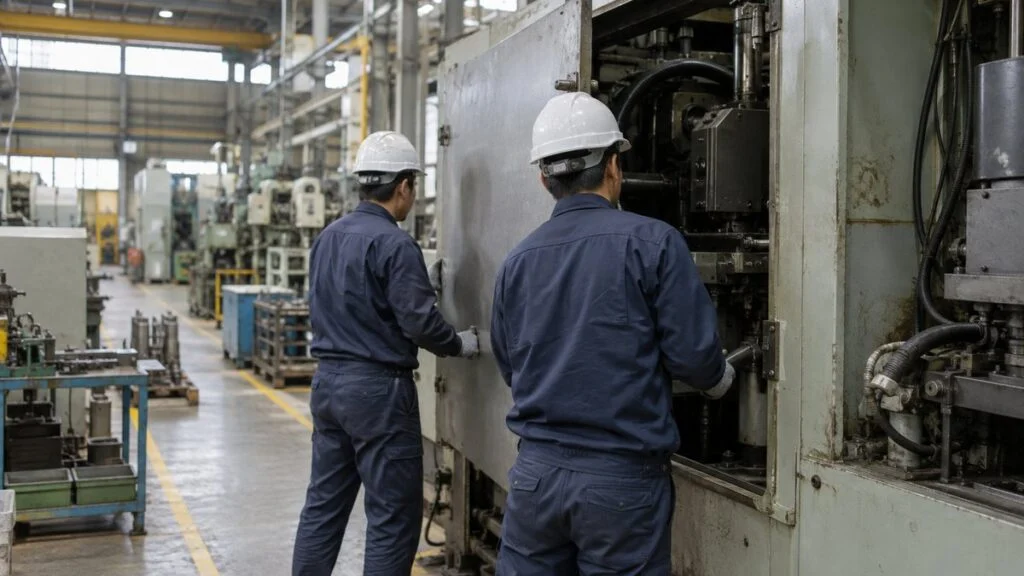
You join a Japanese-owned plant, or start supplying one, and the word hozen comes up in every meeting. The Japanese managers ask whether a conveyor should stay on "BM," want a pump moved from "TBM" to "CBM," and talk about the "hozen team" as if everyone already knows where its job ends and production's begins. The terms map onto ordinary maintenance concepts, but a few of them do not mean what an English speaker expects.
This guide explains what setsubi hozen (設備保全, equipment maintenance) covers in a Japanese plant, what the maintenance department actually does, how Japanese terminology splits maintenance into types, and where it all sits inside TPM (Total Productive Maintenance). It ends with a terminology table, questions to ask the Japanese side, and an FAQ.
Contents
- What Is Hozen (Setsubi Hozen)?
- What the Hozen Team Does
- Types of Maintenance in Japanese Terminology
- Where Hozen Fits in TPM
- Metrics Japanese Plants Use for Maintenance
- Shutdown Windows: When Hozen Is Busiest
- Safety: Stop the Machine and Lock It Before Work
- Skills and the Kikai Hozen Certification
- Quick Reference: Japanese Maintenance Terms
- Questions to Ask the Japanese Side
- Limits of This Guide
- FAQ
What Is Hozen (Setsubi Hozen)?
Hozen (保全) means maintenance, and setsubi hozen is equipment maintenance: everything a plant does to keep its equipment delivering its original performance. The scope goes beyond production machines such as machine tools, assembly lines, and conveyors. It also covers the utilities that keep the plant running, including compressors, power receiving and transforming equipment, air conditioning, and boilers.
The Japanese standard JIS Z 8141 (Production management terms) defines equipment maintenance as the activities that carry out three functions to keep equipment performing: preventing deterioration, measuring deterioration, and restoring performance after deterioration. The activities it lists are planning, inspection, testing, adjustment, servicing, repair, and replacement, done daily or periodically.
The definition starts from one assumption: equipment always deteriorates with use. Hozen slows that deterioration, tracks how far it has gone, and puts worn parts back to their original condition, so the equipment keeps running without unplanned stops.
The JIS Z 8141 definition, translated into shop-floor work.
Japanese plants take this seriously because one stopped machine can halt an entire line. A stop means late deliveries and a reshuffled production plan, plus labor cost while the line sits idle and start-up defects when it restarts. Deteriorated equipment causes trouble even when it keeps running: dimensional variation and foreign matter in the product. Equipment with an unresolved fault can also move unexpectedly, which makes it a safety risk. That is why hozen touches output, quality, safety, and cost at the same time.
What the Hozen Team Does
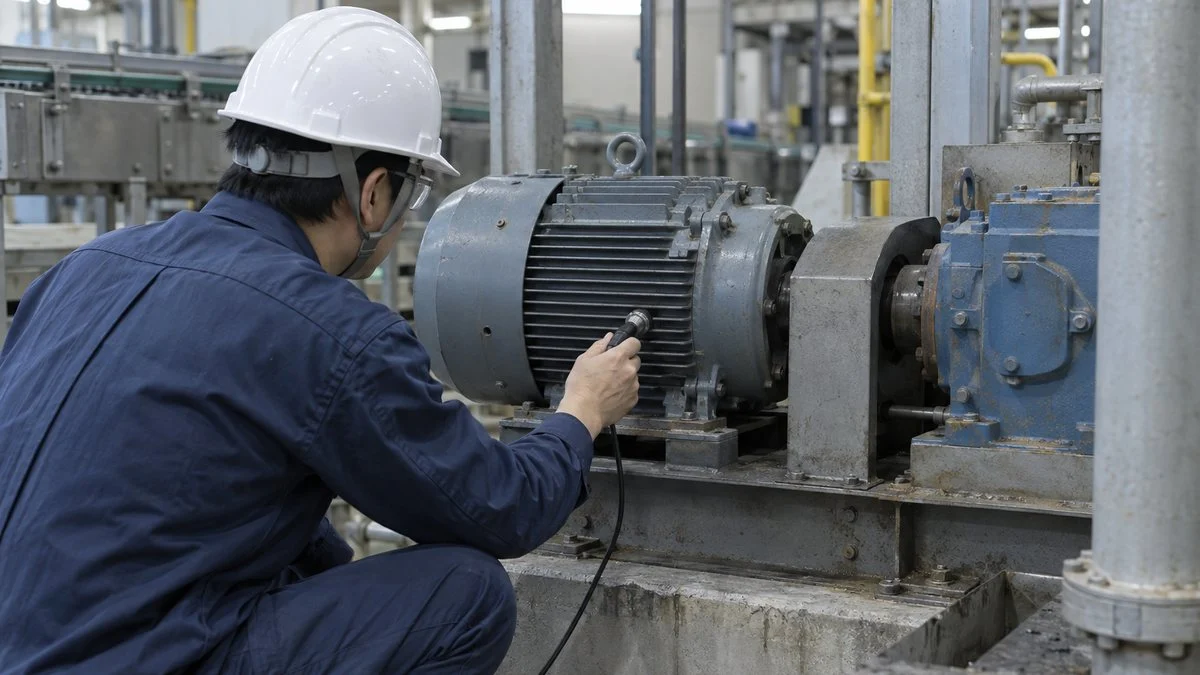
The maintenance department (hozen bumon) splits its work into two kinds: planned work done on a fixed cycle, and breakdown response when something fails without warning. Where the boundaries fall varies by company, but the six duties below are typical.
Top row: measuring condition. Middle row: fixing and improving. Bottom row: running the maintenance operation.
Note: In small plants, one person often covers all six. Large plants often split planning staff from floor technicians.
Inspection and Breakdown Response
Inspection is the daily foundation. Technicians make inspection rounds with a set checklist, looking for unusual sound or vibration, rising temperature, and oil seepage. Most faults give some kind of warning before they become failures, and the point of inspection is to catch it.
No amount of inspection brings sudden failures to zero, though. When a line stops, the hozen technician is called and has to work out whether the cause is a sensor, a motor, or the control program, then get the line running again. Output is zero while the line is down, so speed and accuracy in narrowing down the cause are what this part of the job tests.
Improvement and Maintenance Planning
A repair is not the end of the job. Hozen teams dig into why a part failed and change something so it does not happen again: a more wear-resistant material for a fast-wearing part, or a lubrication port moved to where it is easy to reach. Each change makes the equipment need a little less attention.
The department also keeps records of inspections and replacements, and tracks the maintenance cost of each machine. Those records are the basis for predicting the next replacement and for deciding which equipment should be replaced outright.
The hour-by-hour rhythm of this work, and how breakdowns reshuffle a planned day, are covered in a separate guide.
Related: Maintenance Workflow at Japanese Plants: 8 Steps in 3 Phases
Mechanical vs. Electrical, and How Hozen Differs From Seisan Gijutsu
Larger hozen teams often split by discipline. Mechanical staff (kikai-kei) handle bearings, gears, hydraulic and pneumatic equipment, and pumps. Electrical staff (denki-kei) handle motors, inverters (VFDs), sensors, control panels, and PLCs. In small plants, one person commonly covers both.
The role most often confused with hozen is seisan gijutsu (production engineering). Roughly speaking, production engineering plans and launches new lines and equipment, while hozen keeps that equipment running day to day after start-up and keeps improving it.
Types of Maintenance in Japanese Terminology
Japanese plants use several maintenance methods and choose among them by how critical the equipment is and how big an impact a failure would have. They fall into two groups: methods that keep equipment running, and methods that make the equipment itself better.
"Fix or prevent failures" (maintaining) vs. "make the equipment better" (improving).
Note: Definitions follow JIS Z 8141 (Production management terms). Names and groupings vary by company.
Watch the abbreviation "CM." In general English usage, "corrective maintenance" usually means repairing equipment after it fails. In Japanese TPM practice, "CM" is commonly used for kairyo hozen, improvement-oriented work that changes the equipment so the failure does not recur. Even JIS Z 8141 lists "corrective maintenance" as the English term for jigo hozen (repair after a fault). When a report or KPI sheet says "CM," ask which one it means.
Jigo Hozen: Breakdown Maintenance (BM)
JIS Z 8141 defines jigo hozen (事後保全) as maintenance done after a fault is detected, to restore the item to the state where it performs as required. Put simply: fix it when it breaks.
It sounds careless, but putting every machine on preventive maintenance is not realistic. Choosing breakdown maintenance on purpose can be the rational option for equipment whose stoppage barely affects output, equipment with a standby unit, and parts that are cheap and quick to swap.
Teiki Hozen: Time-Based Maintenance (TBM)
Preventive maintenance (yobo hozen, 予防保全) is maintenance that reduces the effects of deterioration and lowers the probability of failure. Teiki hozen (定期保全), also called time-based maintenance (TBM), is the form JIS defines as preventive maintenance done at scheduled time intervals.
The cycle comes from failure records and the equipment maker's recommendations: "replace this belt every six months," "strip and inspect this pump once a year." TBM is easy to plan, but it also replaces parts that still had life left. Set the cycle too short and costs climb; set it too long and it fails to prevent breakdowns.
Yochi Hozen: Condition-Based Maintenance (CBM)
Condition-based maintenance (CBM) acts on the equipment's condition instead of the calendar. JIS Z 8141 defines yochi hozen (予知保全, predictive maintenance) as a preventive maintenance method that tracks deterioration trends with equipment diagnostic techniques and takes the best action at the best time before failure, and notes that it is also called condition-based maintenance.
Technicians measure vibration, temperature, current, or lubricant condition, and replace the part when the trend crosses a set level. The advantage is that the equipment gets attention only when it needs it, and only as much as it needs. Sensors and data analysis have made CBM more common.
Related: Predictive Maintenance ROI: How Japanese Plants Justify It
None is better in general. Each fits some equipment and not others.
Note: Real plants usually combine all three, matched to how critical each piece of equipment is.
Kairyo Hozen and Hozen Yobo: Improving the Equipment
Kairyo hozen (改良保全, improvement maintenance) aims to make equipment less prone to failure or to raise its performance. If the same spot keeps failing, changing the design usually ends up cheaper than replacing the part again and again.
Hozen yobo (保全予防, maintenance prevention, MP) acts even further upstream. Past maintenance records and failure data are built into new equipment at the planning and design stage, so the equipment is less likely to fail and easier to inspect from day one. When a hozen team sends requirements to production engineering or to the equipment maker before new equipment is bought, that is maintenance prevention in practice. If you build equipment for a Japanese customer, you may receive requests of this kind.
Where Hozen Fits in TPM
In a Japanese plant, maintenance is not only the maintenance department's job. TPM (Total Productive Maintenance), widely used in Japanese manufacturing, was proposed in 1971 by the Japan Institute of Plant Maintenance (JIPM). JIPM states its aim as building, with everyone taking part, systems that prevent every kind of loss before it happens, such as "zero accidents, zero defects, zero breakdowns."
Two pillars deal directly with equipment maintenance: autonomous maintenance and planned maintenance.
Note: Pillar names and the three groupings follow JIPM's "What is TPM" page (Japanese). The descriptions are general summaries. English translations of the pillar names differ between sources.
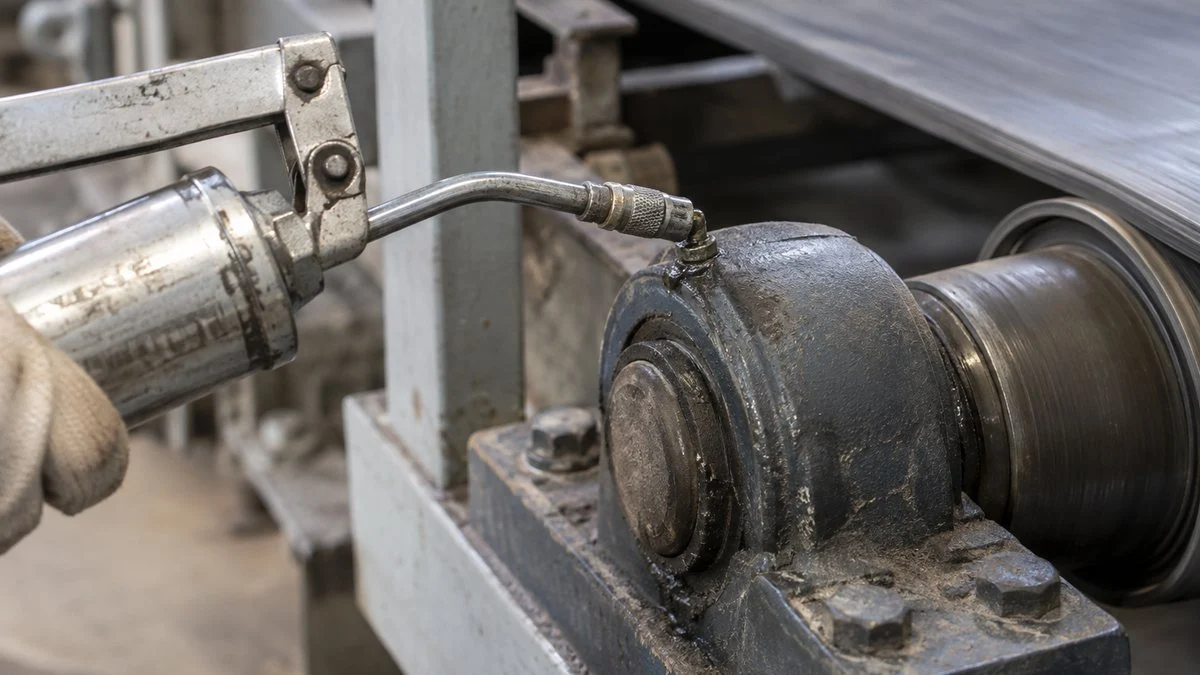
The pillar closest to hozen is jishu hozen (autonomous maintenance). Production operators who run the equipment every day do the cleaning, lubrication, bolt retightening, and simple inspections themselves, on the idea that the people who touch the equipment daily are the first to notice when something is off.
Once autonomous maintenance takes hold, the hozen team no longer spends its time on routine upkeep. It can focus on keikaku hozen (計画保全, planned maintenance): periodic servicing, diagnostics, and improvement work that needs specialist skills. Finding defects through cleaning also overlaps heavily with 5S, and is treated as the foundation for shop-floor improvement.
Related: Kaizen in Japanese Companies: How Improvement Actually Runs
Metrics Japanese Plants Use for Maintenance
A feeling that "we had fewer breakdowns" is not enough to judge maintenance. Plants measure how efficiently the equipment runs and use the numbers to set improvement priorities.
Three rates multiplied together capture losses from stopping, slowing down, and making defects.
Note: OEE was developed by JIPM. The formula and terms follow JIS Z 8141. Japanese terms: setsubi sogo koritsu (OEE), jikan kadoritsu (availability), seino kadoritsu (performance), ryohinritsu (quality rate).
OEE (overall equipment effectiveness) separates the losses: you can see whether the problem is stoppages, slow running, or defects. The two reliability metrics read simply: a longer MTBF means the equipment fails less often, and a shorter MTTR means it gets fixed faster. That makes them a common way to show the effect of maintenance improvements. The number of breakdown calls and the total downtime they cause are also used as a yardstick for the maintenance department. Before you compare these numbers with another plant, confirm how each side counts downtime.
Related: OEE and the 7 Big Losses vs. Six Big Losses in TPM
Shutdown Windows: When Hozen Is Busiest
In Japan, the long holidays (Golden Week in late April to early May, the summer break, and the New Year holidays) are rare chances to stop equipment for long periods. Many plants schedule major servicing and equipment upgrades for these windows, so the hozen team is busiest exactly when the plant is closed. Plants that run 24 hours a day may also put maintenance staff on shifts or call them in at night and on holidays.
If you are a contractor or equipment maker, these windows drive the schedule. The hozen team works out the sequence and safety measures for holiday upgrade work with contractors in advance. Process plants with statutory inspection cycles plan their own large shutdowns; see teishu (plant turnaround).
Safety: Stop the Machine and Lock It Before Work
Hozen work happens right next to machines that can move. In Japan, Article 107 of the Industrial Safety and Health Regulations requires the employer to stop a machine when cleaning, lubrication, inspection, repair, or adjustment work could put workers in danger. Adjustment work was added to the list in October 2013. Once the machine is stopped, the employer must take steps such as locking the starting device and attaching a sign to it, so that nobody other than the workers doing the job can start it.
A Ministry of Health, Labour and Welfare leaflet adds that signs can fall off or be overlooked, so using a lock together with the sign is preferred. Out-of-routine tasks such as inspection, adjustment, and clearing jams are called hiteijo sagyo (非定常作業, non-routine work). A labor standards office leaflet describes a fatal accident in which no safe work procedure existed for adjustment work and the machine restarted during the job.
These are Japanese legal requirements. Outside Japan, local law applies; in the US, for example, that is OSHA's standard on the control of hazardous energy (29 CFR 1910.147). A Japanese parent's procedures and your local rules can differ, so confirm which rules govern your plant and who signs off on them. Under pressure to restart a stopped line, the risk is skipping steps; rushed checks can lead to secondary accidents or wrong repairs. For related hazard-awareness practices, see kiken yochi (KY) training and hiyari hatto near-miss reports.
Related: Lockout/Tagout in Japan: Japanese Law vs. OSHA 1910.147
Skills and the Kikai Hozen Certification
Hozen draws on both mechanical and electrical knowledge, and most technicians build their range on the job, working breakdowns alongside senior staff. On the mechanical side, the basics are the structure of bearings, gears, and hydraulic and pneumatic equipment, plus reading drawings. On the electrical side, circuit basics plus an understanding of PLCs and sequence control make fault isolation much faster.
The skill that is easy to overlook is coordination. Hozen technicians negotiate downtime with production, get an accurate description of symptoms from operators, and explain specifications to contractors. The job involves as much work with people as with machines.
The best-known Japanese qualification in the field is the Kikai Hozen Gino Kentei (機械保全技能検定, national trade skills test for machine maintenance). Those who pass can use the title kikai hozen ginoshi (certified machine maintenance technician), and JIPM runs the exams. Grade 3 requires no work experience, so it is a common first goal for newcomers. You may see the grade on a Japanese engineer's résumé or in a parent company's training plan.
Higher grades require more years of hands-on experience.
Note: Based on JIPM's guide for the second 2026 exam (Japanese). Required experience can be shortened depending on education and vocational training. Check the official site for current details.
Depending on the equipment, Japanese hozen staff may also hold licenses such as electrician (denki koji shi), chief electrical engineer (denki shunin gijutsusha), hazardous materials engineer (kikenbutsu toriatsukaisha), boiler-related licenses, and crane and slinging training certificates. In Japan, some work on electrical equipment and boilers may legally be done only by licensed people, so staff add licenses to match the equipment they look after. Licensing rules in other countries differ, so check local requirements.
Quick Reference: Japanese Maintenance Terms
| Japanese | Romaji | English | Abbreviation |
|---|---|---|---|
| 設備保全 | setsubi hozen | equipment maintenance | – |
| 保全部門 | hozen bumon | maintenance department | – |
| 事後保全 | jigo hozen | breakdown maintenance (JIS English: corrective maintenance) | BM |
| 予防保全 | yobo hozen | preventive maintenance | PM |
| 定期保全 / 時間基準保全 | teiki hozen / jikan kijun hozen | time-based (periodic) maintenance | TBM |
| 予知保全 / 状態基準保全 | yochi hozen / jotai kijun hozen | predictive / condition-based maintenance | CBM |
| 改良保全 | kairyo hozen | improvement maintenance (often called corrective maintenance in TPM) | CM |
| 保全予防 | hozen yobo | maintenance prevention | MP |
| 計画保全 | keikaku hozen | planned maintenance (TPM pillar) | – |
| 自主保全 | jishu hozen | autonomous maintenance (TPM pillar) | AM |
| 設備総合効率 | setsubi sogo koritsu | overall equipment effectiveness | OEE |
| 非定常作業 | hiteijo sagyo | non-routine work | – |
Note that "PM" can also mean "productive maintenance," the pre-TPM concept, in older Japanese material. Context usually makes it clear.
Questions to Ask the Japanese Side
Use these when you start working with a Japanese hozen team, a Japanese parent company's TPM office, or a Japanese customer's maintenance department.
- Which equipment is on BM, TBM, or CBM, and how was each machine's criticality ranked?
- When your reports say "CM," do you mean improvement work or repair after a failure?
- Which tasks belong to operators (jishu hozen) and which to the hozen team? Is there a written list?
- Where does hozen's responsibility end and production engineering's begin, especially for new equipment start-up?
- How are OEE, MTBF, and MTTR calculated here? What counts as downtime, and are setups included?
- Which shutdown windows (Golden Week, summer, New Year) are reserved for major work, and how early must contractors confirm plans?
- For new equipment: what maintenance-prevention (MP) requirements will you send to the equipment maker, and when?
- Whose lockout rules apply on site: the parent company's standard, local law, or both? Who approves non-routine work procedures?
Limits of This Guide
Maintenance organization varies widely between Japanese companies and industries. In small plants one person may handle everything; larger plants often separate planning from floor work and split mechanical and electrical teams. Term usage also varies: companies may group maintenance methods differently from JIS Z 8141, and English TPM vocabulary is not standardized. The legal points above describe Japanese rules only and are not work instructions. Always follow your plant's own procedures and local law.
FAQ
What does hozen mean in Japanese?
Hozen (保全) means maintenance. In a plant, it usually refers to setsubi hozen, equipment maintenance, or to the maintenance department itself. Jishu hozen is autonomous maintenance done by operators; keikaku hozen is planned maintenance done by the maintenance team.
Is corrective maintenance the same as breakdown maintenance?
It depends on who is speaking. In general English usage, and in the English term listed by JIS Z 8141, corrective maintenance means repairing after a fault. In Japanese TPM practice, "CM" often refers to kairyo hozen, improvement maintenance that changes the equipment so failures recur less. Ask which meaning is intended.
What are the main types of maintenance in Japanese plants?
Japanese terminology commonly uses five: breakdown maintenance (BM), time-based maintenance (TBM), condition-based maintenance (CBM), improvement maintenance (kairyo hozen, often CM), and maintenance prevention (MP). TBM and CBM are both forms of preventive maintenance.
What is the difference between planned maintenance and autonomous maintenance?
Autonomous maintenance (jishu hozen) is routine care done by production operators: cleaning, lubrication, retightening, and daily checks. Planned maintenance (keikaku hozen) is done by the maintenance department: scheduled servicing, diagnostics, and improvement work that needs specialist skills.
What is maintenance prevention (MP)?
Maintenance prevention (hozen yobo) uses past maintenance records and failure data at the planning and design stage of new equipment, so the equipment is less likely to fail and easier to inspect. In practice, the plant's maintenance team sends requirements to production engineering and the equipment maker before the equipment is built.
Sources
- Definitions of equipment maintenance and maintenance methods: JIS Z 8141:2022 Production management terms, maintenance terms (Japanese)
- OEE formula: JIS Z 8141:2001 Production management terms (Japanese)
- TPM definition and the eight pillars: Japan Institute of Plant Maintenance, "What is TPM" (Japanese)
- Kikai Hozen Gino Kentei grades and eligibility: Machine Maintenance Skills Test, 2026 second exam outline (Japanese)
- Article 107 machine stop and starting-device lock: Ministry of Health, Labour and Welfare leaflet on Article 107 (Japanese)
- Accident during non-routine work: Niigata Labour Bureau, Koide Labour Standards Inspection Office, leaflet on preventing caught-in accidents (Japanese)
- US hazardous energy control: OSHA, 29 CFR 1910.147 The control of hazardous energy (lockout/tagout)
Original article in JapaneseThis guide is adapted from a MONOSCOPE article written for readers in Japan: 設備保全とは?仕事内容・保全の種類・1日の流れを現場目線で整理
About the editor
 MONOSCOPE EditorFOUNDER & EDITOR
Spent about ten years at a plant equipment maker and a plant engineering company, proposing, designing, and commissioning equipment, then moved into web marketing. Now a web consultant for B2B manufacturers, helping them explain their products and technology. Licensed in Japan as an Energy Manager and a Third-Class Chief Electrical Engineer.
Has run an engineering blog since 2017 (500+ articles) and a Japanese YouTube channel with about 20,000 subscribers. Each English guide is written from the Japanese shop-floor point of view and checked against the cited standards.