Japanese Mold Makers and Machining Shops: Who Does What
You need a stamping die or an injection mold built in Japan, or your Japanese customer has told you that a part will come from "our mold maker in Aichi." Then the questions start. Who designs the tool, and who actually runs production with it? Who owns the mold once it is paid for? Is the tooling cost a separate invoice, or is it buried in the piece price? And why is a trading company copied on every email?
The answers come from how Japan's mold and machining industry is organized. Material and machine suppliers sit upstream. In the middle are mold makers (kanagata makers, 金型メーカー), the shops that use those molds to mass-produce parts, and small specialist shops for heat treatment and finishing. Automakers, appliance makers, and their Tier 1 suppliers sit downstream and place the orders.
This guide explains who does what in that chain, how orders and money move through it (shoryu, 商流, the commercial flow), where the margin sits (profit and ways of working differ sharply by stage), and how the industry is changing. It ends with a checklist for buyers outside Japan and a sample inquiry email. It does not rank companies.
Contents
The Japanese Mold and Machining Supply Chain at a Glance
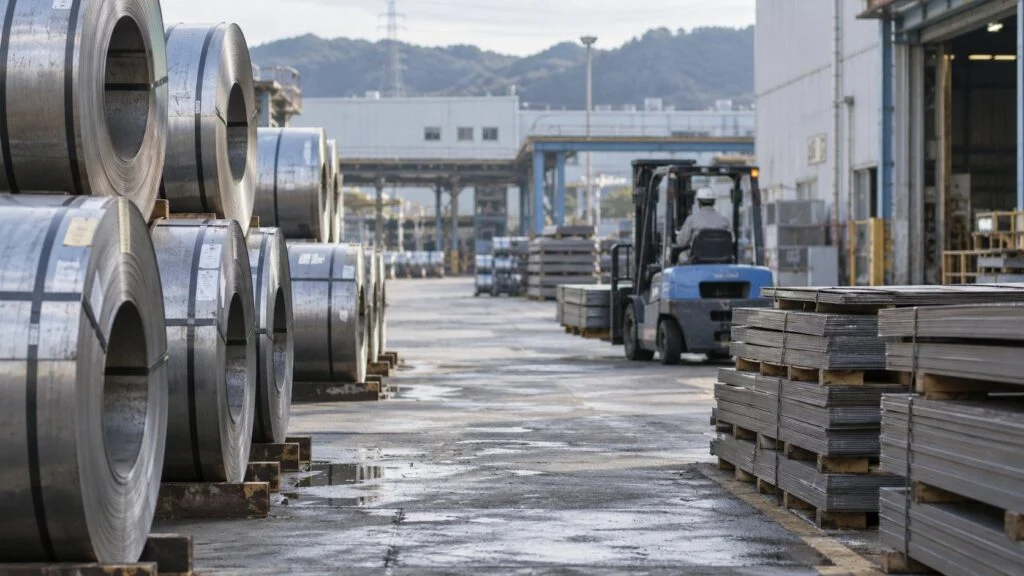
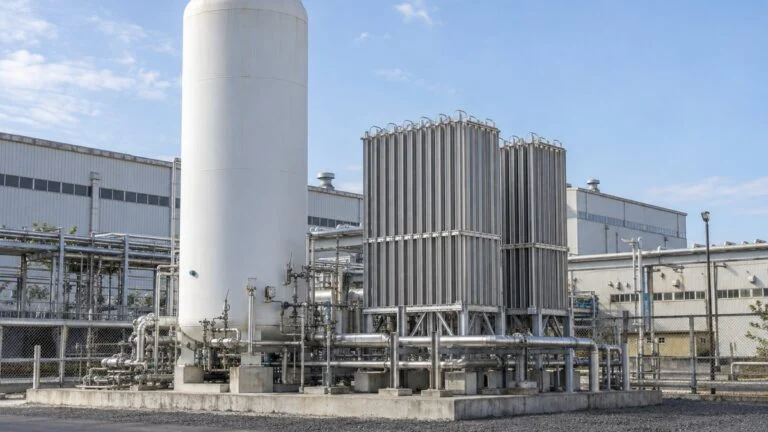
The industry sits in the middle of a long chain. It takes steel, nonferrous metals, and resins from material makers, and machine tools, presses, and cutting tools from equipment makers. It turns them into molds and parts, then ships them to parts makers and finished-product makers further down the chain.
Molds and machining connect each stage from raw material to finished product.
Actual flows vary by project. A finished-product maker may order directly from a mold maker, for example.
The mold is the hinge of the whole structure. Every mold is built to order, and its quality sets the quality and cost of everything stamped or molded from it afterward. When a finished-product maker starts developing a new model, that information travels back up the chain and becomes mold orders.
Two sets of figures show what the industry makes and for whom. According to the Japan Die & Mould Industry Association (JDMIA), automobiles, motorcycles, and other transport equipment accounted for 73.0% of Japanese mold production by value in 2025. By mold type, plastic molds (33.2%) and press dies (32.7%) make up about two-thirds of output, followed by die-casting and casting molds (8.4%) and forging dies (4.3%).
Geography matters too. Aichi Prefecture, home to Toyota and its suppliers, produces the most molds by value, followed by Kanagawa, Osaka, Shizuoka, and Gifu. Mold makers, production shops, and specialist subcontractors cluster near the plants of the finished-product makers, so much of the work can be split among companies in the same region. If you visit a supplier in Aichi, expect its heat treater and its machining subcontractors to be a short drive away.
Who Does What: The Five Players
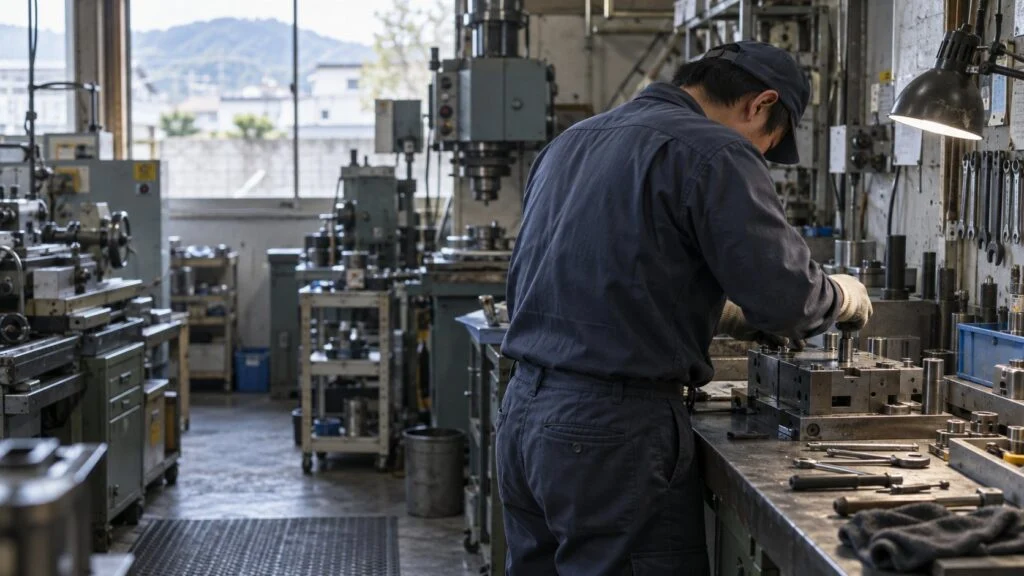
Companies in this industry look very different depending on their tier and size. Start with the size data, because it explains a lot about who you will deal with.
JDMIA's figures for 2024 count 4,077 mold establishments in Japan. 62.4% of them have nine or fewer employees, yet they produce only 9.4% of output by value. Establishments with 100 or more employees are only about 2% of the total but produce 41.7% of the value. By count, the industry is mostly small shops. By value, a limited number of mid-size and large companies carry much of the weight.
Within the same industry, size changes the work a company does and how that work is organized.
Figures are for 2024, from JDMIA's compilation of METI's survey of manufacturing establishments. "100 or more" includes establishments with 300 or more. Work and organization describe general tendencies.
Material and Equipment Suppliers (Upstream)
Steel, nonferrous metal, and resin makers supply the materials. Machine tool, press, and cutting tool makers supply the equipment. Many are large companies, and for mold makers and machining shops they set two big cost lines: materials and capital investment.
When steel or energy prices rise, the increase hits the shop's costs directly. How much of it a small shop can pass on to its customer largely decides whether it makes money. Buyers see this as price increase requests. See Japan Steel Price Increase 2026 and Price Increase Requests in Japan.
Related: Japan Steel Price Increase 2026: Responding to Suppliers
Mold Makers
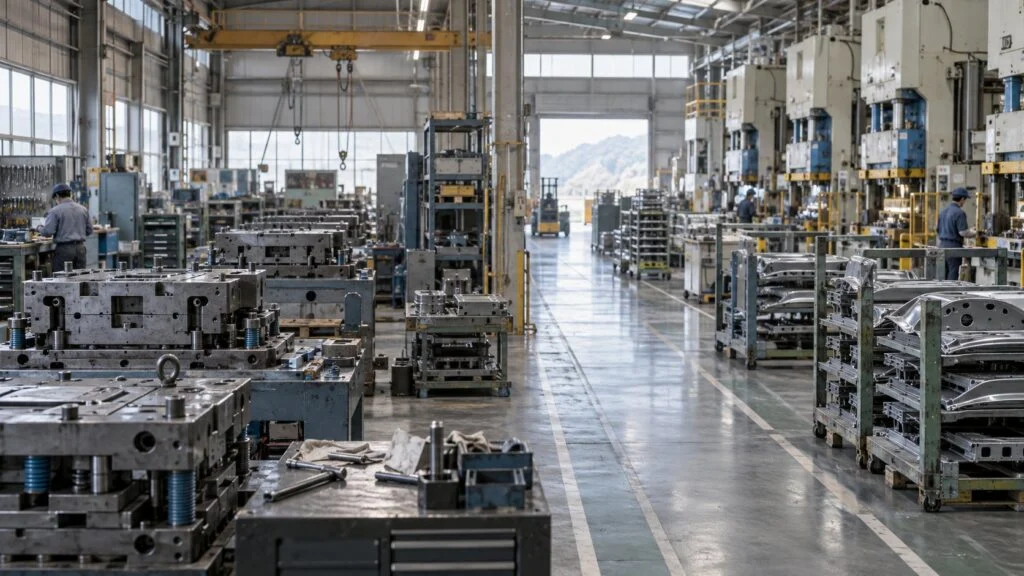
Mold makers build one-off tools to order. They range from companies that make large press dies for car body panels to shops that specialize in precision molds for electronic components, so size and equipment vary widely with specialty.
Makers that handle the whole job end to end (design, machining, finishing, and tryout, the test shots or test hits before approval) capture more of the value. Design capability is what sets them apart. Smaller shops often specialize in machining or repairing mold components for other mold makers.
Production Shops: Stamping, Machining, Casting, Forging
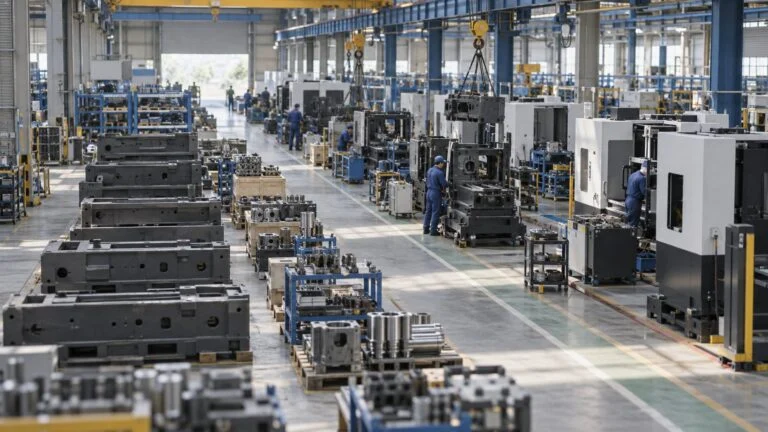
These companies use the molds and dies to mass-produce parts. They range from listed companies that stamp car body structures to small local press shops. They tend to have larger sales than mold makers, which build one tool at a time.
In volume production, equipment utilization and defect rate decide profit. The margin on each part is small, so these shops make money by running a steady, high volume.
Specialist Process Shops
Heat treatment, surface treatment, grinding, and electrical discharge machining (EDM) are often done by shops that offer only that one process. Most are small and take work from mold makers and production shops in the same region.
Each one is small, but the regional division of labor depends on them. A shop with strong skills in one process can draw work from far away. For buyers, this means part of your mold or part may be processed by a company you never see on the purchase order. For the heat treatment terms you will meet on Japanese drawings, see Heat Treatment Terms on Japanese Drawings.
The Customer: Finished-Product Makers and Tier 1s
Automakers, parts makers, and other customers set the specification, price, and delivery date. Some of them have their own tooling departments and build critical molds in-house.
In-house tooling is a sizable share. In METI's machinery statistics compiled by JDMIA, molds made by companies for their own use were 26.1% of production by value for January–August 2026, or roughly one in four. The share differs by mold type: 29.3% for press dies and 19.1% for plastic molds over the same period.
How Orders and Money Flow
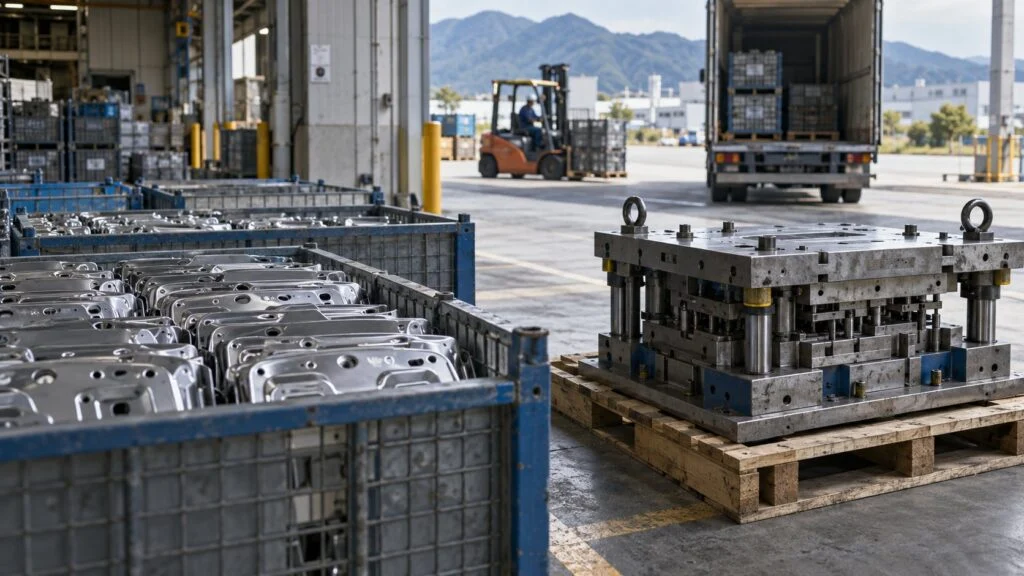
The basic pattern is simple: the customer presents a specification, and the supplier quotes and takes the order. But a mold stays in use for years, through production, maintenance, and storage, so the commercial relationship does not end with a single sale.
The flow has three stages: before the order, build and delivery, and after production.
Payment terms vary by deal. The tooling cost may be paid as a lump sum or recovered through the piece price.
Tooling Cost: Paid Up Front or Amortized Into the Part Price
How the mold gets paid for varies by deal. In some deals, the customer pays the tooling cost as a lump sum after acceptance. In others, the supplier recovers it by adding it to the piece price, which is tooling amortization.
For a buyer, the payment method connects directly to two other questions: who owns the mold, and who pays to store it after production ends. If the cost is amortized, ask how many parts the amortization assumes and what happens if volume falls short. Settle ownership, storage, and scrapping in writing. Japan's rules on free mold storage and a checklist for tooling agreements are covered in Mold Storage in Japan: Subcontract Act Rules and Checklist.
Keiretsu and Independent Shops
In the auto industry, long-term supply relationships headed by each automaker (keiretsu) have long been the norm. Some large production shops sell most of their output to one automaker group.
Many small and mid-size mold makers, on the other hand, belong to no group and work for several customers. A spread of customers makes them more resilient to downturns. For a buyer outside Japan, it is worth asking early how much of a shop's work goes to one customer group. For how keiretsu and tiers work in autos, see Japanese Automotive Supply Chain: Tiers, Keiretsu, Pricing.
Trading Companies and Other Intermediaries
A trading company or a parts maker sometimes sits between the customer and the shops. It arranges molds for overseas plants, or it bundles parts from several machining shops and delivers them as one order. For small shops, it is also a way to reach customers and overseas projects they could not reach alone.
Each layer in the middle tends to shrink the shop's share of the price, so whether a shop can deal directly with the customer is one of the things that separates profitable shops from the rest. More small and mid-size shops now publish their technical capabilities to get direct inquiries. As a buyer, you can ask whether the company quoting is the one building the tool, and which processes it subcontracts. A similar pattern exists in factory automation; see Japanese Factory Automation: Makers, Distributors, SIers.
Pricing and Trade Practices
Prices start from a build-up of labor hours and material cost, and the final figure comes out of negotiation with the customer. Customers have traditionally held the stronger position, and practices that shift costs onto suppliers, such as repeated cost-down requests and free storage of molds, have long been criticized.
On January 1, 2026, Japan's Subcontract Act was amended and renamed. The Japan Fair Trade Commission (JFTC) shortens the new name to the Fair Transactions Act (toriteki-ho, 取適法). Conditions are improving for suppliers to ask customers to pay for storing molds after production ends and to cover higher material and labor costs. If you buy from Japanese suppliers, expect more of these requests. For how Japanese suppliers quote, see RFQ to a Japanese Manufacturer.
Where the Margin Sits
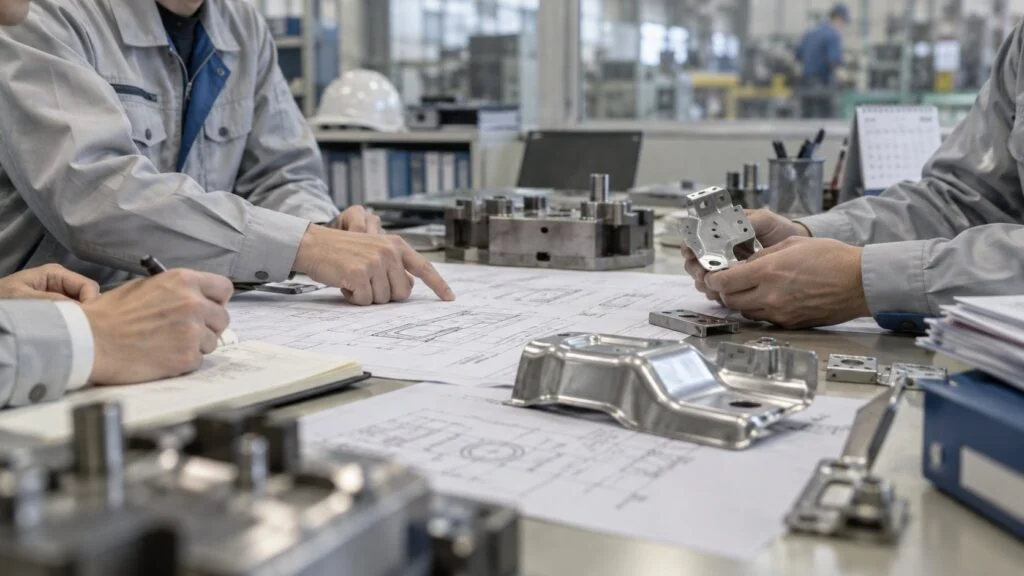
Companies in the same industry earn money in very different ways depending on their process and position.
Value tends to gather upstream in design and downstream in maintenance.
The most value lies in the design stage, where a supplier proposes the mold structure and the forming method. Suppliers that join the customer's development early are chosen for their engineering, not just their price.
Work that only machines to the drawing is the opposite. It competes with many shops in Japan and abroad and tends to become a price fight. Imported molds most likely compete mainly in this segment.
Production shops have large sales but thin margins. Material is a high share of their cost and equipment depreciation is heavy, so whether they can pass material price changes on to customers makes a large difference to profit.
Small mold makers are under even more pressure. In a Teikoku Databank survey of mold makers for fiscal 2024 (April 2024–March 2025), 37.3% reported a loss and 23.0% reported lower profit, so about six in ten saw results worsen.
Maintenance helps balance this. Once a mold is delivered, repair and modification requests keep coming as long as production runs. Each job is smaller than a new mold, but together they are a steady source of income.
How the Structure Is Changing
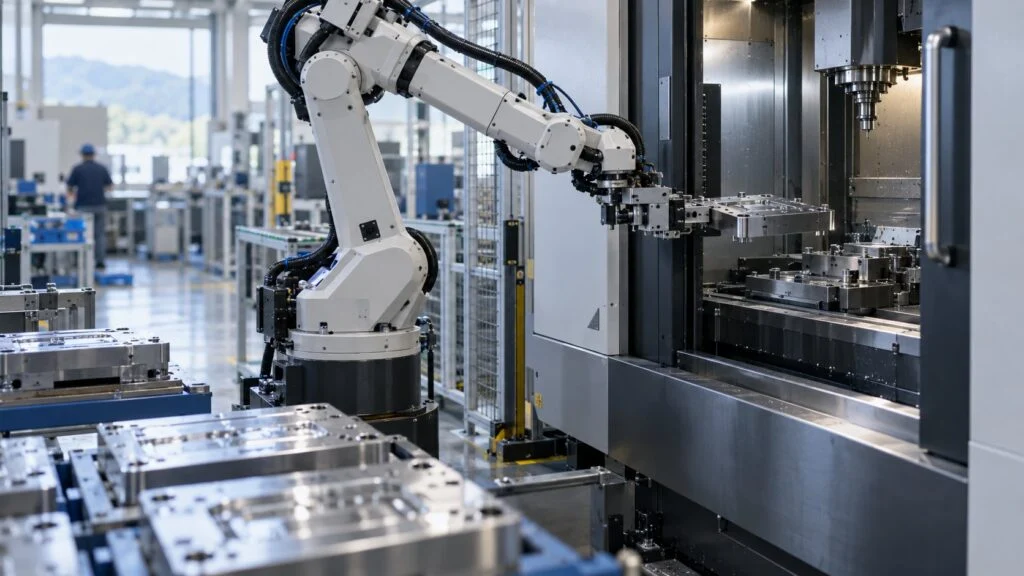
Three changes are reshaping the industry: fewer companies, a settled division of work with other countries, and electrification.
Fewer Shops and Consolidation
Japan had 12,815 mold establishments at the 1991 peak and 4,077 in 2024. Teikoku Databank counted 126 mold makers that went bankrupt or closed in January–September 2025 (36 bankruptcies and 90 closures or dissolutions), putting exits on track to rise for a fourth straight year. Reports on the survey list these causes:
- Labor shortages
- Weak demand
- Customers moving production overseas or bringing tooling in-house
- Rising material prices
Small companies find it hardest to renew equipment and find successors. When one closes, its work moves to the shops that remain, and more equipment and people are likely to change hands through business succession and M&A. For a buyer, this is a supply risk: check the supplier's succession plan and where your molds would go if it closed. See Japanese Supplier Financial Health: Warning Signs and Checks.
Overseas Production, Imports, and Exports
Large production shops have followed their customers abroad and built overseas plants. Mold imports are also established. Japan imported JPY 133.9 billion of molds in 2025, 58% of it from China, according to trade statistics compiled by JDMIA.
Molds flow the other way, too. Japan exported JPY 204.0 billion of molds in 2025. The United States was the largest destination at JPY 71.5 billion (35%), followed by Thailand (JPY 25.3 billion), China (JPY 22.9 billion), and Mexico (JPY 21.3 billion). Vietnam, Indonesia, India, the Philippines, and Malaysia each took between JPY 3.8 billion and 8.6 billion.
Japanese shops are expected to win on work that sets them apart from overseas competitors, such as difficult molds and short lead times. When you compare a Japanese quote with a lower one from elsewhere, compare the tryout, maintenance, and engineering support included, not just the price.
Electrification and New Business
Electric vehicles create new product areas, such as stamped motor cores and battery components, while some engine-related tooling demand falls. Some precision mold makers have already made these parts a major business. Whether a shop can carry its existing strengths into new parts will decide who gains ground in the coming years.
Checklist: Before You Order From a Japanese Mold Maker
Use these questions when you buy a mold, or parts made with a mold, from a Japanese supplier. Ask them before you place the order, and keep the answers in writing.
| Topic | What to ask |
|---|---|
| Who builds it | Is the company quoting the one designing and building the mold? Which processes (heat treatment, surface treatment, EDM, machining of components) are subcontracted, and to whom? |
| Who produces the parts | Will the mold maker also run production, or will the mold go to a separate press or molding shop? Who is responsible for part quality? |
| Tooling cost | Is the tooling paid as a lump sum or amortized into the piece price? If amortized, over how many parts, and what happens if volume falls short? |
| Acceptance | What counts as acceptance (number of tryouts, sample approval, inspection report), and when is payment due? |
| Ownership | Who owns the mold after payment? Is it marked or tagged as your property? Who holds the mold drawings and data? |
| Maintenance and changes | How are wear repair and design changes quoted and approved? What tool life does the supplier expect, in molding shots or press strokes? |
| Storage and end of life | Where is the mold stored after production ends, who pays, and how will scrapping or return be decided? |
| Intermediaries | If a trading company is involved, what does it handle (quotes, logistics, payment, warranty), and who answers technical questions? |
| Continuity | What happens to the mold and the open order if the supplier closes or is sold? Is there a backup shop? |
Sample Inquiry Email to a Japanese Mold Maker
The example below is fictional. Replace the bracketed items.
Subject: Request for quotation: [press die / injection mold] for [part name], [annual volume] pcs/year
Hello,
We are [company name], a [product] manufacturer in [city, country]. We are looking for a supplier for the following tooling and would like to request a quotation.
Part: [part name and number] (drawing attached)
Material: [material]
Annual volume: [quantity], production period: [years]
Production location: [your site or the supplier's site]Could you tell us:
1. which processes you perform in-house and which you subcontract;
2. the tooling price and whether it is quoted separately or amortized into the piece price;
3. lead time to first samples, and the number of tryouts included;
4. ownership of the mold after payment, and your terms for maintenance and storage after production ends;
5. whether you can ship the mold overseas and support it there.We are happy to sign an NDA before sharing further details.
Best regards,
[Name, title, company, phone]
Limits of This Guide
- This describes typical patterns in Japan. Actual commercial flows vary by project. A finished-product maker may order directly from a mold maker, for example.
- Payment, ownership, and storage terms are set by each contract. Nothing here replaces reading your own agreement.
- Statistics are national totals for Japan and do not describe any single supplier.
- This guide does not rank mold makers or compare individual companies.
FAQ
How many mold makers are there in Japan?
JDMIA counts 4,077 mold establishments for 2024, down from 12,815 in 1991. About 62% have nine or fewer employees.
What does tooling amortization mean when buying from Japan?
It means the supplier recovers the mold cost by adding it to each part's price instead of invoicing it up front. Agree in writing on the volume it assumes, what happens if volume falls short, and who owns the mold.
Who owns a mold made by a Japanese supplier?
It depends on the contract. Molds the customer pays for are commonly kept at the supplier's plant for production, so state ownership, storage, and scrapping in your agreement.
Why is a trading company involved in my mold order?
Trading companies arrange molds for overseas plants and bundle parts from several shops into one order. Ask what the trading company handles and who answers technical questions.
Does Japan import molds from China?
Yes. In 2025, Japan imported JPY 133.9 billion of molds, 58% from China. Japan also exported JPY 204.0 billion, with the United States as the largest destination.
Sources
- Establishments by size, output by size, 1991 peak, prefecture ranking, demand by industry, mold type mix, imports and exports: Japan Die & Mould Industry Association, "Japan's Mold Industry at a Glance" (Japanese) and JDMIA, national mold statistics 2024 (Japanese)
- In-house share of mold production: JDMIA, mold production based on METI machinery statistics (Japanese)
- Bankruptcies, closures, and earnings of mold makers: Teikoku Databank release via Zaikei, October 2025 (Japanese)
- Fair Transactions Act and mold storage: MONOSCOPE, Mold Storage in Japan
Original article in JapaneseThis guide is adapted from a MONOSCOPE article written for readers in Japan: 金型・加工業界の構造をわかりやすく解説|サプライチェーン・商流・利益構造
About the editor
 MONOSCOPE EditorFOUNDER & EDITOR
Spent about ten years at a plant equipment maker and a plant engineering company, proposing, designing, and commissioning equipment, then moved into web marketing. Now a web consultant for B2B manufacturers, helping them explain their products and technology. Licensed in Japan as an Energy Manager and a Third-Class Chief Electrical Engineer.
Has run an engineering blog since 2017 (500+ articles) and a Japanese YouTube channel with about 20,000 subscribers. Each English guide is written from the Japanese shop-floor point of view and checked against the cited standards.