Japanese NPI Process: 8 Steps to Mass Production

Your plant in Thailand is getting a new model line from its Japanese parent. Or you are a US supplier building parts or equipment for a Japanese customer's launch. Either way, the requests start arriving in a sequence that can feel arbitrary: comments on your drawings, a request for cycle-time data, dates for a tachiai (witness inspection), then a ryosan shisaku (pre-production trial) and a long list of documents before handover.
The sequence is not arbitrary. At many Japanese manufacturers, the production engineering team (seisan gijutsu) takes a new product from drawings to stable mass production through roughly eight steps. This is their version of a new product introduction (NPI) process. If you know which step the project is in, you can tell what the Japanese team needs from you now, what comes next, and where a shortcut will cost you later.
This guide walks through the eight steps in three phases: production preparation planning, equipment installation, and the mass-production launch and improvement. It then shows how the flow changes by product type, industry, and company size, and ends with a quick-reference table, a checklist, and an email template. For who the seisan gijutsu team is and how it differs from other departments, see Seisan Gijutsu: Japanese Production Engineering Explained.
Contents
- The 8 Steps from Drawings to Mass Production
- Phase 1: Production Preparation Planning
- Phase 2: Equipment Installation
- Phase 3: Mass-Production Launch and Improvement
- How the Flow Changes by Product, Industry, and Company Size
- Quick Reference: What Each Step Produces and Where You Come In
- Checklist: Questions to Ask Before You Commit to a Launch Schedule
- Email Template: Asking for the Launch Plan and Your Role
- Where This Flow Does Not Apply
- FAQ
- Sources
The 8 Steps from Drawings to Mass Production

For a new product, the production engineering work usually runs in this order:
Eight steps in three phases: production preparation planning, equipment installation, and the mass-production launch and improvement.
The order and overlap of steps vary by product and company. In practice, several steps run in parallel.
The work can start a long time before launch. To match a new product's development schedule, production engineering sometimes begins preparing more than a year before the product's release or first delivery. At the other end, improvement has no fixed end date: it continues as long as the product is in production.
Along the way, production engineering deals with design, quality assurance, manufacturing, procurement, equipment maintenance, and outside equipment makers. Keeping everyone working from the same information matters as much as the hands-on technical work. If you are one of those outside parties, expect frequent requests to confirm data and dates.
Do not expect the steps to finish one at a time. Engineers often revise the process design while equipment orders are already in progress, or change a specification after a trial run. Moving back and forth between steps is normal.
Phase 1: Production Preparation Planning
The first phase settles, on paper, how the product will be made. The decisions made here drive the equipment specifications and the size of the investment, so the later something changes, the more rework it causes.
Step 1: Product and Drawing Review
Production engineering does not wait for finished drawings. Engineers join design reviews (DR) during development and look at prototype drawings and 3D models to check whether the shape will be easy to make in volume. Typical comments sent back to the designers early:
- "The cutting tool can't reach this hole."
- "This tolerance will be hard to hold in mass production."
- "The parts don't all assemble from the same direction."
Their main counterparts at this step are mechanical design and quality assurance. With 3D models, they can check assembly interference and tool access on screen, and teams that use CAD and CAE well catch more problems at the drawing stage.
Related: DRBFM vs FMEA: Design Review Steps, Template & Example
The common failure is finding a problem after the drawings are frozen. Because design changes cost more time and money the later they come, production engineers are expected to speak up early. If you supply parts or tooling, this is also a good time to raise your own manufacturability comments.
Step 2: Process Design

Working from the drawings, the team decides the order of machining and assembly, the equipment and number of operators at each station, and the line layout. They calculate the takt time (the time available per unit to meet the target output) and distribute the work so that each station fits within it.
Fictional example: a line must make 960 units a day over two shifts with 7.5 hours of working time each. That gives 54,000 seconds a day, so the takt time is 54,000 ÷ 960 ≈ 56 seconds. Every station has to finish its work in about 56 seconds or less.
The results go into a process flow chart, a layout drawing, and a QC kotei-hyo (QC工程表, QC process chart) that lists the control items for each process. A QC process chart covers similar ground to what IATF 16949 and AIAG users call a control plan, but formats differ by company, so ask for a sample rather than assuming they match. The more the team settles here, including which tasks people do and which machines do, and where quality is checked, the smoother the later steps go.
The common failure is one station whose work takes much longer than the rest, which then chokes the whole line. Engineers line up the times for every station side by side and, where one stands out, split the work differently or raise the equipment's capacity.
Process design works out the combination of people, equipment, and methods at the same time.
Step 3: Equipment and Jig Specifications
Once the process is set, the team writes the conditions each station's equipment and jigs must meet into a specification. It has to give equipment makers everything they need to quote and design, such as:
- Cycle time
- Machining accuracy
- Workpiece size
- Safety devices
- Interfaces with existing equipment
For jigs, the engineers picture how they will be used on the floor: how the workpiece is located, and whether the operator can reach in easily.
A vague specification is how a plant ends up with equipment that is "not what we expected." The usual practice is to start from past specifications or in-house standards and state each condition as a number that can be checked. For what a Japanese equipment specification typically contains, see Equipment Purchase Specification: Items, Checks, Template.
The equipment schedule is also built at this step. Building equipment often takes several months, so the order deadline is set by counting back from the start-of-production date.
Phase 2: Equipment Installation
In the second phase, the team sources the equipment against the specification and gets it ready to run in the plant. Much of this period is spent working with outside equipment makers, so schedule control matters. The hardest part of this phase is meeting budget, lead time, and performance targets at the same time.
Step 4: Quotes and Purchase Order
The team sends the specification to several equipment makers, collects quotes, and compares price, lead time, technical proposals, and after-sales support before choosing one. The purchasing steps usually run together with the procurement department. If you are on the supplier side, see RFQ to a Japanese Manufacturer: The 7-Step Hikiai Process.
Equipment investments tend to be large, so they also need approval through ringi, the Japanese written approval process (see Ringi in Japan: Why Approvals Are Slow and How to Help). The engineers have to show in numbers that the investment pays off, with the expected cost reduction and payback period.
The common failure is choosing on price alone. If breakdown support or spare parts are slow after installation, it is the buyer's own line that suffers once production starts. Teams also compare each maker's track record and how quickly it has responded on similar equipment.
Step 5: Build and Witness Inspection (Tachiai)
After the order, the equipment maker designs and builds the machine. Production engineering approves the design and joins review meetings to confirm the build follows the specification (see Approval Drawings (Shonin-zu) in Japan). When jigs or simple equipment are designed in-house, the engineers may draw them in CAD themselves.
When the equipment is finished, the team attends a witness inspection at the maker's factory before shipment, similar to a factory acceptance test (FAT). They run real workpieces and check the cycle time, accuracy, and safety devices. The firm rule is to have problems fixed before the equipment ships, because rework after it reaches the plant costs far more time and effort. See FAT and SAT with Japanese Suppliers for a full checklist.
Before the inspection, the team puts the check items and acceptance criteria into a checklist. Judging pass or fail against criteria agreed in advance, not on impressions in the moment, helps prevent problems later.
Step 6: Installation and Trial Runs

When the equipment arrives, it is installed in position and connected to utilities such as electricity, compressed air, and water. The installation work has to be done safely and without disturbing other lines that are still running. It is often scheduled over weekends or long holidays, and production engineering coordinates the dates with the contractors involved.
During trial runs, the team adjusts conditions a little at a time until the equipment reaches its target performance. If equipment maintenance staff attend and learn the inspection methods and consumable parts now, breakdowns after production starts are much easier to handle.
The conditions and measured values from the trial runs are recorded. When a problem appears during mass production, being able to compare against the state at start-up makes a big difference in how fast the cause is found. If you are receiving a line, ask for these records.
Phase 3: Mass-Production Launch and Improvement
In the last phase, the team runs real products on the new line and brings it to the point where it can produce at volume. This is when production engineering works closest to the shop floor, and the team plans on things not going to plan. Engineers from design, quality assurance, and manufacturing meet almost daily to share status.
Step 7: Pre-Production Trial (Ryosan Shisaku)
The team builds the product with the same equipment, operators, and materials as mass production and checks quality, output, and how easy the work is. Dimensional variation, equipment stoppages, and awkward tasks commonly surface at this step.
When a problem appears, the team finds the cause, adjusts equipment conditions, jigs, or work procedures, and runs the trial again. In industries where quality assurance must review the process or the customer must approve it before production (in automotive, for example, the AIAG Production Part Approval Process, or PPAP), production engineering also prepares the documents for that review.
Operators join the trial too, and the engineers ask them directly which steps are confusing or physically demanding. The earlier the floor's feedback comes in, the easier it is to prevent defects and injuries after launch.
Expecting them in advance lets the team respond faster.
Each problem may be small, but together they delay the launch. Recording each problem and its fix lets the team use that knowledge in the next product launch.
Step 8: Handover and Continuous Improvement

Once quality and output are stable, the team prepares documents such as sagyo hyojunsho (作業標準書, work standard documents) and hands the line over to the production department. Right after mass production starts, many companies apply shoki ryudo kanri (初期流動管理, start-up quality monitoring), watching defects and stoppages more closely than usual and acting on any problem immediately. The seisan gijutsu guide covers this period and its handover questions in more detail.
At handover, procedures that operators can follow without hesitation, and a clear contact route for when something goes wrong, prevent confusion on the floor. After production is running smoothly, the work moves to improvement, mainly:
- Reducing the defect rate
- Cutting changeover time
- Reducing labor through automation
The goal is to make the same product cheaper and faster. What the team learns here is fed into the process design for the next new product.
Improvement themes come from defect and stoppage records on the floor and from operators' suggestions. The team checks the effect in numbers and rolls out what works to other lines, which raises productivity across the plant. Improvement does not end in one round: it is a long-term effort of small changes built up over years.
How the Flow Changes by Product, Industry, and Company Size
The eight steps are the basic pattern. Where the time goes, and who does how much, depends on the product and the size of the company.
How many units and how much time you have shift where production engineering puts its effort.
One company can run both types, depending on the product.
Volume Production vs. Build-to-Order
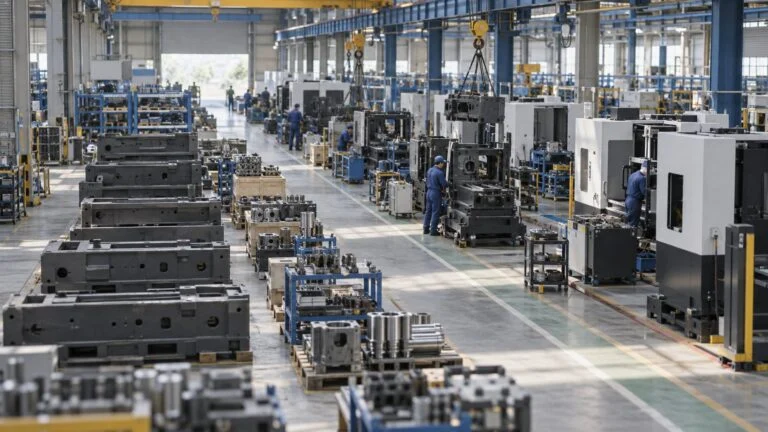
For volume products such as automotive parts, teams spend a long time on production preparation and equipment, and shave seconds off the work time per unit. Because one line then runs at high volume for a long time, the quality of the original process design has a lasting effect. For how Japanese auto parts suppliers are organized, see Japanese Automotive Supply Chain: Tiers, Keiretsu, Pricing.
Build-to-order work, common in the machinery industry, is different. Specifications change from product to product, so general-purpose machine tools are usually shared rather than dedicated equipment being built. Production engineering focuses on deciding machining methods and jigs quickly for each product and shortening changeovers. The time from receiving drawings to starting machining is often short, so the ability to pull up how similar parts were made before is what counts.
Differences by Industry
In food and pharmaceuticals, hygiene control and regulatory compliance are the starting point for process design. Equipment must be easy to clean, foreign matter must be kept out, and production records must be managed, conditions other industries do not face in the same way.
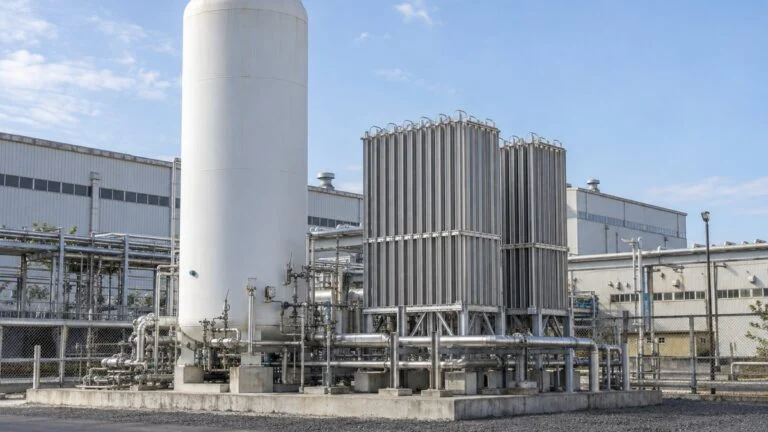
In electronic components and semiconductors, teams often work with clean rooms and expensive equipment, so equipment uptime has a large effect on profit.
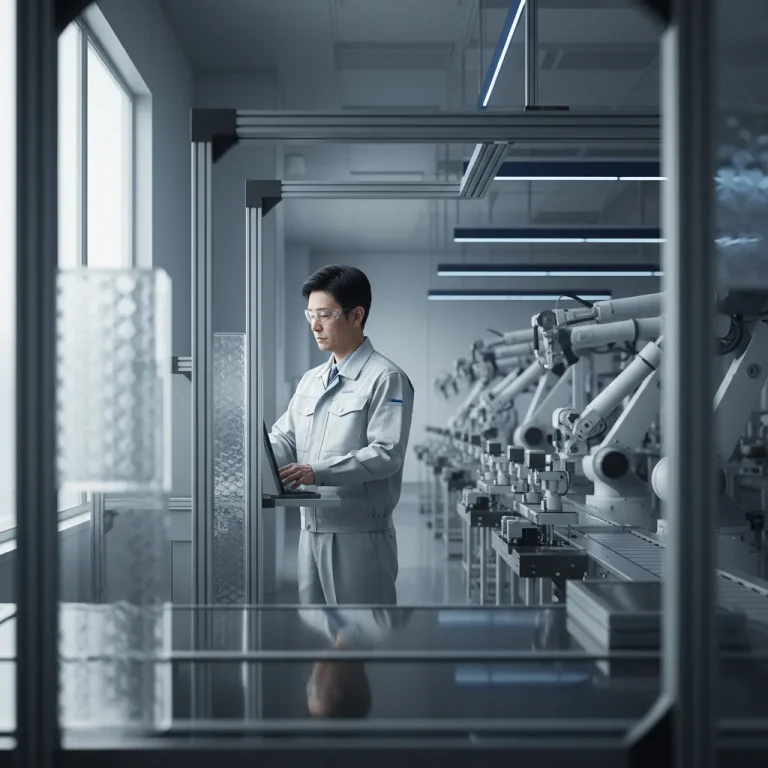
Across industries, labor shortages are driving more automation projects using industrial robots and vision inspection. Much of this equipment is built by factory automation (FA) companies, and production engineering writes the specification as the buyer (see Japanese Robot System Integrators: RFP, Quotes, Acceptance).
Large vs. Small Manufacturers
At large manufacturers, process design, equipment installation, and the launch are often handled by different people, each going deep into one part of the flow. Equipment is normally ordered from equipment makers, so these engineers build strong skills in writing specifications and coordinating with outside companies. You may deal with a different contact at each step.
At small and mid-sized manufacturers, one engineer often covers the whole flow from start to finish, sometimes designing and building jigs or handling maintenance as well. In that case, one person may be your contact for the whole project.
Quick Reference: What Each Step Produces and Where You Come In
Document names and contents vary by company. Use this table to ask which version of each document the Japanese side uses.
| Step | Typical outputs | Where an outside partner usually comes in |
|---|---|---|
| 1. Product and drawing review | Design review comments, drawing changes | Manufacturability comments on parts or tooling you will supply |
| 2. Process design | Process flow chart, layout drawing, QC process chart (QC kotei-hyo), takt time | Cycle times and capacity of your process or station; floor space and utility data for a receiving plant |
| 3. Equipment and jig specifications | Equipment specification, investment schedule | Equipment makers: questions on unclear items before quoting |
| 4. Quotes and purchase order | Quotes, comparison, ringi approval, purchase order | Quote, lead time, after-sales support terms |
| 5. Build and witness inspection | Approval drawings, inspection checklist, inspection results | Equipment makers: approval drawings, hosting the witness inspection |
| 6. Installation and trial runs | Installation schedule, trial-run conditions and measured values | Receiving plant: utilities, installation window, maintenance staff attending |
| 7. Pre-production trial | Trial results, problem log, documents for quality or customer approval | Parts suppliers: production-condition parts; customers: approval review |
| 8. Handover and improvement | Standard work instructions, start-up monitoring records, improvement results | Receiving plant: taking over the line and reporting problems |
Checklist: Questions to Ask Before You Commit to a Launch Schedule

Schedule and steps
- Which of the eight steps is the project in now, and which steps are running in parallel?
- What is the start-of-production date, and what order deadlines were counted back from it?
- When is the design review where we can still comment on drawings?
Process and equipment
- What takt time and daily output is the line designed for?
- Can we see the process flow chart and the QC process chart (QC kotei-hyo) for our part or station?
- Which specification items are stated as numbers, and which are still open?
- What are the acceptance criteria for the witness inspection, and can we attend?
Trials and launch
- How many pre-production trial runs are planned, and what must be true to move to mass production?
- Is quality assurance or customer approval required before mass production? Which documents are needed, and who prepares them?
- Will trial-run conditions and measured values be shared with the plant that runs the line?
- Where will problems and fixes be recorded, and can we see the log?
Email Template: Asking for the Launch Plan and Your Role
Short, numbered questions are easier for Japanese engineers to answer, forward internally, or run through a translation tool. Adjust the details to your project.
Subject: [Product name] launch – schedule and our role
Dear Mr./Ms. [Name],
Thank you for including us in the [product name] launch. So that we can prepare on time, could you please confirm the following?
1. The current step of the project and the planned start-of-production date.
2. The dates of the design review, witness inspection, and pre-production trials that need our input or attendance.
3. The takt time or cycle time we should design for.
4. The acceptance criteria for [equipment / parts], and the format of the check sheet.
5. Any quality assurance or customer approval required before mass production, and the documents you need from us.
If any of these are not decided yet, please let us know when they will be.
Best regards,
[Your name]
[Title, company]
Where This Flow Does Not Apply
- The steps overlap. Real projects run several steps in parallel and loop back after trials. Treat the order as typical, not fixed.
- Names and documents differ by company. Step names, document formats, and who signs off vary. Ask for samples instead of assuming they match your own system.
- Build-to-order work is compressed. For one-off machines or plant equipment, several steps may be done by one person in a short time, and general-purpose machines may be used instead of dedicated equipment.
- Regulated industries add requirements. Food, pharmaceutical, and automotive projects add hygiene, regulatory, or customer approval steps that this overview does not cover.
FAQ
What is the new product introduction (NPI) process at a Japanese manufacturer?
At many Japanese manufacturers, production engineering (seisan gijutsu) takes a new product from drawings to stable production in about eight steps: drawing review, process design, equipment specifications, quotes and ordering, build and witness inspection, installation and trial runs, pre-production trial, and handover with continuous improvement.
How early does production preparation start?
For volume products, production engineering sometimes starts more than a year before the product's release or first delivery. Equipment often takes several months to build, so order deadlines are counted back from the start-of-production date.
What is a QC process chart (QC kotei-hyo)?
It is a document that lists the control items for each process on the line. It covers similar ground to a control plan in IATF 16949 or AIAG terms, but the format varies by company, so compare it item by item rather than treating the two as the same.
What is ryosan shisaku?
Ryosan shisaku is a pre-production trial: building the product with the same equipment, operators, and materials as mass production to find problems such as dimensional variation, short stoppages, and hard-to-do tasks before the line is handed over.
Sources
- Production and quality control engineers coordinating staffing, manufacturing equipment, and production, quality, and inspection processes with related departments: Ministry of Health, Labour and Welfare, job tag, "Production and Quality Control Engineer" (Japanese)
- Studying manufacturing methods for mass production within the development team and reflecting the results in drawings: Ministry of Health, Labour and Welfare, job tag, "Automotive Engineer" (Japanese)
- Production Part Approval Process overview: Wikipedia, "Production part approval process"
Original article in JapaneseThis guide is adapted from a MONOSCOPE article written for readers in Japan: 生産技術の仕事の流れ|製品検討から量産立ち上げ・改善までの各工程を実務目線で解説
About the editor
 MONOSCOPE EditorFOUNDER & EDITOR
Spent about ten years at a plant equipment maker and a plant engineering company, proposing, designing, and commissioning equipment, then moved into web marketing. Now a web consultant for B2B manufacturers, helping them explain their products and technology. Licensed in Japan as an Energy Manager and a Third-Class Chief Electrical Engineer.
Has run an engineering blog since 2017 (500+ articles) and a Japanese YouTube channel with about 20,000 subscribers. Each English guide is written from the Japanese shop-floor point of view and checked against the cited standards.