Germany vs Korea vs Taiwan vs India Manufacturing and Japan
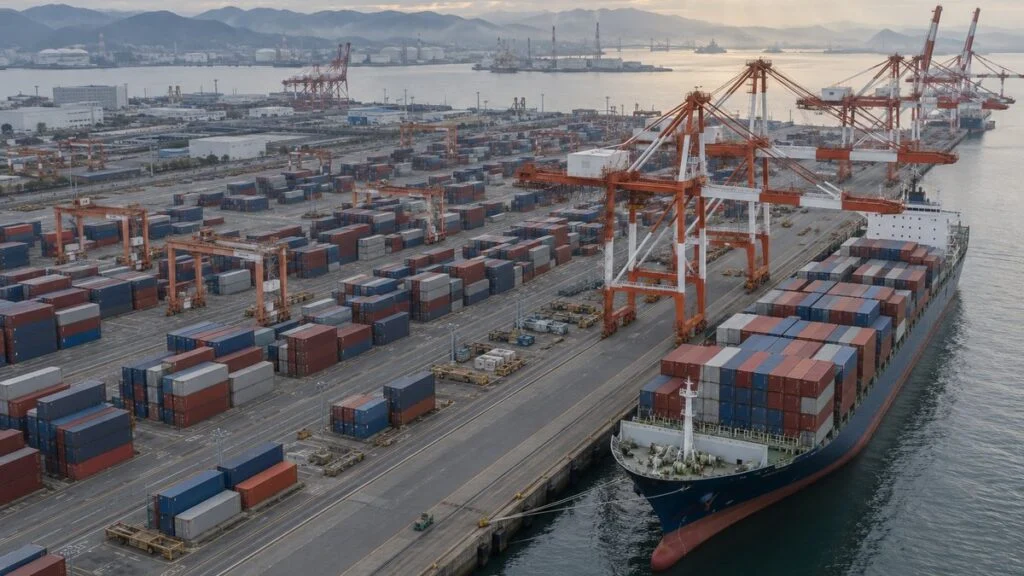
You are sourcing photoresist for a fab project, a machining center for a plant in Pune, or brake parts for a car program in Thailand. The shortlist has a Japanese supplier on it, along with German, Korean, and Taiwanese names. Before you compare quotes, it helps to know where Japan competes with these countries, where it supplies them, and where it builds alongside them.
The short answer: Germany is Japan's head-on rival in cars and machinery, South Korea and Taiwan are major customers for Japanese materials and equipment, and India is where Japanese companies build locally to sell into a growing market. This guide compares the four manufacturing economies, shows how each one connects to Japan, and ends with a checklist and an inquiry template you can use with a Japanese supplier.
Contents
- The Four Countries at a Glance
- How Big Is Each Manufacturing Sector?
- Germany: Mittelstand Exporters and Japan's Direct Rival
- South Korea: Chaebol, Memory Chips, and Japanese Materials
- Taiwan: The Foundry Model and JASM in Kumamoto
- India: Make in India, PLI, and Japanese Automakers
- Compete or Partner? Japan's Trade with the Four Countries
- What This Means When You Source from Japan
- Checklist: Questions for a Japanese Supplier
- Limits of This Comparison
- Summary
- FAQ
- Sources
The Four Countries at a Glance
Manufacturing is a pillar of all four economies, but each one earns its money in a different way. The figure below sums up who drives each industry, what they make, and how they relate to Japan.
Who earns the money, and from what, differs from country to country.
Trade direction from Japan's Ministry of Finance trade statistics (2024). Relationships summarize the examples in this article. Company names are examples only.
How Big Is Each Manufacturing Sector?
In 2024, manufacturing value added (the new value created by production) was USD 843.7 billion in Germany and USD 788.5 billion in Japan, according to the World Bank. South Korea and India were close to each other at just under USD 500 billion each.
Germany and Japan are similar in size, as are South Korea and India. South Korea has the highest share of GDP.
World Bank, World Development Indicators: manufacturing value added (current USD) and share of GDP, 2024. China is shown for reference. Taiwan is not included in the World Bank data.
These are dollar conversions, so treat the ranking with care.
In 2020, Japan was well ahead at about USD 1.03 trillion versus USD 730.2 billion for Germany. The reversal since then largely reflects the weaker yen, which shrinks Japan's figures when they are converted to dollars. The ranking is only a snapshot at that year's exchange rate, not a measure of industrial strength.
Share of GDP tells a different story. At 26.6%, South Korea's economy leans on manufacturing more than any other country in the figure.
Germany: Mittelstand Exporters and Japan's Direct Rival
Industry Structure and Strengths
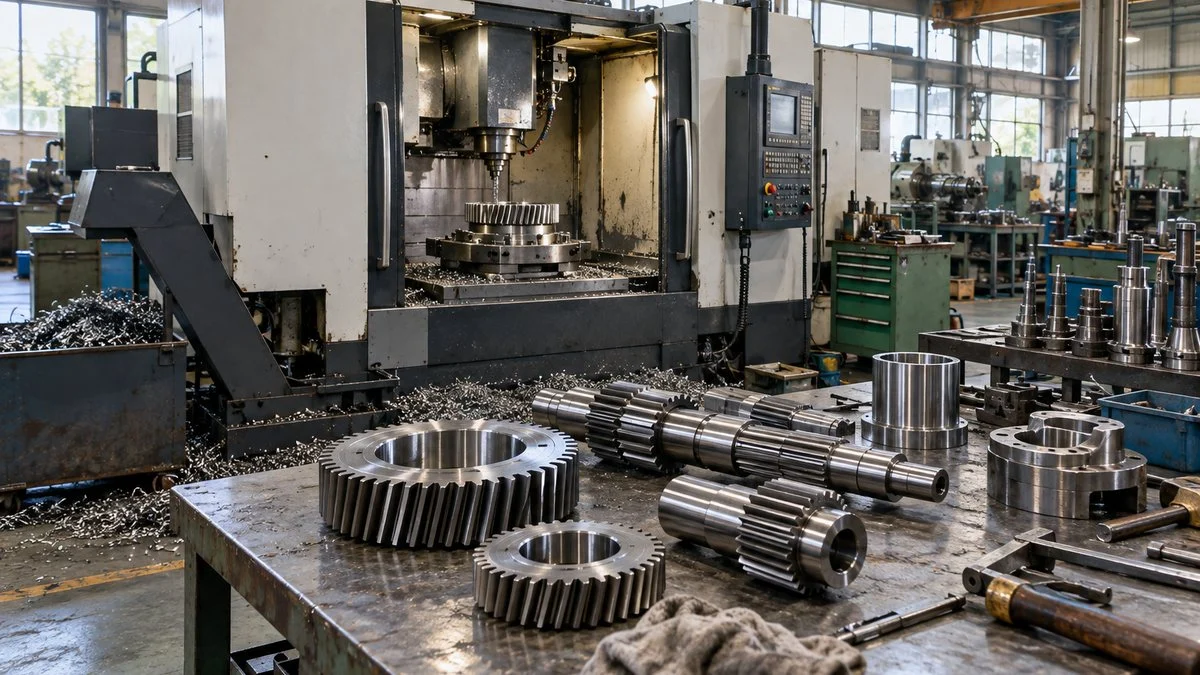
German manufacturing is built to export. In 2025, motor vehicles and parts made up 16.2% of German exports, the largest category, followed by machinery at 13.8% (Destatis, the Federal Statistical Office).
Behind those exports is the Mittelstand, Germany's base of small and mid-sized enterprises (SMEs). In 2024, SMEs were 99.2% of all German companies (about 3.52 million firms) and employed 54.4% of the workforce (IfM Bonn).
Many of these firms are said to rank near the top of the world in one specific component or machine. The pattern resembles Japan's "niche-top" companies, firms that lead a narrow global niche: large finished-goods makers rely on layers of specialized smaller suppliers.
Example Companies and Policy
Well-known names include Volkswagen and BMW in cars, Siemens in electrical engineering, Bosch in components, and BASF in chemicals.
On the policy side, Germany is known for Industrie 4.0, a plan to network factory machines and equipment to make production smarter. It was first presented at Hannover Messe, the industrial trade fair, in 2011.
In 2013, the IT, machinery, and electrical industry associations set up a joint platform to drive it. That is typical of how Germany works: industry associations pick up a national plan and spread it.
Exports of finished goods go hand in hand with the SMEs and industry associations behind them.
Relationship with Japan
From Japan's side, Germany is a direct competitor in cars and machinery. In factory automation and machine tools, Japanese and German suppliers often pitch to the same customers.
In 2024, Japan exported JPY 2.63 trillion (about USD 17.4 billion) to Germany and imported JPY 3.22 trillion (about USD 21.3 billion), according to Japan's Ministry of Finance. Germany is the only one of the four countries with which Japan runs a trade deficit.
For buyers: if you are comparing a Japanese and a German machine tool or automation package, you are usually looking at two suppliers that compete for the same customers. A side-by-side comparison of specs, local service, and lead time is worth the effort.
South Korea: Chaebol, Memory Chips, and Japanese Materials
How Chips Drive Korean Exports
Manufacturing was 26.6% of South Korea's GDP in 2024, higher than in Japan or Germany. Semiconductors sit at the center: chip exports hit a record USD 141.9 billion in 2024 (Ministry of Trade, Industry and Energy).
High-value products such as HBM (high-bandwidth memory used in AI servers) drove that growth. Chips made up about one-fifth of Korea's USD 683.8 billion in total exports that year. The flip side is that chip prices can swing the country's entire export performance.
Example Companies and Policy
Key names include Samsung Electronics and SK hynix in semiconductors, Hyundai Motor in cars, LG Energy Solution in batteries, and HD Hyundai in shipbuilding.
The main industries are led by chaebol, large family-controlled business groups. Their strength is said to be the ability to make large investments quickly. The downside is that exports tend to concentrate in a few companies and product lines.
Samsung Electronics also competes in contract chipmaking, but its global foundry share was 7.1% in October–December 2025 (TrendForce), far behind Taiwan's TSMC.
Relationship with Japan, and the 2019 Export Controls
Korean chip fabs use many Japanese materials and much Japanese manufacturing equipment. In 2024, Japan exported JPY 7.03 trillion (about USD 46.4 billion) to South Korea, the largest amount of the four countries (Ministry of Finance).
That dependence became visible in July 2019. The Japanese government tightened export procedures to South Korea for three materials: hydrogen fluoride, photoresist (the light-sensitive material used to print circuit patterns), and fluorinated polyimide. Exporters had to obtain individual licenses instead of using the simpler bulk license they had used before.
Japan announced a review in March 2023, and the three items went back to the earlier procedure. Japan is a key supplier of materials to Korea and, at the same time, a competitor in memory chips and batteries. That two-sided relationship defines Japan–Korea manufacturing ties.
Japanese materials and equipment go into Korean memory fabs, and the chips go out to devices worldwide.
A simplified view of the main flow. The three items were covered by the 2019 measures of Japan's Ministry of Economy, Trade and Industry (METI).
For buyers: the 2019 case shows that a government decision can change the export procedure for a Japanese material, even when the supplier and the product stay the same. If a material is critical to your line, ask the supplier how it is classified under Japan's export controls.
Taiwan: The Foundry Model and JASM in Kumamoto
How the Foundry Model Works
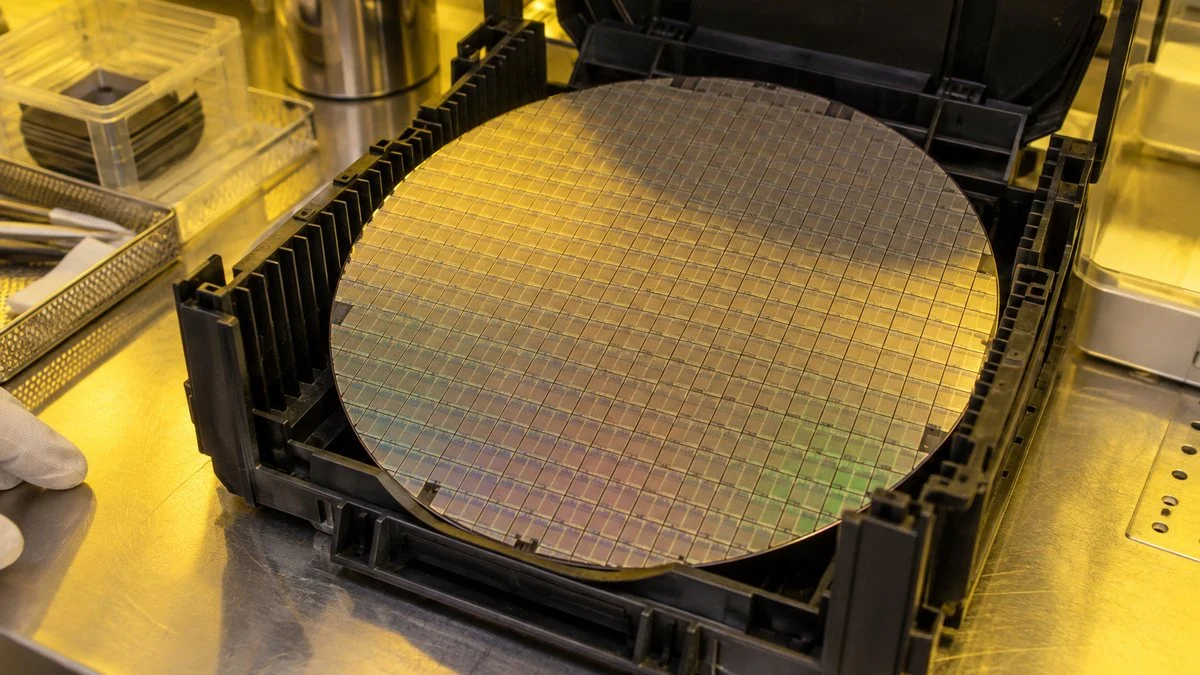
The core of Taiwanese manufacturing is the semiconductor foundry: a business that makes chips designed by other companies. Foundries take orders from fabless design firms that have no factories of their own and handle volume production for them.
Because a foundry does not sell chips under its own brand, it can take orders from many companies. Not competing with its customers is one reason so much contract work flows to Taiwan.
Design, fabrication, and back-end work are handled by different companies. Taiwan sits at the center of fabrication.
Share from TrendForce, based on revenue of the top 10 foundries.
The back-end steps that turn a wafer into a finished chip deserve their own explanation.
Example Companies and Growth
TSMC's global foundry share was 70.4% in October–December 2025, far ahead of Samsung Electronics (TrendForce). Taiwan is also home to UMC (contract chipmaking), MediaTek (chip design), and Hon Hai Precision Industry, better known as Foxconn (electronics assembly).
AI demand has lifted Taiwan's whole economy. Of the 7.15% real GDP growth in January–September 2025, manufacturing contributed 4.89 percentage points (DGBAS, Taiwan's statistics agency).
In other words, manufacturing produced about 70% of the growth. As in Korea, the economy rises and falls with the chip and electronics cycle.
Relationship with Japan
Japan's exports to Taiwan were JPY 6.87 trillion (about USD 45.4 billion) in 2024, up 14.2% from the previous year (Ministry of Finance). The main items are machinery and electrical equipment, base metals, and chemicals (Taiwan's Ministry of Finance, JETRO).
The two countries now also produce chips together. JASM, a TSMC subsidiary, built a fab in Kikuyo, Kumamoto Prefecture, and held its opening ceremony in February 2024. Sony Semiconductor Solutions, Denso, and Toyota Motor are also shareholders.
In June 2022, METI approved a subsidy of up to JPY 476 billion for the fab. JASM told Kumamoto Prefecture in December 2024 that mass production had started, on 12/16 nm and 22/28 nm logic processes.
The project combines Taiwan's manufacturing know-how with Japanese customers and materials.
For buyers: Japanese material and equipment suppliers sell into both Korean and Taiwanese fabs. When you evaluate one of them, ask which fabs and regions they already serve, and from which plants.
India: Make in India, PLI, and Japanese Automakers
Industry Structure and Strengths
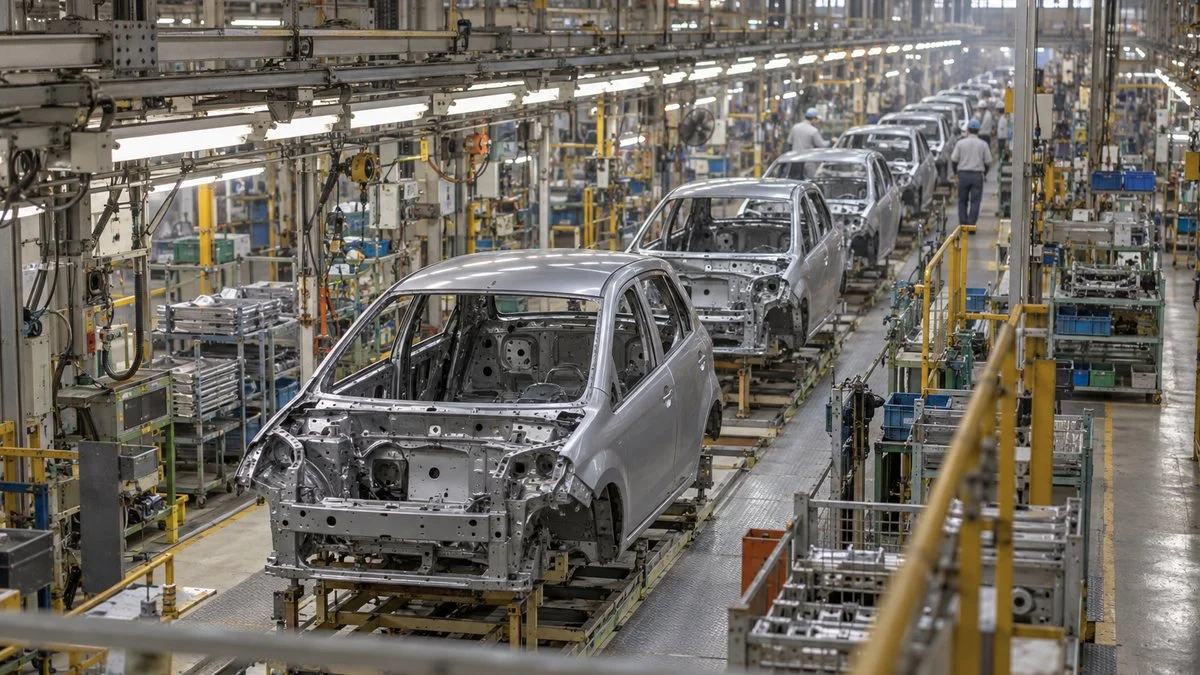
India's manufacturing value added grew from USD 327.8 billion in 2015 to USD 494.1 billion in 2024, about 1.5 times larger (World Bank).
Its share of GDP, however, fell from 15.6% in 2015 to 13.1% in 2024. Manufacturing has grown, but not as fast as the rest of the economy.
Make in India and PLI
The Indian government launched Make in India in September 2014 to bring factories into the country. One of its main tools is the Production Linked Incentive (PLI) scheme, which pays incentives based on increases in domestic production or sales.
PLI covers 14 sectors with a total budget of INR 1.97 lakh crore (INR 1.97 trillion, about USD 24 billion at the rate used by India's Press Information Bureau). The 14 sectors include the following:
- Smartphones and electronic components, telecom equipment
- Pharmaceuticals and drug ingredients, medical devices
- Automobiles and auto components, advanced batteries
- Solar PV modules, specialty steel, white goods
- Food products, textiles, drones
The figure below lines up India's policy steps with what Japanese companies have done there.
Policy draws factories in, and Japanese companies are expanding local production with cars at the core.
Sources: PIB (Press Information Bureau, Government of India), World Bank, JETRO, Embassy of Japan in India. India's fiscal year runs April to March.
Relationship with Japan
India's leading carmakers include Tata Motors, Mahindra & Mahindra, and Maruti Suzuki, a subsidiary of Japan's Suzuki. In fiscal 2024 (April 2024–March 2025), Maruti Suzuki took 40.9% of India's 4.3 million passenger car sales, the top share. India is a market where a Japanese company is number one.
As of October 2024, 1,434 Japanese companies operated 5,205 business locations in India, and about half of those companies (49.4%) are manufacturers. Auto parts makers keep following their carmaker customers into the country.
Japan's exports to India were JPY 2.60 trillion (about USD 17.2 billion) in 2024. That was up 16.5% from the previous year, the fastest growth of the four countries (Ministry of Finance).
For buyers in India: with more than 5,000 Japanese business locations in the country, your supplier may already have a plant or office there. Ask whether a part is made locally or imported from Japan or a third country, because that changes lead time, currency, and duty.
Compete or Partner? Japan's Trade with the Four Countries
Japan's relationship with each country is easier to read if you sort it with three simple tests:
- Product overlap: if both sides sell the same finished products to the same customers, they compete.
- Supply of materials and equipment: if Japan supplies materials or equipment to the other country's factories, they partner.
- Local market: if Japanese companies produce and sell inside the other country, the relationship is closer to a partnership.
The trade figures below show the direction of trade. Dollar values are rough conversions at the 2024 average rate of about JPY 151.5 per USD, so they will shift as the exchange rate moves.
Japan runs a surplus with South Korea, Taiwan, and India, and a deficit only with Germany.
(≈ USD 17.4 bn)
(≈ USD 46.4 bn)
(≈ USD 45.4 bn)
(≈ USD 17.2 bn)
(≈ USD 21.3 bn)
(≈ USD 31.4 bn)
(≈ USD 30.5 bn)
(≈ USD 6.4 bn)
(≈ -USD 3.9 bn)
(≈ +USD 15.0 bn)
(≈ +USD 14.8 bn)
(≈ +USD 10.8 bn)
Japan's Ministry of Finance, Trade Statistics for 2024 (exports final, imports preliminary). Totals include all goods, not only manufactured products. USD values converted at the 2024 average of about JPY 151.5/USD (Federal Reserve) and are approximate.
Trade volume does not measure how hard two countries compete or how closely they cooperate. Use the figure as background, not as a scorecard.
Materials exports to South Korea, for example, are a partnership, yet Japanese companies compete with the same Korean companies in memory and batteries. Most of these relationships include both at once.
The same country can be a competitor in one field and a customer in another.
CompeteCars and machinery. Both sell the same finished products to the same customers worldwide
PartnerTwo-way trade in parts and machinery. Japan imports about JPY 3 trillion a year
CompeteMemory, batteries, shipbuilding, where products overlap
PartnerChip materials and manufacturing equipment for Korean fabs
CompeteLimited overlap, because a foundry makes its customers' products
PartnerSupply of materials and equipment, and joint production in Kumamoto
CompeteWith local carmakers such as Tata and Mahindra in the Indian market
PartnerLocal production and supplier plants in a market that keeps growing
Classification based on the three tests above. Actual business relationships differ from company to company.
What This Means When You Source from Japan
Materials and Equipment: Plan for Policy Risk
When Korean and Taiwanese chip output grows, demand for Japanese materials and equipment grows with it. Which countries and fabs those products can reach, however, also depends on government policy and export controls.
As the 2019 Japan–Korea case shows, relations between governments can change trade procedures. Japanese suppliers have reason not to concentrate their sales in a single country. From the buyer's side, the same logic argues for not relying on a single supply route.
Finished Equipment: Japan and Germany Are Real Alternatives
Germany exports through layers of large companies and specialized SMEs, and some Japanese industries have a similar structure. In cars, machine tools, and factory automation, Japanese and German suppliers often compete for the same customers.
India: A Market and a Production Base
India offers a large market, government incentives, and a growing number of Japanese company locations. Manufacturing, however, is still around 13% of GDP, and the base of local parts suppliers and skilled workers is likely still developing.
A plant built to sell in India and a plant built to export from India call for different decisions. Ask your Japanese supplier which of the two their Indian plant is for before you plan around it.
Checklist: Questions for a Japanese Supplier
Use these questions when a Japanese supplier of materials, equipment, or auto parts is on your shortlist, especially if you are also comparing Korean, Taiwanese, or German options.
- Production site: Which plant makes this item: Japan, India, Southeast Asia, or elsewhere? What is the country of origin on the shipping documents?
- Export controls: Is the item controlled under Japan's export control rules (the Foreign Exchange and Foreign Trade Act)? If so, what license is needed for shipment to our country, and how does it affect lead time?
- Backup supply: Is there a second plant or a qualified alternative source if one route is disrupted?
- Existing customers: Does the supplier already ship this grade to fabs or plants in Korea, Taiwan, or India? Can they share reference applications without breaching confidentiality?
- Local support: Is there a local entity, warehouse, or service engineer in our country, and who handles quality claims?
- Currency: Is the quote in JPY, USD, or local currency? Who carries the exchange-rate risk, and for how long is the price fixed?
- Local incentives: If our project falls under a program such as India's PLI, does local manufacturing of this part matter for us? Confirm the scheme rules with your own compliance team.
If you are writing to the supplier for the first time, the template below covers these points in one message. Replace the bracketed parts with your own details.
Subject: Inquiry about [product name / part number] for supply to [country]
Dear [Name],
We are [company name], a [manufacturer / distributor] in [city, country]. We are evaluating [product name / part number] for [application], with an expected volume of [quantity] per [month / year] starting in [month, year].
Could you please let us know the following?
- Which plant would produce this item, and what country of origin would appear on the shipping documents?
- Is the item subject to Japanese export controls? If so, what license is required for shipment to [country], and how does it affect lead time?
- What are the standard lead time and minimum order quantity, and is there a backup production site?
- Do you have a local office, distributor, or service engineers in [country]?
- What currency would you quote in, and how long would the price be valid?
We would also appreciate a datasheet and any reference applications you can share.
Best regards,
[Your name]
[Title, company, contact details]
Limits of This Comparison
- Dollar figures depend on exchange rates. A weaker or stronger yen can change rankings and the USD values in this article without any change in actual output.
- Trade totals cover all goods, not only manufactured products, and say nothing about any single company's position.
- The compete/partner classification is a simplification. Individual companies may compete in one product line and cooperate in another.
- Export control rules and incentive schemes change. Check the current rules with the supplier and the relevant authorities before you rely on them.
- Taiwan is not in the World Bank dataset, so its size is not directly comparable with the other countries here.
Summary
- In 2024, manufacturing value added was USD 843.7 billion in Germany and USD 788.5 billion in Japan. Dollar-based rankings move with exchange rates.
- Germany's strengths are car and machinery exports backed by the Mittelstand. It competes with Japan in finished products.
- South Korea's chip industry is led by large business groups and is also a major buyer of Japanese materials and equipment. The 2019 export controls showed how policy can affect that supply.
- Taiwan's TSMC holds about 70% of the foundry market and now produces chips with Japanese partners in Kumamoto.
- India is still drawing in factories through policy, and Maruti Suzuki holds about 40% of the passenger car market.
- Before you choose a Japanese supplier, confirm the production site, export control status, backup supply, local support, and quote currency.
FAQ
What is the difference between a foundry and a fabless company?
A fabless company designs chips but owns no factory, while a foundry manufactures chips that other companies design. Taiwan's TSMC is the best-known foundry, and the split lets design and manufacturing be handled by different companies.
What is the Mittelstand?
Mittelstand is the German term for small and mid-sized enterprises, which made up 99.2% of German companies in 2024. Many lead the world in a specific component or machine, much like Japan's "niche-top" companies that lead narrow global niches.
What does PLI stand for in India?
PLI stands for Production Linked Incentive. The scheme pays incentives based on increases in domestic production or sales, and it has a budget for 14 sectors, including electronics, auto components, and pharmaceuticals.
Which Japanese materials did the 2019 export controls on South Korea cover?
They covered hydrogen fluoride, photoresist, and fluorinated polyimide, three materials used in chip production. Japan required individual export licenses from July 2019, announced a review in March 2023, and returned the items to the earlier procedure.
Why do country rankings for manufacturing change from year to year?
Value added is compared in US dollars, so exchange rate moves can reshuffle the ranking. When the yen is weak, Japan's figures shrink in dollar terms, so read any ranking as a snapshot at that year's exchange rate.
Sources
- Manufacturing value added and share of GDP: World Bank, "Manufacturing, value added (current US$)", "Manufacturing, value added (% of GDP)"
- Japan's trade by country: Ministry of Finance, Trade Statistics for 2024 (Japanese)
- Yen–dollar average rate for 2024: Federal Reserve via FRED, Japanese Yen to U.S. Dollar Spot Exchange Rate (annual)
- German export categories: Destatis, "Trading goods"
- German SMEs: IfM Bonn, "Macro-economic significance of SMEs: Germany"
- Industrie 4.0: acatech, "Industrie 4.0", DFKI, "Ten Years of INDUSTRIE 4.0"
- Korean exports and chip exports: The Korea Times, January 1, 2025 (Ministry of Trade, Industry and Energy data)
- Japan's export controls on South Korea: JETRO Business News, July 2019 (Japanese), The Korea Times, March 16, 2023, Bloomberg, March 23, 2023
- Foundry market share: TrendForce, March 12, 2026
- Taiwan's economic growth and manufacturing: Taipei Times, January 12, 2026 (DGBAS data)
- Japan–Taiwan trade by item: JETRO, "Taiwan: Basic Economic Indicators" (Japanese)
- Subsidy for JASM: METI, approved specified semiconductor production facility plans (Japanese)
- JASM opening and shareholders: TSMC, "TSMC Celebrates the Opening of JASM in Kumamoto, Japan" (February 24, 2024)
- Start of JASM mass production: DIGITIMES, December 27, 2024, TechNode, December 19, 2024
- Make in India and the 14 PLI sectors: PIB, "10 Years of Make in India", PIB, November 2024
- Indian passenger car market: JETRO Area Report, June 19, 2025 (Japanese; SIAM data)
- Japanese companies in India: Embassy of Japan in India and JETRO, List of Japanese Companies in India (October 2024), JETRO Area Report, March 10, 2026 (Japanese)
Original article in JapaneseThis guide is adapted from a MONOSCOPE article written for readers in Japan: ドイツ・韓国・台湾・インドの製造業を比較|得意分野と日本との関係
About the editor
 MONOSCOPE EditorFOUNDER & EDITOR
Spent about ten years at a plant equipment maker and a plant engineering company, proposing, designing, and commissioning equipment, then moved into web marketing. Now a web consultant for B2B manufacturers, helping them explain their products and technology. Licensed in Japan as an Energy Manager and a Third-Class Chief Electrical Engineer.
Has run an engineering blog since 2017 (500+ articles) and a Japanese YouTube channel with about 20,000 subscribers. Each English guide is written from the Japanese shop-floor point of view and checked against the cited standards.